 Save to Pinterest
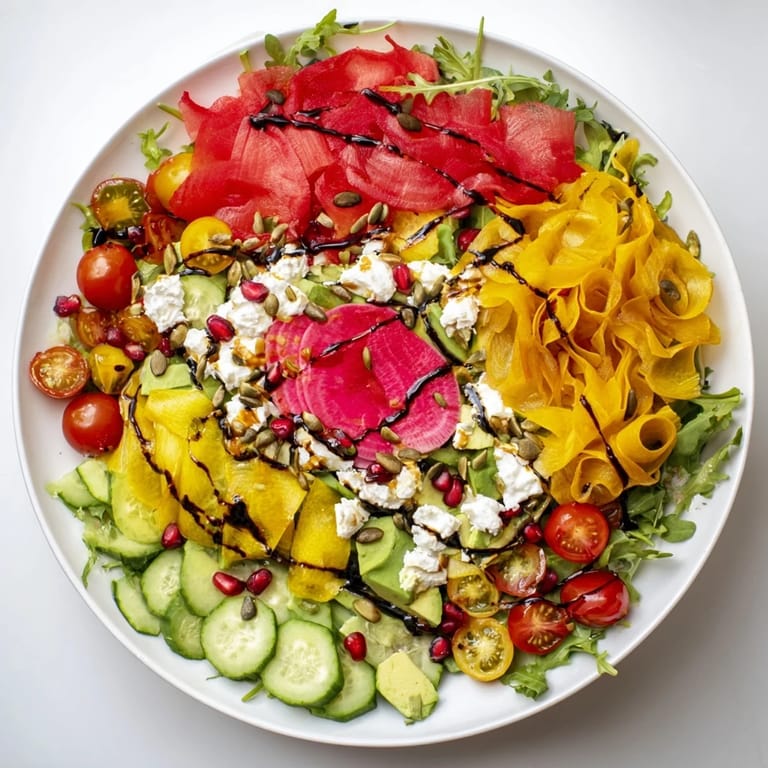
 I discovered this salad on a rainy afternoon while wandering through a modern art museum, mesmerized by a Jackson Pollock painting. The chaotic drips and vibrant colors seemed to dance across the canvas, and I found myself thinking about how food could capture that same wild energy. That evening, I raided my kitchen with newfound inspiration, pulling out every colorful vegetable I could find and arranging them without rules or symmetry. The result was pure magic—a plate that looked like edible art, and tasted even better.
I remember serving this to my sister when she was going through a rough creative block. She sat at my kitchen counter, fork in hand, and just stared at the plate for a moment. Then she smiled—really smiled—and said it was the most beautiful thing she'd eaten in months. We talked for hours while she picked through it, discovering new flavor combinations with each forkful. Food became conversation that day, and art became something you could taste.
Ingredients
- Cherry tomatoes (red and yellow), 1 cup halved: Use a mix of colors for that true artist's palette feel. The sweetness of yellow tomatoes plays beautifully against the bright acidity of red ones. I learned to halve them just before serving so they don't weep water onto your other ingredients.
- Golden beet, 1 small peeled and shaved: A mandoline is your best friend here, creating those delicate ribbons that catch the light. The earthy sweetness grounds all the bright, fresh flavors surrounding it.
- Cucumber, 1 small sliced into ribbons: Use a vegetable peeler to create long, elegant ribbons that drape across the plate like brushstrokes. Choose a firm cucumber with thin skin for the best texture.
- Red radishes, 1/2 cup thinly sliced: They provide that peppery snap that keeps every bite interesting. Don't skip them—they're the punctuation mark of this composition.
- Watermelon, 1 cup cut into irregular cubes: Choose a sweet, ripe melon and cut the pieces in uneven shapes to honor that abstract expressionist chaos. The juicy sweetness against salty feta is a revelation.
- Ripe avocado, 1 cubed: Add this last, just before serving, or it will oxidize and turn sad. The creamy richness is essential balance to all the bright, crisp elements.
- Mixed baby greens, 1 cup (arugula, baby spinach, frisée): This is your canvas. Use the heartiest greens as a base, then let the tender spinach and curly frisée create texture variation.
- Fresh mint leaves, 2 tbsp torn: Don't chop these—tear them by hand. The bruising releases oils that make the whole salad smell like a garden in summer.
- Toasted pumpkin seeds, 1/4 cup: The toasting is crucial. It deepens their flavor and gives them a golden color that plays beautifully with everything else. Toast them yourself if you can—store-bought are fine, but homemade are transcendent.
- Pomegranate seeds, 1/4 cup: These jewel-like arils are your red accent. They burst with tart sweetness and add a surprising textural pop that keeps things exciting.
- Crumbled feta cheese, 1/4 cup: Don't crumble it too fine. Those substantial chunks catch the dressing and create pockets of salty creaminess that ground the lighter elements.
- Extra-virgin olive oil, 3 tbsp: This is not the place to skimp. A truly good olive oil carries the entire dressing. Use one you'd drink straight from the bottle.
- White balsamic vinegar, 1 tbsp: Regular balsamic would darken your beautiful palette. The white variety maintains clarity and brightness while adding essential acidity.
- Honey, 1 tsp: A touch of sweetness to balance the vinegar and feta. It also helps the dressing emulsify.
- Dijon mustard, 1/2 tsp: This acts as an emulsifier and adds subtle tang that ties everything together without overpowering.
- Salt and freshly ground black pepper, to taste: Taste as you go—the salad has so many flavors that finding the right balance is like tuning an instrument.
Tired of Takeout? 🥡
Get 10 meals you can make faster than delivery arrives. Seriously.
One email. No spam. Unsubscribe anytime.
Instructions
- Gather your palette:
- Pull out all your vegetables and fruits and arrange them in separate bowls like you're an artist selecting colors. This moment of preparation is meditative—you're about to create something beautiful. Don't rush it.
- Build your canvas:
- On a large platter or shallow bowl, scatter the baby greens and torn mint in loose, informal clumps. Imagine you're dabbing colors onto canvas, leaving gaps and overlaps. This is where the salad gets its personality.
- Make your splash:
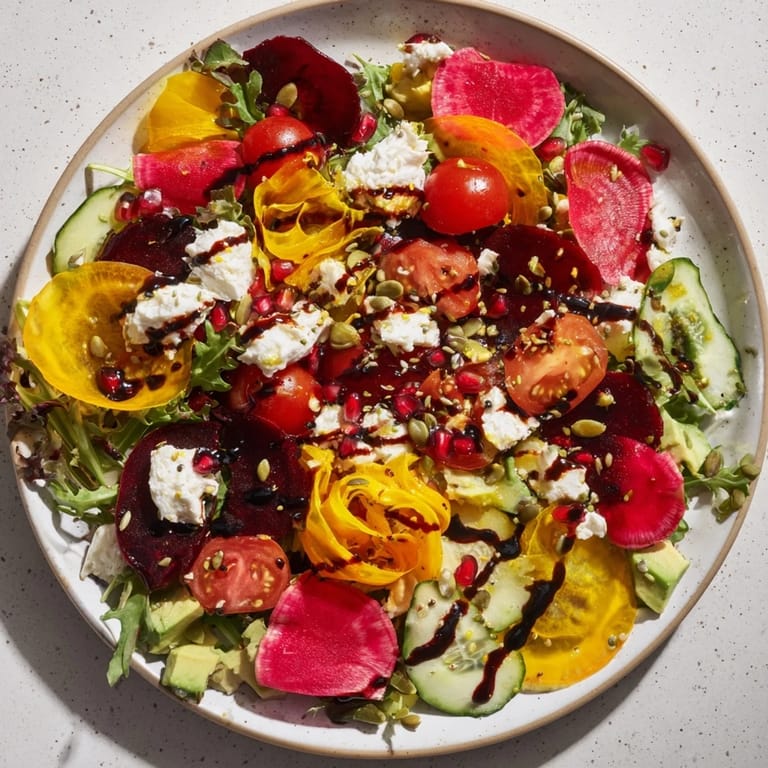
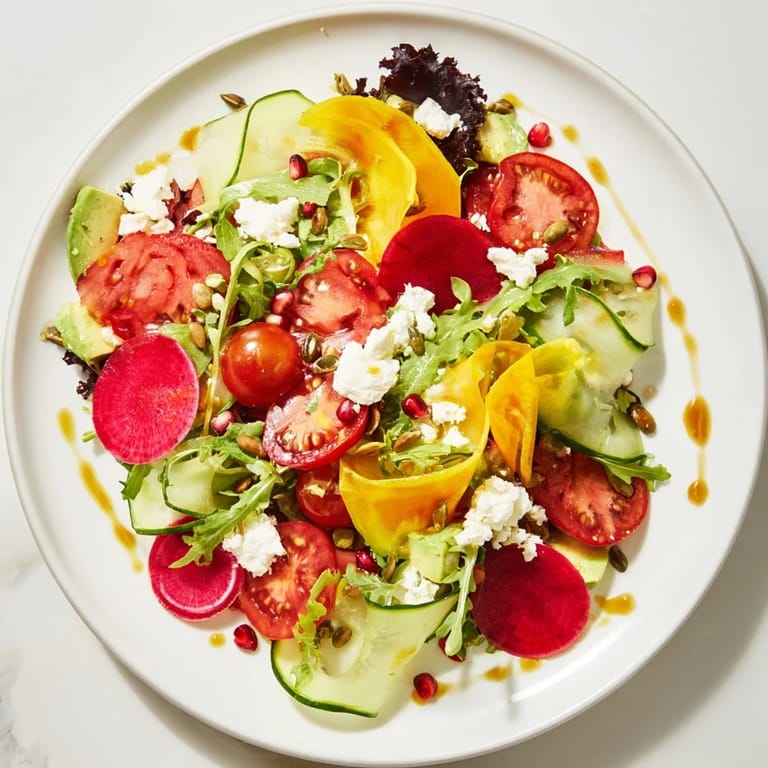
- Now here's where you let go of precision. Artistically splash and scatter the tomatoes, beet shavings, cucumber ribbons, radish slices, watermelon cubes, and avocado across the greens. Let colors overlap, let textures intermingle. There's no wrong way to do this—that's the whole point. Step back occasionally and look at your work.
- Layer the final details:
- Sprinkle the pumpkin seeds, pomegranate seeds, and feta cheese over the top in an intentionally irregular pattern. These are your highlights—the details that catch the eye and add complexity.
- Whisk your dressing:
- In a small bowl, combine the olive oil, white balsamic vinegar, honey, and Dijon mustard. Whisk with intention, watching the oil and vinegar emulsify into a creamy, cohesive dressing. Taste it and adjust the salt and pepper until it sings—it should be bright and balanced, not too sharp or too dull.
- Paint with dressing:
- Drizzle the dressing generously across the salad in zigzags and splatters, truly mimicking brushstrokes. Don't be timid. Let it pool in some places and create delicate lines in others.
- Serve and celebrate:
- Bring it to the table immediately. Let people admire the arrangement for a moment—there's something special about pausing before we eat to appreciate what we've created. Then let them mix it all together, discovering their own flavor combinations.
 Save to Pinterest
 The first time someone truly understood what I was trying to do with this salad was when my neighbor—a retired architect who'd spent her life designing buildings and spaces—watched me arrange it. She didn't say much, just nodded slowly, then picked up a forkful and closed her eyes while she ate. Afterward, she said it reminded her why she'd loved her work in the first place: the intersection of beauty and function, the way form and flavor could speak the same language. That's when I realized this wasn't just a salad anymore.
The Art of Arrangement
The real magic of this salad happens in the arrangement. It's less about following rules and more about trusting your instincts. Think about balance—not symmetrical balance, but the kind you feel. If you've placed something heavy and dark on one side, give the other side some visual weight too, but through a different ingredient. The colors should converse with each other. Put warmth next to coolness. Stack textures in a way that invites your eye to move around the plate. This is where cooking becomes art, and your kitchen counter becomes a studio. Every person will arrange it slightly differently, and that's exactly as it should be.
Seasonal Variations and Swaps
This salad is endlessly adaptable, and that's part of its beauty. In spring, replace the watermelon with fresh peas and add early strawberries. Summer is watermelon's moment, but you could also use grilled peaches or fresh raspberries. Fall invites roasted purple sweet potatoes, crispy Brussels sprouts shavings, and perhaps some toasted hazelnuts replacing the pumpkin seeds. Winter calls for pomegranate, persimmons, and maybe some roasted beets if you want them warm. The bones of the salad stay the same—bright greens, creamy elements, crunch, freshness—but the specific vegetables are your call to make. There's no wrong season to make this dish.
Pairing and Serving Ideas
While this salad stands beautifully on its own, it also plays well with others. Serve it alongside grilled halloumi or crispy tofu for protein. It's the perfect starting course before a light pasta or grain-based main. The dressing's bright acidity makes it an excellent palate cleanser between rich courses. For beverages, a crisp Sauvignon Blanc or Pinot Grigio echoes the salad's freshness, while a sparkling water with fresh citrus keeps things light and refreshing. If you're hosting, you can prep all the components separately and let guests build their own version—it becomes interactive and fun, and everyone gets exactly what they want.
- Make it heartier by adding grilled chicken, chickpeas, or creamy goat cheese.
- Prepare all components ahead and assemble just before serving for maximum freshness and color.
- This salad is naturally gluten-free and can be made vegan by swapping feta for nutritional yeast or cashew cheese.
 Save to Pinterest
 Every time I make this salad, I'm reminded that cooking is just controlled chaos, and sometimes the best things in life happen when we stop trying to be perfect and start trying to be honest. This dish celebrates that beautiful truth.