 Save to Pinterest
 There's something deeply calming about the quiet ritual of arranging vegetables on a plate. I discovered this recipe one autumn afternoon while trying to create something beautiful without turning on the stove—just clean lines, fresh ingredients, and the satisfying crunch of vegetables at their peak. My grandmother used to say that the most elegant meals require the least fuss, and watching the cucumber and celery sticks catch the light on the platter that day, I finally understood what she meant.
I served this at a dinner party where someone mentioned they were overwhelmed by cooking, and watching them relax the moment they realized appetizers could be this simple was a gift. They started arranging the vegetables themselves, turning it into a shared moment rather than something I'd prepared alone. That's when I realized this recipe isn't just about food—it's permission to slow down.
Ingredients
- Cucumbers (2 large): Choose firm ones with thin skin; they should feel heavy for their size and snap when you bend them slightly.
- Celery stalks (4 large): The outer stalks are sturdier and stay crunchier longer than the tender inner ones.
- Toasted sesame seeds (1 tablespoon): Toast them yourself if possible—the aroma that fills your kitchen is half the magic of this dish.
- Light soy sauce or tamari (1 tablespoon): Tamari works beautifully if you need gluten-free, and it has a rounder, deeper flavor.
- Rice vinegar (1 teaspoon): This adds brightness without the harshness of regular vinegar; don't skip it.
- Fresh mint or basil leaves: Tear them just before serving so they release their oils and fragrance.
Tired of Takeout? 🥡
Get 10 meals you can make faster than delivery arrives. Seriously.
One email. No spam. Unsubscribe anytime.
Instructions
- Wash and prepare your vegetables:
- Run them under cool water and dry them thoroughly—wet vegetables won't stay crisp and the platter will look less intentional. This simple step makes all the difference in how the final dish feels.
- Trim and cut into stalks:
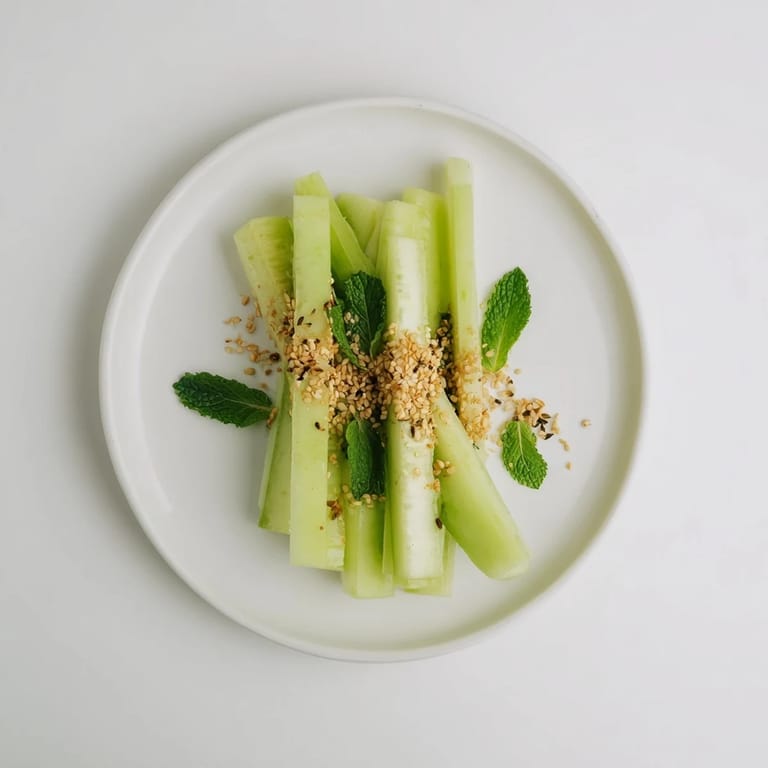
- Slice everything into 4 to 5 inch sticks, keeping them as uniform as possible so they arrange with visual harmony. Aim for sticks about the width of your pinky finger—thick enough to be satisfying to bite, thin enough to feel elegant.
- Arrange like a garden:
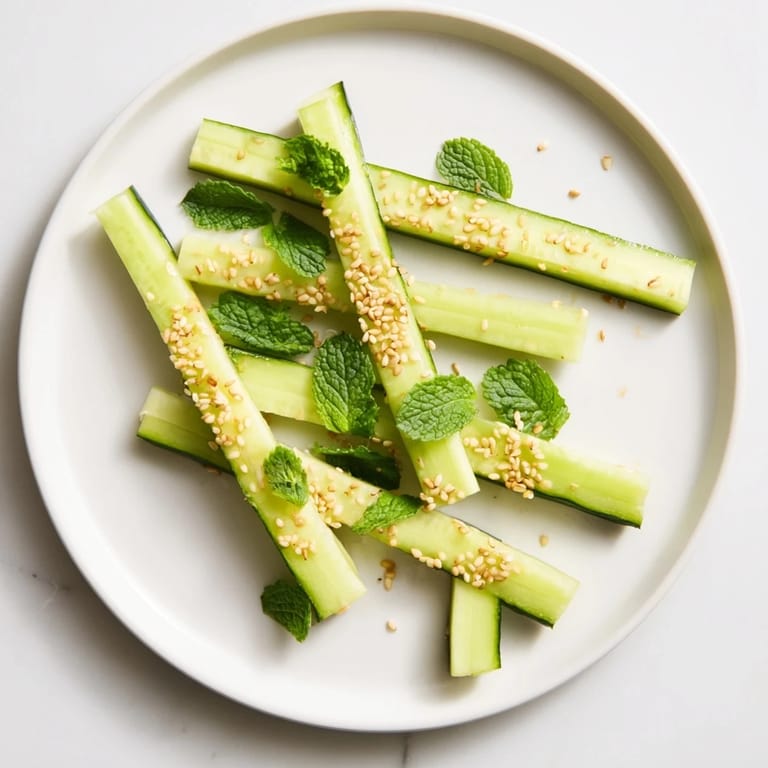
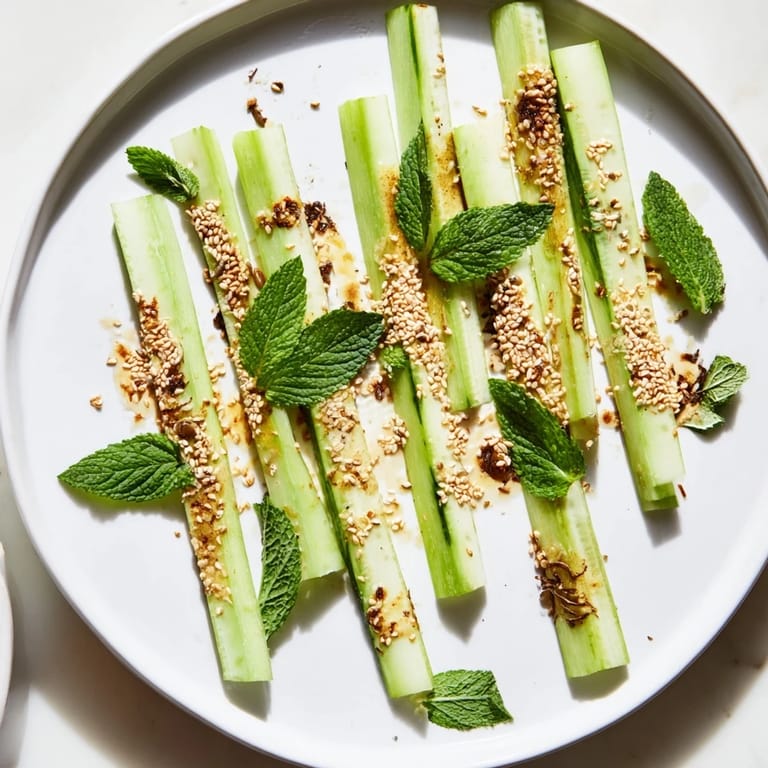
- Stand the sticks upright and lay some horizontally on your platter, creating gentle lines that feel organic rather than rigid. Step back and look—you're creating a small edible landscape.
- Add the finishing touches:
- Sprinkle sesame seeds across the platter and tuck in mint or basil leaves wherever there's a gap. This is where instinct matters more than precision.
- Prepare the dipping sauce:
- Whisk together soy sauce and rice vinegar in a small bowl, tasting as you go—some prefer it tangier, others more savory. Set it beside the platter and let it sit for a few minutes so the flavors meld.
- Chill and serve:
- If you have time, refrigerate everything until just before serving so the vegetables are ice-cold and stay crisp longer through the meal.
 Save to Pinterest
 A friend once told me she brought this to a potluck expecting it to be overlooked, but people kept returning to the platter throughout the night, drawn to its simplicity and the way it refreshed their palate between heavier dishes. She realized then that sometimes the most memorable contributions are the ones that ask nothing of anyone except to taste.
Why Simplicity Wins
There's a Japanese concept called ma—the beauty of empty space. This recipe embodies that perfectly, letting each ingredient speak for itself without competition or distraction. When you stop overthinking and arrange vegetables with intention, you're not just making food; you're creating a moment of calm on the table.
Making It a Ritual
I've started making this whenever I need to reset my mind—the repetitive motion of cutting, the cool water on my hands, the slow arranging on the platter. It's become my version of meditation, and somehow that energy transfers to everyone who eats it. You might find yourself doing the same, reaching for this recipe not because you're hungry, but because you need to slow down.
Beyond the Basics
Once you understand the foundation, you can play with variations without losing the spirit of the dish. Try adding carrot or daikon sticks for subtle color shifts, or experiment with different dipping sauces—miso mixed with rice vinegar is extraordinary, as is a touch of sesame oil stirred into the soy. The beauty is that the format is so flexible that your kitchen experiments become part of the recipe.
- Daikon adds a peppery edge and looks stunning with its pale color contrasting against green cucumber.
- If you want warmth, a tiny pinch of ginger in the dip brings unexpected depth.
- Pair it with chilled sake or a crisp white wine to complete the experience.
 Save to Pinterest
 This recipe taught me that sometimes the best way to show care is to give people something pure and unrushed. Serve it with an open heart, and watch what happens.
Recipe FAQs
- → How should celery and cucumber be cut for the bamboo zen?
Trim ends and cut into long, even sticks around 4–5 inches to mimic bamboo stalks.
- → Can I prepare this dish ahead of time?
Yes, soaking the sticks in ice water for 10 minutes before serving helps keep them crisp and refreshing.
- → What garnishes enhance the presentation and flavor?
Toasted sesame seeds and fresh mint or basil leaves add aroma, color, and texture contrast.
- → What dipping options work best with this arrangement?
A mixture of light soy sauce or tamari with rice vinegar creates a tangy and savory dip.
- → Is this dish suitable for specific diets?
Yes, it is vegan, gluten-free (when using tamari), and low-carb, making it accessible for many dietary preferences.