 Save to Pinterest
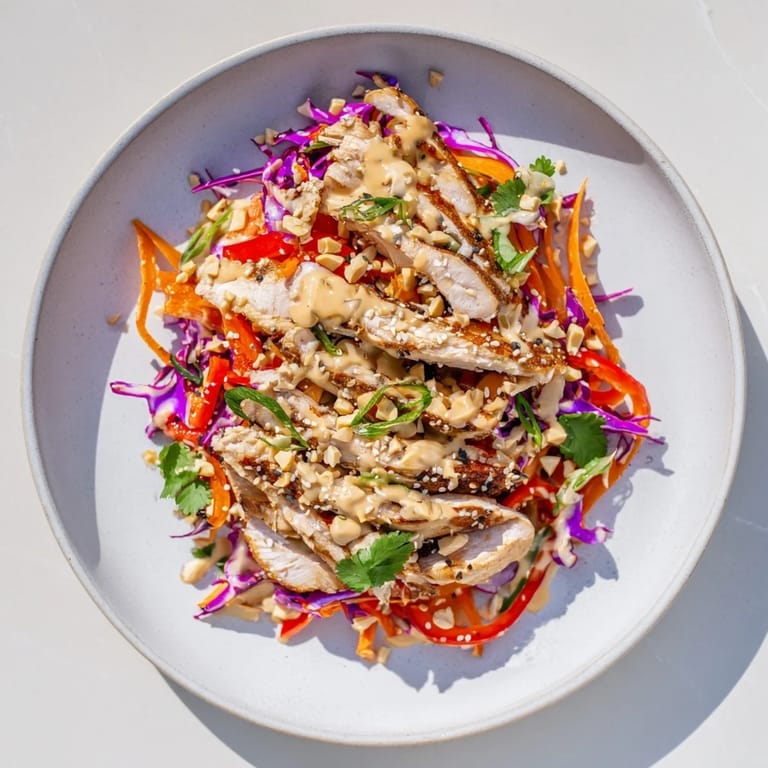
 There's something almost meditative about dragging a vegetable peeler across a carrot and watching it transform into delicate ribbons. I discovered this slaw on a Tuesday when I had chicken in the fridge, a crisper drawer full of vegetables, and zero inspiration—until I thought about how satisfying it would be to eat something that actually crunched back. The ginger-miso dressing is what changed everything; it tasted like the best Thai takeout I'd ever had, except I made it in my kitchen with ingredients I actually understood.
I made this for my sister when she announced she was cutting back on heavy foods, and watching her eyes light up when she took the first bite told me everything I needed to know. She ate it straight from the bowl, standing in my kitchen, and asked for the recipe before she'd even finished chewing—which is basically the highest compliment in our family.
Ingredients
- Boneless, skinless chicken breasts (2, about 400 g): The foundation here—I learned to pound mine to even thickness so they cook uniformly and actually stay juicy instead of drying out on the edges.
- Soy sauce (2 tbsp total across marinade and dressing): Use tamari if you need gluten-free, and don't skip this step; the umami is what makes people ask for seconds.
- Sesame oil (3 tsp toasted, split between marinade and dressing): This has a sharp, nutty punch that's easy to overdo, so I measure it carefully and never wing it.
- Fresh ginger (2 tbsp grated total): Microplane works better than a grater if you have one, and using truly fresh ginger makes the difference between okay and crave-worthy.
- Large carrots (4), peeled into ribbons: A vegetable peeler is your best friend here—it turns tedious prep into something almost meditative.
- Red cabbage (2 cups, finely shredded): The color stays vibrant longer than green cabbage, and it has a natural sweetness that balances the dressing perfectly.
- Red bell pepper (1, thinly sliced): This adds both crunch and brightness, and I usually slice it while the chicken is cooking to stay ahead of the game.
- Scallions (3, thinly sliced) and fresh cilantro (1/2 cup): I keep these separate until the very end so they stay fresh and punchy instead of wilting into the dressing.
- White miso paste (2 tbsp): Don't be intimidated by miso—it's salty and rich and creates that restaurant-quality depth that seems impossible but actually isn't.
- Rice vinegar (2 tbsp) and lime juice (1 tbsp): The acid brightens everything, and the combination keeps the dressing from being too heavy or one-note.
- Honey or maple syrup (1 tbsp): Just enough sweetness to round out the sharp edges without making it cloying.
- Roasted peanuts (1/4 cup, roughly chopped) and toasted sesame seeds (1 tbsp): These go on at the end so they stay crunchy instead of getting soggy in the dressing.
Tired of Takeout? 🥡
Get 10 meals you can make faster than delivery arrives. Seriously.
One email. No spam. Unsubscribe anytime.
Instructions
- Marinate the chicken gently:
- Mix soy sauce, sesame oil, ginger, salt, and pepper in a small bowl, then coat your chicken breasts and let them sit for 10 minutes—this doesn't need to be a long marinade, just enough time for the flavors to start seeping in. If you're running late, even 5 minutes helps.
- Cook the chicken until golden:
- Heat your grill pan or skillet over medium heat and cook each side for 5-7 minutes until the chicken is cooked through and has those beautiful caramelized edges. Let it rest for 5 minutes before slicing, which keeps the meat tender instead of releasing all its juices onto your cutting board.
- Shave the carrots into ribbons:
- Use a vegetable peeler to drag it toward you along the length of each carrot, and you'll get those delicate ribbons that look fancier than they have any right to be. If you accidentally make some thicker than others, don't sweat it—texture variation is actually more interesting.
- Whisk the dressing until creamy:
- Combine miso, rice vinegar, soy sauce, honey, ginger, sesame oil, neutral oil, lime juice, and minced garlic in a small bowl and whisk until the miso is fully dissolved and everything looks smooth and emulsified. This is when your kitchen smells like the best Asian restaurant you know.
- Toss everything together with intention:
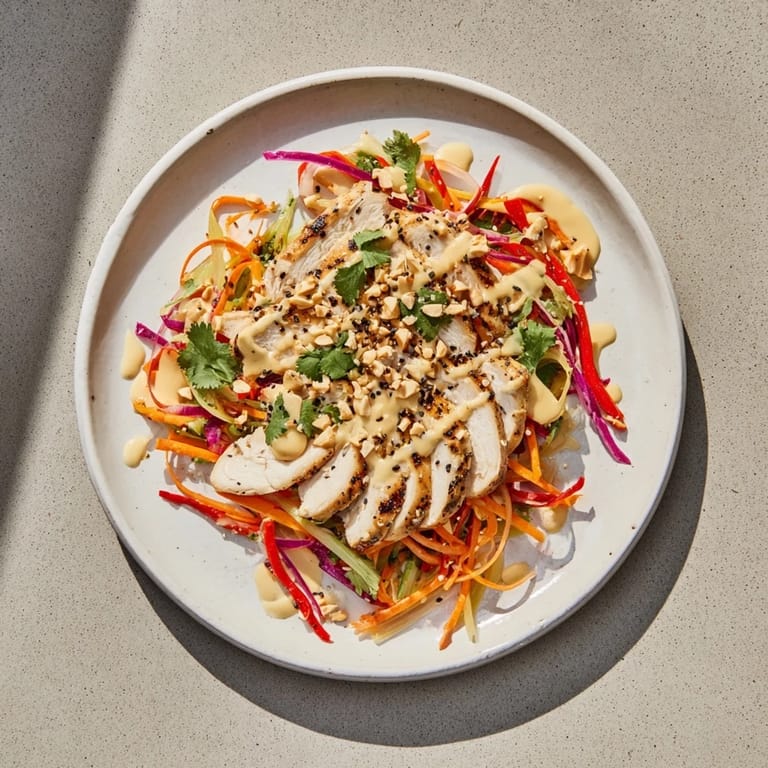
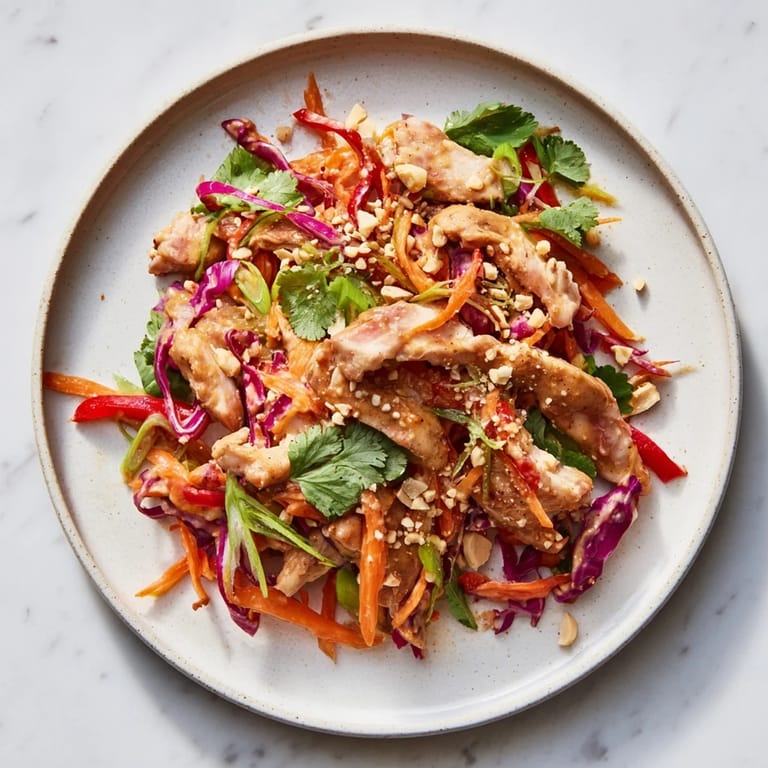
- Put sliced chicken in your large bowl with the vegetables, pour the dressing over top, and toss gently so nothing gets crushed but everything gets coated. The vegetables will wilt slightly from the warm chicken and the dressing, which is exactly what you want.
- Finish with crunch and brightness:
- Sprinkle roasted peanuts and toasted sesame seeds on top just before serving so they stay crispy, and use those raw scallions and cilantro you set aside to add a fresh pop at the very end.
 Save to Pinterest
 The moment that made this dish stick with me came when my partner took a bite and immediately started analyzing the dressing like they'd discovered something, asking about each component and why the miso worked. That's when I realized this wasn't just another chicken salad—it was something with enough complexity to make people actually think about what they were eating.
Why This Slaw Stays Crisp
The secret isn't rocket science, but it's the kind of thing that separates restaurant-quality from average. I keep my vegetables separate from the dressing until the last possible moment, and I use a room-temperature or slightly warm chicken instead of chilling it first. The warmth from the chicken cooks the raw vegetables just barely, creating this tender-crisp texture that's impossible to achieve with a fork and knife alone. The first time I made this, I assembled it an hour early thinking I was being smart, and it turned into a sad, soggy mess—now I treat assembly like a performance and do it right before eating.
The Ginger-Miso Element
This dressing is where the whole thing becomes more than the sum of its parts. White miso is creamy and salty without being aggressive, and when you pair it with fresh ginger and rice vinegar, you get something that tastes way more complex than the handful of ingredients suggest. I learned to taste as I go when whisking, adding a touch more lime juice if it feels too heavy or a whisper more honey if the miso is dominating. The sesame oil is the final touch that makes people wonder what they're tasting—it's subtle enough not to overpower but distinct enough to be interesting.
Customizing Without Losing Yourself
This recipe is forgiving enough to bend to what's in your kitchen, which I've learned the hard way through a series of mostly successful experiments. I've added cucumber for extra crunch, swapped cilantro for mint when I had it, and even used grilled tofu instead of chicken when I wanted something different. The foundation is solid enough that you can play around, but here's what I've figured out stays essential:
- Keep the ginger-miso dressing as the base—it's the thing that ties everything together.
- Always have something crunchy and raw to contrast with the warm chicken and dressed vegetables.
- Don't skip the toasted sesame seeds and peanuts; they're the textural finale that makes it memorable.
 Save to Pinterest
 This slaw taught me that some of the best meals come from working with what you have and trusting your instincts. It's bright, it's filling, and it proves that simple cooking doesn't have to be boring.
Recipe FAQs
- → What is the best way to prepare the carrot ribbons?
Use a vegetable peeler to shave large carrots into thin, delicate ribbons for the ideal texture and presentation.
- → How should the chicken be cooked for optimal flavor?
Marinate the chicken in soy, sesame oil, and ginger, then grill or cook in a skillet over medium heat until juicy and cooked through.
- → Can the dressing be adjusted for different tastes?
Yes, you can balance the ginger-miso dressing by adjusting acidity with more lime juice or sweetness with honey or maple syrup.
- → What alternatives can be used for nuts in this dish?
Toasted peanuts add texture, but you can substitute with toasted almonds or omit entirely for nut-free options.
- → Is it possible to make this dish vegetarian?
Replace the chicken with grilled tofu or tempeh for a protein-rich vegetarian variation.