 Save to Pinterest
 My neighbor brought over a plate of these savory Greek cheesecakes at a summer dinner party, and I watched people hover around them like they were made of gold. When she finally told me the recipe was simpler than I'd imagined, I had to try it myself that same week. There's something magical about turning a sweet dessert concept into something briny, herbaceous, and completely savory that people don't expect. Now I make them whenever I need to impress without spending all day in the kitchen.
I'll never forget serving these at my book club night when someone brought store-bought appetizers and I quietly set down my homemade cheesecake. The conversation literally paused mid-sentence as everyone reached for one, and suddenly we weren't talking about the book anymore. That's when I realized this recipe had real power—the kind that turns a casual evening into something people remember.
Ingredients
- Breadcrumbs: These form your base and need to be packed down firmly so the filling has something sturdy to sit on—I learned this the hard way when my first one collapsed slightly during baking.
- Unsalted butter: Use actual melted butter, not oil, because it binds the breadcrumbs better and gives the crust a richer texture.
- Cream cheese: Let it soften at room temperature for a solid 30 minutes before mixing so you don't end up with lumpy streaks in your filling.
- Ricotta cheese: This keeps the cheesecake lighter and less dense than if you used only cream cheese, which is the secret to getting that perfect slight wobble in the center when it's done baking.
- Parmesan cheese: Freshly grated makes a huge difference here; the pre-grated stuff has anti-caking agents that make the filling feel slightly grainy.
- Kalamata olives: Pit them yourself if you can and chop them by hand—this keeps the briny flavor concentrated instead of getting lost in a food processor.
- Fresh chives and parsley: Add these just before the final pour so their flavor stays bright and doesn't fade during baking.
- Lemon zest: A small amount brightens everything without making it taste citrusy; it's the background singer that makes the whole song better.
Tired of Takeout? 🥡
Get 10 meals you can make faster than delivery arrives. Seriously.
One email. No spam. Unsubscribe anytime.
Instructions
- Prep your pan and heat your oven:
- Preheat to 325°F and grease your springform pan well because a savory cheesecake is more prone to sticking than a sweet one. If you have parchment paper, line the bottom for extra insurance.
- Build the crust:
- Mix your breadcrumbs with melted butter, oregano, and pepper until it looks like wet sand, then press it down firmly into the pan using the bottom of a measuring cup—this keeps it from being too thick. Bake it alone for 8 minutes to dry it out slightly so it doesn't get soggy later.
- Soften and combine your cheeses:
- Beat the cream cheese, ricotta, and Parmesan together until completely smooth with no lumps, which takes longer than you'd think—about 3 minutes with an electric mixer. Add the eggs one at a time, mixing well after each one, because this prevents overmixing the whole batter.
- Fold in the flavor:
- Stir in the thyme, lemon zest, milk, chopped olives, chives, salt, and pepper until everything is evenly distributed. Taste a tiny spoonful if you're comfortable with raw eggs, and adjust the salt since the olives are already salty.
- Pour and smooth:
- Pour the filling over your cooled crust and use a rubber spatula to smooth the top flat so it bakes evenly. This is also where you can visually check that olives are distributed throughout.
- Bake low and slow:
- Bake at 325°F for 25 to 28 minutes—the center should jiggle just slightly when you shake the pan gently, like it's not quite set but the edges are pulling away from the sides. Overbaking makes it crack and taste dry, so resist the urge to leave it in longer.
- Cool gradually and refrigerate:
- Let it cool to room temperature before refrigerating because sudden temperature changes cause cracks. Chill for at least 2 hours, though overnight is even better for flavors to settle.
- Garnish and serve:
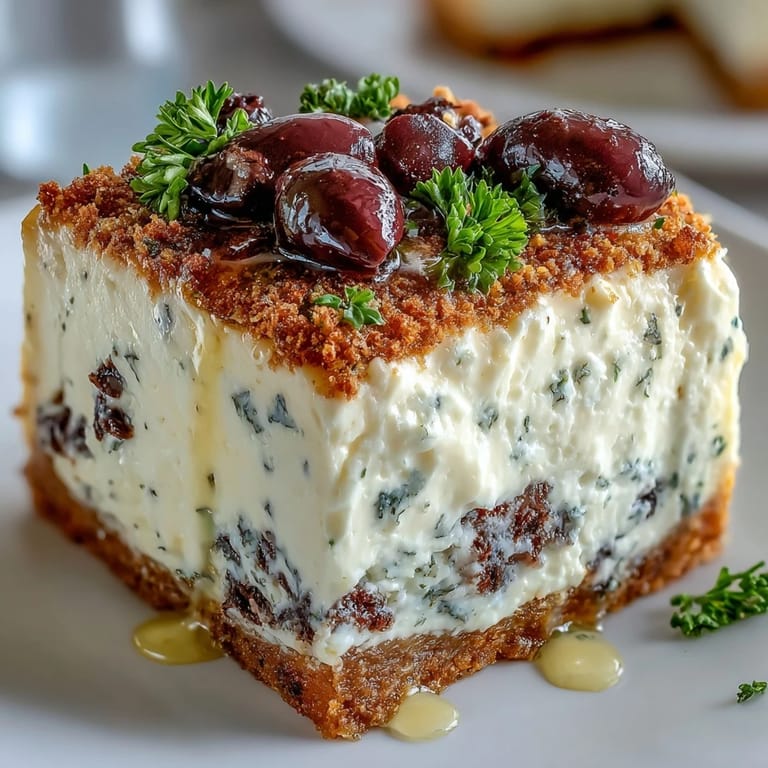
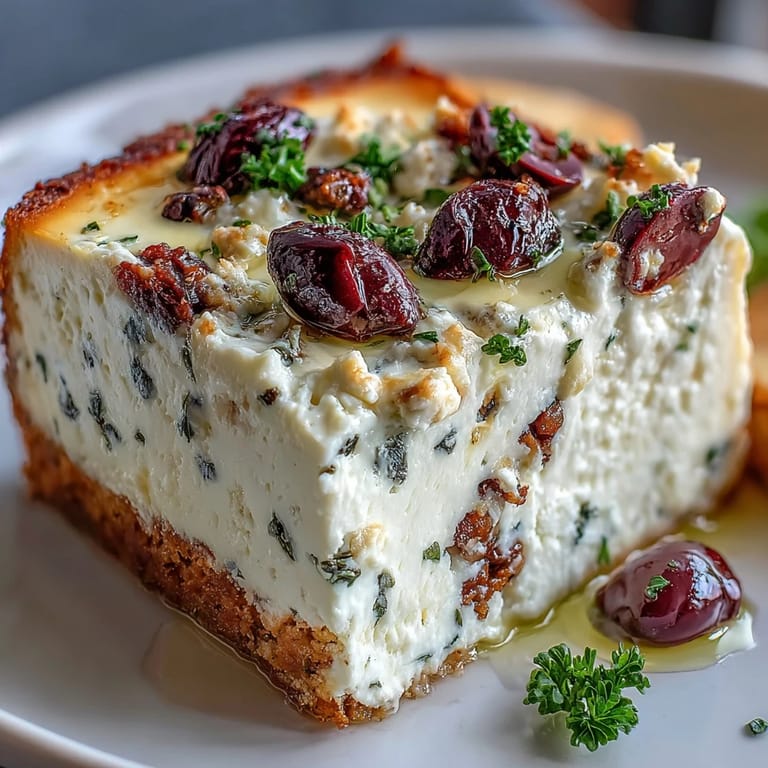
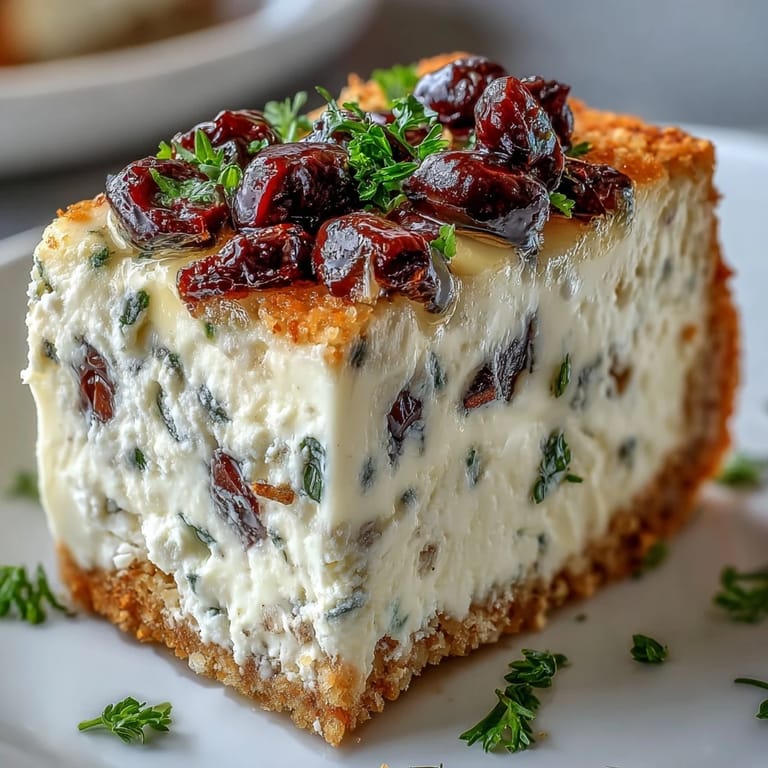
- Right before serving, top with sliced Kalamata olives, fresh parsley, and a generous drizzle of good olive oil. Slice into small wedges with a hot knife that you wipe clean between cuts.
 Save to Pinterest
 I made these for my friend who kept saying she didn't like cheesecake, and watching her eat three slices while insisting they were different somehow felt like a small victory. She asked for the recipe twice, and I think that's when I realized this dish bridges the gap between skeptics and believers.
The Greek Twist on a Classic
Savory cheesecakes aren't new, but the Greek ingredients in this version make them feel fresh and unexpected. The combination of Kalamata olives with thyme and lemon zest is basically the flavor foundation of Greek cooking, just rearranged into appetizer form. When you bite through the creamy filling into those salty olive bits, it's like a flavor moment that makes sense in your mouth but surprises your brain.
Making It Your Own
Once you understand the basic structure of this recipe, you can start playing with what goes inside. The filling is forgiving enough to swap in roasted red peppers, sun-dried tomatoes, or even crispy bacon if you want to go less Greek and more personal. The key is keeping the ratio of cheese stable so the texture stays creamy and firm enough to slice cleanly.
Serving and Storing This Beauty
These are at their best served at room temperature or barely chilled because cold dulls the flavors slightly. I've found they keep in the refrigerator for up to four days covered loosely with plastic wrap, though people usually eat them before then. They also freeze well if you wrap them tightly, though I'd recommend thawing them in the fridge overnight rather than at room temperature.
- Serve these alongside crisp crackers, toasted crostini, or thin slices of fresh bread.
- A chilled white wine or crisp rosé pairs beautifully with the briny, herbaceous flavors.
- If you're bringing this to someone's house, slice it at home and transport it in a flat container to avoid any sliding disasters.
 Save to Pinterest
 This recipe taught me that sometimes the most impressive dishes are the ones that break expectations rather than follow them perfectly. Now whenever I need an appetizer that feels special, this is the first thing I think to make.
Recipe FAQs
- → Can I make this ahead of time?
Yes, this savory cheesecake actually benefits from being made ahead. Prepare it up to 2 days in advance, cover tightly, and refrigerate. Add the garnish just before serving for the freshest presentation.
- → What can I substitute for Kalamata olives?
You can use other briny olives like Castelvetrano or Niçoise olives. For a milder flavor, try green olives. Each variety will give a slightly different taste profile while maintaining the Mediterranean character.
- → How do I prevent cracks in the cheesecake?
Avoid overmixing the filling once eggs are added, bake at the lower temperature specified, and don't overbake—the center should still jiggle slightly. Cooling gradually at room temperature before refrigerating also helps prevent cracking.
- → What should I serve this with?
Serve with crisp crackers, toasted baguette slices, or crostini. Fresh vegetables like cucumber rounds, cherry tomatoes, and bell pepper strips also pair beautifully with the rich, savory filling.
- → Can I freeze this savory cheesecake?
Yes, you can freeze it for up to 1 month. Wrap tightly in plastic wrap and aluminum foil before freezing. Thaw overnight in the refrigerator and add fresh garnishes before serving.
- → How do I know when it's done baking?
The cheesecake is ready when the edges are set and the center still has a slight wobble when gently shaken. It will continue to firm up as it cools. Overbaking can result in a dry, crumbly texture.