 Save to Pinterest
 The first time I truly understood labneh wasn't from reading about it, but from watching my neighbor strain yogurt in her kitchen while we talked through the afternoon. She'd learned it from her mother, who learned it from hers, and there was something almost meditative about how she checked on it—no rushing, just patience and time doing the work. That's when I realized this wasn't really cooking at all; it was more like coaxing something already delicious into something even better.
I remember bringing a bowl of this to a potluck at a friend's place, and it disappeared faster than everything else—not because it was showy, but because people kept coming back to it with bread and vegetables, almost without thinking. Someone asked for the recipe, and I realized I'd never actually written one down; I'd just been repeating what my neighbor had shown me.
Ingredients
- Full-fat plain yogurt (1 kg or about 4 cups): This is the entire recipe, so choose yogurt you'd actually want to eat—Greek yogurt or already-strained varieties work beautifully and shorten your waiting time slightly.
- Fine sea salt (½ tsp): Just enough to wake up the yogurt's tang without making it taste salty; it also helps draw out whey.
- Extra-virgin olive oil (2 tbsp): The final drizzle matters more than you'd think—use something you actually like tasting on its own.
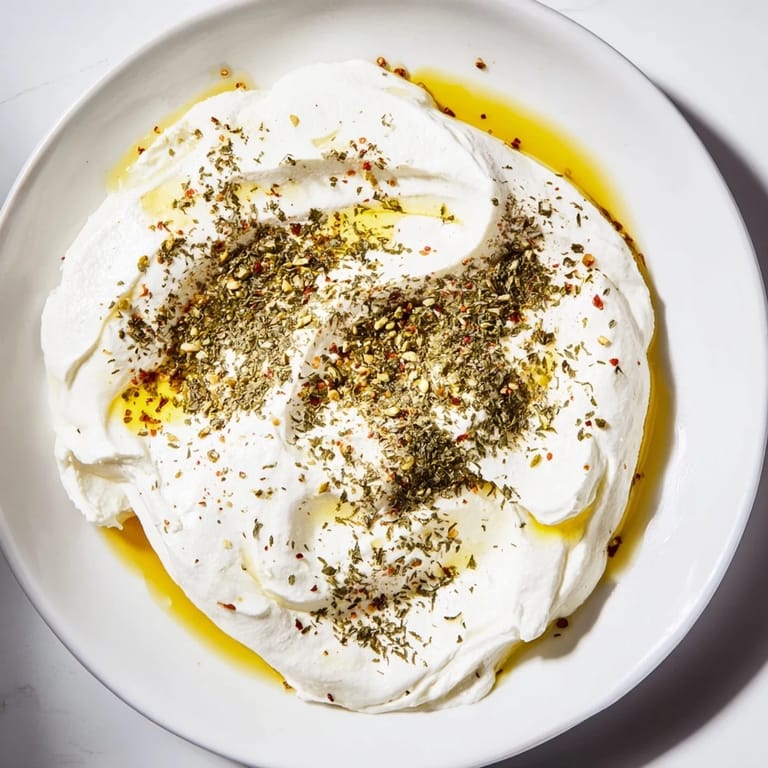
- Dried mint or zaatar (1 tsp, optional): Mint brings brightness; zaatar adds earthiness and complexity if you have it on hand.
- Aleppo pepper or sumac (pinch, optional): Either one adds a whisper of color and a gentle tang that makes people ask what the secret ingredient is.
Tired of Takeout? 🥡
Get 10 meals you can make faster than delivery arrives. Seriously.
One email. No spam. Unsubscribe anytime.
Instructions
- Season and prepare:
- Stir the salt into your yogurt until it's completely even—this seems small, but uneven salt creates uneven flavor. Take your time with this step; it's the only active thing you'll do.
- Set up your strainer:
- Double-layer your cheesecloth or kitchen towel in the sieve, making sure it drapes over the edges enough to gather later. Place the sieve over a deep bowl—you'll be surprised how much liquid comes out.
- Transfer and gather:
- Pour the salted yogurt into the lined sieve and gather the cloth edges loosely over the top, like you're tucking it in. You want it covered but not pressed down; the yogurt needs room to breathe.
- Refrigerate and wait:
- This is the hard part for impatient people like me: slide it into the fridge and forget about it for 12 to 24 hours. Twelve hours gives you spreadable, soft labneh; 24 hours gives you something firmer that can be shaped into balls.
- Transfer to a bowl:
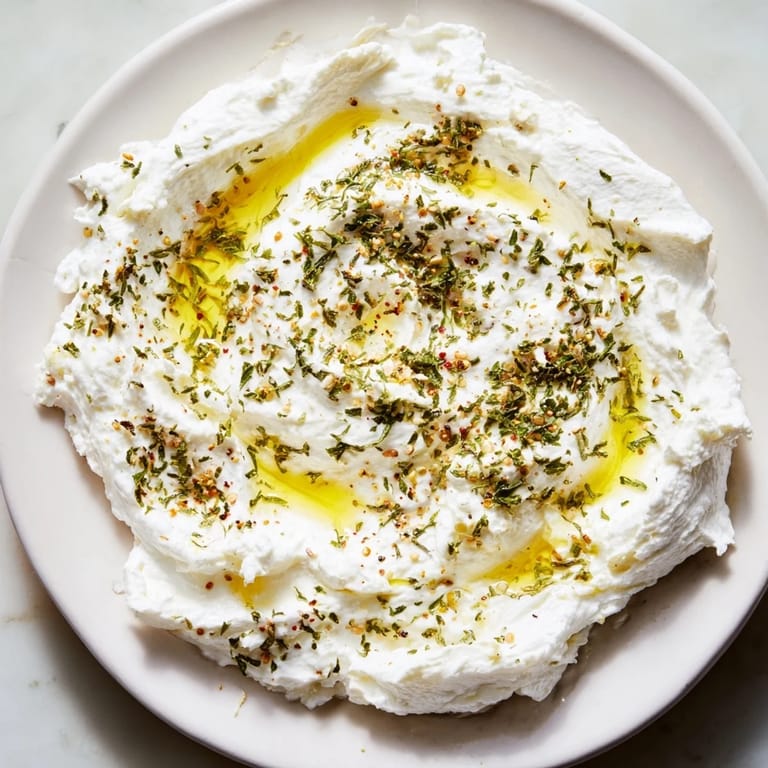
- Once your waiting is done, gently transfer the labneh to a serving dish, scraping any clinging to the cloth. It should look thick and creamy, with a slight wobble.
- Finish and serve:
- Drizzle generously with olive oil—don't be shy, it's where the flavor lives—and scatter your chosen garnish across the top. Serve chilled with warm pita, fresh vegetables, or olives.
 Save to Pinterest
 Years later, I made this for a gathering on a quiet evening, and someone spread it on warm pita with cucumber and olives, then closed their eyes while they ate. That moment—when something so simple stopped being just food—that's when I understood why my neighbor had spent decades making this the same way.
The Magic of Patience
Labneh teaches you something important about cooking: sometimes the best results come from doing almost nothing. While your yogurt strains overnight, you're free to live your life—make other dishes, tend to other things, or simply rest. When you come back, the transformation will be complete, and you'll have done barely anything at all. It's a gentle reminder that time can be your most valuable ingredient.
Variations and Shapes
Once you master the basic method, labneh opens up. If you strain it longer until it's quite firm, you can roll it into walnut-sized balls and store them in a jar, covered completely with olive oil and whatever herbs or spices you love—sumac, Aleppo pepper, dried thyme, or crushed pistachios. These last even longer in the fridge and become little gifts you can give away or pull out whenever someone needs an elegant, no-fuss appetizer.
Serving and Storage Wisdom
Serve labneh cold or at cool room temperature—never straight from the fridge, or it tastes muted. Let it sit out for five or ten minutes before guests arrive, and watch how the olive oil begins to shine. It keeps beautifully for up to five days, though honestly, it rarely lasts that long in my kitchen.
- Make it a day or two before you need it, so you're not watching the clock on hosting day.
- Bring it out as an appetizer, or use it as a spread on sandwiches and toast during the week.
- If you're giving it as a gift, layer it in a clean jar with herbs and top it completely with olive oil to seal it.
 Save to Pinterest
 Labneh is proof that the most elegant things in a kitchen often come from patience and simple ingredients. Make it once, and it becomes part of how you cook.
Recipe FAQs
- → What is the main ingredient in Levantine labneh?
Full-fat plain yogurt is the base ingredient, strained to remove excess liquid and create a thick texture.
- → How long should yogurt be strained to make labneh?
Yogurt should be strained between 12 to 24 hours, depending on desired thickness, with longer straining producing a firmer texture.
- → What garnishes complement labneh best?
Extra-virgin olive oil, dried mint, zaatar, sumac, or Aleppo pepper enhance flavor and presentation.
- → Can labneh be made vegan?
Yes, by using thick plant-based yogurt alternatives and following the same straining method.
- → How should labneh be served?
Serve chilled, spread on warm pita or fresh vegetables, or include as part of a mezze platter.
- → How long does labneh keep refrigerated?
Properly stored, it remains fresh for up to 5 days in the refrigerator.