 Save to Pinterest
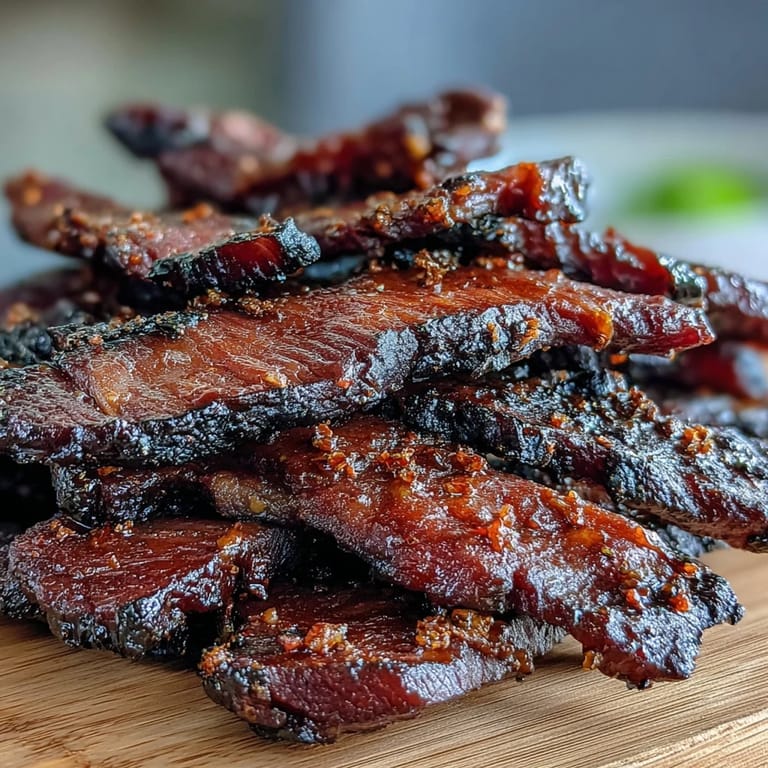
 My neighbor handed me a piece of jerky at the fence one afternoon, and I expected the usual salty chew. Instead, my mouth filled with this dark, fruity sweetness that somehow made the smoke taste richer, almost mysterious. He wouldn't tell me what he'd done until I promised to make a batch myself and report back. That conversation led me down a rabbit hole of marinating beef in jam and cherry smoke, and I haven't looked back since.
I made this for a road trip with friends last fall, and everyone went quiet the first time they tried it. No one could figure out what the flavor was, just kept saying it tasted like autumn in jerky form. By the end of the drive, the container was empty and my inbox was full of messages asking for the recipe. That's when I realized this wasn't just a snack—it was something people actually remember eating.
Ingredients
- Lean beef (top round, flank, or sirloin): Slicing against the grain is the secret that keeps each piece tender even after hours of smoking; I learned this the hard way after chewy batches early on.
- Black currant jam or preserves: This is your sweet anchor and what makes this jerky different—don't skip it or substitute with something lighter.
- Soy sauce: Use tamari if you're avoiding gluten, and yes, it makes a noticeable difference in depth.
- Worcestershire sauce: Two tablespoons gives umami without overpowering; this is the secret weapon most people miss.
- Apple cider vinegar: This cuts through richness and keeps the jerky from feeling cloying no matter how sweet the jam is.
- Brown sugar: A touch of extra sweetness that helps the surface caramelize during smoking.
- Smoked paprika: Don't use regular paprika here; the smokiness amplifies what the cherry wood is already doing.
- Garlic powder and onion powder: These two together create a savory backbone that balances the fruit beautifully.
- Ground black pepper and kosher salt: Classic seasonings that sharpen everything else, so don't skimp on quality.
- Cayenne pepper (optional): A quarter teaspoon adds heat if you want to cut through the sweetness; I use it when I'm feeling daring.
- Cherry wood chips: Milder and sweeter than hickory or oak, cherry wood is what lets the black currant flavor shine instead of getting overwhelmed.
Tired of Takeout? 🥡
Get 10 meals you can make faster than delivery arrives. Seriously.
One email. No spam. Unsubscribe anytime.
Instructions
- Build your marinade:
- Whisk together the black currant jam, soy sauce, Worcestershire, vinegar, brown sugar, smoked paprika, garlic powder, onion powder, pepper, salt, and cayenne in a large bowl until completely smooth with no lumps of jam hiding in the corners. The mixture should smell sweet, savory, and slightly funky all at once.
- Coat the beef:
- Add your thinly sliced beef to the bowl and make sure every single piece gets coated—this takes patience, but it's worth massaging the marinade into the meat. Cover and refrigerate for at least 8 hours, though overnight is genuinely better because the flavors have time to actually sink in.
- Dry and arrange:
- The next day, drain the beef carefully and pat each piece completely dry with paper towels; any surface moisture will steam instead of smoke. Lay the strips in a single layer on your racks or trays without overlapping, because they need air circulating around them to dry properly.
- Set your temperature:
- Get your smoker or oven to a steady 160°F (71°C)—this low heat is what keeps the beef tender instead of turning it into jerky-flavored shoe leather. If you're using a smoker, add your cherry wood chips now according to whatever your particular smoker needs.
- Smoke and watch:
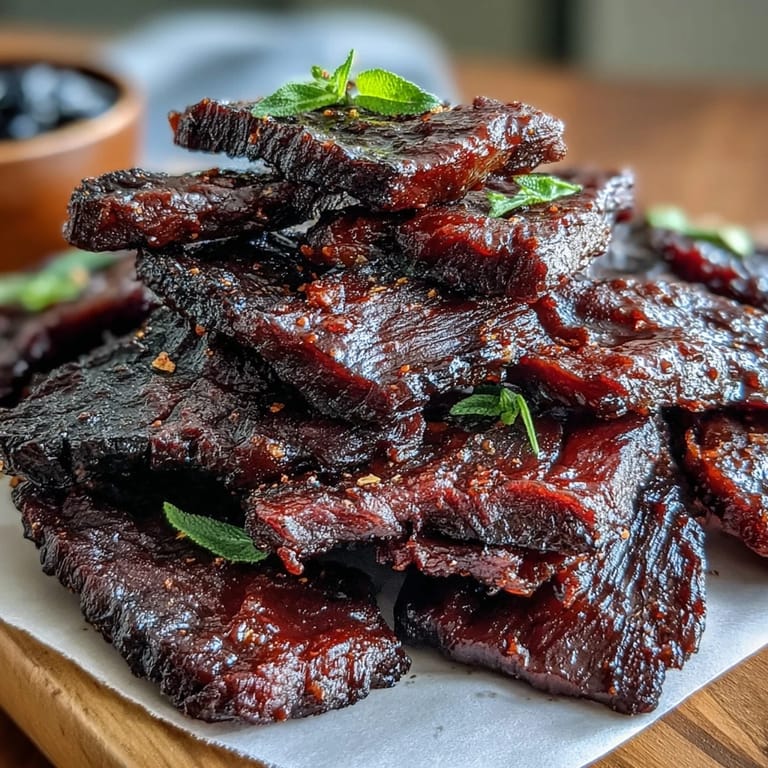
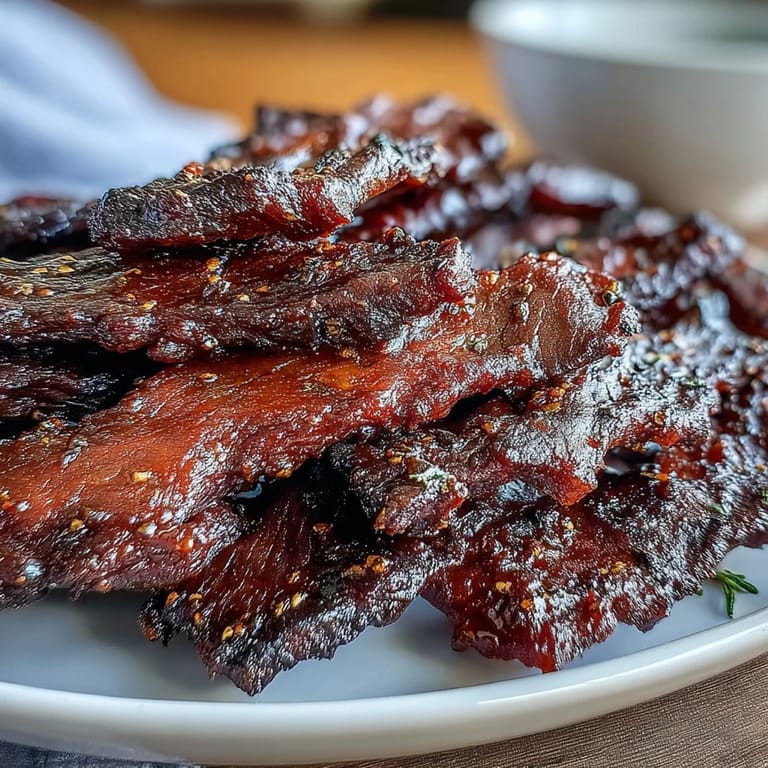
- Let the jerky sit in that gentle heat for 4 to 6 hours, flipping everything halfway through so it dries evenly. You'll know it's done when it bends without breaking but has no moisture when you squeeze it.
- Cool and store:
- Let everything come to room temperature completely before sealing it away in an airtight container; hot jerky will sweat inside the container and ruin your work. It keeps up to two weeks in the fridge or a month vacuum-sealed if you're planning ahead.
 Save to Pinterest
 My partner texted me from work once asking if I could make a batch because they'd been craving it for days. That's when I realized this recipe had somehow become a thing we both actually reach for, not just something nice to make for guests. It's the kind of snack that makes you feel a little bit proud of yourself.
The Black Currant Question
Black currant is tangy but sweet, with these dark berry notes that somehow play nicely with smoke. If you can't find real black currant jam, a good quality blackberry or boysenberry works in a pinch, though the flavor will shift slightly darker and less bright. I've tried jam substitutes, and they each add their own personality—that's fine, just know what you're getting into.
Smoking Versus Dehydrating
You can absolutely make this in a regular oven set to 160°F if you don't have a smoker, though you'll lose that cherry wood kiss that makes it special. A food dehydrator works beautifully too and gives you more even results because the air circulation is so consistent. The first batch I made in my oven actually turned out great—not quite as smoky, but the black currant flavor came through even stronger because nothing was competing with it.
Customizing Your Batch
This recipe is a starting point, not a rulebook. If you love spice, add half a teaspoon of cayenne or even a pinch of ghost pepper powder, and suddenly you've got something with teeth. For less heat and more brightness, cut back the brown sugar by half a tablespoon and add an extra splash of apple cider vinegar instead.
- Substitute the black currant jam with equal parts blackberry and a tablespoon of balsamic vinegar for earthier depth.
- Use hickory or oak chips if cherry wood isn't available, but expect a bolder, less fruity smoke profile.
- Make mini batches with different heat levels so everyone in your house gets their preference in the same container.
 Save to Pinterest
 This jerky has become my answer to everyone asking what to bring to gatherings, and honestly, I love that. It's the kind of thing that makes people slow down and actually taste what they're eating.
Recipe FAQs
- → What cut of beef works best for jerky?
Lean cuts like top round, flank steak, or sirloin are ideal because they have minimal fat. Fat doesn't dehydrate well and can cause the jerky to spoil faster. Always slice against the grain for tender results.
- → Can I make this without a smoker?
Yes, you can use a dehydrator or your oven set to the lowest temperature (usually 160°F). The jerky won't have the cherry wood smoke flavor, but you can add extra smoked paprika to compensate.
- → How long does the jerky need to marinate?
Marinate for at least 8 hours, but overnight (12-24 hours) yields the best flavor penetration. The longer marinating time allows the black currant and spices to fully infuse the meat.
- → How do I know when the jerky is done?
Properly dried jerky should be dry to the touch but still slightly pliable when bent. It shouldn't crack or break. If it's still soft or moist, continue drying. Typical drying time is 4-6 hours at 160°F.
- → Can I substitute the black currant jam?
Other fruit preserves like blackberry, blueberry, or grape can work, though they'll alter the flavor profile. Black currant provides a unique tartness that pairs beautifully with the smoky elements.
- → How should I store the finished jerky?
Store completely cooled jerky in airtight containers or vacuum-sealed bags. It keeps up to 2 weeks refrigerated or 1 month vacuum-sealed. For longer storage, freeze for up to 6 months.