 Save to Pinterest
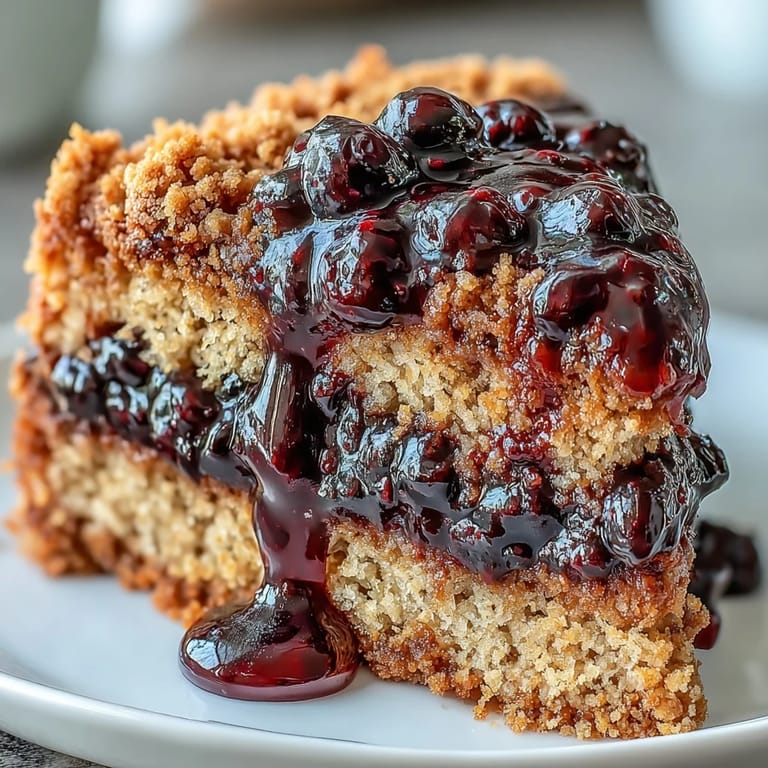
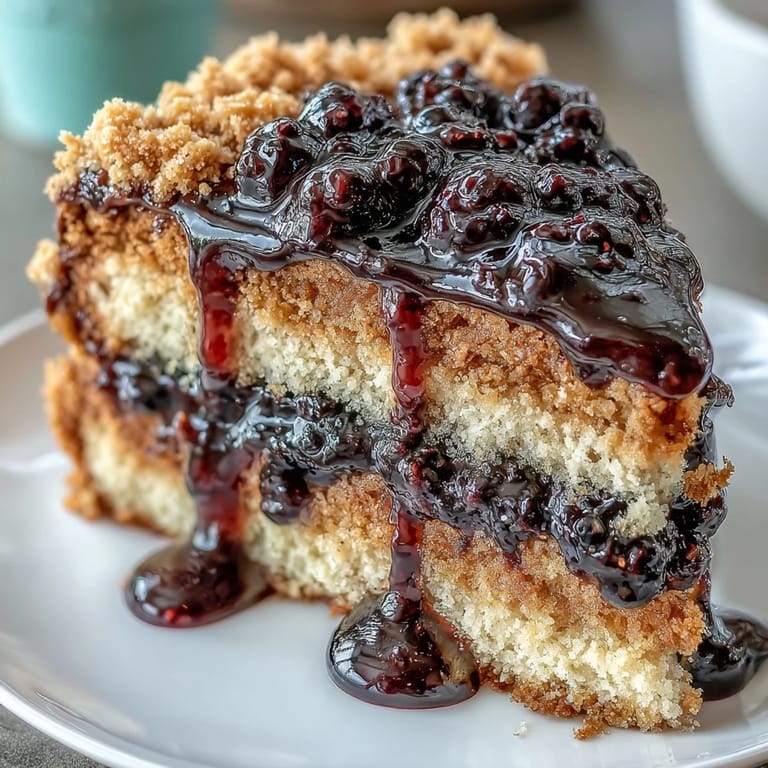
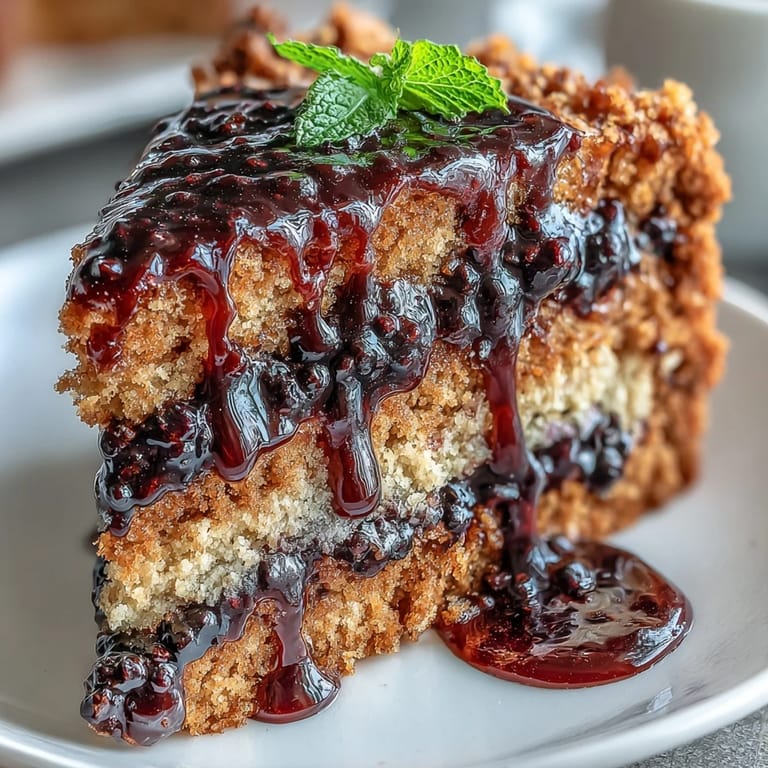
 My neighbor brought over a jar of homemade black currant preserves one summer, insisting I do something interesting with it beyond toast. I'd been craving a peanut butter cake for weeks, and something clicked—why not marry those two flavors the way a childhood sandwich does? The result was this tender, nutty cake with a tart jam surprise in the middle, crowned with a glossy black currant sauce that somehow tastes like an elegant secret.
I made this for a dinner party last autumn when the light was turning golden and everyone was restless for something both comforting and surprising. Watching people's faces when they hit that jam layer—that moment of discovery—made the whole afternoon of baking feel completely worth it. One guest asked for the recipe before even finishing her slice, which never happens at my table.
Ingredients
- All-purpose flour (1 1/2 cups): This is your structure; whisk it with the leavening agents before mixing to avoid lumpy batters and overmixing later.
- Baking powder and baking soda (1 tsp and 1/2 tsp): They work together here to lift the cake gently while the acidity from the currants keeps everything balanced.
- Salt (1/4 tsp): A small pinch that makes the peanut flavor sing and rounds out the tartness of the jam.
- Unsalted butter and creamy peanut butter (1/2 cup and 3/4 cup): The soul of this cake—beat them together until they're almost fluffy, which takes longer than you'd think but changes everything.
- Granulated sugar (1 cup): Creaming it with the butter and peanut butter incorporates tiny air pockets that keep the crumb tender.
- Eggs (2 large): Add them one at a time so they emulsify properly and create a stable batter.
- Vanilla extract (1 tsp): A quiet backdrop that lets the peanut and currant flavors take center stage.
- Whole milk (1/2 cup): Alternating it with the flour keeps the batter smooth and the cake moist without being dense.
- Black currant jam (1/2 cup): The surprise layer—use good quality preserves with real fruit, not the thin, overly sweet stuff.
- Fresh or frozen black currants for sauce (1 cup): Either works beautifully; frozen ones are often more affordable and break down faster.
- Sugar, water, and lemon juice for sauce (1/3 cup sugar, 2 tbsp water, 1 tsp lemon juice): These three ingredients transform tart berries into silky, complex sauce.
Tired of Takeout? 🥡
Get 10 meals you can make faster than delivery arrives. Seriously.
One email. No spam. Unsubscribe anytime.
Instructions
- Heat your oven and prep your pan:
- Set the oven to 350°F while you grease and line an 8-inch round pan with parchment paper. This matters more than it sounds—parchment paper keeps edges from sticking and helps you slide the cake onto a rack without it crumbling.
- Combine your dry ingredients:
- Whisk together flour, baking powder, baking soda, and salt in a medium bowl. Setting them aside now means you won't scramble halfway through mixing.
- Cream butter and peanut butter with sugar:
- Beat the softened butter and creamy peanut butter together until the mixture looks smooth, then add sugar and keep beating for about 3 minutes until it's noticeably lighter and fluffier. This is where air gets trapped, and air makes cake tender.
- Add eggs and vanilla one at a time:
- Drop in the first egg, beat until it disappears into the mixture, then repeat with the second. Add vanilla and give it all a final mix to combine.
- Alternate flour mixture and milk:
- Start with a third of the flour mixture, beat briefly, then add half the milk, then another third of flour, then the remaining milk, then the final third of flour. Begin and end with flour—this sequence prevents the batter from breaking and keeps everything emulsified.
- Layer with jam and top with remaining batter:
- Spread half the batter evenly into your prepared pan, then spoon jam over it leaving a half-inch border (this prevents the jam from seeping to the edges and burning). Gently spread the remaining batter on top, being careful not to disturb the jam layer beneath.
- Bake until golden and set:
- Bake for 30 to 35 minutes until a toothpick inserted in the cake part comes out clean (it might hit jam, which is fine). The cake should smell nutty and slightly caramelized at the edges.
- Cool with patience:
- Let it rest in the pan for 10 minutes—this gives the structure time to set—then turn it out onto a wire rack to cool completely. Cutting into a warm cake is tempting but results in crumbling.
- Make the sauce while cake cools:
- Combine black currants, sugar, and water in a small saucepan over medium heat. Bring to a boil, then lower heat and simmer for 8 to 10 minutes, stirring occasionally, until it thickens into a glossy syrup. Stir in lemon juice and let it cool slightly before serving.
 Save to Pinterest
 There's something almost nostalgic about serving a cake that tastes like childhood reinvented—familiar enough to feel like home, surprising enough to feel like an adventure. This one bridges both worlds in a single slice.
Why Black Currants Deserve Your Attention
Black currants have a tartness and depth that regular jam can't quite match; they're floral and slightly earthy, with a sophistication that makes peanut butter feel less casual. When simmered into sauce, they become almost wine-like, adding complexity to what might otherwise feel like a straightforward cake. If you can't find them fresh, frozen black currants work equally well and are often cheaper.
The Science of Creaming
Beating butter and peanut butter with sugar isn't just busywork—it's the moment when you're actually aerating the mixture, creating thousands of tiny air bubbles that expand during baking and give the cake its tender crumb. This is why electric mixers were invented, though a sturdy arm and a wooden spoon will get you there too, just more slowly. Skip this step or rush it, and you'll end up with something that tastes more like dense peanut bread than cake.
Serving Suggestions and Storage
This cake is best served at room temperature with sauce drizzled generously over each slice, alongside cold milk or a glass of something fruity like a Riesling or even a crisp Sancerre if you're feeling fancy. It keeps well wrapped at room temperature for two days, or refrigerated for up to four days, and actually improves slightly as the flavors settle and meld together.
- For extra moisture, brush each cake layer with a simple syrup before assembling—just equal parts sugar and water, cooled.
- If you can't find black currant jam, raspberry or blackberry preserves work beautifully as substitutes.
- Make the sauce the morning of serving so it's thick and glossy without being overly set.
 Save to Pinterest
 This cake somehow tastes like both a nostalgic lunch and a dinner party showstopper, which is exactly what makes it worth the hour it takes to pull together. Make it once and you'll be making it again.
Recipe FAQs
- → Can I use natural peanut butter instead of regular?
Natural peanut butter works well, though the texture may be slightly denser. If using unstabilized natural peanut butter with oil separation, stir thoroughly before measuring and reduce the milk by 1-2 tablespoons to account for the higher oil content.
- → What if I can't find black currant jam?
Raspberry, blackberry, or grape jam all make excellent substitutes. Black currant has a distinctive tart, earthy flavor profile, but any dark berry preserves will provide that wonderful contrast against the rich peanut butter layers.
- → Can this cake be made ahead of time?
Absolutely. The cake actually develops better flavor after sitting for a day. Wrap cooled cake tightly in plastic and store at room temperature for up to 3 days. The black currant sauce can be refrigerated separately in an airtight container for up to a week—gently warm before serving.
- → Why is there a border around the jam filling?
The 1/2-inch border prevents jam from leaking out the sides during baking and creates clean, distinct layers. It also ensures proper structural integrity so the top batter completely covers the filling without sinking or creating air pockets.
- → Can I freeze this peanut butter cake?
Yes! Wrap the completely cooled cake (without sauce) tightly in plastic wrap, then aluminum foil. Freeze for up to 3 months. Thaw overnight at room temperature before serving. Make the sauce fresh or thaw frozen sauce separately.
- → What's the best way to achieve even layers?
Weigh your batter or use a measuring cup to divide it precisely in half. Using an offset spatula, spread the first layer to the edges, drop spoonfuls of jam in a grid pattern, then gently spread the remaining batter starting from the center and working outward.