 Save to Pinterest
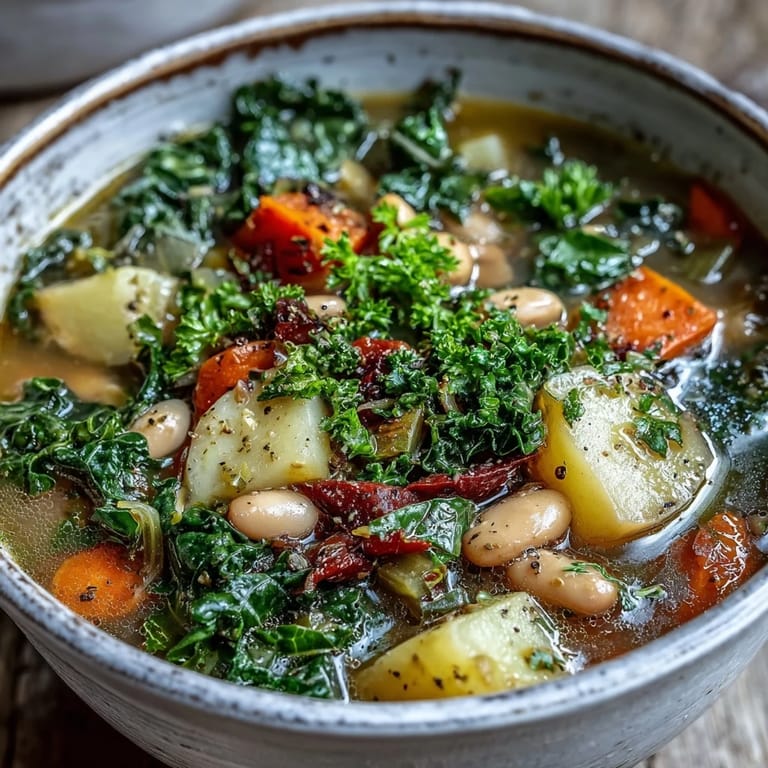
 My neighbor knocked on the door one gray afternoon with a bunch of kale from her garden, apologizing for the abundance. I had no grand plan, just a half-full vegetable drawer and the desire to do something nourishing with what I had. This soup emerged from that spontaneous moment, and it's become the dish I make whenever I need to feel grounded again. There's something about the way the kale softens into the broth, releasing its earthy promise, that feels like a quiet gift to yourself.
I served this to a friend who was recovering from surgery, and she told me later that the simplicity of it, the lack of heaviness, was exactly what she needed. She had seconds sitting in her kitchen the next day, still in the same pot, and I realized then that this isn't just soup—it's the kind of thing people return to when they need something honest.
Ingredients
- Olive oil (2 tablespoons): The foundation that lets your vegetables speak without burning, golden and patient over medium heat.
- Onion (1 large, finely chopped): Chopped fine means it dissolves into the broth almost invisibly, building sweetness and depth.
- Garlic cloves (2, minced): Fresh garlic wakes up the entire pot; bottled just won't give you that brightness.
- Carrots (3 medium, diced): They soften beautifully and their natural sugar balances the earthiness of the kale.
- Celery stalks (2, diced): Often overlooked, but this is where the savory backbone comes from—don't skip it.
- Potato (1 large, peeled and diced): This creates a subtle creaminess without any cream, which is the quiet magic of this soup.
- Kale (6 cups, stems removed and leaves chopped): Remove those tough stems or they'll fight you through the whole cooking process; the leaves soften to silk when given time.
- Cannellini beans (1 can, 15 oz, drained and rinsed): Rinsing them removes the starchy liquid that clouds your broth, and they add gentle protein.
- Vegetable broth (6 cups, low-sodium): Low-sodium lets you control the seasoning yourself, which always tastes better.
- Lemon juice (1 tablespoon): Added at the end, this lifts everything, making the flavors suddenly sharp and clear.
- Dried thyme (1 teaspoon): Herbal and grounding, it ties the vegetables together into one coherent thought.
- Ground cumin (1/2 teaspoon): Just enough to warm the soup from the inside without announcing itself.
- Salt and black pepper: Taste as you go and adjust; this is where control belongs entirely in your hands.
- Red pepper flakes (pinch, optional): For when you want the soup to have a quiet backbone of heat.
Tired of Takeout? 🥡
Get 10 meals you can make faster than delivery arrives. Seriously.
One email. No spam. Unsubscribe anytime.
Instructions
- Heat the oil and soften your aromatics:
- Warm olive oil over medium heat and add your chopped onion, listening for the gentle sizzle. After about three minutes, when the onion turns translucent and smells sweet, you'll know you're ready for the next step.
- Build flavor with the root vegetables:
- Stir in the garlic, carrots, celery, and potato, cooking for five minutes while stirring occasionally. You're not trying to cook them through yet; you're just waking them up and letting them release their flavors into the oil.
- Add the kale and let it begin to wilt:
- Push the chopped kale into the pot and stir for about two minutes until it softens slightly and loses some of its volume. The transformation is quick and satisfying, like watching something wild become welcoming.
- Pour in the broth and seasonings:
- Add your vegetable broth along with the thyme, cumin, salt, pepper, and red pepper flakes if you're using them. Stir to combine and let the seasonings wake up in the heat.
- Bring to a boil, then settle into a simmer:
- Let it come to a rolling boil for a minute, then reduce the heat and let it simmer uncovered for twenty minutes. The kitchen will smell like comfort—vegetables softening, herbs releasing their wisdom into the steam.
- Add the beans and finish cooking:
- Stir in the drained cannellini beans and let everything simmer together for five more minutes so the beans warm through and absorb some of the broth's flavor.
- Brighten with lemon and adjust seasoning:
- Squeeze in the lemon juice and taste, adding more salt, pepper, or even lemon if it needs that final note of clarity. Serve hot in whatever bowl makes you happy.
 Save to Pinterest
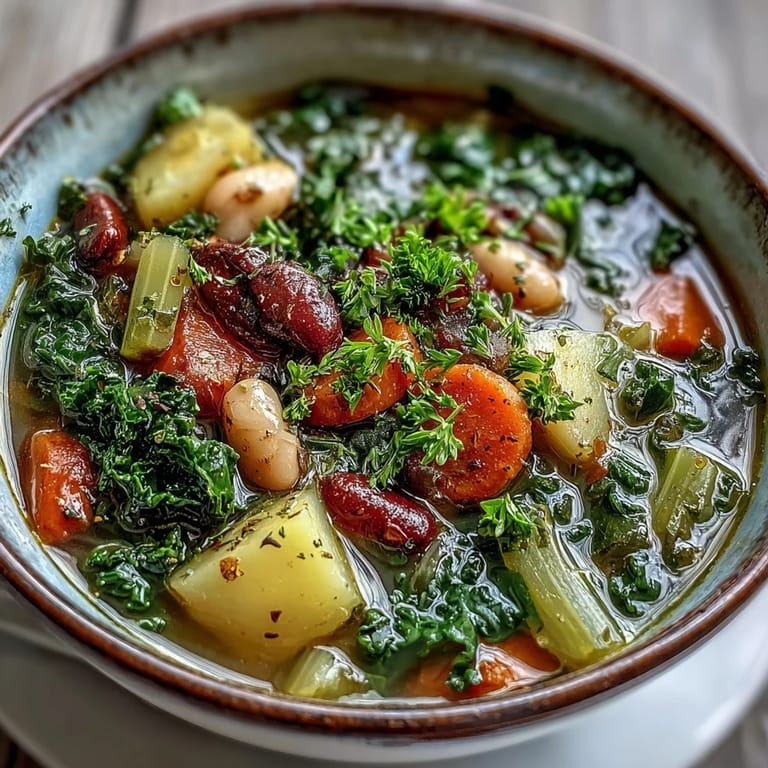
 There was a moment last winter when I was eating this soup straight from the pot while standing at the window, watching snow accumulate on the fence. It wasn't dramatic, but it felt like the kind of small contentment that happens when you've made something true with your own hands. That's when I understood this recipe wasn't about nutrition facts or wellness trends—it was about taking care of yourself in the quietest possible way.
Variations That Work
The beauty of this soup is how willingly it accepts changes. Some days I add diced tomatoes or a splash of red wine for depth, other times I swap the cannellini beans for chickpeas or lentils and hardly notice the difference. You could add spinach alongside the kale if you have it, or even swap in other sturdy greens like chard—the soup will simply become a slightly different version of itself, but remain itself.
Serving Suggestions and Pairings
This soup doesn't demand much, but it appreciates good company. Crusty bread for dipping is the traditional pairing, and it's perfect for that reason—the bread soaks up the broth and becomes something almost as satisfying as the soup itself. If you want to add richness without heaviness, a sprinkle of grated Parmesan on top catches the steam and softens into the bowl. Sometimes I add a dollop of thick yogurt or a drizzle of good olive oil, turning the simple into something slightly more luxurious without changing its essential nature.
Storage and Make-Ahead Wisdom
This soup actually improves after a day in the refrigerator, as the flavors settle and deepen together. It keeps for about five days in a covered container, and freezes beautifully for up to three months—I often double the recipe just so I have portions waiting in the freezer for moments when I need something nourishing but have nothing left to give. When reheating, do it gently over medium heat, adding a splash of broth or water if it's thickened too much.
- Let it cool slightly before transferring to containers so condensation doesn't dilute the flavors.
- The lemon juice is best added fresh before serving rather than added before freezing, which preserves the brightness.
- Label your containers with the date and contents—future you will be grateful for this small act of kindness.
 Save to Pinterest
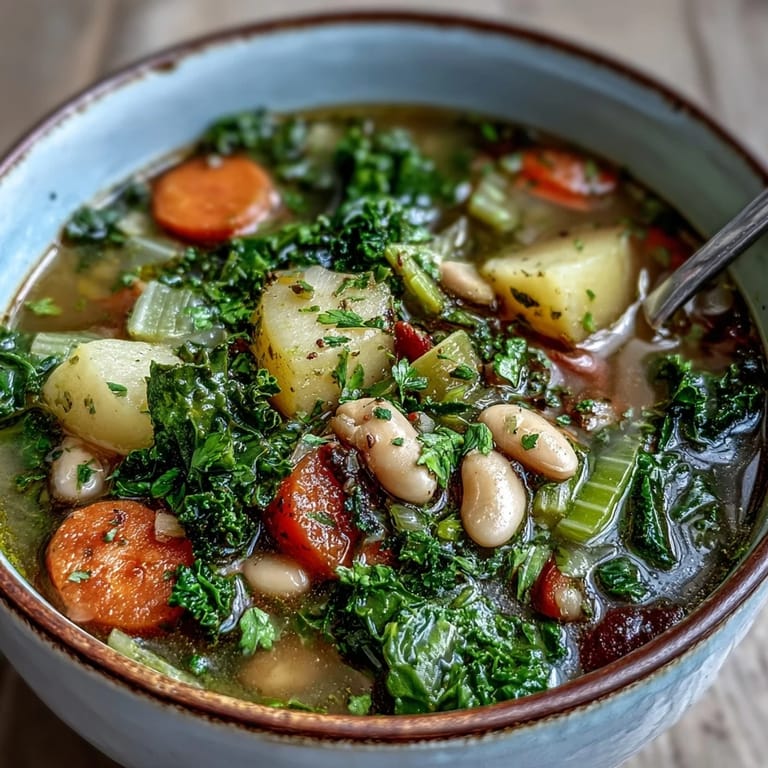
 This soup has become my answer to the question, What do you make when you want to feel better? It asks so little and gives so much. Make it when you need grounding, when you're feeding someone you care about, or simply because your hands want something honest to do.
Recipe FAQs
- → Can I freeze this soup?
Yes, this soup freezes beautifully. Cool completely before transferring to airtight containers. It keeps well for up to 3 months. Thaw overnight in the refrigerator and reheat gently on the stovetop, adding a splash of broth if needed.
- → What other greens work in this soup?
Spinach, Swiss chard, or collard greens make excellent substitutes. Spinach cooks faster—add it during the last 5 minutes. Collard greens need more time, so add them with the kale.
- → Can I make this in a slow cooker?
Sauté the onion, garlic, and vegetables first, then transfer everything to your slow cooker. Cook on low for 4-6 hours or high for 2-3 hours. Add the beans during the last 30 minutes.
- → How can I add more protein?
Stir in diced cooked chicken or turkey during the last 10 minutes. For vegetarian options, add extra beans, quinoa, or hemp seeds. A dollop of Greek yogurt also boosts protein when serving.
- → Why add lemon juice at the end?
Lemon juice brightens flavors and balances the earthiness of kale and beans. Always add citrus at the end of cooking to preserve its fresh taste and prevent bitterness from developing.