 Save to Pinterest
 My neighbor stopped by on a Tuesday afternoon with a container of roasted chickpeas she'd made for meal prep, and I remember thinking how something so simple—just spiced legumes and grains—could taste so alive on the tongue. That single gesture led me down a rabbit hole of grain bowl experiments, and by the third attempt, I realized the magic wasn't in any one ingredient but in how the lemon vinaigrette brought everything into focus. Now these bowls feel like edible sunshine, the kind of meal that makes you want to eat slowly even when life is moving fast.
I made these for my book club last spring, and Sarah—who eats only salads because she thinks grain bowls are "too much"—had three servings and asked for the recipe before leaving. That moment taught me that food skeptics often just need to taste something prepared with intention, and suddenly their whole approach shifts.
Ingredients
- Quinoa or brown rice or farro: 1 cup uncooked; quinoa fluffs up beautifully and adds a subtle nuttiness, but brown rice is forgiving if you're new to grains and farro brings a chewy texture that some people crave.
- Water: 2 cups; the ratio matters, so measure it properly or you'll end up with either crunchy grains or mushiness.
- Salt: 1/2 tsp for the grains, plus another 1/4 tsp in the dressing and chickpea seasoning; I learned to salt at each stage rather than all at once, which distributes flavor more evenly.
- Canned chickpeas: One 15 oz can, drained and rinsed; rinsing removes excess sodium and a faint metallic taste that surprises people when they skip this step.
- Olive oil: 1 tbsp for roasting chickpeas and 1/4 cup for the vinaigrette; extra virgin in the dressing brings brightness, while regular olive oil works fine for roasting.
- Smoked paprika: 1/2 tsp; this spice does the heavy lifting in flavor, giving the chickpeas a subtle depth that makes people pause and ask what you did differently.
- Cumin and garlic powder: 1/2 tsp and 1/4 tsp respectively; they work together to build warmth without overpowering.
- Cherry tomatoes: 1 cup halved; their natural sweetness balances the tang of the lemon beautifully.
- Cucumber: 1 cup diced; choose a firm one so it stays crisp and cool against the warm grains.
- Shredded carrots: 1/2 cup; they add sweetness and a delicate crunch that shouldn't be underestimated.
- Red onion: 1/4 cup thinly sliced; the thin slices let the sharp bite of raw onion dissolve into the dressing rather than dominate the bite.
- Avocado: 1 ripe one, sliced just before assembly; overripe avocado becomes mushy, underripe tastes grassy, so feel for one that yields gently to thumb pressure.
- Fresh parsley: 1/4 cup chopped; it's not just garnish—it adds a green note and slight peppery quality that opens up your palate.
- Fresh lemon juice: 2 tbsp from about 1 lemon; bottled juice tastes hollow by comparison, and fresh squeezing takes maybe a minute longer.
- Dijon mustard: 1 tsp; this emulsifies the vinaigrette and adds a subtle sharpness that anchors the whole dressing.
- Maple syrup or honey: 1 tsp; a tiny touch of sweetness rounds out the acid and spice without making the dressing taste dessert-like.
Tired of Takeout? 🥡
Get 10 meals you can make faster than delivery arrives. Seriously.
One email. No spam. Unsubscribe anytime.
Instructions
- Heat your oven and prepare:
- Preheat to 425°F and line a baking sheet with parchment paper; this prevents sticking and makes cleanup feel like a gift to future you.
- Cook the grains gently:
- Bring quinoa, water, and salt to a boil in a saucepan, then cover and reduce heat to low for 15 minutes until the water absorbs completely. You'll see a little spiral tail pop out of each quinoa kernel when it's done—that's your sign to fluff with a fork and step away.
- Dry and season the chickpeas:
- Pat the drained chickpeas thoroughly with a clean towel because any moisture will turn them steamed instead of roasted. Toss with olive oil and all the spices—smoked paprika, cumin, garlic powder, salt, and pepper—until every chickpea is coated evenly.
- Roast until they crackle:
- Spread the seasoned chickpeas in a single layer on your prepared baking sheet and roast for 20 to 25 minutes, shaking the pan halfway through so they brown evenly rather than unevenly. They'll smell incredible after about 15 minutes, and that's when you know the magic is happening.
- Whisk the vinaigrette together:
- In a small bowl or jar, combine olive oil, fresh lemon juice, Dijon mustard, maple syrup, minced garlic, salt, and pepper. Whisk until the mixture looks slightly thickened and emulsified—this takes about 30 seconds of actual effort and changes the texture completely.
- Assemble with intention:
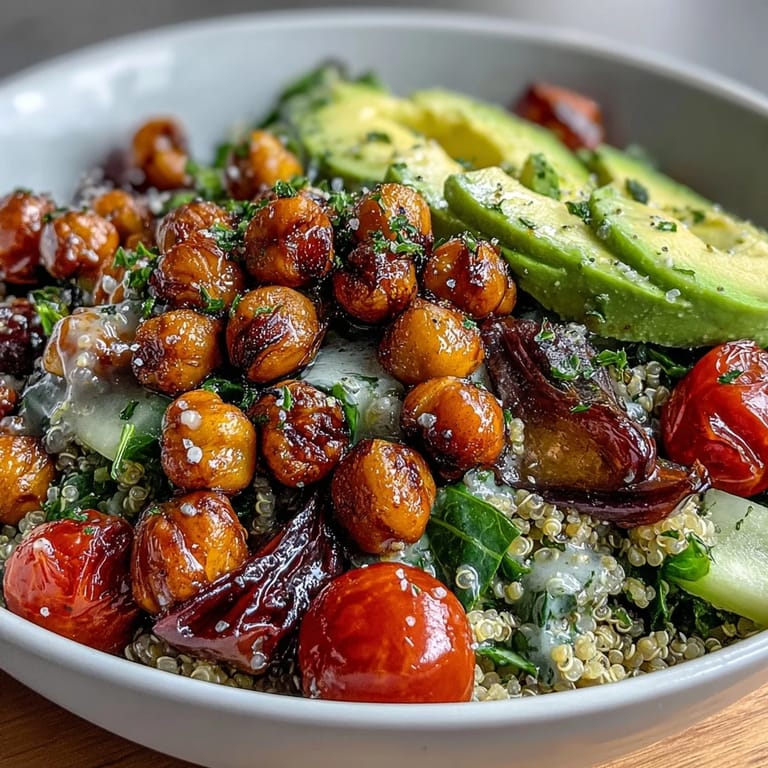
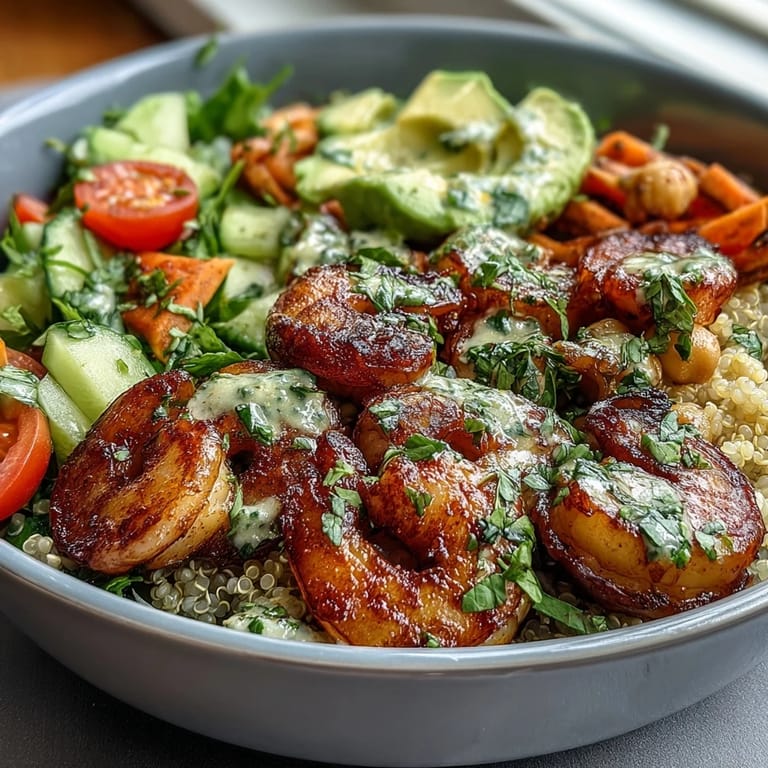
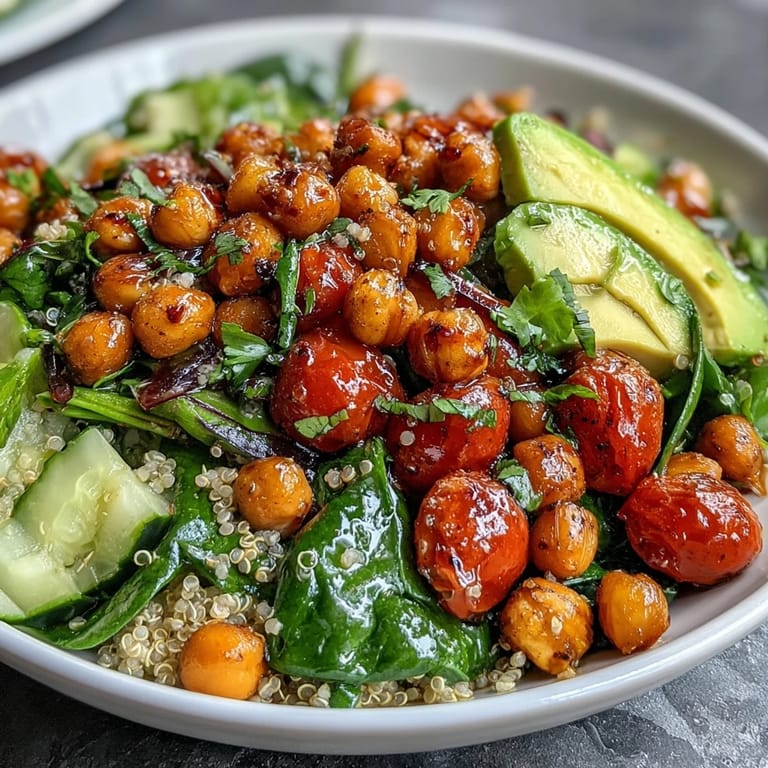
- Divide the warm grains among four bowls, then arrange the roasted chickpeas, tomatoes, cucumber, carrots, red onion, and avocado slices on top of each bowl like you're creating something meant to be noticed. Scatter parsley over everything and drizzle each bowl generously with the lemon vinaigrette just before serving.
 Save to Pinterest
 Last month my daughter came home from school stressed about a test, and I made these bowls without asking if she wanted them. She ate quietly at the kitchen counter, and halfway through she said the meal felt "like eating something that cares about me," which is the best compliment food has ever received in our house.
Why This Works as a Weeknight Dinner
These bowls answer the question I ask myself almost every afternoon—something nourishing that doesn't require complicated technique or hard-to-find ingredients. The grains can cook while the chickpeas roast, so 30 minutes of oven time gets most of the work done, and all the vegetables are just cutting and tossing. You're not standing over a stove sweating; you're mostly managing a baking sheet and a cutting board, which feels like freedom.
How to Make Them Your Own
The structure here is really just a framework—warm grains, crispy protein, fresh vegetables, and a bright dressing. I've made versions with roasted beets instead of tomatoes, added crumbled feta for creaminess, swapped in berbere spice instead of paprika and cumin, and even stretched a batch with soft goat cheese and herbs de Provence. The lemon vinaigrette stays, because that's the through-line, but everything else bends to whatever is in your kitchen or calling to you that day.
Storage and Make-Ahead Wisdom
The individual components keep separately for a few days, which means you can roast chickpeas on Sunday and have them ready to assemble into bowls throughout the week. Grains keep in the fridge for up to four days, vegetables stay fresh when stored properly, and the vinaigrette actually tastes better after sitting overnight as flavors meld together. The only thing I avoid making ahead is slicing the avocado, which browns quickly no matter how much lemon juice you splash on it.
- Roasted chickpeas can be stored in an airtight container for up to two days but taste crispest on day one.
- The dressing keeps for a week in a jar in the fridge, and you can shake it to re-emulsify if it separates.
- Assemble bowls right before eating so grains stay warm and vegetables stay crisp and cold.
 Save to Pinterest
 These bowls quietly became a favorite in my kitchen because they prove that simple food prepared with care is often more satisfying than anything complicated. I hope they do the same for you.
Recipe FAQs
- → What grains work best for this dish?
Quinoa, brown rice, or farro provide a hearty base. Choose your favorite or what’s on hand.
- → How do I achieve crispy roasted chickpeas?
Pat chickpeas dry before tossing with oil and spices, then roast at 425°F for 20-25 minutes, shaking halfway.
- → Can I prepare the lemon dressing in advance?
Yes, the vinaigrette can be whisked and stored in the fridge for up to 2 days for convenience.
- → What can I add for extra creaminess?
Crumbled feta or goat cheese complements the flavors well; omit or substitute for a vegan choice.
- → Are there gluten-free options for the grains?
Quinoa and brown rice are naturally gluten-free; avoid barley or farro if gluten sensitive.