 Save to Pinterest
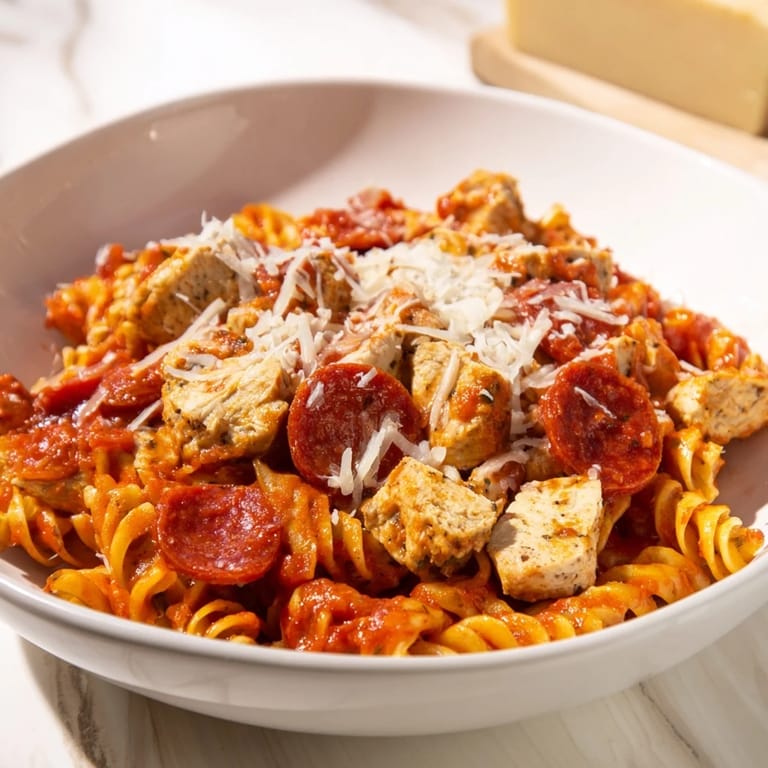
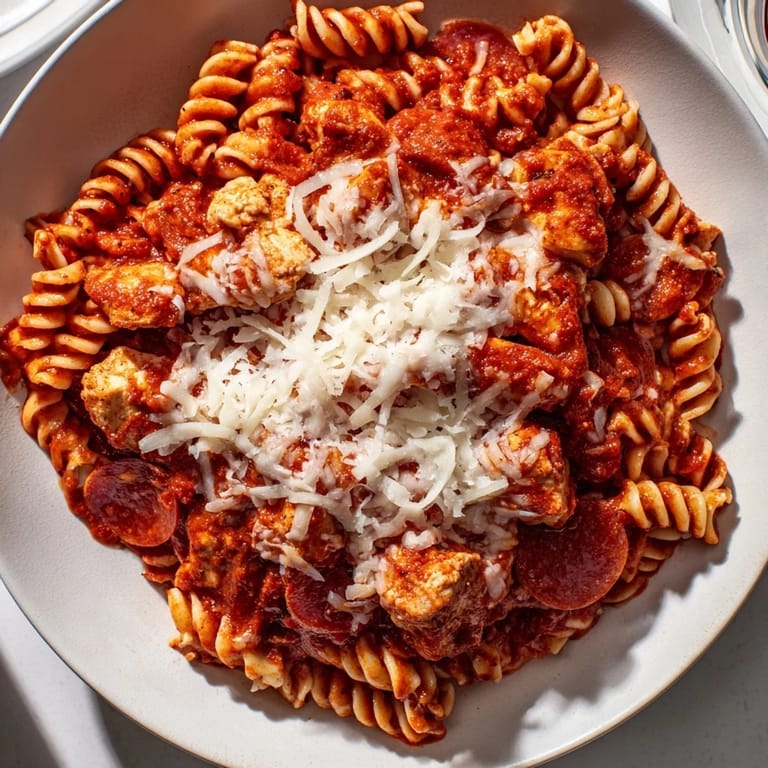
 One night, I was standing in front of my open fridge with fifteen minutes until dinner guests arrived, and I spotted rotini, pepperoni, and mozzarella staring back at me. It hit me then—why not just throw everything together the way pizza tastes, but in pasta form? That first version was chaotic, but something magical happened when that cheese melted over the top. Now it's become the dish I reach for when I need to feel like I've cooked something impressive without the usual fuss.
I made this for my sister on a lazy Sunday, and she ate two bowls before asking for the recipe. That's when I knew it wasn't just convenient; it was genuinely craveable. There's something about the way the pasta absorbs all that pizza flavor while staying creamy that makes people come back for more.
Ingredients
- Boneless, skinless chicken breast: Cut into bite-sized pieces so it cooks quickly and mingles evenly with the pasta—don't overthink the size, just aim for roughly the same as your rotini curls.
- Pepperoni: Quartered pieces work best because they crisp up slightly and release their spicy oils into everything around them.
- Rotini pasta: The spirals catch sauce like little cups, but penne or fusilli work just as well if that's what you have.
- Mozzarella and Parmesan: Shred or grate fresh if you can—it melts smoother and tastes brighter than pre-shredded, which often has anti-caking powder.
- Marinara or pizza sauce: The backbone of flavor; choose one you'd actually eat by the spoonful straight from the jar.
- Onion, garlic, and bell pepper: These soften and sweeten as they cook, adding body to the sauce and a hint of vegetable texture.
- Olive oil: Just enough to keep the chicken from sticking and to toast the garlic properly.
- Italian herbs and red pepper flakes: Dried herbs are fine here since they cook low and slow into the liquid, and the flakes add a whisper of heat.
- Chicken broth or water: The liquid that becomes your sauce as the pasta absorbs it—don't skip this step or you'll end up with a dry, stuck-together mess.
Tired of Takeout? 🥡
Get 10 meals you can make faster than delivery arrives. Seriously.
One email. No spam. Unsubscribe anytime.
Instructions
- Get your pan hot and sear the chicken:
- Use a large deep skillet and warm the olive oil over medium heat until it shimmers. Add the chicken pieces with a pinch of salt and pepper, and let them sit for a moment—they need those three to four minutes to get a light brown edge, not a full cook.
- Build the flavor base:
- Toss in the onion, garlic, and bell pepper if using. Stir gently and let everything soften together for a couple of minutes until the kitchen smells like something good is happening.
- Bring the pepperoni into play:
- Add the pepperoni pieces and stir once or twice, just enough for them to release their oils without burning.
- Combine everything in the pan:
- Dump in the uncooked rotini, marinara sauce, chicken broth, Italian herbs, and red pepper flakes. Stir well, making sure the pasta is mostly covered by liquid—this is important because the pasta needs to absorb as it cooks.
- Let it simmer gently:
- Bring the liquid to a gentle boil, then lower the heat and cover the pan. Stir once or twice over the next twelve to fourteen minutes, letting the pasta soften and soak up all that saucy pizza flavor.
- Add the cheese and let it melt:
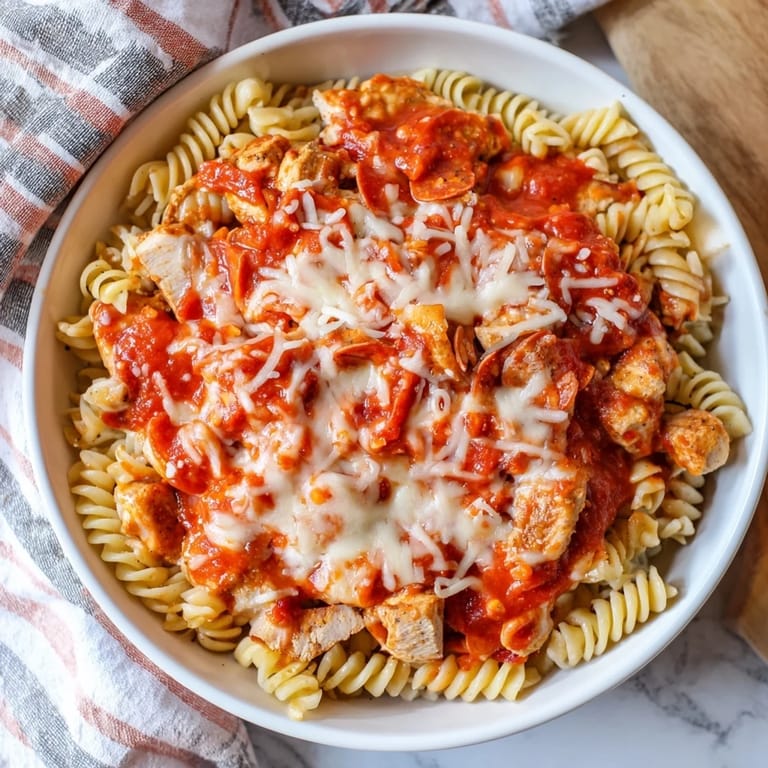
- When the pasta is tender and most of the liquid is gone, stir in half the mozzarella and all of the Parmesan. Scatter the rest of the mozzarella on top, cover, and give it two to three more minutes until everything turns gooey and bubbly.
- Rest and serve:
- Take the pan off heat and let it sit for a minute or two—this lets everything settle and makes serving easier.
 Save to Pinterest
 The moment I watched someone close their eyes and take that first bite, I realized this dish was about more than saving time or impressing people. It's comfort in a pan, the kind of meal that makes you feel looked after even when you threw it together in a rush.
Why This Works as a One-Pan Meal
Cooking pasta in sauce instead of boiling it separately is the secret. The liquid gets starchy and thick as the pasta releases its starches, turning into a natural, creamy coating that needs no cream. Plus, every flavor melds together rather than living in separate pots, so you get this cohesive pizza-pasta experience that tastes intentional and considered.
Customizing Your Version
This recipe is forgiving and friendly to substitutions. Swap the chicken for Italian sausage if you want something richer, or leave it out entirely for a vegetarian version with extra mushrooms or zucchini. The pepperoni is what makes it feel like pizza, but if someone at your table doesn't eat meat, that's okay too—the marinara and cheese carry the dish beautifully on their own.
Make It Your Own
This is a base recipe, not a strict rule. I've made it with fresh basil stirred in at the end, with a splash of balsamic vinegar for depth, and once with sun-dried tomatoes mixed into the sauce. Each version felt different but equally right.
- Fresh herbs like basil or oregano added after cooking brighten everything up without getting bitter.
- A squeeze of lemon juice at the very end cuts through the richness and makes all the flavors pop.
- If your sauce is on the thin side, let it simmer uncovered for a couple extra minutes to thicken up before adding pasta.
 Save to Pinterest
 This dish has a way of showing up in my kitchen when I need something quick but still feel like I cooked. It's proof that the best meals don't need complicated techniques, just good ingredients and a willingness to throw them together.
Recipe FAQs
- → What pasta types work best for this dish?
Rotini is ideal for holding sauce, but penne or fusilli can be used as substitutes without losing texture or flavor.
- → Can I adjust the spiciness level?
Yes, use spicy pepperoni and extra crushed red pepper flakes for more heat, or omit them to keep it mild.
- → How do I prevent the chicken from drying out?
Sauté the chicken briefly until lightly browned but still undercooked before simmering with the sauce to keep it tender.
- → Is it necessary to use both mozzarella and Parmesan cheeses?
Combining shredded mozzarella for meltiness and Parmesan for sharpness enhances flavor and texture, but each can be used individually if preferred.
- → What are good vegetable additions or substitutions?
Bell pepper adds sweetness and color, but mushrooms or olives are great alternatives for different flavor profiles.
- → Can this dish be prepared ahead of time?
While best served fresh, it can be reheated gently on the stove or in the oven, adding a splash of broth to loosen the sauce if needed.