 Save to Pinterest
 There's something almost magical about watching beets transform in the oven—their earthy sweetness intensifies until the kitchen fills with this deep, mineral-rich aroma that makes you pause whatever you're doing. I discovered this soup on a gray November afternoon when I had a bunch of beets sitting in my crisper drawer, stubbornly refusing to be ignored. What started as a simple attempt to use them up became the kind of dish I now make whenever I need something that feels both nourishing and special, without fussing endlessly in the kitchen.
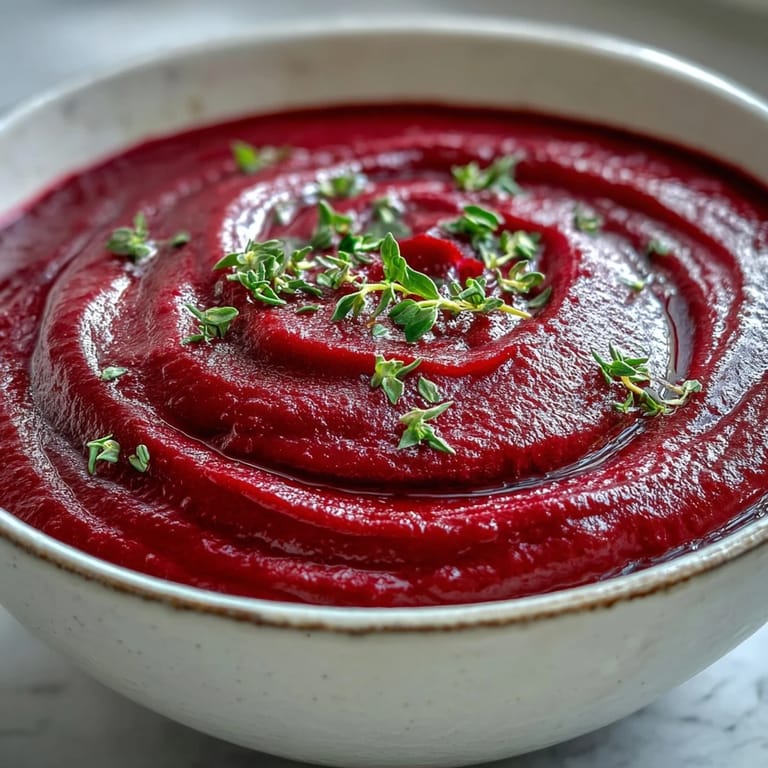
My partner walked into the kitchen right as I was blending this soup, catching the moment when all that deep burgundy became impossibly smooth and creamy, and I watched his expression shift from curiosity to genuine excitement. That's when I knew this wasn't just a recipe—it was one of those dishes that somehow says welcome home, even on a random Tuesday. Now it's become my go-to when friends drop by unexpectedly, because it feels thoughtful without screaming that you've been cooking all day.
Ingredients
- Medium beets: Choose ones that feel firm and have unblemished skin; smaller beets tend to be sweeter and roast more evenly than massive ones.
- Yellow onion: The sweetness balances the earthiness of the beets perfectly, so don't skip it or substitute with red onion.
- Medium carrots: They add natural sweetness and a subtle brightness that keeps the soup from feeling too heavy.
- Garlic cloves: Just enough to add depth without overpowering; minced rather than sliced ensures even distribution throughout.
- Vegetable broth: Use the best quality you can find or make your own, because it becomes the foundation of every spoonful.
- Olive oil: Good for sautéing the aromatics, though you could use butter if you prefer a richer flavor.
- Heavy cream: This is what transforms the soup from good to velvety; pour it in slowly so you can control the richness.
- Salt and pepper: Season at the end after blending, because flavors concentrate as the soup cooks down.
- Fresh lemon juice: The secret weapon that brightens everything and prevents the soup from tasting flat or one-dimensional.
- Fresh thyme: Adds an herbaceous whisper that makes people wonder what you did differently.
Tired of Takeout? 🥡
Get 10 meals you can make faster than delivery arrives. Seriously.
One email. No spam. Unsubscribe anytime.
Instructions
- Ready your beets for roasting:
- Preheat your oven to 400°F while you wrap each beet individually in foil, creating little packets that will steam the beets as they roast. Place them on a baking sheet and slide them in for 40 to 45 minutes, checking occasionally until they yield easily to a fork.
- Build your flavor base:
- While the beets are roasting, heat olive oil in a large pot over medium heat and add your diced onion and carrots, letting them soften for about 5 minutes until they start to turn translucent. Add the minced garlic and cook for just 1 minute more—you want it fragrant but not brown.
- Combine everything:
- Once the beets have cooled slightly, peel away the papery skin and chop them into rough chunks, then add them to the pot along with the fresh thyme, salt, and pepper. Stir everything together so the flavors start getting acquainted.
- Simmer and meld:
- Pour in your vegetable broth, bring the whole pot to a gentle boil, then reduce the heat and let it simmer quietly for 10 minutes. This gives the vegetables time to release their essence into the liquid.
- Transform into silk:
- Remove from heat and use an immersion blender to purée the soup until completely smooth, working in batches if you're using a countertop blender. The moment it shifts from chunky to velvety never gets old.
- Finish with richness and brightness:
- Stir in the heavy cream slowly, tasting as you go, then add the fresh lemon juice. Taste and adjust the salt and pepper—you might be surprised how much seasoning a blended soup actually needs.
 Save to Pinterest
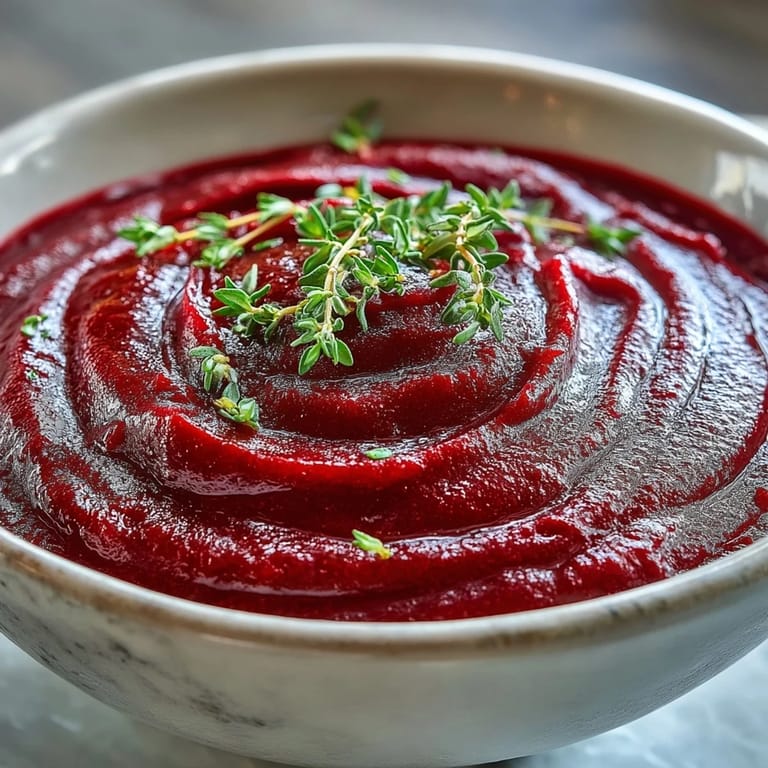
 Years ago, my grandmother made something similar for a dinner party, and I remember her casually mentioning that beet soup meant you'd thought about your guests—that you'd chosen something nourishing over something easy. I finally understand what she meant now, because this soup asks so little of you yet delivers something that feels genuinely cared for.
Serving Ideas and Occasions
This soup arrives at the table looking almost jewel-like, so it naturally becomes your opening act when you want to set a thoughtful tone for a meal. I've served it to vegetarians without ceremony, to folks on gluten-free diets without drawing attention to it, and to skeptics who were convinced they didn't like beets until this moment. It's equally at home as a light lunch with good bread, or as the elegant first course to a more elaborate dinner.
Make-Ahead and Storage
You can roast the beets several days in advance, storing them in an airtight container, which means the actual soup assembly becomes a 20-minute affair when you need it. The fully made soup keeps beautifully in the refrigerator for about 4 days, and it also freezes well for up to 2 months (freeze it before adding the cream, then stir that in after reheating for the smoothest texture).
Playing with Variations
Once you've made this soup once, you'll start noticing ways to make it your own without changing its essential character. Some versions I've loved include adding a splash of balsamic vinegar for extra depth, swirling in a touch of horseradish cream for unexpected punch, or topping each bowl with crumbled goat cheese and fresh dill for an herbaceous finish. The soup is forgiving enough to handle these experiments while still tasting like itself.
- Swap the heavy cream for coconut cream to make it vegan, and honestly, many people can't tell the difference.
- Garnish with toasted pumpkin seeds for a subtle earthiness that echoes the beets themselves.
- Serve alongside crusty bread and a crisp white wine to lean into the elegant simplicity of the moment.
 Save to Pinterest
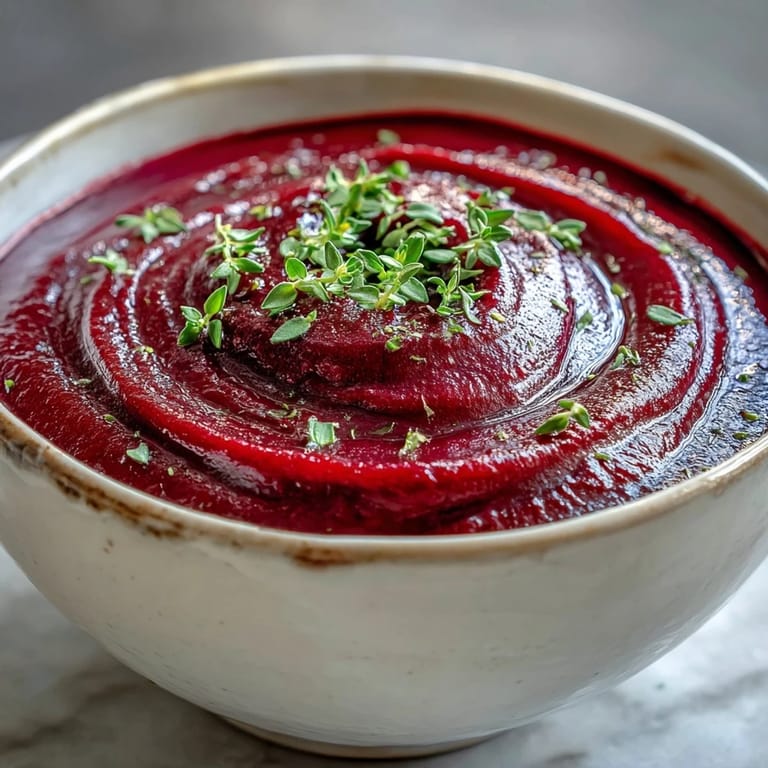
 There's quiet satisfaction in serving a bowl of this soup, knowing you've created something beautiful and nourishing with ingredients that cost almost nothing. Make it whenever you want to remind yourself that simple cooking done with attention is its own kind of luxury.
Recipe FAQs
- → Can I make this soup ahead of time?
Yes, this soup actually tastes better the next day as flavors meld. Store in an airtight container in the refrigerator for up to 4 days. Reheat gently on the stovetop, adding a splash of broth if needed to adjust consistency.
- → How do I prevent staining when working with beets?
Wear gloves when peeling and chopping roasted beets to avoid staining your hands. Work on a cutting board you don't mind temporarily tinting. Lemon juice or baking soda paste helps remove beet stains from surfaces and skin.
- → Can I use raw beets instead of roasting?
While possible, roasting develops a much deeper, sweeter flavor profile. If using raw beets, peel and dice them, then simmer in the broth for 25-30 minutes before blending. The result will be good but less complex than the roasted version.
- → What's the best way to achieve the smoothest texture?
An immersion blender works well, but a high-speed countertop blender creates the silkiest results. Blend in batches if using a standard blender, and be careful with hot liquids—remove the center cap and cover with a kitchen towel to allow steam to escape.
- → Can I freeze this soup?
Yes, freeze without the cream for best results. Cool completely, transfer to freezer-safe containers, and store for up to 3 months. Thaw overnight in the refrigerator, reheat, then stir in the cream and lemon juice just before serving.