 Save to Pinterest
 I stumbled onto this dish during a winter evening when snow was falling so thickly I couldn't see the street lights. Standing in my kitchen, I was mesmerized by the frost patterns on the window and thought: what if I could bring that same stark, quiet beauty onto a plate? The minimalism appealed to me instantly—no fire, no fuss, just the honest textures of vegetables that had barely been touched. My hands moved with intention as I pulled out the mandoline, and for the first time in years, I felt like I was making art instead of just dinner.
The first time I made this for a dinner party, my friend Sarah watched me arrange the vegetables and said, 'It looks like we're eating the Arctic.' I'd been nervous about whether something so spare would feel like enough, but watching people lean in close to examine each element, hearing them comment on the interplay of textures—it reassured me that quietness on a plate can be just as compelling as abundance. That night taught me that restraint is its own kind of generosity.
Ingredients
- Daikon radish: Choose one that feels firm and heavy for its size; the thin slices should be translucent and peppery, acting as the palest element on your plate.
- Kohlrabi: This odd, bulbous vegetable has a delicate, almost cabbage-like sweetness that anchors the composition; slice it just as thin as the daikon for visual harmony.
- Belgian endive: The leaves are your architecture; pick ones that separate cleanly and arrange them like scattered brushstrokes.
- Cauliflower florets: Finely chop these into small, almost crumb-like pieces so they function more as texture than vegetable.
- Unsweetened coconut flakes: Toast them yourself if you can; the warmth brings out a subtle nuttiness that plays beautifully against everything cold.
- White and black sesame seeds: Light toasting deepens the flavor and creates a visual contrast that mimics the tundra's light-and-dark patterns.
- Microgreens: Pea shoots are my first choice because their tender sweetness keeps the plate from feeling austere; add them at the very last moment.
- Flaky sea salt: This is your only seasoning beyond the dressing; trust its crystalline quality to speak for itself.
- Extra-virgin olive oil: Use one with character; the dressing should taste like you, not a generic bottled version.
- Fresh lemon juice: Squeeze it yourself and do it right before assembly so the brightness doesn't fade.
- White wine vinegar: The acidity cuts through the richness of the oil with elegance rather than aggression.
- White pepper: Ground pepper would muddy the minimalist aesthetic, so stick with white to keep everything pale and clean.
Tired of Takeout? 🥡
Get 10 meals you can make faster than delivery arrives. Seriously.
One email. No spam. Unsubscribe anytime.
Instructions
- Chill your canvas:
- Slide your stone or marble platter into the freezer for 15 minutes before you touch anything else. That cold surface is non-negotiable; it keeps every element crisp and signals that this meal is intentional and considered.
- Mix the dressing:
- In a small bowl, whisk the olive oil, lemon juice, vinegar, and white pepper until they stop feeling like separate ingredients and start moving as one. Taste it and resist the urge to adjust; restraint is the whole point here.
- Scatter the vegetables:
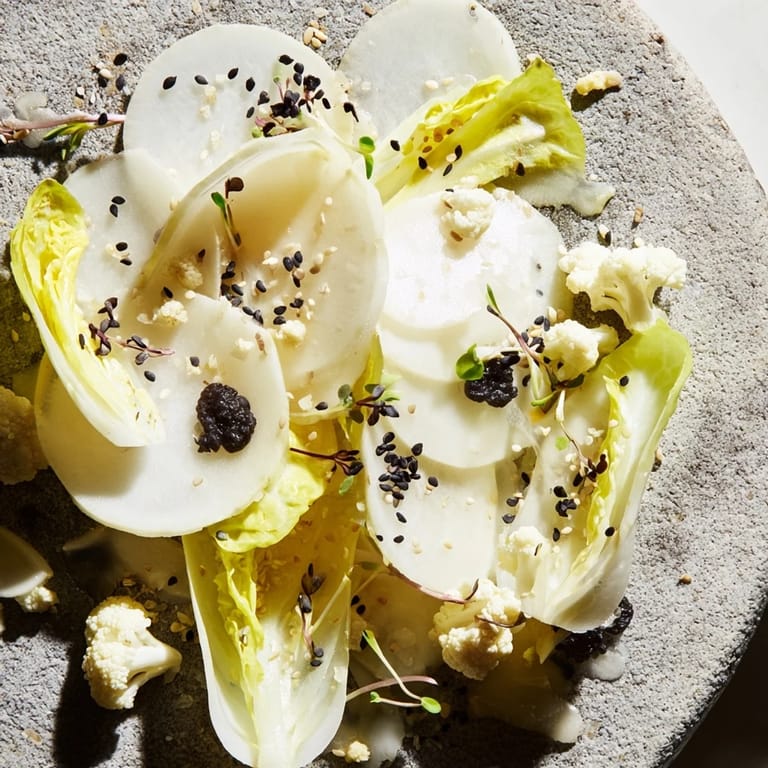
- Working quickly so nothing warms, arrange your daikon and kohlrabi slices across the cold stone with space between them, as if wind had placed them there. Layer the endive leaves in a loose, organic pattern, not fussy or symmetrical.
- Build the texture:
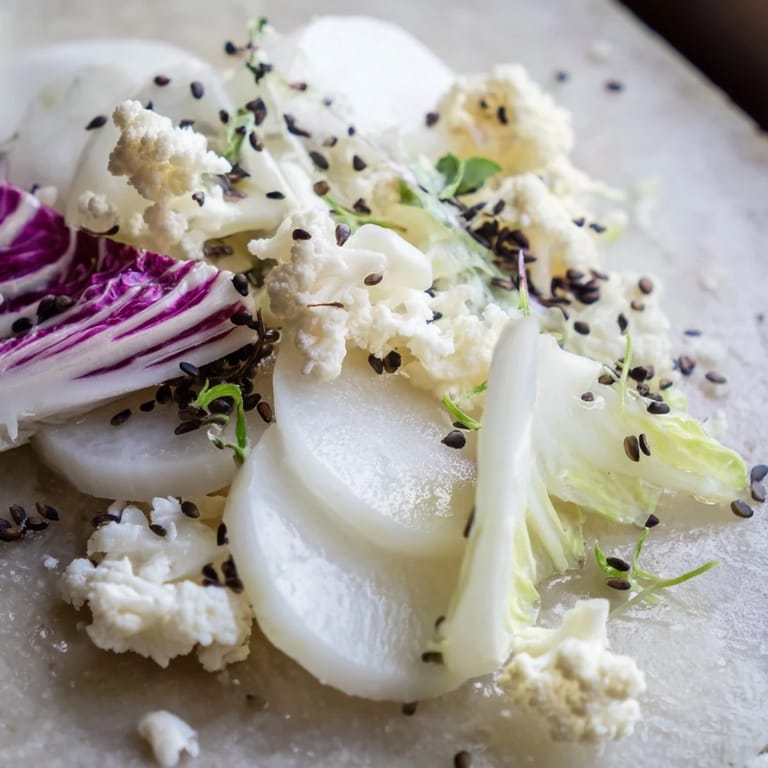
- Sprinkle the cauliflower pieces, coconut flakes, and both types of sesame seeds across the vegetables in a pattern that feels unplanned and random. Step back; does it look like tundra, or like you're trying too hard? Adjust until it feels right.
- Add the dressing:
- Drizzle the dressing across everything with a light hand, letting some areas shine with oil while others stay dry and bright. The dressing should enhance, not dominate.
- Final flourish:
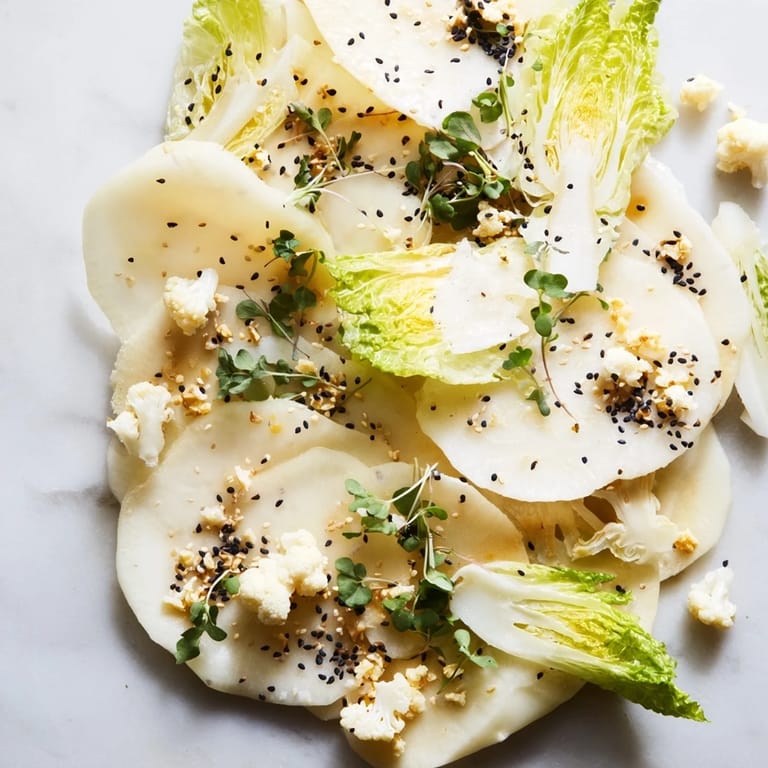
- Crown the plate with microgreens and a gentle pinch of flaky sea salt right before anyone's fork touches it. Once it's dressed, it needs to be eaten immediately; this is not a dish that waits.
 Save to Pinterest
 What strikes me now, looking back, is how this dish taught me that you don't need heat or complexity or fussiness to make something memorable. On that winter night with Sarah, no one asked for more food; they asked to slow down and look at what was on their plate. That's when I understood what I'd actually made: a moment, not just a meal.
The Art of Minimal Presentation
Minimalism in cooking is harder than abundance, because every element has to earn its place. When you're not hiding anything behind sauces or cooking techniques, the vegetables themselves have to be stunning. I've learned to approach the plating like a painter, stepping back frequently to ask whether the arrangement feels balanced or if I'm fussing too much. The scattered, windswept aesthetic isn't about randomness—it's about intentional placement that looks effortless once you stop trying so hard.
Vegetables That Shine Raw
Raw vegetables have personality in a way that cooked ones sometimes lose. The daikon brings peppery heat, the kohlrabi whispers something almost fruity, and the endive has a subtle bitterness that keeps your palate interested. I've experimented with other pale vegetables—sliced celery root, shaved turnip—and while they work, these three create a flavor conversation that feels complete. The mandoline has become my favorite tool for this dish because it forces precision; you're creating paper-thin slices, not chunks, and that refinement changes everything about how the dish feels.
When Garnish Becomes Structure
On this plate, the coconut, sesame, and microgreens aren't afterthoughts—they're the supporting characters that make the vegetables sing. The toasted coconut adds a whisper of warmth, the sesame seeds introduce a nutty depth, and the microgreens provide a vegetal punctuation mark. I learned this lesson the hard way when I once skipped the garnishes to save time, and the dish felt incomplete, like I'd forgotten the second act of a play. Now I treat them as seriously as I treat the vegetables themselves.
- Toast your sesame seeds in a dry pan for just 2 minutes; any longer and they'll taste bitter instead of nutty.
- If you're making this ahead, keep the microgreens separate and add them literally moments before serving so they don't wilt from the cold stone.
- Save a pinch of flaky salt for the very top; it catches the light and reminds people that this meal was made with care.
 Save to Pinterest
 This dish reminds me that sometimes the most beautiful meals are the ones where you stop trying to impress and just listen to what the ingredients want to become. Serve it cold, eat it slowly, and let the simplicity do the work.
Recipe FAQs
- → What vegetables feature in this dish?
The dish includes thinly sliced daikon radish, kohlrabi, Belgian endive leaves, and finely chopped cauliflower florets for a crisp texture.
- → How is the smoky accent added to the dish?
Smoked whitefish flakes or chilled poached shrimp can be added for protein and a smoky or savory contrast, though these are optional.
- → What dressing complements the vegetable arrangement?
A light dressing made from extra-virgin olive oil, lemon juice, white wine vinegar, and white pepper adds subtle acidity and flavor without overpowering the vegetables.
- → Why use a chilled stone or marble plate for serving?
Serving on a chilled stone plate enhances the refreshing, crisp textures of the vegetables and echoes the arctic inspiration behind the dish.
- → Can the acidity be varied in this dish?
Yes, you can substitute lemon juice or white wine vinegar with yuzu juice or rice vinegar to alter the acidity profile slightly.
- → Are there common allergens in this dish?
It contains sesame seeds and coconut flakes, which may affect individuals with allergies to tree nuts or sesame.