 Save to Pinterest
 My neighbor knocked on the door one July afternoon with an armful of zucchinis from her garden, the kind of overflow that happens every summer when gardeners plant too hopefully. I had no idea what to do with six massive squashes, so I roasted one, made bread with another, and then my sister suggested soup. That first batch taught me something unexpected: the simplest ingredients, when treated gently, become something elegant. Now whenever I see zucchini at the market, I think of that afternoon and how a humble squash soup became my go-to move for feeding people on hot days.
I made this soup for a dinner party last June when my friend was visiting from out of town, and she kept asking what fancy ingredient made it taste so good. When I told her it was just zucchini, herbs, and broth, she looked genuinely surprised. That's when I realized the magic isn't in the complexity; it's in treating each ingredient with respect and letting the blender do what it does best. We sat on the porch that evening with chilled bowls and crusty bread, and nobody talked much because we were all too busy eating.
Ingredients
- Olive oil: Use good quality here because you'll taste it directly; start with 2 tablespoons for sautéing, then drizzle more at the end.
- Onion and celery: These build the foundation of flavor, so don't skip the initial sauté; it matters more than you'd think.
- Garlic cloves: Just two, minced fine so they melt into the background rather than announce themselves loudly.
- Zucchinis: Four medium ones work best; overgrown zucchinis get watery and bland, so younger is better here.
- Potato: This adds body and creaminess without cream; one medium potato keeps things light.
- Vegetable broth: Quality matters since it's the soul of the soup; taste it first to gauge saltiness.
- Cream or coconut milk: Optional but transforms the texture from nice to silky; use cream for richness or coconut milk for a dairy-free version.
- Fresh herbs: Parsley, basil, and thyme should go in at the very end so they stay bright and don't turn muddy.
- Lemon zest: Don't skip this; it's the secret whisper that makes people wonder what they're tasting.
Tired of Takeout? 🥡
Get 10 meals you can make faster than delivery arrives. Seriously.
One email. No spam. Unsubscribe anytime.
Instructions
- Start with aromatics:
- Heat olive oil in a large pot over medium heat and add your chopped onion and celery, letting them soften for about 4 minutes until they start to smell sweet. You'll notice the kitchen filling with that particular warmth that tells you something good is about to happen.
- Coax out the garlic:
- Stir in your minced garlic and cook for just 1 minute; timing matters here because garlic burns quickly and turns bitter if you're not watching. When it becomes fragrant, you'll know you're exactly where you need to be.
- Add the main players:
- Toss in your sliced zucchini and diced potato, stirring occasionally for about 5 minutes so everything gets to know the oil and heat. This early cooking helps develop flavor rather than just boiling vegetables into submission.
- Simmer into tenderness:
- Pour in your vegetable broth and bring everything to a boil, then lower the heat and let it simmer partially covered for about 15 minutes until the vegetables are so soft they fall apart easily. The kitchen will smell like a farmer's market at this point, in the best way.
- Introduce the herbs:
- Remove from heat and stir in your fresh parsley, basil, thyme, and lemon zest while the soup is still hot but not bubbling; the warmth will release their essential oils without cooking them away. This is when the soup goes from good to memorable.
- Blend to silky perfection:
- Use an immersion blender to puree the soup until it's completely smooth, or work in batches with a regular blender if that's what you have. Take your time and listen for the sound to change as the vegetables break down.
- Finish with richness:
- Stir in your cream or coconut milk if you're using it, and taste as you season with salt and pepper. Go slow with salt since your broth might already be salty.
- Serve with intention:
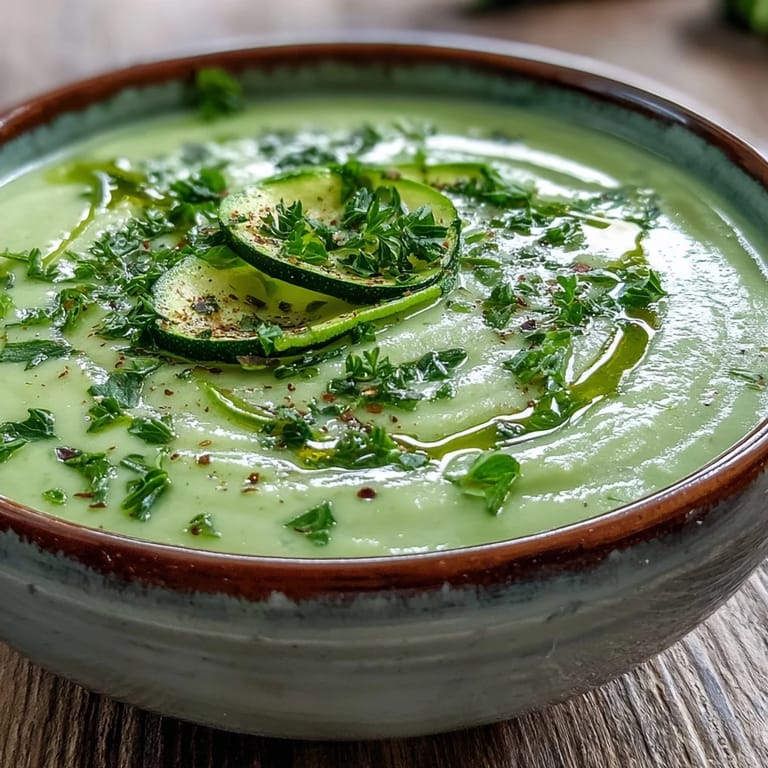
- Reheat gently if needed and serve hot, or chill it completely if you prefer it cold on a warm day. Garnish with extra herbs and a drizzle of good olive oil or a swirl of cream.
 Save to Pinterest
 My daughter, who typically eats like a bird, actually asked for seconds of this soup, which in our house is basically a standing ovation. That moment made me understand that food isn't just about flavor; it's about creating the conditions for someone to feel cared for. Every time I make it now, I think about that bowl and how something so simple held so much.
Hot or Cold, Take Your Pick
Summer soup tradition in my kitchen splits down the middle now—half the batch gets served steaming in deep bowls with crusty bread for dunking, and the other half goes into the refrigerator overnight for chilled soup days. Chilled soup shocked me the first time I tried it because I assumed it would taste flat and sad, but somehow cooling it deepens the zucchini flavor and makes the lemon pop more. I've learned to make larger batches just so I can keep some cold on hand for those afternoons when the heat makes cooking feel impossible.
The Art of the Garnish
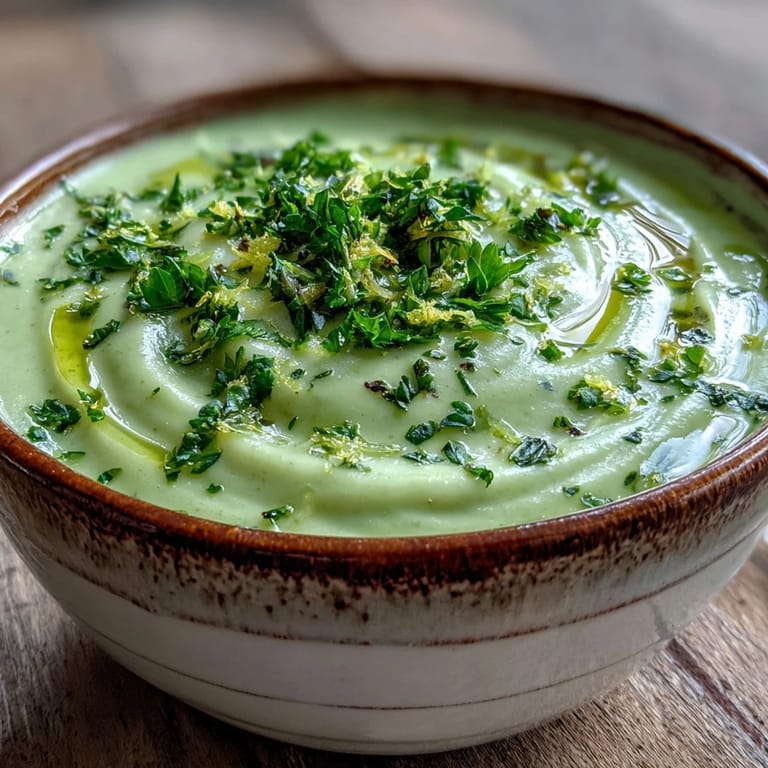
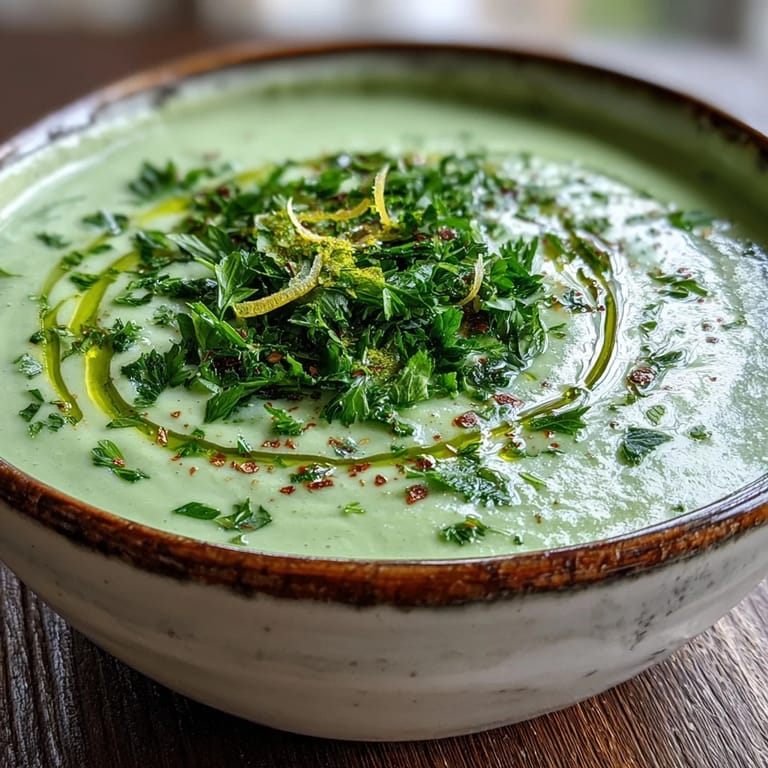
Presentation matters more than you'd think with something this simple and pale green, so I started experimenting with toppings that would add texture and color. A few toasted sunflower seeds scattered across the top add crunch, fresh basil leaves float like little green boats, and a proper swirl of cream or good olive oil makes it look like you spent three hours in the kitchen. My rule now is that the garnish should feel intentional, not like an afterthought; it's the final word on the bowl.
Variations and Flexibility
This soup welcomes modification better than any recipe I know, which is partly why I keep coming back to it. I've added handfuls of baby spinach at the end for color, swapped the cream for cashew cream for richness, and once used half zucchini and half cucumber for a completely different but equally wonderful result. The bones of the recipe stay the same, but you're encouraged to listen to what your kitchen has and what sounds good that day.
- For a vegan version, use coconut milk and trust that it tastes just as luxurious as the dairy version.
- A handful of fresh spinach stirred in at the end adds nutrients without changing the flavor much.
- Serve alongside crusty bread or topped with toasted seeds, and a glass of Sauvignon Blanc turns this into something celebratory.
 Save to Pinterest
 This soup has become my answer to the question of what to cook when you want something that tastes like care but requires almost no effort. It's the kind of recipe that reminds me why I love being in the kitchen in the first place.
Recipe FAQs
- → Can I serve this soup chilled?
Yes, this soup is excellent served chilled. The flavors develop beautifully when refrigerated for a few hours, making it perfect for warm weather dining or light lunch starters.
- → How do I make it dairy-free?
Substitute coconut milk for the cream and use vegetable broth. The natural sweetness of zucchini pairs wonderfully with coconut milk's subtle tropical notes.
- → Can I freeze this soup?
Absolutely. Freeze without the cream added. When reheating, stir in the cream then. The soup maintains its silky texture beautifully for up to three months.
- → What makes this soup silky smooth?
The combination of potato and thorough blending creates that luxurious texture. Blending while still warm helps achieve the silkiest consistency, though always be careful with hot liquids.
- → What herbs work best in zucchini soup?
Fresh parsley, basil, and thyme create a classic herb trio. Dill, mint, or chives also work beautifully. Use tender herbs at the end to preserve their delicate flavors and vibrant color.
- → How long does this soup keep?
Store refrigerated for up to four days in an airtight container. The flavors actually improve after a day as the herbs and lemon zest have time to meld with the zucchini.