 Save to Pinterest
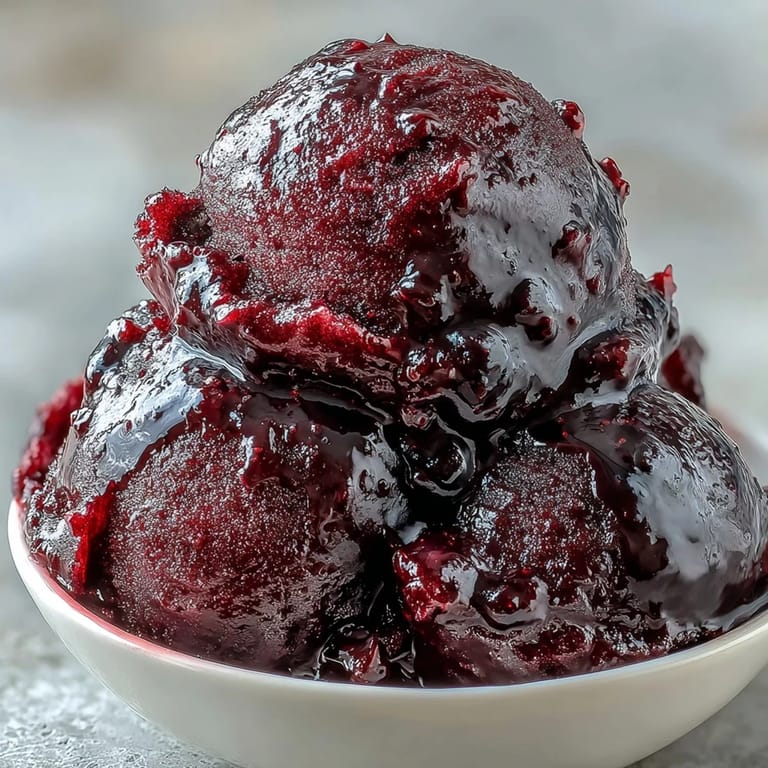
 There's something almost magical about the moment when you first taste black currant sorbet on a hot summer afternoon—that electric tartness that makes your mouth wake up, followed by a wave of cool sweetness. I discovered this gem quite by accident one July when a neighbor handed me a bag of black currants from their garden, and I had no idea what to do with them beyond jam. A quick search led me down this path, and now I can't imagine summer without it.
I made this for a dinner party last summer, and watching my friend's face when she tasted it was worth every minute of prep. She closed her eyes, and I could see her mentally cataloging that bright, complex flavor—no dairy masks, no cream to hide behind, just pure black currant intensity. That's when I knew this recipe was a keeper.
Ingredients
- Fresh or frozen black currants (500 g): These small, dark berries are the star, and honestly, frozen ones work just as well as fresh—sometimes better because they're picked at peak ripeness and already slightly softened.
- Granulated sugar (200 g): You'll want regular sugar here; it dissolves cleanly and sweetens without competing flavors.
- Water (250 ml): This becomes your syrup base, so use filtered water if your tap tastes strongly of chlorine.
- Freshly squeezed lemon juice (2 tbsp): This is non-negotiable—the acidity brightens the berries and keeps the sorbet from tasting one-dimensional and flat.
Tired of Takeout? 🥡
Get 10 meals you can make faster than delivery arrives. Seriously.
One email. No spam. Unsubscribe anytime.
Instructions
- Prepare your currants:
- Rinse them under cool water, pinching off any stems or shriveled ones as you go. This takes just a few minutes but makes a real difference in the final texture.
- Build your syrup:
- Combine the sugar and water in a medium saucepan and bring to a simmer over medium heat, stirring until the sugar dissolves completely—you'll know it's ready when you no longer feel grains at the bottom when you stir. This usually takes about 3 to 4 minutes.
- Cook the berries:
- Add your rinsed black currants to the hot syrup and let them simmer for exactly 5 minutes, watching as they soften and begin to burst, releasing their deep color into the liquid. The berries should feel tender when you press one against the side of the pan.
- Blend to smoothness:
- Remove from heat and let cool for just a minute or two—it should still be warm but safe to handle. Use an immersion blender right in the pot, or transfer to a regular blender and process until completely smooth with no visible berry bits.
- Strain for elegance:
- Press the blended mixture through a fine-mesh sieve into a clean bowl, using the back of a spoon to coax the puree through while leaving the seeds and skins behind. This step takes patience, but it's what gives you that silky, refined texture.
- Add brightness:
- Stir in the freshly squeezed lemon juice and taste—you're looking for that moment when the tartness makes you smile instead of pucker. Adjust sweetness if needed by stirring in a teaspoon of sugar at a time.
- Chill thoroughly:
- Cover your bowl and refrigerate for at least 2 hours, until the mixture is completely cold to the touch. Cold mixture churns more evenly and freezes faster.
- Churn to perfection:
- Pour into your ice cream maker and follow its instructions—most machines will need 20 to 30 minutes to reach that perfect soft-serve consistency. You'll notice the mixture transforming from liquid to thick and slushy.
- Final freeze:
- Transfer the churned sorbet to a freezer-safe container and freeze for at least 2 hours until firm enough to scoop without collapsing. You can make this up to a week ahead.
- Serve with intention:
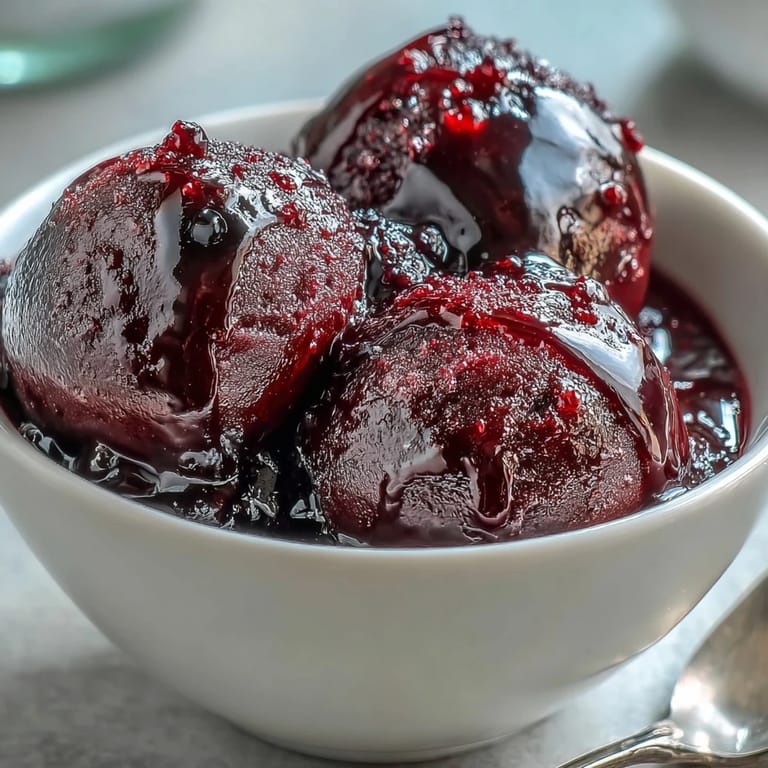
- Let it sit at room temperature for 2 to 3 minutes before scooping—this brief rest makes serving infinitely easier and the first spoonful more melting on your tongue.
 Save to Pinterest
 What surprised me most wasn't the flavor—it was how this humble sorbet became the conversation piece of the evening. People asked for seconds, then thirds, and by the end of the night, someone was already asking if I'd make it for her daughter's birthday party.
The Magic of Black Currants
Black currants aren't berries you see in every supermarket, which is part of their charm and a bit of their mystery. They're deeply flavored—almost savory in their complexity—with a natural tartness that doesn't need much sweetening. In Europe, they've been beloved for centuries, turned into syrups, liqueurs, and desserts. Once you understand their personality, you realize they're perfect for sorbet because they're assertive enough to shine even when frozen.
Why Straining Matters More Than You'd Think
The first time I skipped the sieving step because I was impatient, and the result was gritty and odd, with little seed husks between my teeth. Never again. Straining isn't fussy—it's the difference between a dessert that feels elegant and one that feels amateur. The skins and seeds are bitter, and they'll muddy both the texture and flavor if you leave them in.
Making It Your Own
This recipe is forgiving enough to experiment with once you've made it once. Some people add a splash of crème de cassis (about 1 tablespoon) before churning for an adults-only version with even more complexity. Others swirl in a bit of rose water or add a whisper of vanilla, though I'd go easy with either of those because black currants can be overpowered. The beauty is that the base recipe is solid enough to handle your adjustments.
- If you want to make it less tart, add an extra 25 grams of sugar, but taste first—you might surprise yourself and like the edge.
- Leftover sorbet that's crystallized in the freezer can be softened at room temperature for 10 minutes and re-churned into something smooth again.
- Serve it with lemon shortbread, fresh berries, or even a thin crisp cookie for textural contrast.
 Save to Pinterest
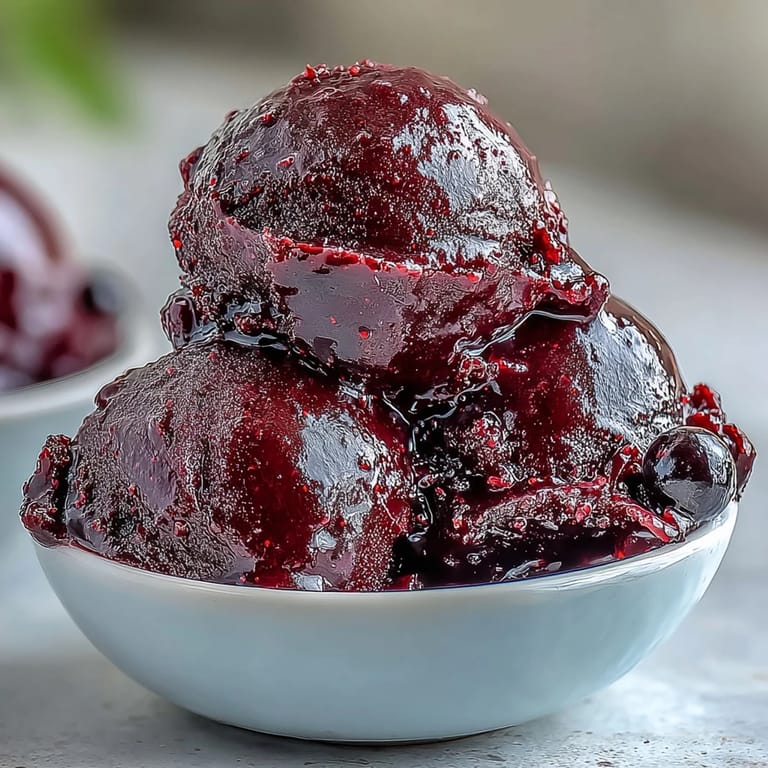
 Black currant sorbet has become my go-to dessert when I want to impress without fuss—it's elegant, memorable, and tastes like summer captured in a bowl. Make this once, and you'll find yourself looking for excuses to make it again.
Recipe FAQs
- → Can I use frozen black currants instead of fresh?
Absolutely. Frozen currants work perfectly and may actually be more readily available depending on the season. Simply use them straight from the freezer—no need to thaw before adding to the simmering syrup.
- → What can I use if I don't have an ice cream maker?
Pour the chilled mixture into a shallow container and freeze. Every 30 minutes, stir vigorously with a fork to break up ice crystals. Repeat 3-4 times until smooth and frozen. The texture will still be creamy and delicious.
- → How long does this keep in the freezer?
Stored properly in an airtight container, this maintains optimal texture for about 2-3 weeks. After that, ice crystals may form, but it remains safe to eat. Let soften 5 minutes before scooping for best results.
- → Can I reduce the sugar amount?
You can slightly reduce sugar, but keep in mind that sugar helps prevent ice crystals from forming and contributes to the smooth texture. Too little sugar may result in a harder, icier final product.
- → What pairs well with this?
Lemon shortbread cookies, buttery cake, or fresh berries complement the tartness beautifully. A sprig of mint or a dollop of coconut cream also makes an elegant garnish for serving.
- → Is this suitable for special diets?
Yes. This naturally contains no dairy, eggs, gluten, or nuts, making it suitable for vegan, gluten-free, and dairy-free diets. Always verify your sugar is processed in a nut-free facility if allergies are a concern.