 Save to Pinterest
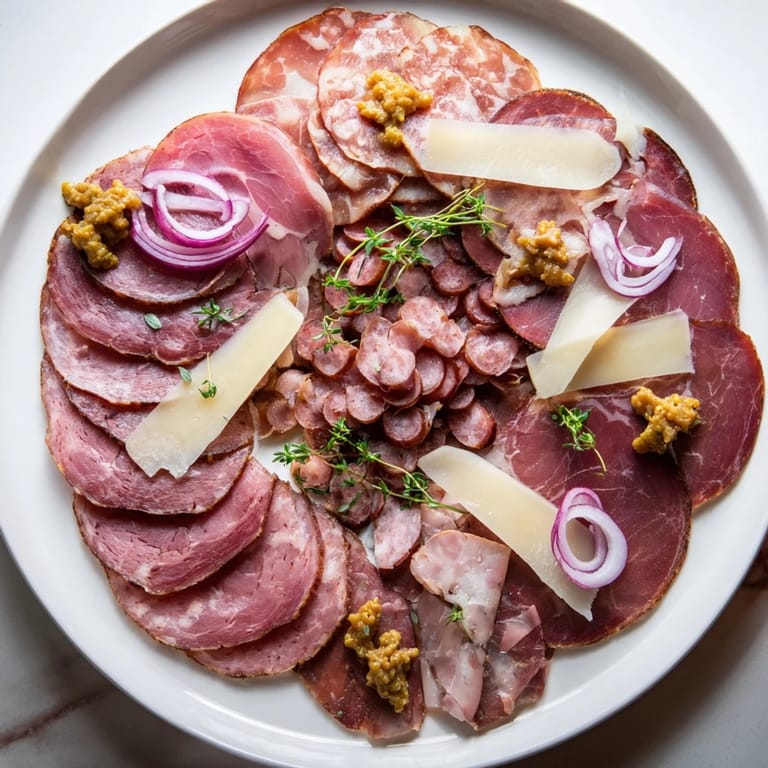
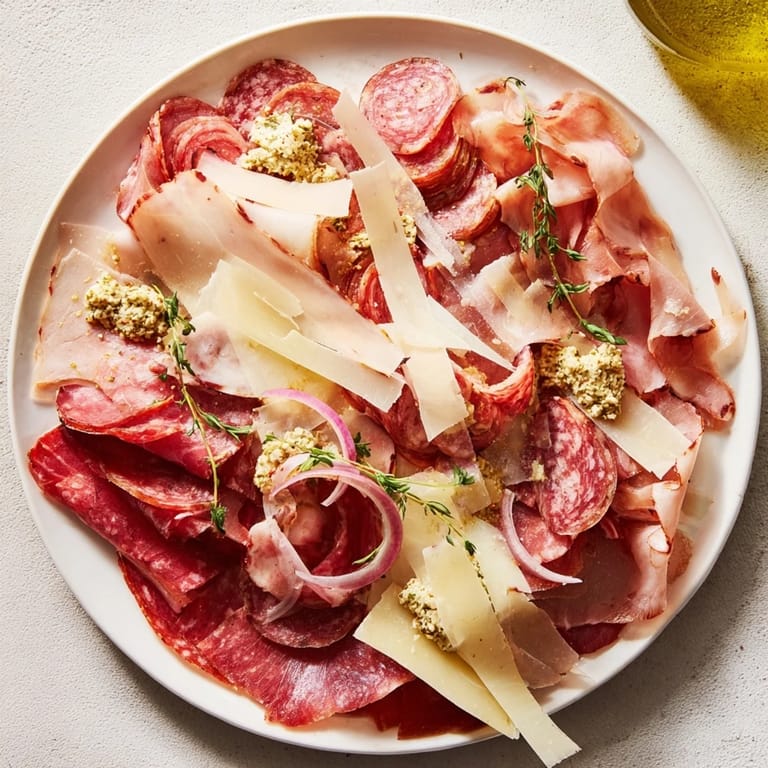
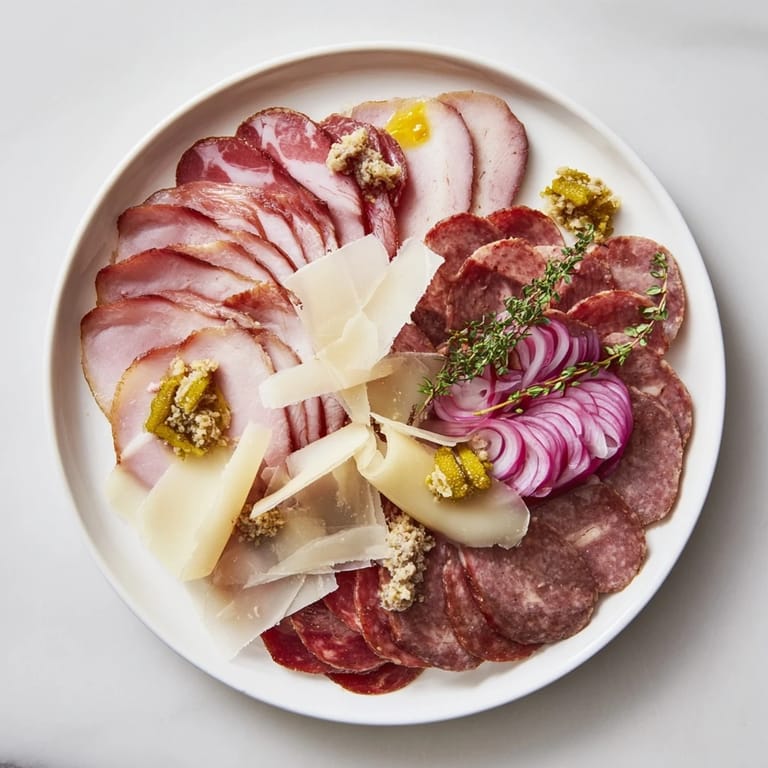
 There's something about pulling together a charcuterie board that feels less like cooking and more like creating a small edible landscape. I discovered this particular arrangement one evening when a friend arrived unexpectedly, and I had just enough good meats and aged cheeses in my kitchen to improvise something special. The contrast between the rough, bold slices of smoked beef and the delicate, nearly translucent shavings of Parmigiano Reggiano became the whole point—it's a platter that celebrates what happens when you honor both the rustic and the refined.
I remember assembling this for a small dinner party on a crisp October evening, and how the fresh thyme sprigs caught the candlelight as people leaned in to fill their plates. There was something about the informality of it—no rules, no perfect portions—that made everyone relax. People kept coming back for just one more thin slice of that aged Manchego, and I loved watching the platter evolve as it was picked at throughout the evening.
Ingredients
- Smoked beef: Look for thickly cut slices at a good deli counter; the smokiness becomes the foundation of everything else on the board.
- Rustic country ham: Roughly chopped rather than sliced gives it a more honest, hand-made feel that sets the tone for the platter.
- Smoked sausage: The thick rounds or wedges keep their integrity and add visual variety alongside the softer meats.
- Parmigiano Reggiano: Use a cheese plane or vegetable peeler to create those paper-thin ribbons that look almost fragile but taste intensely savory.
- Aged Manchego: This Spanish cheese has a slightly nutty flavor that bridges the gap between bold and delicate beautifully.
- Gruyère: The hint of sweetness here prevents the board from feeling one-dimensional or too heavy.
- Cornichons: These tiny pickled cucumbers are your palate's reset button; their sharp bite cuts through all that richness.
- Red onion: Thinly sliced, it adds a peppery crunch and visual color without overpowering the delicate cheeses.
- Grainy mustard: A small spoonful alongside everything else, never too much; it's there to highlight rather than dominate.
- Fresh thyme or rosemary: Beyond garnish, these herbs perfume the whole platter and remind people that care went into this.
- Crusty bread: Optional but worthwhile; it gives hands something to do and lets people build their own bites.
Tired of Takeout? 🥡
Get 10 meals you can make faster than delivery arrives. Seriously.
One email. No spam. Unsubscribe anytime.
Instructions
- Create your meat foundation:
- Arrange the rough-cut meats in overlapping layers or loose mounds directly on a wooden board or platter—think of it less as precision and more as organized chaos. This rustic approach is intentional and sets the entire tone.
- Shave your cheeses with intention:
- Using a cheese plane or vegetable peeler, create thin, translucent ribbons from each cheese and drape them loosely over and beside the meats like delicate fabric. You'll notice how the light shows through these ribbons in a way that sliced cheese simply can't match.
- Scatter your accompaniments:
- Place cornichons and sliced red onion in small clusters around the platter, and add three or four small dollops of grainy mustard at strategic points. Think of these as little flavor surprises waiting to be discovered.
- Finish with fragrance:
- Tuck fresh thyme or rosemary sprigs into gaps and on top of the arrangement, both for their visual appeal and for the subtle aroma they'll release when people lean in. This final touch makes the platter feel alive and considered.
- Present and serve:
- Set the platter down and step back—it's ready to go, preferably with crusty bread nearby if you're including it. Everything is meant to be picked at with fingers or small pieces of bread, so embrace that informal spirit.
 Save to Pinterest
 I learned the real magic of this board one afternoon when my mother tasted it and said it reminded her of meals she'd had in a small village outside Lyon, sitting in someone's kitchen with good wine and no agenda. That comment made me realize this isn't about impressing anyone with difficulty or technique—it's about honoring good ingredients and giving people permission to slow down.
Building Layers That Work
The secret is understanding that this platter is actually a conversation between textures and intensities. The rough, almost violent way you tear the country ham against the silk-thin cheese creates visual and gustatory contrast that keeps each bite interesting. I've noticed that when people eat from a board like this, they naturally create their own combinations—a bit of ham with cheese, a cornichon as punctuation, a dab of mustard as emphasis. The board becomes less a recipe and more a vocabulary.
Wine and Timing Matters
Timing this right changes everything because a charcuterie board is really about the moment, not the minutes. I learned not to assemble it more than an hour before guests arrive, or the cheese ribbons begin to stick together and lose their delicate presentation. The platter should be fresh and eager to be enjoyed, not sitting on the counter looking tired. And while it's technically ready whenever you are, there's something about serving it alongside a bold red wine—a Côtes du Rhône or a Barolo—that suddenly makes everything taste more intentional.
Seasonal Additions and Variations
Once you understand the core structure, this board becomes a canvas for whatever good things you can find. In autumn, I add toasted walnuts and dried apricots; in summer, fresh figs if I can get them. I've experimented with different aged cheeses—a sharp Manchego one time, a creamy aged Gouda another—and each brings its own personality to the arrangement. The beauty is that there's no wrong way to approach this as long as you're choosing quality ingredients and giving them room to be themselves.
- Swap in any firm, aged cheese that speaks to you—Comté, Pecorino Romano, or aged Gruyère varieties all work beautifully.
- Add roasted marcona almonds or candied nuts for textural richness and a touch of sweetness.
- A tiny bowl of really good honey on the side elevates everything, especially the aged cheeses, without overwhelming them.
 Save to Pinterest
 This platter has become my go-to when I want to cook without actually cooking, when I want to feed people something that tastes thoughtful without stress. It's taught me that restraint and honest ingredients matter more than technique.
Recipe FAQs
- → What types of meats work best for this platter?
Hearty smoked beef, rustic country ham, and smoked sausage provide bold, complementary flavors and textures.
- → How should the cheeses be prepared?
Shave aged, firm cheeses like Parmigiano Reggiano, Manchego, and Gruyère into thin, translucent ribbons for a delicate presentation.
- → Can I customize the accompaniments?
Yes, try adding nuts like toasted walnuts or dried fruits such as figs and apricots for extra flavor complexity.
- → What garnishes enhance the platter’s aroma?
Fresh sprigs of thyme or rosemary add aromatic depth and visual appeal to the arrangement.
- → Is bread necessary to serve with this platter?
Bread is optional; a rustic country loaf or crusty baguette complements the meats and cheeses but can be omitted for gluten-free preferences.