 Save to Pinterest
 There's something magical about butternut squash soup that makes you feel like you've got your life together, even if you're eating it straight from a mug while standing at the kitchen counter. I discovered this version on a particularly gray October afternoon when my farmers market haul was staring me down, and I realized I had exactly what I needed to turn a heap of vegetables into something that tasted like comfort itself. The first spoonful was a revelation—silky, warming, with those whispers of sage and nutmeg that somehow feel both elegant and deeply homey. It's become my default answer to the question "what's for dinner?" on nights when the weather turns chilly and my soul needs something gentle.
I made this for a dinner party last year, and what stuck with me wasn't the compliments (though there were kind words) but the moment my friend Sarah blew on her spoon to cool it down, that little cloud of steam rising up, and she just closed her eyes and smiled. That's when I knew this recipe did what good food is supposed to do—it pauses the conversation, it makes people present. Now whenever I make it, I think about that moment and remember why I bother cooking at all.
Ingredients
- Butternut squash (1 large, about 2.5 lbs): This is the star, so pick one that feels heavy for its size—that's where the flavor is hiding. Peeling raw squash is an arm workout, so here's a secret: if you can't find pre-cut squash at your market, microwave the whole thing for 3 minutes first, and it becomes exponentially easier to handle.
- Yellow onion (1 medium, chopped): The quiet foundation that makes everything taste deeper and more savory than it should.
- Garlic (2 cloves, minced): Don't skip this or rush it—one minute of cooking is the exact moment it becomes fragrant instead of harsh.
- Vegetable broth (4 cups): Use something you'd actually taste on its own; bland broth makes bland soup, no way around it.
- Olive oil (2 tbsp total): Split between roasting the squash and sautéing the aromatics—it's the invisible thread holding everything together.
- Sea salt (1 tsp) and black pepper (1/4 tsp): Season as you go, not all at the end, or you'll chase the flavor the whole time.
- Ground nutmeg (1/2 tsp): This is the ingredient that makes people ask "what is that?" in the best way. Don't be shy with it.
- Dried sage (1 tsp, or 1 tbsp fresh): Fresh is always worth the effort if you have it, but dried sage in this soup is honest and reliable.
- Heavy cream or coconut milk (1/4 cup, optional for serving): A swirl transforms it from simple to restaurant-quality, even if you're eating at 6 PM in your kitchen in yesterday's sweater.
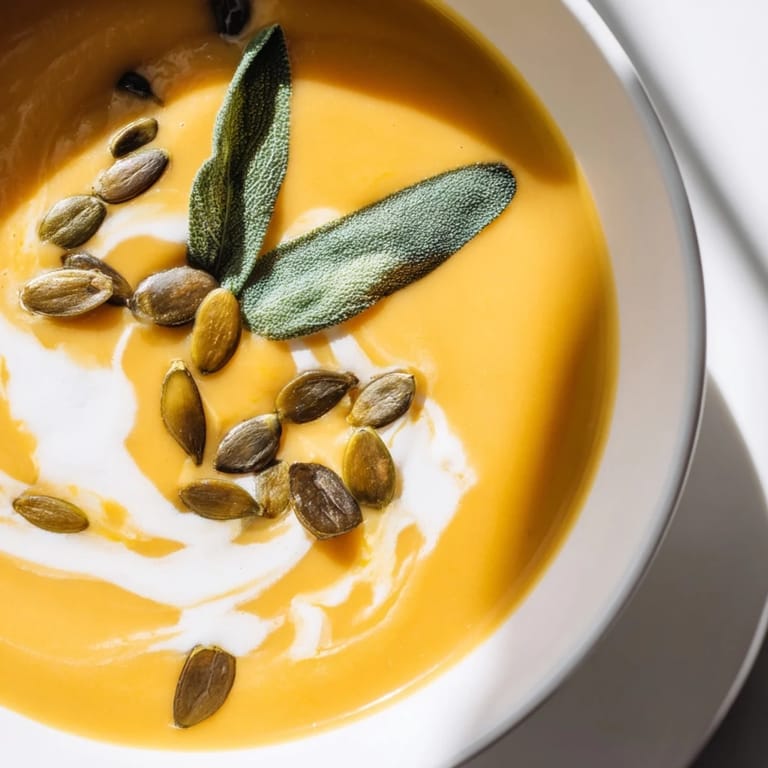
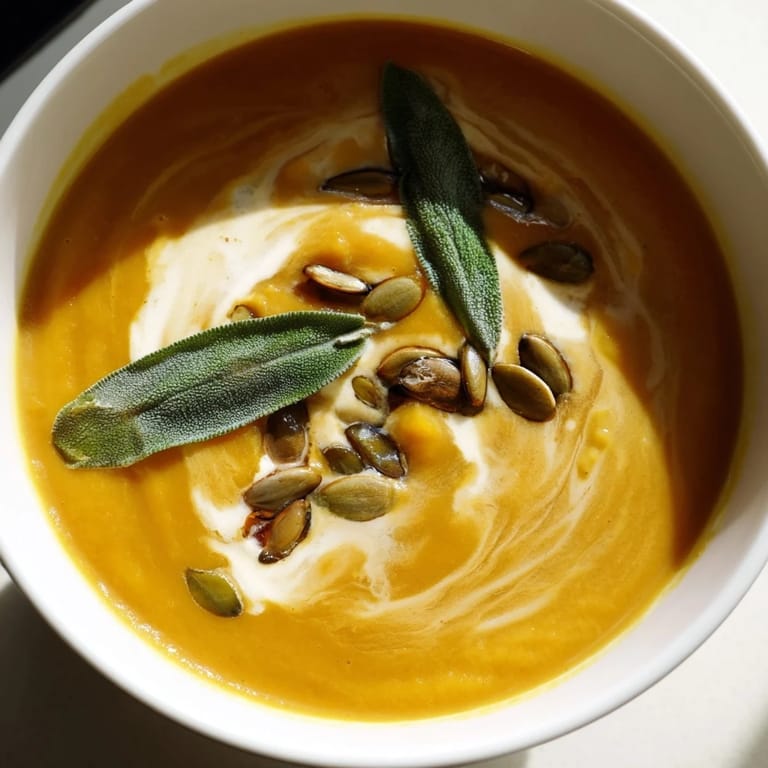
- Roasted pumpkin seeds and fresh sage (for garnish): These aren't just decoration—they add texture and a reminder that you cared enough to finish it properly.
Tired of Takeout? 🥡
Get 10 meals you can make faster than delivery arrives. Seriously.
One email. No spam. Unsubscribe anytime.
Instructions
- Fire up the oven:
- Preheat to 400°F (200°C). This needs to be ready before you start cutting squash.
- Prep the squash for roasting:
- Toss your cubed squash with 1 tbsp olive oil, 1/2 tsp salt, and a pinch of pepper, then spread it on a parchment-lined baking sheet in a mostly single layer. You want room for the heat to do its job, not a crowded pile.
- Roast until golden:
- Into the oven for 30 to 35 minutes, stirring halfway through. You'll know it's ready when the edges are caramelized and the insides are tender enough to break with a spoon. This is where the magic happens—the natural sugars concentrate into something that tastes intentional.
- Build the base:
- Heat the remaining 1 tbsp olive oil in a large pot over medium heat. Sauté your chopped onion for 4 to 5 minutes until it turns translucent and soft, then add the garlic and cook for exactly one more minute until the kitchen smells impossibly good.
- Bring it together:
- Add your roasted squash to the pot, then sprinkle in the sage and nutmeg—you'll feel it before you see it, the way those spices wake up as they hit the heat. Pour in the broth, bring it all to a boil, then lower the heat and let it simmer gently for 10 minutes. This rest time lets everything get to know each other.
- Blend to silk:
- Remove from heat and blend using an immersion blender, moving it slowly through the soup until you can't feel any graininess anymore. If you're using a countertop blender, work in batches and never fill it more than halfway—hot liquid needs room to expand. There's a reason it's called "immersion" and not "explosion blender."
- Taste and adjust:
- This is non-negotiable. Taste it, then add more salt or pepper if it needs it. Trust yourself here.
- Serve with intention:
- Ladle into bowls while it's steaming. A swirl of cream or coconut milk on top, some pumpkin seeds scattered around, maybe a fresh sage leaf if you're feeling fancy. Serve immediately while it's hot enough to warm your hands around the bowl.
 Save to Pinterest
 There's a particular kind of quiet that happens when people are eating something warm and delicious, where the spoons do most of the talking. That's when you know this soup did its job.
Why Roasting Changes Everything
The temptation is always to skip straight to boiling the squash in the broth and save yourself thirty-five minutes. I tried this once, and the soup was fine, competent even, but it tasted like a recipe. The roasted version has depth—a faint caramel note underneath the spice that makes people reach for another spoonful before the first one's even swallowed. Roasting concentrates the squash's inherent sweetness into something almost savory, and that's the difference between soup that's lunch and soup that's an occasion.
Variations and Flexibility
This soup is genuinely forgiving. If you want it vegan, use coconut milk instead of cream—it actually adds a subtle richness that feels more indulgent than dairy. For a spicier version that'll clear your sinuses, add a pinch of cayenne pepper when you add the sage and nutmeg; I discovered this accidentally after my roommate left hot sauce on the counter, and now I keep cayenne specifically for this soup. You can also add apple, a splash of balsamic vinegar, or even a whisper of cinnamon if you want to push it toward something slightly different but still fundamentally this soup.
Serving and Storage
Serve this hot, always hot, either in bowls or in mugs if you're eating it while scrolling through your phone. It pairs perfectly with crusty bread—something to swipe through the bowl to catch every last bit—or a crisp white wine like Sauvignon Blanc if you're in the mood for something more intentional. Leftovers keep for four days in the fridge and freeze brilliantly for up to three months, so there's no reason not to make a double batch and thank yourself later.
- Let it cool completely before freezing to avoid thermal shock to your containers.
- Reheat gently on the stove with a splash of water or broth if it's thickened too much.
- Make this when you're feeling generous, because it somehow tastes better when shared.
 Save to Pinterest
 This soup has become the recipe I return to when I want to remind myself why cooking matters—it's not complicated, but it's honest, and it tastes like someone cared.
Recipe FAQs
- → What type of squash is best for this dish?
Fresh butternut squash, peeled and cubed, works best to achieve a naturally sweet and creamy texture when roasted.
- → Can I substitute any herbs used here?
Sage is key for its earthy aroma, but if unavailable, thyme or rosemary can provide a different, pleasant herbal note.
- → How do I achieve a smooth and velvety texture?
Roasting the squash caramelizes sugars, and blending thoroughly with vegetable broth ensures a silky consistency.
- → Are there ways to add extra depth to the flavor?
Adding a pinch of nutmeg and sautéing garlic and onion before simmering enhances warmth and complexity.
- → What garnishes complement this dish well?
Swirls of cream or coconut milk, roasted pumpkin seeds, and fresh sage leaves add richness and texture contrast.