 Save to Pinterest
 There's something almost magical about the moment when pasta water mingles with cream and Parmesan in a hot skillet—the way the sauce transforms from thin to silky in just a few stirring motions. I discovered this dish on a weeknight when I had chicken, broccoli, and a craving for something that tasted like restaurant comfort food but required zero cleanup drama. The beauty of it is that everything happens in one pan, and by the time you're plating, your kitchen smells like garlic and melted cheese in the best possible way.
I made this for my roommate on a Tuesday evening when we'd both had the kind of day that demanded immediate comfort food, and watching their face light up after the first bite was absolutely worth every minute. They asked for the recipe that same night, and now it's become our go-to dish when we want to eat well without overthinking it—proof that the best recipes are the ones people actually want to make again.
Ingredients
- Boneless, skinless chicken breasts: Dicing them into roughly equal pieces helps them cook evenly and allows them to absorb the creamy sauce beautifully—I've learned the hard way that uneven chunks lead to some pieces drying out while others are still cooking.
- Broccoli florets: Keeping them relatively uniform in size ensures they'll all reach that perfect tender-but-still-bright-green stage at the same time.
- Garlic and yellow onion: The garlic becomes almost sweet and mellow when it simmers in cream, so don't be shy with it; the onion provides a subtle sweetness that balances the richness.
- Short pasta: Penne, fusilli, or rotini all work wonderfully here because their shapes catch and hold the sauce in every bite.
- Whole milk and heavy cream: The combination of both creates a sauce that's rich without being overwhelming, and the milk helps you use less cream while still achieving that luxurious texture.
- Parmesan cheese: Freshly grated is genuinely worth the small effort—it melts more smoothly than pre-grated varieties and tastes noticeably brighter.
- Chicken broth: This is your liquid base, so using low-sodium gives you control over the final seasoning rather than ending up with a dish that's unexpectedly salty.
- Olive oil and butter: The combination creates a flavorful base for searing the chicken and sautéing the aromatics without either fat overwhelming the other.
Tired of Takeout? 🥡
Get 10 meals you can make faster than delivery arrives. Seriously.
One email. No spam. Unsubscribe anytime.
Instructions
- Sear the chicken in your skillet:
- Heat the oil and butter together over medium heat until the butter is foaming and smells nutty, then add your diced chicken with a generous pinch of salt and pepper. Let it sit undisturbed for a minute or two before stirring—this initial sear creates those golden edges that taste incredible. When the outside is golden and the meat is cooked through (about 5 to 6 minutes), transfer it to a plate.
- Build your flavor base:
- In the same skillet, add the chopped onion and let it soften for about 2 minutes, then add the minced garlic and cook just until fragrant, roughly 30 seconds—garlic burns quickly, so stay attentive here. This is where the magic of flavor really begins.
- Add pasta and liquid:
- Stir in your uncooked pasta, chicken broth, milk, and Italian herbs, and bring everything to a boil. Once it's bubbling actively, reduce the heat to a gentle simmer, cover the skillet, and let it cook for about 8 minutes, stirring occasionally so the pasta doesn't stick to the bottom.
- Introduce the broccoli:
- Add your broccoli florets, cover again, and simmer for another 5 to 6 minutes until the pasta is tender but still has a slight bite and the broccoli is bright green with a little softness. The pasta will continue absorbing liquid and becoming creamier as it cooks.
- Create the creamy finish:
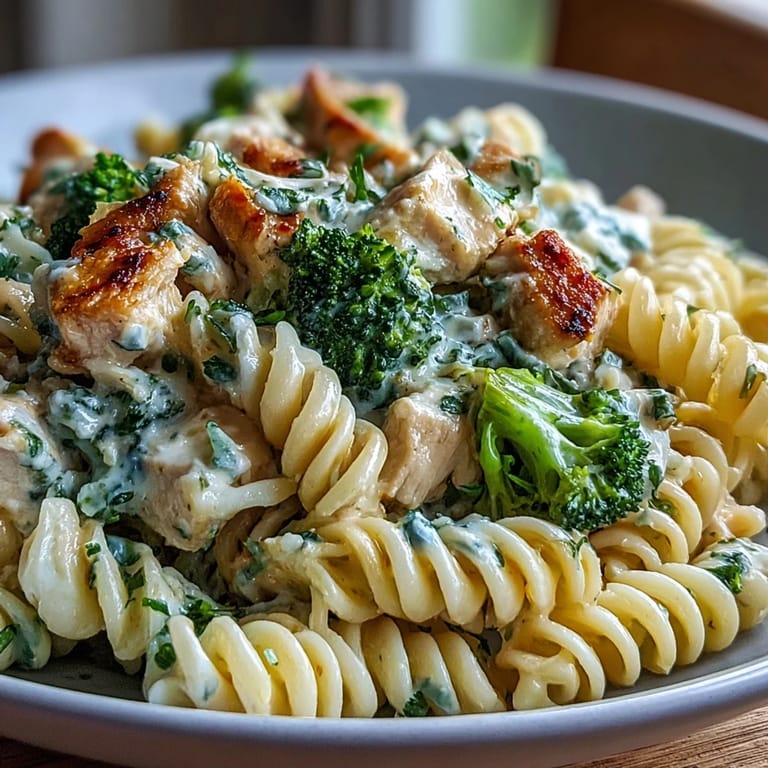
- Lower the heat to medium-low and pour in the heavy cream, then sprinkle the Parmesan over the top while stirring constantly until the cheese has melted completely and the sauce looks silky and cohesive. Return your cooked chicken to the skillet, stir gently to combine everything, and let it warm through for about 2 minutes.
- Taste and adjust:
- Before serving, taste a forkful and adjust the salt and pepper to your preference—remember that Parmesan is already salty, so go easy at first. Finish with fresh parsley and an extra whisper of Parmesan if you're feeling fancy.
 Save to Pinterest
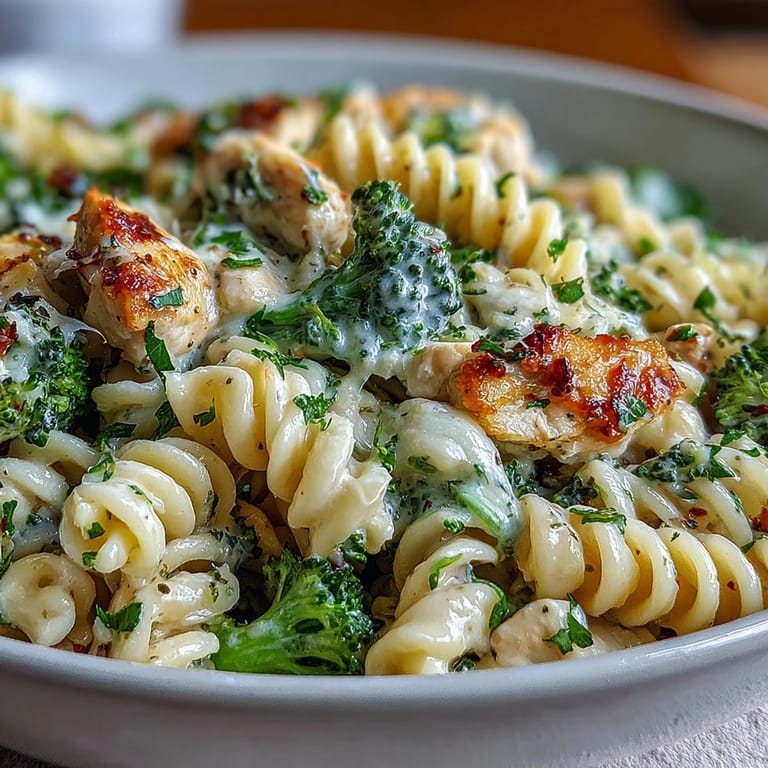
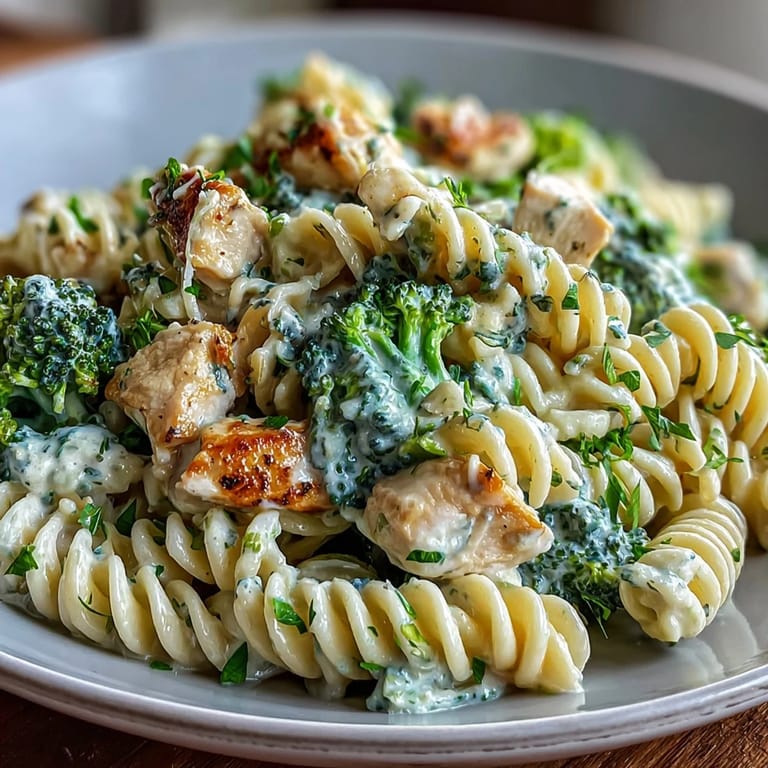
 There's a quiet satisfaction in plating this dish—watching the creamy sauce coat every piece of pasta and broccoli, knowing that in just over half an hour you've created something that tastes like you've been cooking all day. It's the kind of meal that reminds you that weeknight dinners don't have to be boring, and that comfort food can be both genuinely easy and genuinely delicious.
Why This Works as a One-Pan Dinner
Everything cooking together in one skillet means the pasta absorbs all those savory, garlicky flavors from the broth and cream instead of boiling in plain water—it's why this tastes so much more developed than conventional pasta dishes. The timing is designed so that the pasta reaches al dente exactly when the broccoli is done, which requires just a bit of attention but no complicated juggling of multiple pots and pans. Plus, minimal cleanup means you actually have energy to enjoy your meal instead of dreading the dishes.
Flexibility and Variations
While I've given you the exact version that made me fall in love with this recipe, the framework is flexible enough to work with whatever's in your kitchen. You can swap the broccoli for spinach (just add it at the very end so it wilts gently), use peas for a slightly sweeter note, or even add sun-dried tomatoes for a subtle tang that plays beautifully against the cream and cheese. If you're short on time, rotisserie chicken works perfectly and cuts your active cooking time down to about 20 minutes—I've done this countless times when I'm too tired to dice raw chicken but still want something homemade and satisfying.
Pairing and Serving Suggestions
This dish sings alongside something crisp and light—a chilled glass of Pinot Grigio cuts through the richness beautifully, or even a simple sparkling water with lemon if you're keeping it alcohol-free. A simple green salad with lemon vinaigrette on the side balances the heaviness of the sauce, and some warm, crusty bread is never a bad idea for soaking up every last drop. The beauty of serving this is that it looks elegant enough for guests but casual enough for a regular Tuesday night.
- If you're cooking for vegetarians, skip the chicken entirely and add an extra cup of broccoli or mushrooms sautéed until golden.
- Make sure your broccoli florets are roughly the same size so they cook evenly and look intentional on the plate.
- This reheats surprisingly well in a gentle oven at 300 degrees if you're making it ahead—just add a splash of milk to loosen the sauce back up.
 Save to Pinterest
 This is the kind of dish that settles into your regular rotation because it delivers exactly what you're hoping for every single time you make it. There's something genuinely wonderful about a meal that's both easy and generous, and this one absolutely is.
Recipe FAQs
- → Can I use pre-cooked chicken?
Yes, rotisserie chicken or leftover cooked chicken works perfectly. Add it during step 5 when stirring in the cream and cheese, just long enough to heat through.
- → What pasta shapes work best?
Short pasta varieties like penne, fusilli, or rotini are ideal because they catch the creamy sauce in their crevices. Macaroni or gemelli would also work well.
- → Can I make this dairy-free?
Substitute whole milk and heavy cream with unsweetened almond or cashew milk. Use nutritional yeast or vegan Parmesan alternative instead of dairy Parmesan, and replace butter with olive oil.
- → How do I store leftovers?
Store in an airtight container in the refrigerator for up to 4 days. The pasta will absorb more sauce as it sits, so add a splash of milk or broth when reheating to restore creaminess.
- → Can I add other vegetables?
Absolutely. Spinach, peas, diced bell peppers, or zucchini would all complement the garlic Parmesan flavors. Add heartier vegetables with the pasta in step 3, and delicate greens like spinach in the final minutes.
- → Why cook pasta in the skillet?
Cooking pasta directly in the broth and milk allows the starch to release into the liquid, naturally thickening the sauce. This technique infuses the pasta with flavor and creates a creamier texture without additional flour or roux.