 Save to Pinterest
 The first time I made this soup was on a particularly gray Tuesday when I was craving takeout flavors but too tired to even think about ordering. I stood in my kitchen in fuzzy socks, realizing I had all the building blocks of egg rolls sitting in my fridge but zero ambition to actually wrap filling in dough. That happy accident has since become one of my most requested comfort recipes.
Last winter my neighbor Sarah came over during a snowstorm with a bag of cabbage from her CSA share. We stood around the stove watching the steam rise, taking turns tasting and adjusting the seasoning. She took home three containers and texted me the next day that her husband had already asked when I was making it again.
Ingredients
- 1 pound ground pork: Pork gives this soup that authentic egg roll depth but chicken or turkey work beautifully too
- 4 cloves garlic: Fresh garlic is non negotiable here for that aromatic backbone
- 2 tablespoons fresh ginger: The fresh stuff brings a bright warmth that ground ginger cannot match
- 1 tablespoon soy sauce: Use tamari if you are keeping it gluten free
- 1 tablespoon sesame oil: This is what makes it taste restaurant quality
- 1 medium yellow onion: Shallots work if you want something sweeter and milder
- 6 cups low sodium chicken broth: Low sodium lets you control the salt level perfectly
- 1 cup shredded carrots: Red bell pepper strips add lovely color if you want to switch it up
- 4 cups green cabbage: Napa cabbage is more delicate but regular green cabbage holds up better
- 1/2 cup green onions: Save some for the top because that pop of green makes everything better
- 1 tablespoon rice vinegar: Apple cider vinegar works in a pinch
- Salt and black pepper: Trust your taste buds here
- 2 large eggs: Totally optional but those silky ribbons make it feel so special
- Red pepper flakes: Add this if you like a little kick at the end
Tired of Takeout? 🥡
Get 10 meals you can make faster than delivery arrives. Seriously.
One email. No spam. Unsubscribe anytime.
Instructions
- Start with the pork:
- Heat your largest pot over medium high heat and add the ground pork. Use your wooden spoon to break it into small pieces as it cooks. Let it get nicely browned which takes about five to seven minutes. You can drain some fat if there is a lot but a little stays behind for flavor.
- Add the aromatics:
- Toss in your diced onion, minced garlic, and grated ginger right into the pot with the pork. Cook everything together for three to four minutes until your kitchen smells amazing and the onions turn translucent.
- Build the flavor base:
- Pour in the soy sauce, sesame oil, and rice vinegar. Stir everything thoroughly so the pork and vegetables get evenly coated in all that flavor.
- Add the broth:
- Pour in all six cups of chicken broth and bring the soup to a gentle boil. Watch how the liquid turns a beautiful rich color from the pork and seasonings.
- Cook the vegetables:
- Add the shredded carrots and sliced cabbage to the boiling broth. Turn the heat down to maintain a steady simmer. Let the vegetables cook for ten to fifteen minutes until they are tender but still have some bite.
- Add the eggs:
- If you are using eggs, beat them in a small bowl first. Slowly drizzle the eggs into the soup while gently stirring in a circular motion. They will cook instantly into delicate ribbons throughout the broth.
- Season to taste:
- Taste your soup and add salt and pepper as needed. This is when you decide if it needs anything else.
- Finish and serve:
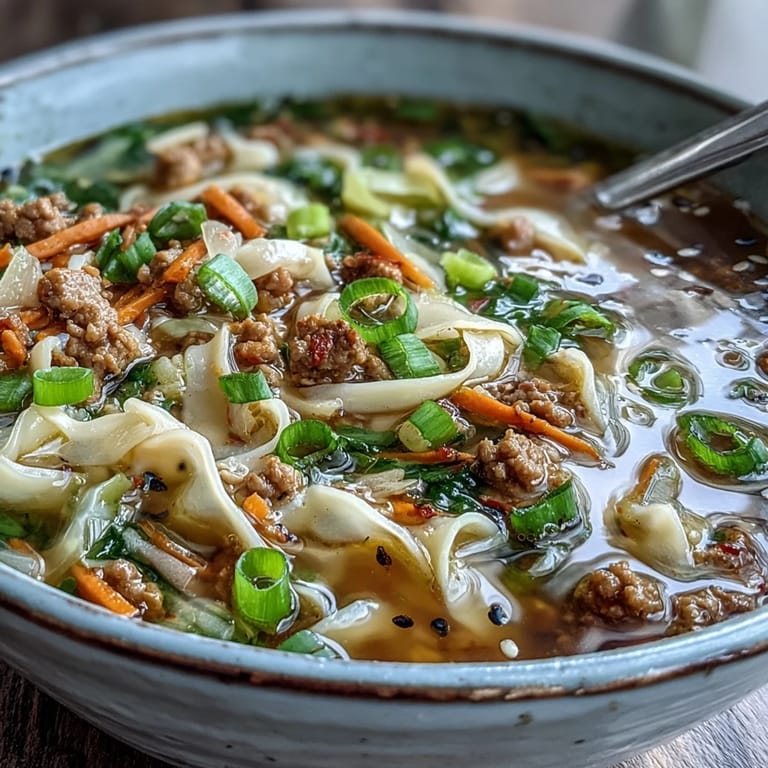
- Ladle the hot soup into bowls and scatter those reserved green onions on top. Add red pepper flakes or sriracha if you want some heat.
 Save to Pinterest
 This soup has saved me on countless busy weeknights when I wanted something comforting but did not have hours to spend at the stove. My kids now request it whenever the weather turns even slightly chilly.
Making It Your Own
One of my favorite discoveries was that this soup base is incredibly forgiving. I have made it with whatever vegetables were languishing in my crisper drawer and it always turns out comforting and delicious. The key is keeping the ratio of broth to vegetables roughly the same.
Perfect Pairings
While this soup is plenty satisfying on its own, I love serving it with steamed rice on especially hungry nights. Crispy wonton strips from the store add the most wonderful crunch on top. A simple side salad balances out the richness beautifully.
Meal Prep Magic
This soup actually tastes better the next day which makes it perfect for meal prep. The flavors meld together and the cabbage softens into the broth in the most appealing way. I always make a double batch and portion it into glass containers for easy lunches throughout the week.
- Let the soup cool completely before storing to prevent condensation
- Reheat gently on the stove adding a splash of broth if it seems too thick
- The eggs will reabsorb into the soup which is totally normal and still delicious
 Save to Pinterest
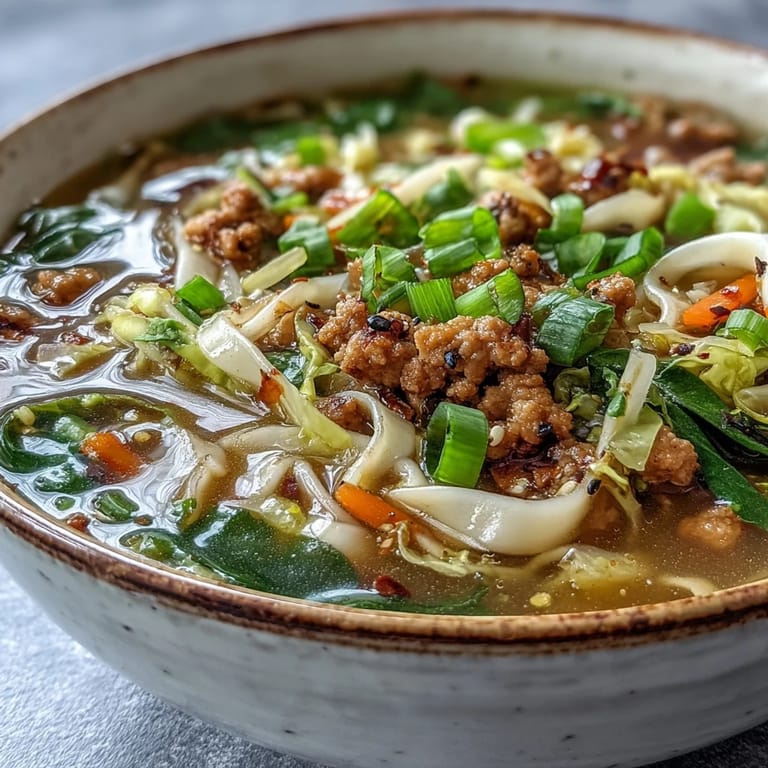
 There is something deeply satisfying about taking familiar flavors and transforming them into something new and cozy. I hope this soup finds its way into your regular rotation too.
Recipe FAQs
- → Can I make this soup vegetarian?
Absolutely. Simply swap the chicken broth for vegetable broth and replace the ground pork with diced firm tofu, mushrooms, or plant-based ground meat alternative. The seasoning blend remains just as flavorful.
- → What type of cabbage works best?
Napa cabbage is ideal for its delicate texture and mild sweetness, but standard green cabbage works beautifully too. Both varieties soften nicely in the simmering broth while maintaining a pleasant crunch.
- → How can I make this gluten-free?
Use gluten-free tamari instead of regular soy sauce and verify your broth is certified gluten-free. All other ingredients naturally fit a gluten-free lifestyle.
- → Can I freeze the leftovers?
The soup freezes well for up to 3 months, though the vegetables will soften more upon reheating. For best texture, undercook slightly before freezing, then thaw overnight in the refrigerator before gentle reheating.
- → What toppings complement this soup?
Fresh green onions add brightness, while crispy elements like fried wonton strips or toasted sesame seeds create appealing contrast. A drizzle of chili oil or sriracha brings welcome heat for spice lovers.