 Save to Pinterest
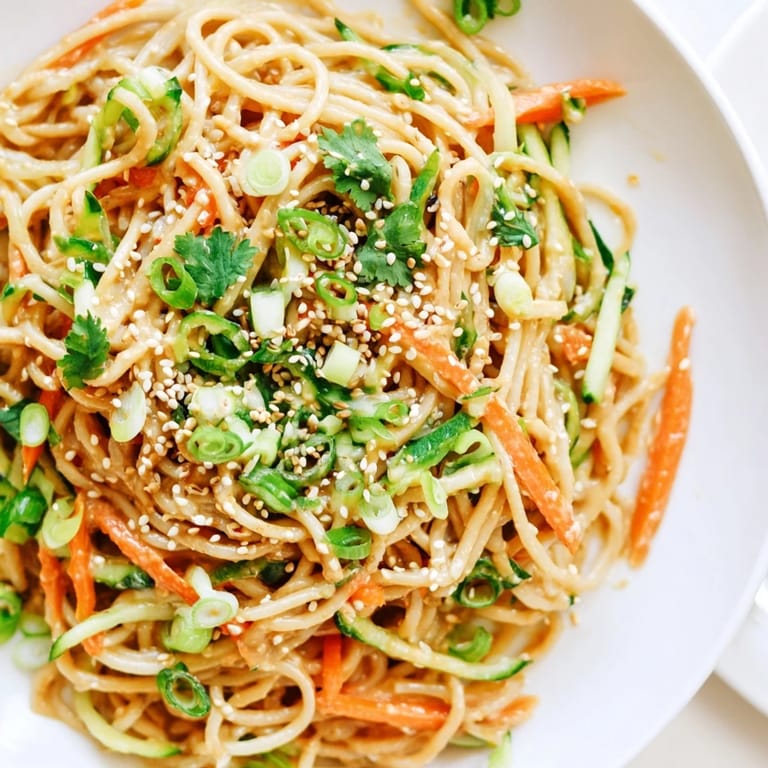
 Summer arrived in my kitchen the moment I tasted cold sesame noodles at a tiny noodle shop tucked between two apartment buildings. The owner, a woman who seemed to know everyone by name, whisked her sauce with such ease that I asked for her secret. She laughed and said there was no secret, just good ingredients and cold water. Now, whenever the heat makes cooking feel impossible, these silky, slurpable noodles remind me that sometimes the best meals are the ones that cool you down.
I made this for my roommate on the kind of day where opening the oven felt like a crime against humanity. She came home exhausted from a double shift, and I had these noodles waiting in the fridge, topped with a small mountain of fresh cilantro and crushed peanuts. She ate directly from the bowl while standing at the counter, and that's when I knew this recipe was a keeper.
Ingredients
- Wheat noodles or spaghetti (350 g): Use fresh or dried, but avoid the super thin ones as they get mushy when cold. Toss with sesame oil right after draining to stop them clumping together.
- Tahini or sesame paste (4 tbsp): This is the backbone of your sauce, so don't skip it or swap it carelessly. The toasted versions have more depth than raw.
- Smooth peanut butter (2 tbsp): Adds richness and mellows the sesame so it doesn't overpower. Natural or creamy both work beautifully.
- Low-sodium soy sauce (3 tbsp): The salt level matters here since you're not cooking the sauce. Taste as you go and adjust.
- Rice vinegar (2 tbsp): This bright acidity keeps the whole dish from feeling heavy. White vinegar works in a pinch but tastes harsher.
- Honey or maple syrup (1 tbsp): A touch of sweetness balances the sesame and savory notes. Maple syrup leans earthy, honey stays neutral.
- Toasted sesame oil (1 tbsp): The dark amber bottle, not the light golden kind. A small bottle lasts forever because you use it in tiny amounts.
- Garlic and ginger (2 cloves and 1 tbsp): Freshly grated, never from a jar. Ginger especially loses its brightness if it sits in a bottle.
- Chili oil (1–2 tsp, optional): For gentle heat. Start with less, you can always drizzle more on your bowl.
- Cold water (3–5 tbsp): Add this slowly to get the sauce exactly how you like it, thinner for dressing, thicker for coating.
- Cucumber and carrots: Cut them into thin matchsticks so they're refreshing to bite into rather than chewy. A mandoline makes this easy if you have one.
- Spring onions, sesame seeds, cilantro: These toppings are where the dish gets its personality. Don't skip them.
Tired of Takeout? 🥡
Get 10 meals you can make faster than delivery arrives. Seriously.
One email. No spam. Unsubscribe anytime.
Instructions
- Cook and cool the noodles:
- Boil them in salted water until just tender, then drain and immediately run cold water over them while stirring gently so they cool evenly. The sesame oil keeps them silky and loose.
- Build the sauce:
- Whisk tahini, peanut butter, soy sauce, rice vinegar, honey, and sesame oil together first, then add the garlic and ginger. Once smooth, pour in the water a little at a time, whisking constantly, until it's pourable but still coats a spoon.
- Toss noodles and sauce:
- Put the cooled noodles in a large bowl and pour the sauce over them, then toss with your hands or two forks until every noodle has a thin coat. This takes a minute but matters.
- Plate and garnish:
- Pile noodles into bowls and top with cucumber, carrots, spring onions, sesame seeds, and cilantro. Add peanuts if you want extra texture and a protein boost.
- Chill or serve:
- If you have time, cover and refrigerate for 15 minutes so the flavors settle and everything gets properly cold. If you're hungry now, eat it immediately, it's still delicious.
 Save to Pinterest
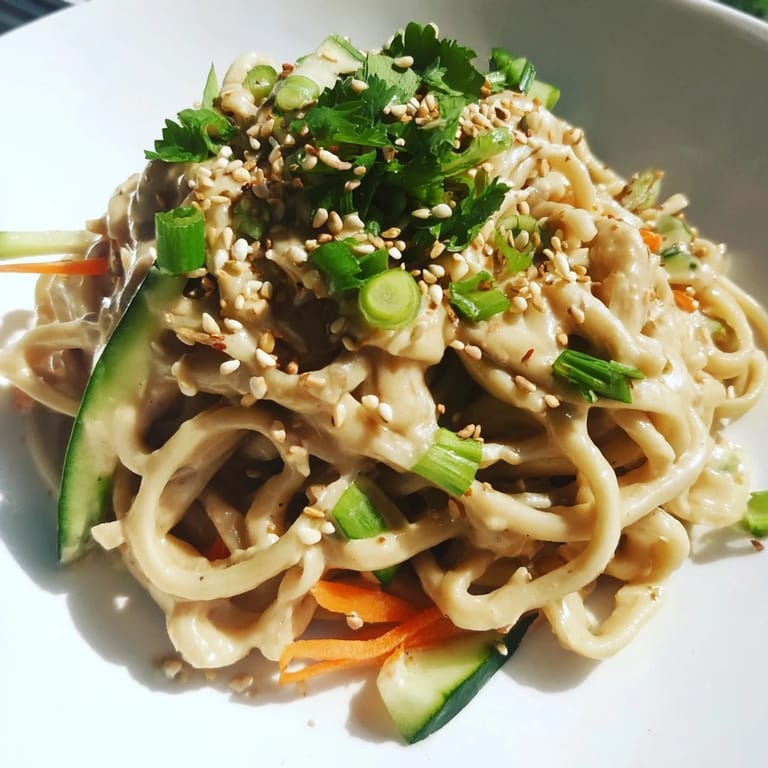
 There's something almost meditative about arranging those paper-thin vegetable strips on top of the noodles, like you're setting up a small edible landscape. My friend once said it looked too pretty to eat, then she mixed it all together and ate the whole bowl without stopping.
Why This Works as a Make-Ahead Meal
The beauty of cold sesame noodles is that they actually taste better when they've had time to rest in the fridge. Prep the sauce and vegetables the night before, cook the noodles in the morning, and you're five minutes away from lunch. I've brought these to potlucks, packed them for day trips, and left them in the office fridge for emergency dinners when I couldn't face cooking.
Playing with Flavor and Texture
Once you have the basic sauce down, it becomes a canvas. I've added miso for umami depth, coconut milk for creaminess, and more chili oil on days when I needed something to wake me up. The vegetables are flexible too—shredded radish adds peppery crunch, edamame brings protein, and a handful of mint changes everything about how the dish tastes.
Building Your Perfect Bowl
The toppings are where you make this recipe your own, so don't treat them as decorative afterthoughts. Each element should add something—temperature contrast, textural crunch, a pop of brightness. I've learned that the quality of your cilantro and the amount of sesame seeds matter way more than extra protein or fancy additions.
- Toast your own sesame seeds in a dry skillet for two minutes if you can, the smell alone is worth it.
- A squeeze of fresh lime just before eating brings the whole dish alive.
- Crushed roasted peanuts add nutty depth and keep the noodles from sliding around your bowl.
 Save to Pinterest
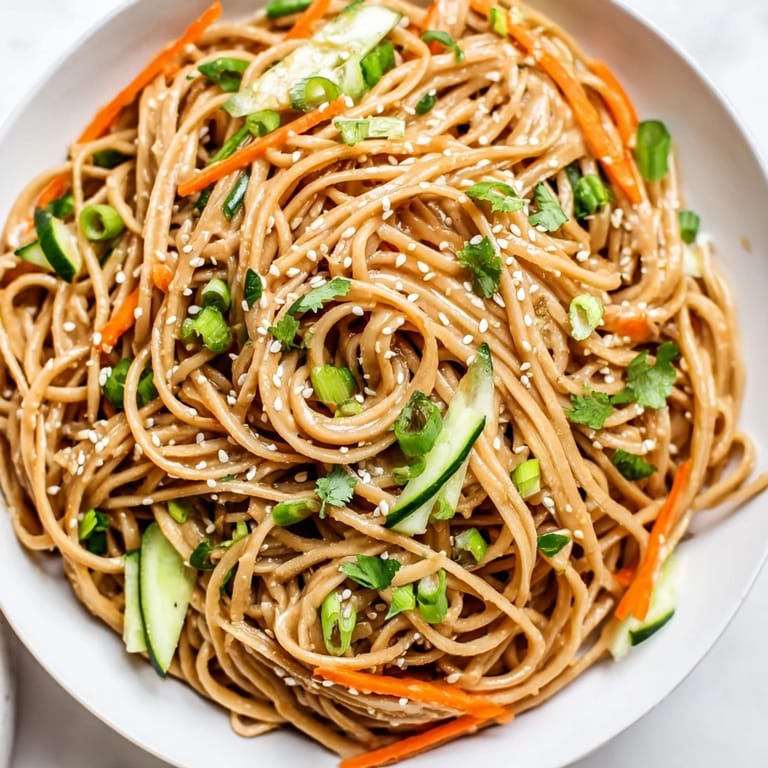
 These noodles taught me that some of the best meals ask for almost nothing from you, just good ingredients and five minutes of attention. They're the kind of food that makes you want to eat with your hands and slurp loudly, no apologies.
Recipe FAQs
- → What noodles work best for this dish?
Wheat noodles or spaghetti provide the ideal texture, holding the creamy sauce well when properly chilled.
- → How can I adjust the sauce thickness?
Add cold water gradually to reach a smooth, pourable consistency without losing creaminess.
- → Are there gluten-free alternatives?
Yes, using gluten-free noodles and tamari in place of soy sauce ensures a gluten-free adaptation.
- → Can I add protein to the noodles?
Shredded chicken, tofu, or shrimp can be mixed in for extra protein and heartiness.
- → What toppings enhance the flavor?
Julienned cucumber, carrots, spring onions, toasted sesame seeds, fresh cilantro, and crushed peanuts add crunch and freshness.
- → How should the dish be served?
Chill the noodles for 10–15 minutes before serving or enjoy immediately for a refreshing, flavorful meal.