 Save to Pinterest
 There's a particular Thursday evening I think about whenever I make this bisque—not because it was special, but because it wasn't. I'd picked up an odd assortment of mushrooms from the farmer's market, uncertain what to do with them, and ended up simmering them down into something that tasted far more elegant than my wandering approach deserved. Now it's become the soup I make when I want to feel like I know what I'm doing in the kitchen, even on nights when I'm just following instinct and a half-remembered conversation with someone's grandmother.
I made this for a dinner party once where someone mentioned being tired of the same old soups, and I watched their face when they tasted that first spoonful—how their whole expression softened. That's when I realized this isn't just a recipe; it's the kind of dish that makes people pause mid-conversation and actually taste what's in front of them.
Ingredients
- Mixed wild mushrooms (500 g): Chanterelle, cremini, and shiitake each bring different depths; don't skip the variety, and clean them gently with a damp cloth rather than washing them aggressively.
- Unsalted butter (2 tbsp): This is where the flavor builds, so use real butter and let it warm slowly to coax out the aromatics.
- Yellow onion and leek (1 onion + 1 leek): The onion brings sweetness, the leek adds a subtle sophistication; slice the leek lengthwise first, then into half-moons to catch the layers.
- Garlic (2 cloves): Mince it fine so it melts into the base without any harsh bite.
- Vegetable or chicken stock (750 ml): Use stock you'd actually drink—the quality makes itself known in the final bowl.
- Dry white wine (120 ml): A Sauvignon Blanc or Pinot Grigio works best; something crisp that cuts through the richness.
- Heavy cream (240 ml): This is what makes it velvety; don't skimp, and add it at the end so it stays silky.
- Fresh thyme, black pepper, sea salt, and nutmeg: The thyme is essential (dried is fine if fresh isn't around), and just a whisper of nutmeg—it shouldn't announce itself.
Tired of Takeout? 🥡
Get 10 meals you can make faster than delivery arrives. Seriously.
One email. No spam. Unsubscribe anytime.
Instructions
- Coax out the aromatics:
- Melt the butter low and slow, then add your onion, leek, and garlic, letting them soften for about five minutes without taking on color. You're listening for that gentle sizzle and waiting for the kitchen to smell like something good is happening.
- Let the mushrooms speak:
- Stir in the mushrooms and thyme, cooking for 8 to 10 minutes until they've given up their moisture and started to caramelize slightly at the edges. This is where the depth comes from—don't rush it.
- Deglaze with wine:
- Pour in the white wine and let it bubble for a few minutes, scraping up every browned bit stuck to the bottom of the pot; those are liquid gold.
- Build the broth:
- Add your stock, salt, pepper, and nutmeg, then bring it all to a gentle boil before lowering the heat to simmer uncovered for 20 minutes. This is a good moment to step back and let the soup do its work while you breathe.
- Blend to silky perfection:
- Pull the pot from heat and use an immersion blender to purée everything until it's completely smooth and creamy, or carefully work it through a standard blender in batches if you prefer.
- Finish with warmth:
- Return the soup to low heat, stir in the cream gently, and let it warm through without boiling—boiling cream breaks its delicate structure. Taste and adjust the seasoning one last time.
- Serve with intention:
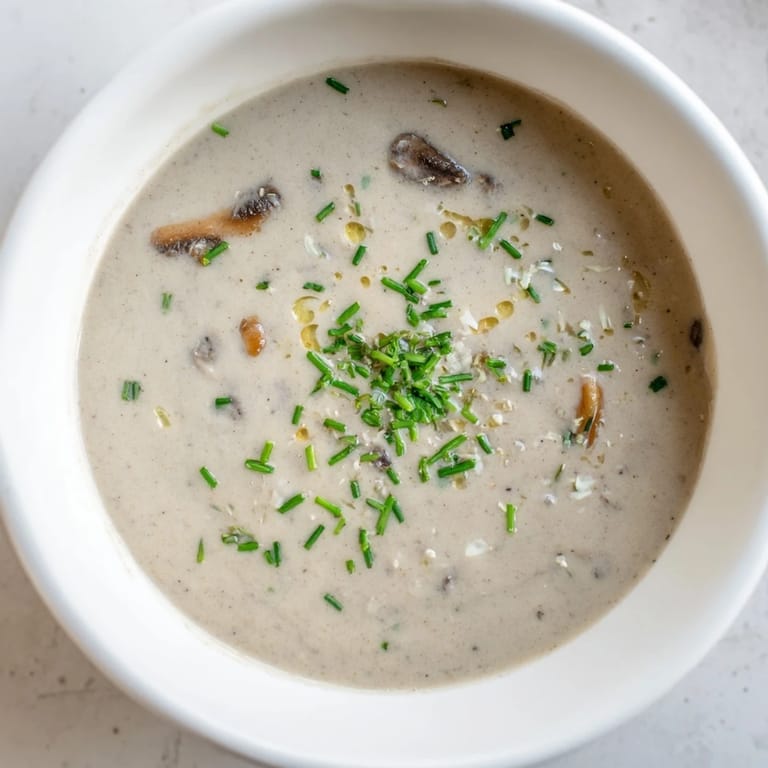
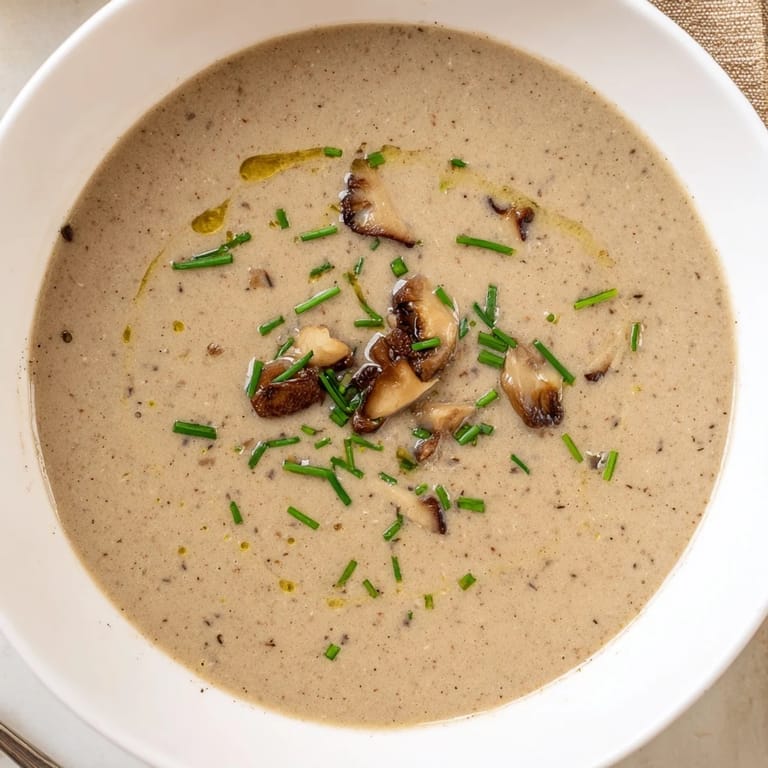
- Ladle into bowls and top with fresh chives or parsley and a tiny drizzle of truffle oil if you're feeling it. Sometimes the simplest garnish is the most elegant.
 Save to Pinterest
 There's something almost meditative about watching a creamy soup come together in a pot—how raw ingredients transform into something you'd order at a place with white tablecloths. I've made this enough times now that I sometimes make it without really thinking, and I like that kind of muscle memory, that ease.
Variations Worth Trying
If you have dried porcini mushrooms tucked away, rehydrate them in warm water and add both the mushrooms and their soaking liquid to the pot—it deepens everything mysteriously. For a vegan version, swap butter for good olive oil and use a plant-based cream; the soup loses a little richness but gains its own delicate charm. You can also stir in a spoonful of Dijon mustard or a splash of sherry vinegar at the end if the soup feels one-dimensional, though it rarely does.
Serving Suggestions
Pair this with something crusty—sourdough, garlic toasts, or torn bread to soak up the last spoonfuls. A glass of crisp white wine alongside it makes sense; the wine's acidity keeps everything from feeling too heavy. I've also served it in smaller portions as an opener to a roasted chicken dinner, and it sets a tone of care without overwhelming what comes next.
Storage and Make-Ahead Tips
This soup keeps beautifully in the refrigerator for up to three days, and it actually tastes deeper the next day after the flavors have had time to settle and know each other. You can also freeze it without the cream, then thaw it, gently reheat it, and stir in fresh cream when you're ready to serve—that way it always tastes like you just finished cooking.
- Make it the morning of a dinner party if you want to free up your evening.
- Reheat gently over low heat, never in the microwave, so the cream stays silky instead of separating.
- Keep the cream separate and add it just before serving for the silkiest texture.
 Save to Pinterest
 This is a soup that asks very little but gives back something warm and generous, the kind of dish that makes ordinary evenings feel intentional. Once you've made it, it becomes part of your quiet repertoire—something you reach for when you want to cook without fuss but still feel proud.
Recipe FAQs
- → What types of mushrooms work best for this bisque?
A mix of wild mushrooms like chanterelle, cremini, and shiitake offers complexity and rich earthiness ideal for this dish.
- → Can I make the bisque vegan?
Yes, replace butter with olive oil and swap heavy cream for unsweetened plant-based alternatives to maintain creaminess.
- → How do I achieve a smooth texture?
Use an immersion blender or standard blender to purée the soup until silky and fully blended without lumps.
- → What wines pair well with this bisque?
Crisp white wines such as Chardonnay or dry Riesling complement the creamy and earthy notes beautifully.
- → Can I prepare the soup ahead of time?
Yes, this bisque can be cooled and refrigerated for up to two days; reheat gently before serving, stirring to restore creaminess.