 Save to Pinterest
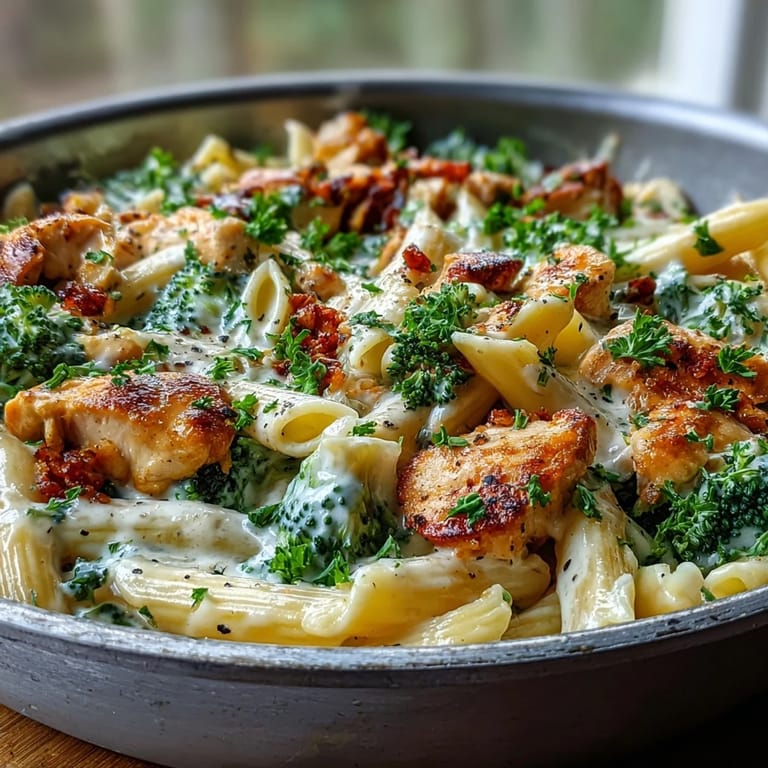
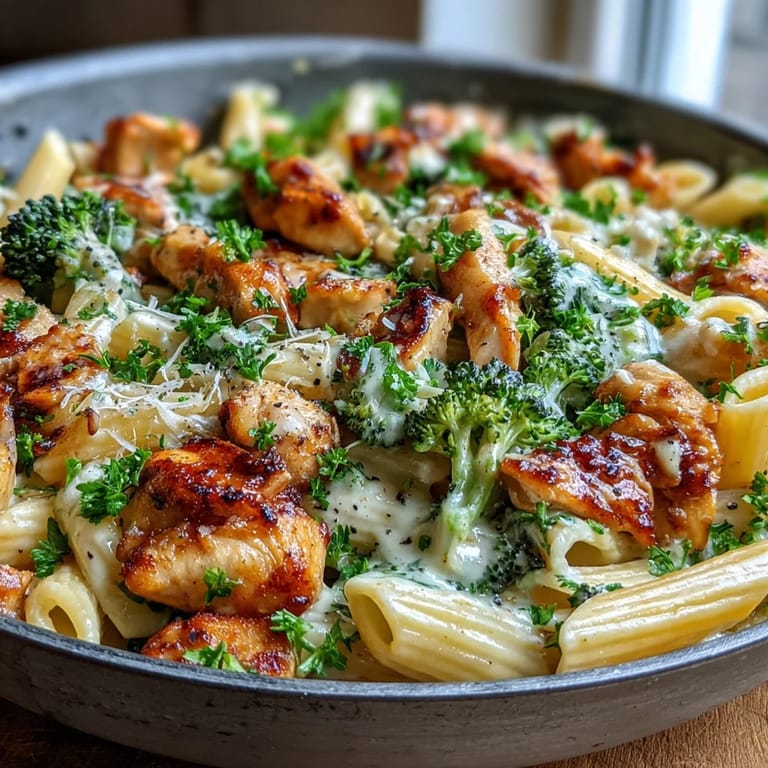
 There's something about the smell of garlic hitting hot butter that makes everything feel like dinner is already half solved. I discovered this pasta one Tuesday evening when I had chicken breasts, broccoli, and cream in the fridge but absolutely zero motivation to think too hard about cooking. What emerged was this ridiculously simple one-skillet wonder that tastes like you spent way more effort than you actually did. The creamy garlic Parmesan sauce clings to every noodle and piece of broccoli, and honestly, it's become my go-to recipe when I want something that feels restaurant-quality but doesn't demand much from me.
I made this for my friend Sarah on a random Thursday, and she watched the whole thing come together from her seat at the kitchen counter with visible disbelief. She kept saying, "That's it? That's the whole thing?" By the time I stirred in the Parmesan and the sauce turned from creamy to silky, she was already asking if she could steal the recipe. Now whenever she texts asking what I'm making for dinner, I know she's hoping I'll say this pasta.
Ingredients
- Boneless, skinless chicken breasts (400 g): Cutting them into bite-size pieces means they cook fast and distribute evenly through the pasta so every forkful has protein.
- Penne, rigatoni, or rotini pasta (300 g): The shape matters more than you'd think—tubes and ridges grab the sauce way better than smooth noodles.
- Small broccoli florets (200 g): Keeping them small means they cook at the same speed as the pasta and become tender but still slightly crisp.
- Garlic (3 cloves, minced): Fresh garlic is non-negotiable here; it's the backbone of the whole flavor, so don't skip it or use powder.
- Small onion, finely chopped: Onion dissolves into the sauce and adds sweetness that balances the garlic and Parmesan.
- Heavy cream (240 ml): This is what makes the sauce luxurious, but it's diluted with broth and milk so it feels sophisticated, not indulgent.
- Freshly grated Parmesan cheese (100 g): Freshly grated melts smoothly and tastes infinitely better than pre-shredded; trust me on this one.
- Unsalted butter (30 g): The starting fat that allows everything else to build; unsalted gives you control over the final salt level.
- Milk (120 ml): This bridges heavy cream and broth, keeping the sauce silky without becoming too rich.
- Low-sodium chicken broth (480 ml): This is the liquid foundation that cooks the pasta right in the pan and adds savory depth.
- Salt, black pepper, and optional additions: Start conservative with salt since Parmesan brings its own; red pepper flakes add a whisper of heat if you like that.
Tired of Takeout? 🥡
Get 10 meals you can make faster than delivery arrives. Seriously.
One email. No spam. Unsubscribe anytime.
Instructions
- Sear the chicken until it's golden:
- Melt butter over medium heat and let it get foamy, then add chicken pieces seasoned with salt and pepper. Don't move them around too much—let them sit for a minute or two so they develop a light golden crust, which takes about 4 to 5 minutes total. This isn't about cooking them through; it's about building flavor.
- Flavor the pan with aromatics:
- In that same skillet with all the chicken-flavored butter, add your chopped onion and minced garlic. Stir constantly for about 2 minutes until the garlic becomes fragrant and the onion turns translucent. This is where the foundation of your sauce gets built.
- Build the creamy sauce base:
- Pour in your chicken broth, milk, and heavy cream all at once and stir everything together. Bring it to a gentle simmer—you want it bubbling softly at the edges, not aggressively boiling.
- Cook pasta and broccoli together in the sauce:
- Add your dried pasta and broccoli florets directly to the simmering liquid, stir well, cover the skillet, and turn heat to medium-low. Let it cook for 10 to 12 minutes, stirring occasionally so nothing sticks and the pasta absorbs the sauce evenly. Watch as the pasta becomes tender and the liquid reduces; if it looks too thick before the pasta is done, add a splash of broth or water.
- Finish with cheese and seasoning:
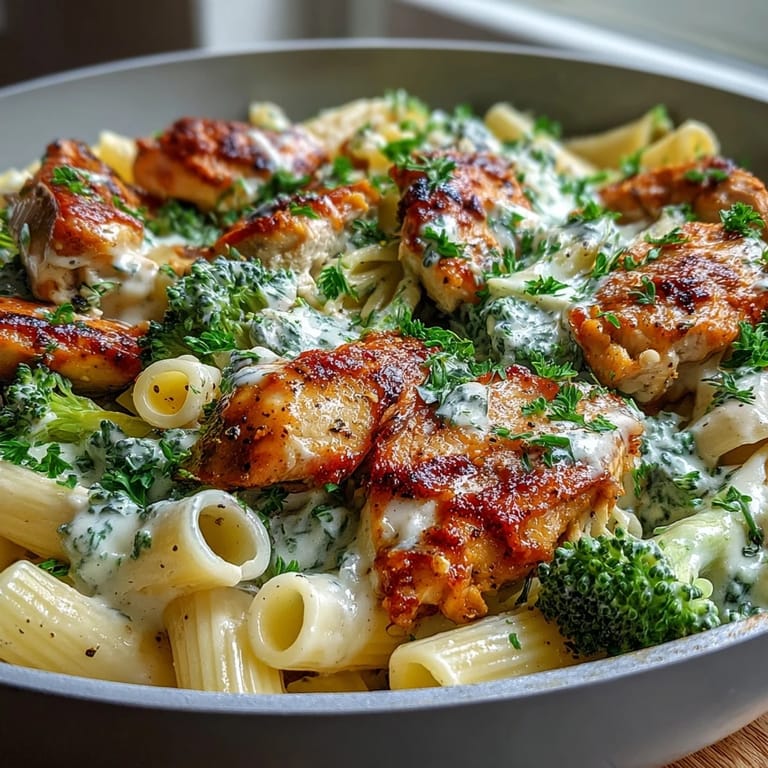
- Return the seared chicken to the pan, add your freshly grated Parmesan, optional Italian herbs, and red pepper flakes if you're using them. Stir constantly for about a minute until the cheese melts completely and the sauce becomes silky and cohesive. Taste it and adjust salt and pepper—you might need a touch more depending on your broth.
- Plate and finish with freshness:
- Ladle everything into bowls while it's steaming hot and shower with fresh chopped parsley and a bit more Parmesan. Serve immediately because the magic is in that creamy warmth.
 Save to Pinterest
 My neighbor came over as I was finishing this, drawn by the smell of garlic and butter wafting through the hallway, and I ended up making her a bowl on the spot. She took one bite, closed her eyes, and said, "This tastes like home but also like you actually tried." That's exactly what this dish is—it feels effortless but tastes like you know what you're doing.
Why This Method Works So Well
Cooking the pasta directly in the sauce instead of draining it separately is the secret move here. The pasta absorbs all that garlicky, creamy goodness as it cooks, and any starch it releases thickens the sauce naturally, making it cling to every piece of broccoli and pasta. You're essentially making a pasta bath rather than tossing dry noodles in sauce afterward—it's the difference between good and unforgettable. The broccoli softens exactly as the pasta reaches al dente, so there's no guessing games or timing separate components.
Easy Variations to Keep It Fresh
Once you've made this once, you'll see how infinitely adaptable it is to whatever you have on hand. I've swapped the broccoli for spinach, bell peppers, or even zucchini, and each version tastes equally delicious. You can use rotisserie chicken if you're truly pressed for time, or skip the chicken entirely and use vegetable broth for a vegetarian version that's still deeply satisfying. A squeeze of fresh lemon juice at the end adds brightness, or if you like heat, double the red pepper flakes or add a pinch of cayenne.
The Golden Rules for Perfect Results
The temptation with cream-based sauces is to crank the heat and rush, but medium to medium-low heat is genuinely your friend here. Low heat gives everything time to meld together peacefully, and you'll end up with a silky sauce instead of a broken, separated mess. Patience pays off in a way that tastes undeniable. One more thing: taste as you go and adjust seasoning at the very end, after everything is combined, because flavors change as things cook down and come together.
- Use low-sodium broth so you control the salt: Regular broth can make this dish taste aggressively salty by the time it reduces.
- Stir occasionally while the pasta cooks: Every 3 minutes or so keeps everything from sticking and helps the sauce distribute evenly.
- Don't overcook the pasta: Remember it continues cooking slightly after you remove from heat, so pull it at al dente, not soft.
 Save to Pinterest
 This is the kind of recipe that becomes part of your regular rotation because it's genuinely foolproof, tastes restaurant-quality, and takes less time than you'd expect. Make it for yourself on a random Tuesday, or make it for people you want to impress—either way, it never disappoints.
Recipe FAQs
- → Can I use rotisserie chicken instead of raw chicken?
Yes, shredded rotisserie chicken works perfectly. Skip the initial chicken sauté step and add it during step 5 when you return cooked chicken to the skillet, just long enough to heat through.
- → What pasta shapes work best for this dish?
Penne, rigatoni, and rotini are ideal because their shapes and ridges hold the creamy sauce well. Short pasta with tubes or curls works better than long strands like spaghetti.
- → Can I make this vegetarian?
Absolutely. Omit the chicken and swap chicken broth for vegetable broth. You can add extra vegetables or white beans for protein. Consider adding mushrooms or spinach for more substance.
- → Why cook pasta directly in the sauce?
Cooking pasta in the creamy broth allows the noodles to absorb flavor directly while releasing starch into the liquid, creating a naturally thicker, more cohesive sauce that clings beautifully to every bite.
- → How do I store and reheat leftovers?
Store in an airtight container in the refrigerator for up to 3 days. Reheat gently on the stove with a splash of milk or broth to restore creaminess, as the sauce thickens when chilled.
- → Can I use half-and-half instead of heavy cream?
Yes, though the sauce will be slightly less rich. For the best results, keep some heavy cream and supplement with half-and-half, or add extra Parmesan to maintain the luxurious texture.