 Save to Pinterest
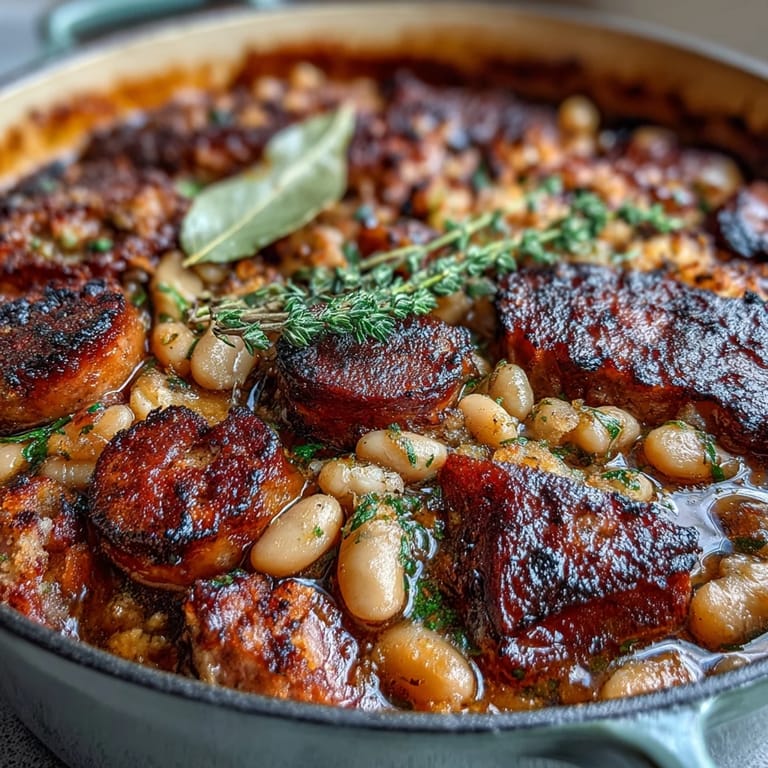
 My neighbor Claude handed me a steaming bowl of cassoulet one winter evening, and I watched the steam rise off those creamy beans studded with ham and sausage. He barely said anything, just smiled and left it on my doorstep with a note that said "slow magic." That night, I understood what he meant. This isn't fussy French cooking—it's the kind of dish that asks you to trust time and heat, then rewards you with something that tastes like comfort wrapped in smoke and herbs.
I made this for my book club on a rainy Thursday, and three people asked for the recipe before they'd even finished eating. One woman said it reminded her of a cassoulet she'd had in Toulouse thirty years ago, which seemed impossible given how simple the ingredients are. That's when I realized this dish isn't about complexity—it's about patience and the alchemy that happens when you let good things sit together in heat.
Ingredients
- Smoked ham, 400 g: The backbone of this dish—use a good quality ham because its smokiness carries the whole flavor profile, and dicing it allows the taste to spread throughout the beans.
- Pork sausage, 200 g: Look for sausages with real seasoning, not the bland ones; they should smell fragrant when you open the package.
- Bacon or pancetta, 100 g: This renders its fat into the pot first, creating the flavor foundation everything else builds on.
- Dried white beans, 500 g: Soak them overnight without fail—this cuts cooking time and helps them cook evenly so you don't end up with a mix of mushy and hard beans.
- Carrots and celery: These aren't just supporting players; they sweeten as they cook and thicken the broth naturally.
- Onion, 1 large: Mincing it fine helps it dissolve into the sauce rather than appearing as distinct chunks.
- Garlic, 4 cloves: Add it after the softer vegetables so it doesn't brown and turn bitter.
- Diced tomatoes: Drain them well so you control the liquid balance and prevent the cassoulet from becoming soupy.
- Chicken stock, 1.2 L: This is your cooking medium and it should taste good on its own—don't skimp on quality here.
- Tomato paste, 2 tbsp: Cook it for a minute after adding so the raw, tangy taste mellows into deep umami.
- Olive oil, 2 tbsp: Use a reliable everyday oil, not your fancy finish oil.
- Bay leaf and thyme: These create the French backbone; fresh thyme smells brighter than dried, but either works.
- Smoked paprika, 1 tsp: This is your secret weapon for depth when the dish doesn't have that ham bone richness.
- Breadcrumbs, 1 cup: Optional, but they crisp up beautifully in the last minutes and add textural contrast to the creamy beans.
Tired of Takeout? 🥡
Get 10 meals you can make faster than delivery arrives. Seriously.
One email. No spam. Unsubscribe anytime.
Instructions
- Get your oven and pot ready:
- Set the oven to 160°C (325°F) and choose a heavy Dutch oven or casserole dish that has a tight-fitting lid—this gentle heat and sealed environment is what makes cassoulet work.
- Render the bacon:
- Heat olive oil in your pot over medium heat, then add the bacon or pancetta and let it cook until the edges curl and it's golden brown. You're not rushing this; you want to coax out all that fat, which becomes your cooking medium.
- Build your flavor base:
- Once the bacon is crispy, add the onion, carrots, and celery, and let them soften for five to seven minutes, stirring occasionally. You're aiming for them to lose their raw edge and start to turn golden at the edges.
- Welcome the garlic:
- Stir in the minced garlic and cook for about one minute—just until it becomes fragrant and you can smell it clearly. This brief cooking prevents it from burning while deepening its flavor.
- Brown the meats:
- Add your diced ham and sliced sausage and let them sit for a few minutes before stirring, so they develop color and release their smoky flavors into the pot. You're not looking for full crispiness, just light browning.
- Deepen the sauce:
- Stir in the tomato paste, smoked paprika, and drained tomatoes, and let everything cook together for two minutes. The tomato paste will darken slightly and lose its raw edge.
- Add the beans and liquid:
- Pour in your soaked, drained beans, the chicken stock, bay leaf, and thyme, then season with salt and pepper to taste. Bring everything to a simmer on the stovetop, stirring gently so the beans don't break apart.
- Move to the oven:
- Cover your pot and transfer it to the oven, where it will cook gently and slowly for about one hour and thirty minutes. This low heat is crucial—it allows the beans to become creamy without falling apart.
- Stir and check:
- Open the pot once or twice during cooking to stir gently and check that the liquid isn't evaporating too quickly. The mixture should be thick and saucy by the end, not soupy.
- Add the crispy topping (optional):
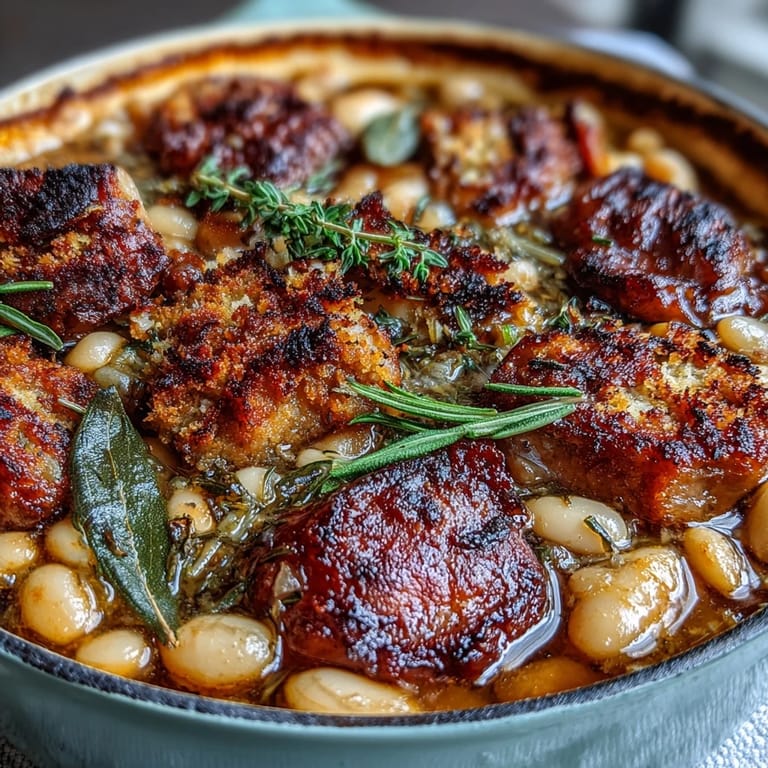
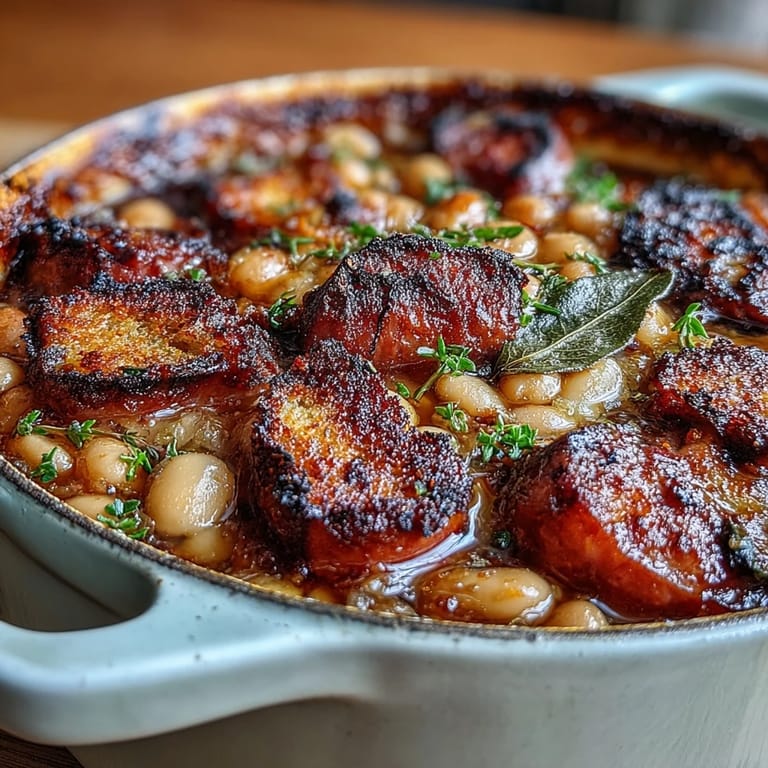
- In the last fifteen minutes, if using breadcrumbs, sprinkle them evenly over the top and return the pot to the oven uncovered. They'll turn golden and create a lovely contrast to the creamy beans below.
- Finish and taste:
- Remove the cassoulet from the oven, fish out the bay leaf and any thyme sprigs, then taste and adjust seasoning with more salt, pepper, or paprika as needed. Let it rest for five minutes before serving.
- Serve with style:
- Ladle the cassoulet into bowls and finish with a scatter of fresh chopped parsley and a crack of black pepper. Serve with crusty bread for soaking up every drop.
 Save to Pinterest
 Last winter, my mother arrived sick with the flu, and I made this cassoulet because I knew soup alone wouldn't feel substantial enough. She ate two bowls and said it tasted like someone had wrapped her in warmth. That's when I understood that cooking isn't really about technique—it's about knowing what people need and giving it to them in a bowl.
Why This Dish Feels Special
Cassoulet has this reputation for being complicated, but honestly, it's just a series of small, manageable steps that build into something greater than the sum of its parts. There's no fancy technique here, no precise timing that demands perfection. Instead, there's patience and trust that slow cooking will turn humble ingredients into something luxurious. The French understood something about letting time do the work that we've mostly forgotten in our rush to get dinner on the table.
Making It Ahead and Storing It
This is genuinely better made a full day ahead—the flavors meld overnight and the beans soften even further as they rest in the broth. Simply cover and refrigerate it, then reheat gently on the stovetop or in a 160°C oven for about thirty minutes, adding a splash of stock if it's dried out. It keeps well for three or four days, and freezes beautifully for up to two months, making it a perfect candidate for weekend cooking that sustains you through busy weeknights.
Pairing and Serving Suggestions
Serve this with a robust red wine like Cahors or Côtes du Rhône—the wine's tannins cut through the richness and the earthiness echoes the beans. Crusty bread is non-negotiable for soaking up the broth at the bottom of the bowl. If you want to make it a full meal, a simple green salad with sharp vinaigrette afterward cleanses the palate and feels appropriately French.
- For a vegetarian version, omit all the meats and increase the smoked paprika to two teaspoons for that crucial depth and smokiness.
- If breadcrumbs aren't available or you want to skip them, the cassoulet is perfect without—thick and saucy on its own.
- Leftovers can be stirred into soups, tossed with pasta, or eaten straight from a bowl on quiet mornings when you need comfort.
 Save to Pinterest
 This is the kind of dish that transforms a kitchen with its aroma and brings people to the table with genuine hunger. Make it when you want to feed people something that says you've given them real time and thought.
Recipe FAQs
- → What type of beans work best for this dish?
Cannellini or Great Northern beans are ideal for their tender texture and ability to absorb flavors when soaked overnight.
- → Can I prepare this dish in advance?
Yes, it benefits from overnight resting as flavors deepen, making it a great make-ahead option.
- → How do breadcrumbs affect the final dish?
Adding breadcrumbs in the last 15 minutes of baking creates a crunchy topping that contrasts the creamy bean mixture.
- → Is there a vegetarian alternative?
Omit the meats and boost flavor with smoked paprika and herbs for a satisfying plant-based version.
- → What herbs enhance the flavor?
Fresh thyme and bay leaf add aromatic depth, while parsley garnish brightens the dish before serving.