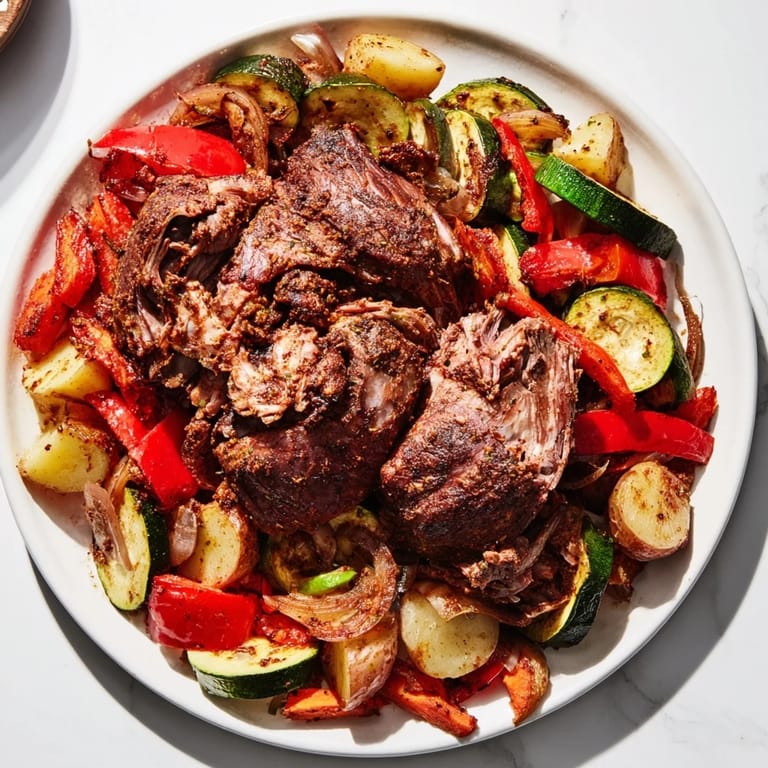
 Save to Pinterest
 The first time I tasted zarb, I wasn't expecting it to change how I thought about slow cooking. My neighbor had brought over this foil-wrapped bundle from her family's weekend gathering, and when she opened it at my kitchen table, the steam rose up carrying this incredible blend of cumin and smoke that seemed to fill every corner of the room. She laughed at my expression and said, "This is how my grandmother fed the whole family on a single afternoon," and somehow I understood that zarb wasn't just a recipe but a moment stretched across hours in an oven, turning simple ingredients into something unforgettable.
I made zarb for a dinner party thinking I'd impress eight people with my new skill, and what actually happened was everyone gathered in my kitchen the moment that foil came open, standing around the platter like something sacred had just been revealed. One guest kept saying "how did you do this?" while another was already tearing into a potato with a fork that barely needed pressure. That's when I realized zarb doesn't need fancy plating or perfect timing, just the honesty of good meat and vegetables cooked until they become something greater than their individual parts.
Ingredients
- Lamb shoulder or chicken pieces: Bone-in cuts matter because they give you flavor during the long cook; 1.5 kg feeds six people generously and the bones practically dissolve into the sauce.
- Olive oil: Use good quality since it's going directly onto the meat; 2 tablespoons seems small until you're coating every surface with that spice marinade.
- Cumin, coriander, cinnamon, smoked paprika: These four spices are the backbone of zarb, and measuring them is actually worth doing exactly because their balance is what makes people ask for your recipe.
- Ground black pepper and salt: Don't skip seasoning the meat properly; most people underestimate how much salt a 1.5 kg piece of meat actually needs.
- Garlic and lemon juice: Four cloves minced fine and the juice from one fresh lemon brighten everything without overwhelming the spices.
- Potatoes, carrots, onions: Cut these into large chunks because they need enough surface area to caramelize but enough bulk to stay intact through hours of steam.
- Zucchini, bell peppers, tomatoes: These add color and a lighter note to balance the richness of the meat.
- Long-grain rice (optional): If serving alongside, 2 cups of rice with 3 cups of broth becomes a neutral canvas for all those incredible cooking juices.
Tired of Takeout? 🥡
Get 10 meals you can make faster than delivery arrives. Seriously.
One email. No spam. Unsubscribe anytime.
Instructions
- Make the marinade:
- Combine olive oil, all your spices, minced garlic, and fresh lemon juice in a bowl large enough to cradle the meat. The mixture should look wet and fragrant, almost like a paste.
- Marinate the meat:
- Add your meat chunks and massage the marinade in as if you're working it into tired shoulders, covering every piece. Refrigerate for at least an hour, though overnight transforms the flavor completely and is worth the planning.
- Preheat and arrange:
- Set your oven to 180°C (350°F) and lay your marinated meat on a wire rack or large roasting tray, giving each piece room to breathe. The meat should be in one layer, not piled.
- Prepare the vegetables:
- Toss your cut vegetables with a drizzle of olive oil, salt, and pepper, then arrange them underneath and around the meat where they'll catch all those dripping juices. This isn't about aesthetic beauty; it's about positioning everything to cook evenly.
- Seal it tight:
- Cover the entire tray with aluminum foil, pressing it firmly so steam gets trapped inside and the flavors intensify rather than escape. If you have banana leaves, wrap those first for authenticity, then foil over top.
- Let time do the work:
- Bake for 2.5 hours until the meat falls apart when you prod it and the vegetables have softened into almost creamy pieces. The wait is the whole point here.
- Make rice if you're serving it:
- In a separate saucepan, bring rice, broth, butter, and salt to a boil, then cover and simmer for 15 to 20 minutes until fluffy. This happens while the zarb finishes, so they're ready at the same moment.
- Open and serve:
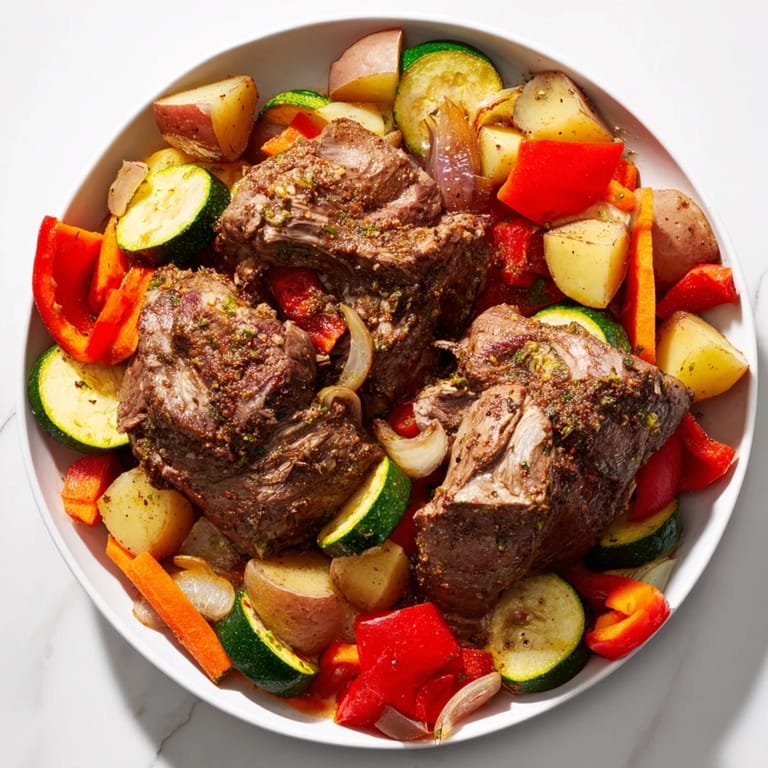
- Carefully peel back the foil to release all that steam, then transfer the meat and vegetables to a large platter, optionally over that bed of rice. Spoon all the cooking juices over everything.
 Save to Pinterest
 My grandmother once told me that zarb was invented because someone clever realized that if you wrapped good food tightly and let heat and time do everything, you could feed a family while doing absolutely nothing, and honestly that wisdom has stayed with me every time I make this. It's the kind of dish that reminds you why people cooked together for centuries, not because they had to impress anyone, but because the smell of something slow-cooked brings everyone to the table.
The Beauty of One-Pot Cooking
There's something deeply satisfying about layering meat and vegetables into a single tray, sealing it, and then having nothing to do but wait. No stirring, no adjusting heat, no wondering if something is cooking faster than something else because the steam environment equalizes everything. The first time I realized I could essentially abandon my oven for two and a half hours while hosting guests in my living room felt like discovering a culinary cheat code.
Customizing Your Zarb
While the traditional recipe is nearly perfect as written, zarb responds beautifully to what's in your kitchen and what you love eating. Eggplants become silky after that long steam, and sweet potatoes add an almost surprising sweetness that plays well against the savory spices. Some families add chickpeas for protein, others layer in dried apricots for brightness, and the recipe stretches to accommodate all of these without losing its essential character.
Serving and Pairing
Zarb arrives at the table wanting accompaniments that respect its slow-cooked seriousness without trying to improve it. Tangy yogurt sauce cuts through the richness while flatbread becomes edible vessels for soaking up juices that taste like hours of careful cooking. If you're in the mood for wine, something robust and red stands beside it without apology, or traditional mint tea if you want to stay true to how this dish is actually eaten across the region.
- Serve the platter family-style and let people help themselves to the proportions they want.
- Any leftover meat and vegetables rewarm beautifully, making zarb excellent for feeding unexpected guests the next day.
- The cooking juices are too good to waste, so spoon them generously over everything right before eating.
 Save to Pinterest
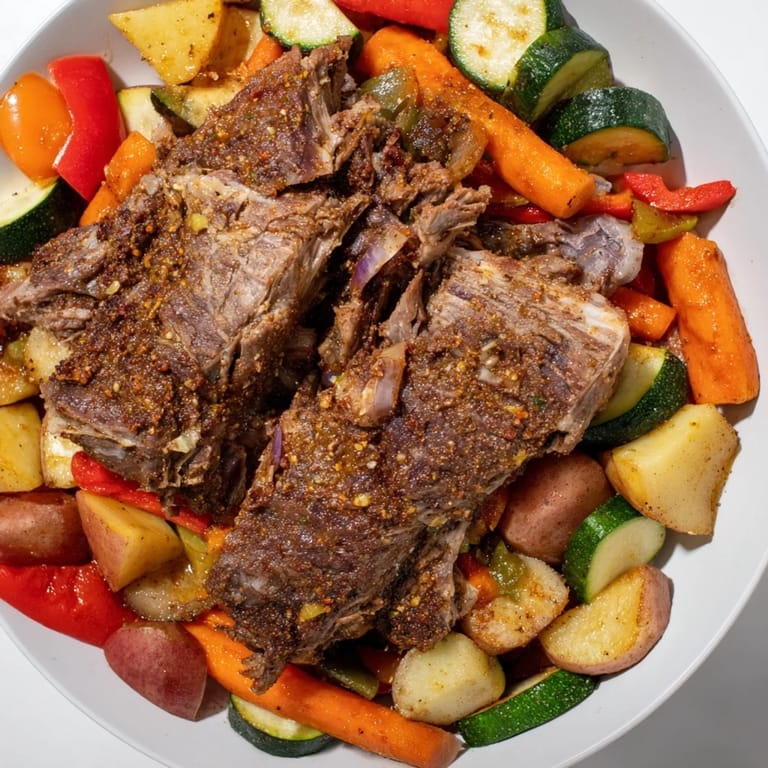
 Zarb tastes like patience rewarded, like the kind of meal that justifies an afternoon of waiting because the result genuinely couldn't be rushed. Once you understand how to make it, you'll find yourself planning dinner parties just for the excuse to wrap something in foil and disappear into the oven.
Recipe FAQs
- → What type of meat is best for Zarb?
Lamb shoulder is ideal for its tenderness and flavor, but chicken pieces can also be used or combined for variation.
- → How is the Zarb traditionally cooked?
Traditionally, Zarb is slow-cooked in an underground oven covered with hot coals and sand, imparting a smoky flavor.
- → Can vegetables be varied in this dish?
Yes, while potatoes, carrots, onions, and peppers are common, additions like eggplant or sweet potatoes can enhance the dish.
- → Is rice served alongside Zarb?
Rice is optional but often served, cooked with broth and butter or oil, complementing the rich flavors of the meat and vegetables.
- → What spices are used to marinate the meat?
A warm blend of cumin, coriander, cinnamon, smoked paprika, black pepper, and salt is combined with garlic and lemon juice for the marinade.
- → How is the dish cooked if no underground oven is available?
It can be baked in a conventional oven at 180°C (350°F) with tightly covered foil or banana leaves to trap moisture and flavors.