 Save to Pinterest
 I discovered the magic of motion on a plate during a cooking class in Copenhagen, where a chef demonstrated how food could tell a visual story without saying a word. That afternoon, watching vegetables gradually fade from a dense cluster into scattered whispers of color, something clicked—this dish became my love letter to modern plating. Now, whenever I arrange these vibrant slices with intention, I'm transported back to that moment of revelation, remembering that the best dishes engage not just the palate, but the eyes and imagination first.
I remember making this for a dinner party where a guest who claimed not to like vegetables actually went back for seconds—not because I tricked them, but because the careful arrangement made them see their plate as something worth exploring. That's when I truly understood the power of this dish: it's not just about the food, it's about making people feel like they're part of something intentional and special.
Ingredients
- Golden beet, thinly sliced: The sweetness of golden beets brings warmth to your plate and pairs beautifully with the tang of goat cheese—I learned to slice them paper-thin on a mandoline so they catch the light
- Red beet, thinly sliced: Deep, earthy color that creates visual drama; use a mandoline to get consistent, delicate slices that arrange smoothly
- Watermelon radish, thinly sliced: This is the surprise ingredient that stops people mid-conversation—those pale pink and white stripes create an unexpected pop when you arrange them
- Persian cucumber, thinly sliced: The freshness and crisp bite keep this dish from feeling heavy; slice them just before serving to prevent weeping
- Baby carrots, sliced on a bias: A bias cut makes them feel more intentional and catches light differently—it's a small move that elevates the whole presentation
- Creamy goat cheese, at room temperature: Room temperature is crucial; cold cheese won't spread naturally into those perfect dollops, and you'll lose the creamy texture that makes this work
- Toasted hazelnuts, roughly chopped: Toasting them yourself brings out a depth that raw nuts can't touch; the nuttiness becomes a grounding element against all that bright vegetable sweetness
- Black sesame seeds: These tiny seeds add visual pop and a subtle nutty earthiness; they're the detail that makes people lean in and really look at your plate
- Microgreens (arugula or radish): The peppery bite and delicate leaves add a living quality; I prefer radish microgreens for their bite and staying power
- Fresh dill, fronds only: Use the tender fronds, not the woody stems—they add herbaceous freshness and soften the plate visually with their feathery texture
- Extra virgin olive oil: A good quality oil matters here because there's nowhere for it to hide; use one you'd drink on its own
- Fresh lemon juice: Freshly squeezed, always—bottled changes the brightness and clarity of the dressing
- Honey: Just a touch to round out the acidity and add a whisper of sweetness that balances the peppery microgreens
Tired of Takeout? 🥡
Get 10 meals you can make faster than delivery arrives. Seriously.
One email. No spam. Unsubscribe anytime.
Instructions
- Make your dressing first:
- Whisk together the olive oil, lemon juice, honey, salt, and pepper in a small bowl—do this before you start arranging because you want everything ready. The dressing should taste bright and balanced; if it's too acidic, add another drop of honey; if too sweet, a squeeze more lemon. Set it aside and let it sit for a moment so the flavors marry.
- Arrange with intention:
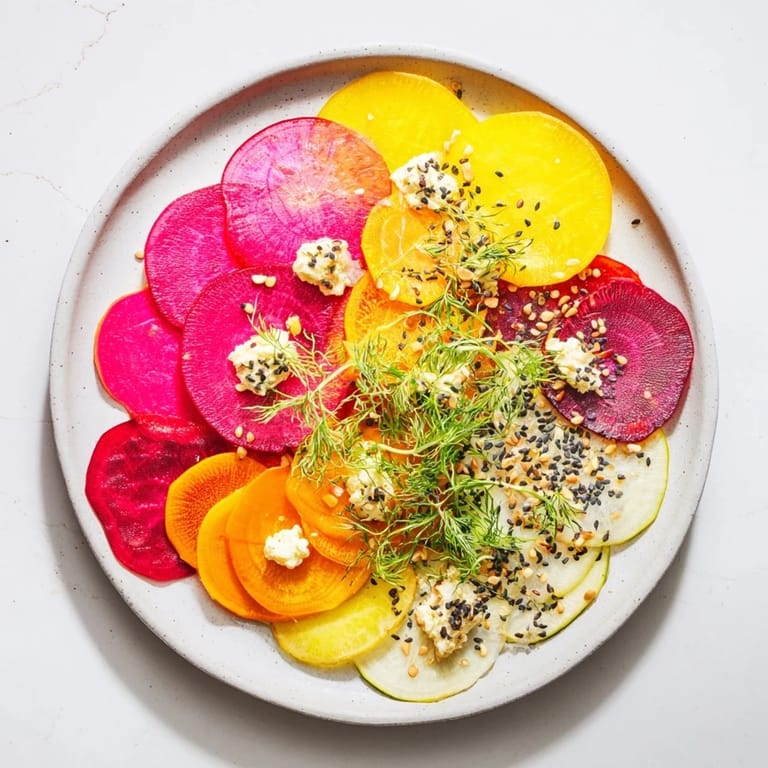
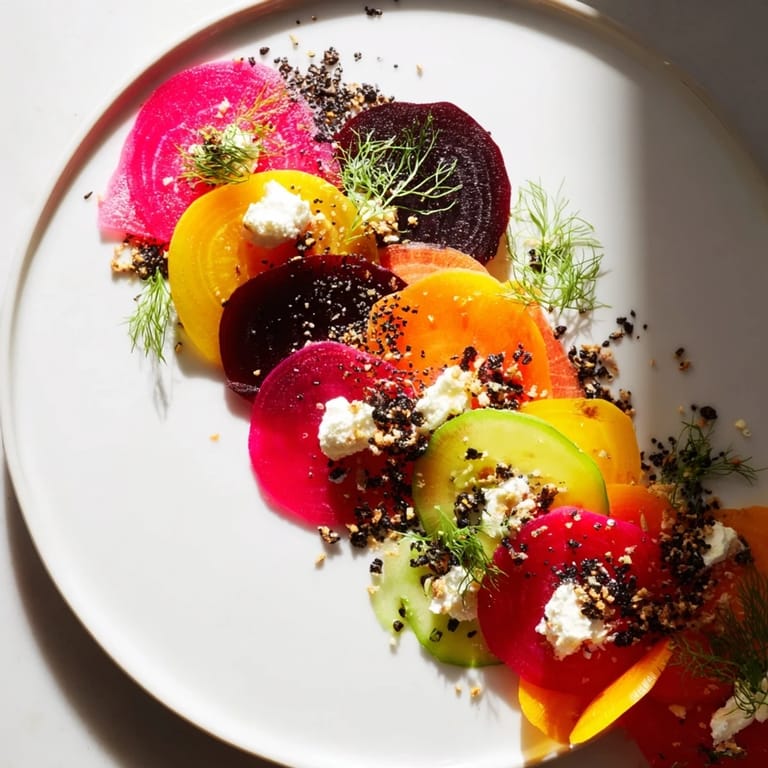
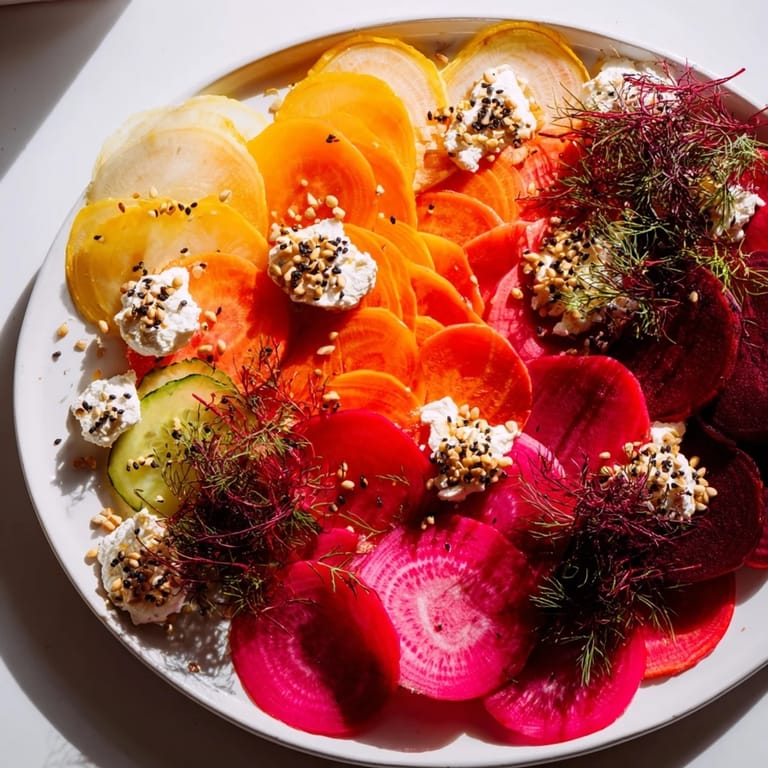
- On your platter or individual plates, start building your motion. Begin on one side with overlapping vegetable slices packed densely together—think of how waves cluster before they break. As you move across the plate, gradually increase the space between slices, letting them scatter toward the opposite edge. This is where patience pays off; the visual effect only works if you're deliberate about the fade.
- Dot the cheese thoughtfully:
- Place small spoonfuls of goat cheese among the dense cluster, then fewer as you move toward the sparse side. The cheese should feel like it's part of the motion, not fighting against it. Let some of it soften slightly into the vegetables.
- Scatter the crunchy elements:
- Sprinkle the toasted hazelnuts and black sesame seeds, concentrating them on the dense side and gradually trailing off. This mirrors the vegetable arrangement and strengthens the kinetic effect.
- Finish with greens and herbs:
- Scatter the microgreens and dill fronds last—they're delicate and wilt quickly, so this step should happen closest to serving. Again, concentrate on the dense side and let them fade toward the edge.
- Drizzle with confidence:
- Pour the dressing evenly across the platter, but use a lighter hand on the sparse side—this visual restraint actually enhances the motion effect and prevents the sparser vegetables from slipping around.
- Serve immediately:
- The magic happens in the first few minutes while everything is still crisp and the visual impact is at its peak. Don't let this sit; it's meant to be experienced fresh.
 Save to Pinterest
 There was a moment during a quiet family dinner when my daughter stopped eating and just stared at her plate, asking why I'd made it look like the vegetables were moving. I realized then that this dish does something beyond nourishment—it creates a pause, a moment of wonder that reminds us why we gather around food in the first place.
The Art of the Fade
The kinetic blur effect isn't just about arranging vegetables; it's about understanding negative space and how the eye moves across a plate. When you create density on one side and scatter elements toward the other, you're guiding the viewer's attention and creating a narrative. The plate tells a story of motion even though nothing is moving. This principle transformed how I think about all my plating—it's not just about fitting things on a plate, it's about creating visual rhythm.
Vegetable Selection and Substitution
The beauty of this recipe is its flexibility paired with intention. Different seasons call for different vegetables, but the principle stays the same—you want colors that contrast beautifully and textures that remain crisp. In spring, try thinly sliced radishes and snap peas. Summer opens doors to compressed tomatoes and thin zucchini ribbons. Fall invites roasted beets (cooled completely before slicing) and thin apple slices. Winter is your time for celeriac and chicory. The key is choosing vegetables that maintain their crispness and won't release too much water onto your plate.
Making It Your Own
Once you understand the framework, this dish becomes your canvas. Add thin slices of smoked salmon or trout if you want to move it toward the pescatarian side. Substitute plant-based cheese for a fully vegan version—cashew-based cheeses work beautifully here. Consider edible flowers like pansies or nasturtiums for seasonal color and sophistication. The dressing can shift too: try a balsamic vinaigrette in fall, or a sesame-ginger dressing for an Asian-inspired version. What matters is maintaining the visual principle while making it feel like your own creation.
- Pair this with a crisp Sauvignon Blanc that echoes the brightness of the lemon dressing
- A dry sparkling wine adds effervescence that plays beautifully against the creamy cheese
- For non-alcoholic options, try a bright kombucha or sparkling mineral water with fresh herbs
 Save to Pinterest
 This dish taught me that sometimes the most memorable meals aren't complicated or expensive—they're the ones where someone took time to make you feel seen and special through thoughtfulness. Every time I make this, I'm reminded that plating is love made visible.
Recipe FAQs
- → How do I create the kinetic blur effect with the vegetables?
Arrange thin vegetable slices in dense clusters on one side, gradually spacing them out toward the opposite edge to create a seamless transition that mimics motion.
- → Can I substitute the goat cheese for a different ingredient?
Yes, plant-based cheese can be used for a vegan alternative, maintaining the creamy texture and balancing flavors.
- → What nuts work best for this dish?
Toasted hazelnuts provide a rich crunch, complementing the soft vegetables and cheese; black sesame seeds add subtle nuttiness and visual contrast.
- → How should the dressing be applied to preserve the visual effect?
Drizzle the honey-lemon olive oil dressing more heavily on the dense side, tapering off toward the sparse area to enhance the kinetic blur.
- → What herbs are recommended for garnishing?
Fresh dill fronds and microgreens such as arugula or radish add freshness and a delicate herbal note that brightens the dish.
- → How do I maintain freshness until serving?
Serve immediately after assembly to preserve texture, color, and the overall visual impact of the dish.