 Save to Pinterest
 There's something about the smell of curry paste hitting hot oil that instantly transports me to a tiny kitchen in Bangkok, even though I've never been there. Years ago, a friend brought home a container of red curry paste from a Thai market, and I was skeptical—the color was almost neon, the smell was intense and unfamiliar. She insisted we make soup that very evening, and I remember being genuinely surprised at how quickly something so vibrant could become something so deeply comforting. This lentil version became my go-to, the one I make when I need warmth in a bowl.
I made this for a friend who'd just moved into her first apartment with barely a pantry to her name. She was nervous about cooking, convinced everything would burn or taste wrong. We chopped vegetables together while her radio played terrible pop music, and when that first spoonful hit her mouth, something shifted—she got quiet for a moment, then asked for seconds. She's made it dozens of times now, and she always texts me photos. That kind of quiet joy is why I keep coming back to this recipe.
Ingredients
- Red lentils: These small, coral-colored legumes break down as they cook, creating natural creaminess and thickening the broth—no added cream needed.
- Onion, garlic, and ginger: This trio is the flavor foundation; don't skip sautéing them first, as heat releases their essential oils and sweetness.
- Red curry paste: Buy a quality brand from an Asian market if you can; the difference in depth is noticeable, and a little goes a long way.
- Coconut milk: Full-fat is non-negotiable here—light coconut milk turns the soup thin and watery, and that richness is the whole point.
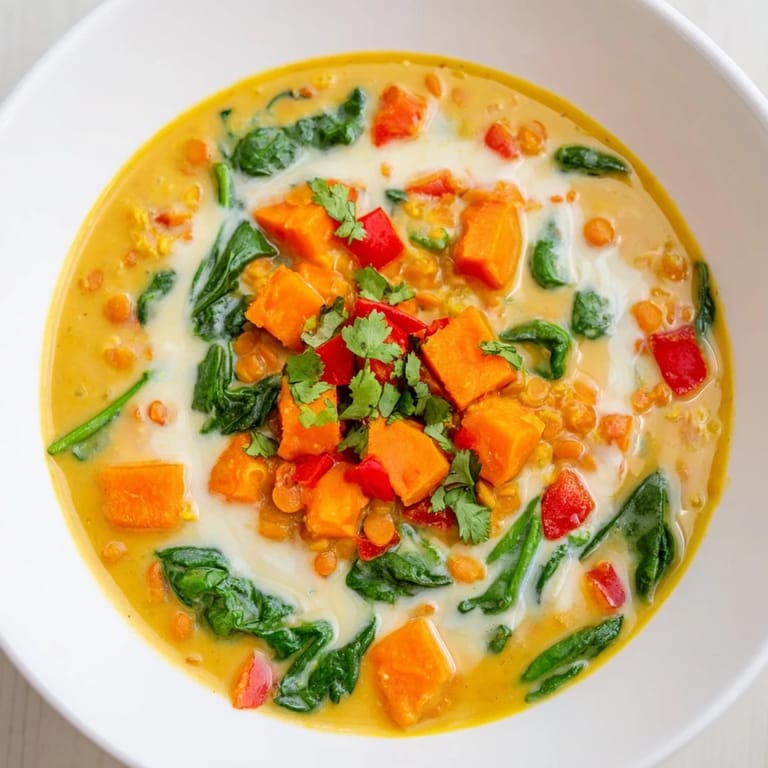
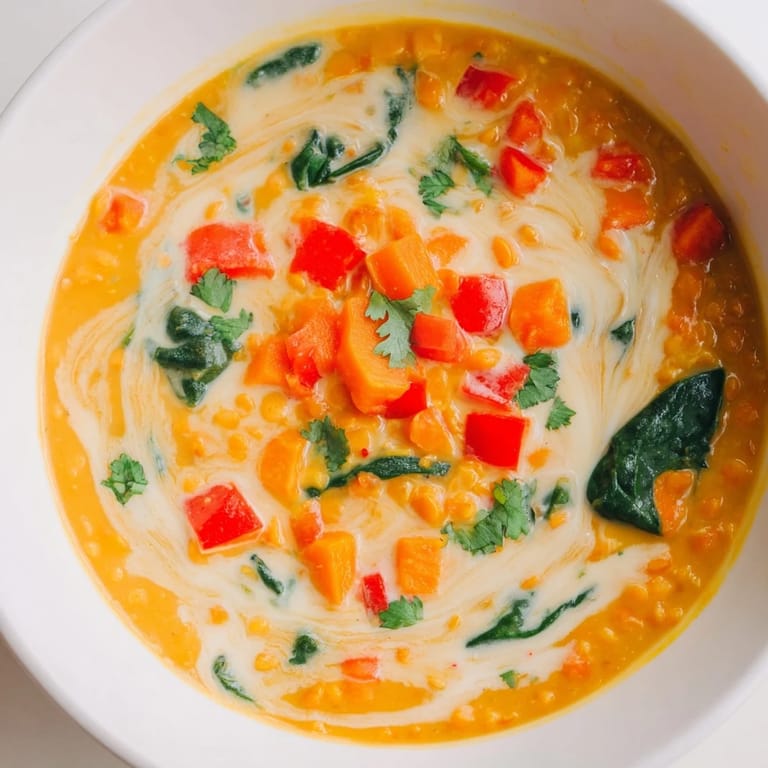
- Vegetables: Carrots and bell peppers add natural sweetness that balances the heat; spinach added at the end stays bright and vibrant.
- Vegetable broth: A good broth matters—if yours tastes bland, this soup will taste bland too, so taste as you go.
- Lime juice: This finishing touch brightens everything and prevents the soup from tasting heavy, no matter how creamy it is.
Tired of Takeout? 🥡
Get 10 meals you can make faster than delivery arrives. Seriously.
One email. No spam. Unsubscribe anytime.
Instructions
- Sauté your aromatics:
- Heat oil in your pot over medium heat and let the onion soften, about 3 minutes. Add garlic and ginger next and cook for just a minute—you want to smell them blooming but not turning bitter.
- Toast the curry paste:
- Stir in the curry paste and turmeric, cooking for a minute or two while stirring. This step matters; it wakes up the spices and transforms that raw paste flavor into something warm and integrated.
- Build with vegetables:
- Add your harder vegetables—carrot, bell pepper, zucchini—and let them soften slightly before adding liquid. This gives them a head start.
- Add the main players:
- Pour in lentils, coconut milk, broth, and soy sauce, then bring to a boil before dropping the heat down to a gentle simmer. Let it bubble away uncovered for 20 to 25 minutes, stirring occasionally—the lentils will soften and some will dissolve, naturally thickening the soup.
- Finish bright:
- Stir in spinach and let it wilt, about 2 minutes, then add lime juice and taste for salt. The lime is crucial—it cuts through the richness and makes everything taste alive.
 Save to Pinterest
 I once made this soup on a gray November afternoon when I wasn't sure why I was bothering with anything. The repetitive chopping felt meditative, and by the time the smell filled my kitchen, my mood had shifted entirely. There's something about a pot simmering on the stove that promises the day isn't as heavy as it felt an hour ago.
Heat Level and Flavor Balance
Red curry paste varies wildly in heat level depending on the brand and where you buy it. Start with 3 tablespoons and taste the finished soup before adding more, because once it's in, you can't undo it. I've learned the hard way that some pastes are genuinely spicy while others are milder and more herb-forward. If you love heat, a chopped Thai chili or a pinch of chili flakes stirred in at the end gives you control and brightness rather than just fire.
Stretching This One Recipe
This soup is flexible in the best way. Kale works beautifully instead of spinach if that's what you have, and zucchini is optional if you're in a season where fresh vegetables are expensive or uninspiring. I've added mushrooms, made it with white beans instead of lentils, stirred in fresh basil at the end—the red curry and coconut framework is solid enough to carry whatever vegetables you want to contribute.
Serving and Storing
This soup keeps beautifully for 3 to 4 days in the refrigerator, and the flavors actually deepen overnight. Reheat gently on the stovetop, adding a splash of water or broth if it's thickened too much. It also freezes well for up to 3 months, though the spinach will darken—add fresh spinach when you reheat if you care about how it looks on the plate. Serve it with jasmine rice, naan, or crusty bread, or drink it on its own as something warm and sustaining.
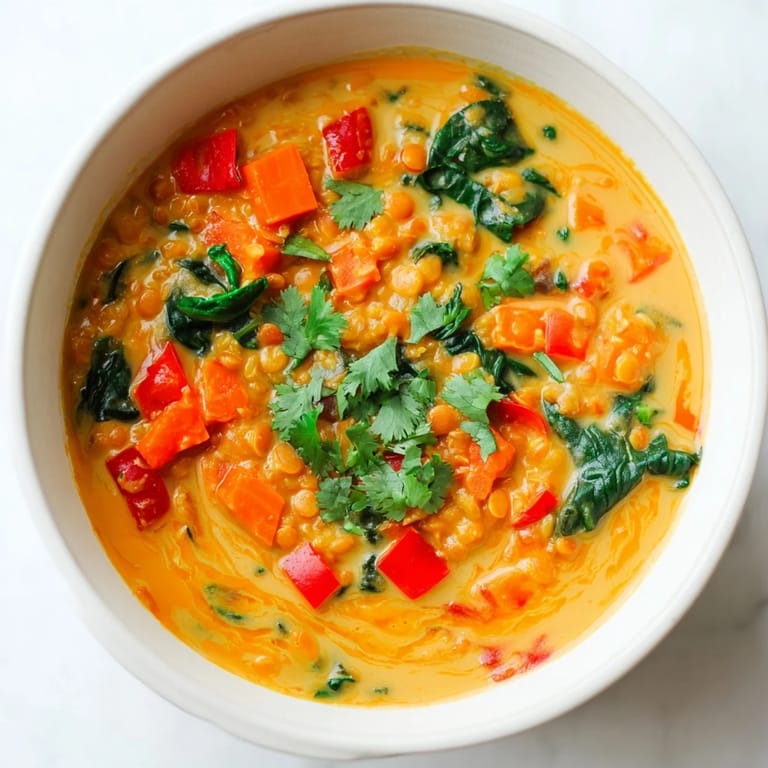
- Ladle it into bowls and top with fresh cilantro, a squeeze of lime, and a pinch of chili flakes if you like heat.
- Leftover curry paste keeps in the fridge for weeks in an airtight container, so don't worry about waste.
- If you're cooking for someone with a soy allergy, swap tamari or soy sauce for coconut aminos—the umami is still there.
 Save to Pinterest
 A good curry soup is the kind of dish that sticks around in your cooking life because it asks so little and gives so much. Every time you make it, it feels a little different depending on what's in your pantry and how you're feeling that day.
Recipe FAQs
- → Can I use different lentils in this dish?
Yes, while red lentils cook faster and break down to create a creamy texture, you can substitute with yellow or brown lentils. Adjust cooking time accordingly.
- → How spicy is the red curry paste?
Red curry paste varies by brand; it typically adds a gentle to moderate heat. Adjust the amount used to suit your preferred spice level.
- → Can this be made gluten-free?
Yes, ensure the soy sauce used is gluten-free or opt for tamari. Also, double-check curry paste and broth labels for gluten-free certification.
- → What can I serve alongside this dish?
Steamed jasmine rice or warm naan bread complements the rich, flavorful broth and adds heartiness to the meal.
- → How do I store leftovers?
Store in an airtight container in the refrigerator for up to 3 days. Reheat gently on the stove or in the microwave before serving.
- → Can I add other vegetables?
Absolutely. Vegetables like kale, zucchini, or peas work well. Add them during simmering or near the end to maintain texture.