 Save to Pinterest
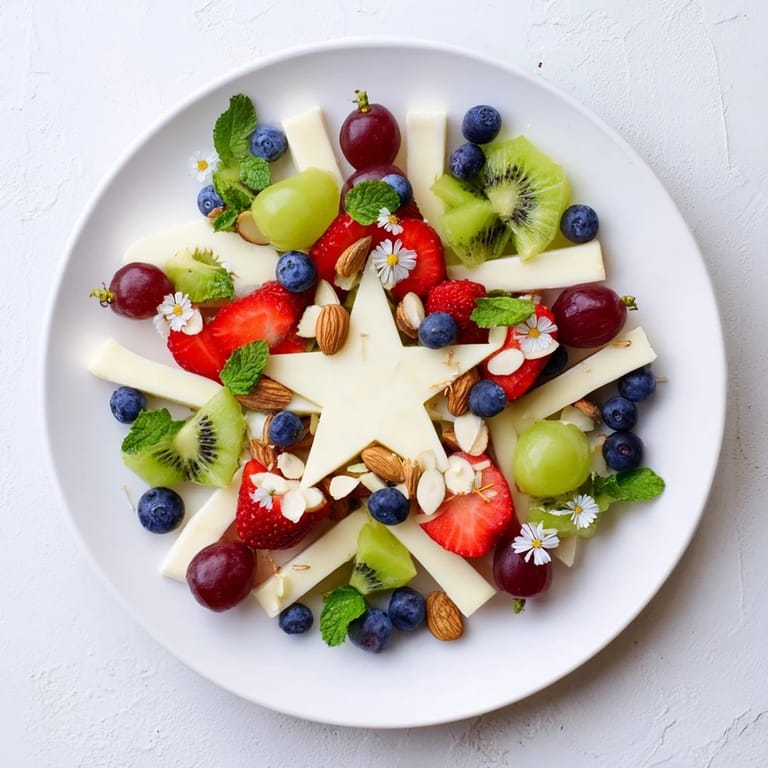
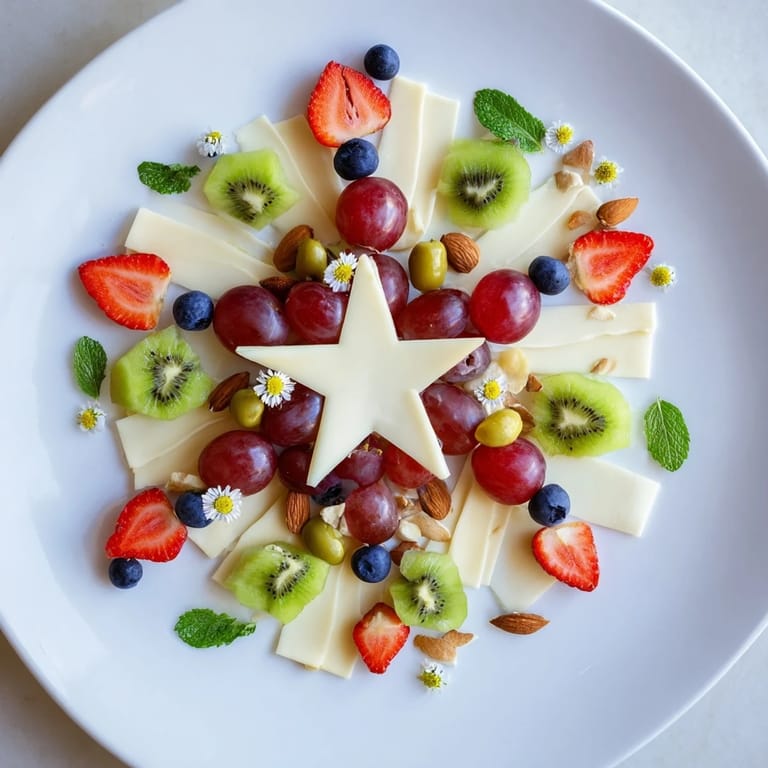
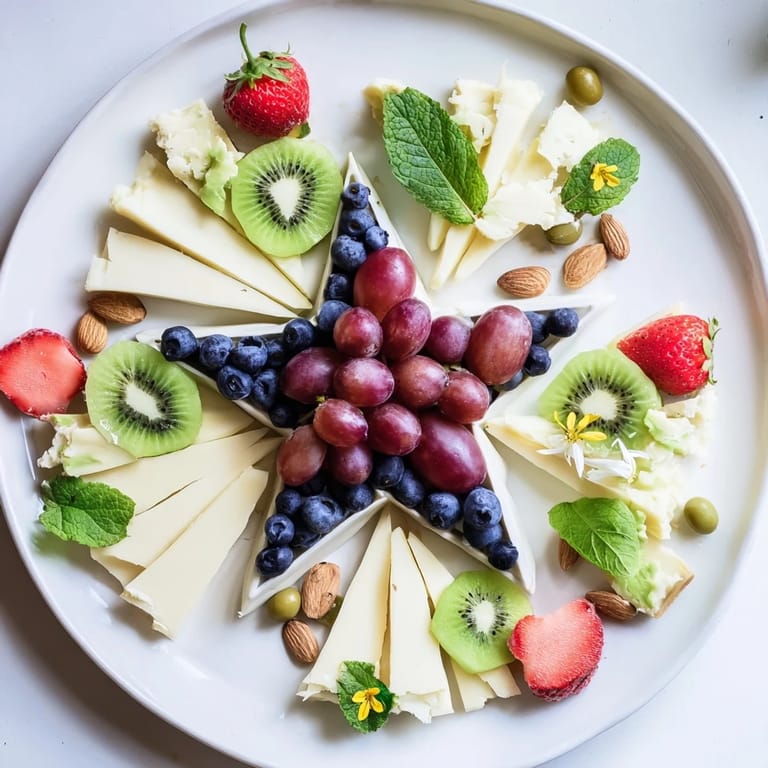
 I'll never forget the moment I first saw a platter arranged with such intentional artistry—negative space transformed into a language of its own. A friend's chef created a star-shaped void in the middle of an elegant board, and suddenly, what could have been just another cheese platter became a conversation piece. That night, I realized that food could be architecture, that the emptiness mattered as much as what filled it. Now, whenever I want to impress people, I create these puzzles of flavor and form, watching their faces light up as they discover the hidden shape.
I made this for my sister's engagement party, spelling out their initials in negative space while surrounding them with jewel-toned fruits and creamy cheeses. When guests arrived and collectively gasped, I understood why this technique feels almost like magic—it transforms a simple arrangement into a deliberate work of art.
Ingredients
- Brie cheese, sliced (100 g): The creamy anchor of your platter—slice it just before serving so it stays glossy and inviting, and let it sit out for fifteen minutes to reach that perfect spreadable softness.
- Manchego cheese, sliced (100 g): Its subtle nuttiness adds complexity and holds its shape beautifully, making it ideal for clustering around your negative space design.
- Goat cheese, crumbled (100 g): This one adds visual contrast with its pure white color—it's almost too perfect for creating definition in your design.
- Seedless red grapes (1 cup): These are your workhorse, filling gaps with consistent color and requiring no preparation beyond a gentle rinse.
- Strawberries, halved (1 cup): Choose ones that are ripe but still firm so they don't weep into your arrangement, and halve them just an hour before serving.
- Kiwi, sliced (1): The bright green becomes a natural accent—slice it thin and pat dry with paper towels to prevent any moisture from pooling.
- Blueberries (1/2 cup): These little spheres are perfect for filling small gaps and creating unexpected pops of color throughout.
- Thin crackers (12): Choose varieties that stay crisp and neutral in flavor—they're scaffolding for cheese, not the star.
- Roasted almonds (1/2 cup): Their warm, toasted color creates wonderful contrast against softer items, and their texture adds a satisfying crunch.
- Green olives, pitted (1/4 cup): Small piles of olives add sophistication and a briny note that awakens the palate.
- Fresh mint leaves: These are your final flourish—they catch light and suggest that you actually know what you're doing.
- Edible flowers (optional): If you can find them, they transform this from impressive to Instagram-worthy, but honestly, the negative space alone carries the magic.
Tired of Takeout? 🥡
Get 10 meals you can make faster than delivery arrives. Seriously.
One email. No spam. Unsubscribe anytime.
Instructions
- Dream up your design:
- Before anything touches the platter, sit quietly with it and decide what shape will live in the negative space. Will it be a star? Your guest's initials? A heart? Sketch it lightly on parchment paper—make the shape generous enough that it reads clearly, not so tiny that it disappears. This is your architectural moment.
- Map your territory:
- Place the parchment guide directly on your serving platter and secure the edges gently with a bit of painter's tape so it doesn't shift as you work. This becomes your invisible boundary.
- Begin with confidence:
- Start arranging your cheeses and crackers in small, intentional clusters around the perimeter of your design. Think of them as anchors, creating visual weight that makes the negative space feel purposeful rather than empty. Don't scatter randomly—group like items together in little moments of abundance.
- Fill with intention:
- Now for the fruit. Place strawberry halves, grapes, and kiwi slices in the spaces between your clusters, always respecting that invisible boundary. This is where patience becomes your greatest tool—it's tempting to fill everything, but resist. The space you leave alone is what makes this special.
- Add depth and texture:
- Scatter your almonds and olives in small piles, using them to create visual rhythm and add that crucial textural contrast. These elements break up the smoothness of the cheese and fruit, making people want to taste everything.
- The reveal moment:
- This is pure satisfaction. Carefully slide the parchment away, lifting it slowly so nothing shifts. Take a breath. Your negative space shape should emerge clean and undeniable, like you've drawn something invisible into existence.
- The finishing touch:
- Tuck fresh mint leaves throughout the platter with apparent casualness—each one should look like it landed there by design, not accident. If you're using edible flowers, place them where they'll catch the light. Step back. Admire your work. You've earned it.
- Time to perform:
- Bring the platter out and encourage people to look before they eat. Let them discover the shape. You'll see it on their faces—that moment when they realize what you've done. Serve immediately so everything is at its peak.
 Save to Pinterest
 During a quiet moment at that engagement party, I watched someone trace their finger around the initials, then look up with this wondering smile, as if they'd been given something unexpectedly personal. That's when I understood—this platter isn't really about cheese and fruit. It's about creating space for moments of delight, about showing people that you see them enough to arrange the world around their shape.
Dessert Version Possibilities
If you want to pivot this into a sweet finale instead of an appetizer, the negative space concept works even better. Replace the cheeses entirely with dark chocolate chunks, bittersweet chocolate-covered almonds, and creamy white chocolate curls. Swap crackers for biscotti, dried apricots, and candied ginger. The fruit becomes your sweet backup singers—dried cranberries, candied orange peel, dried figs halved to show their jeweled centers. Everything becomes more precious, more decadent, and the negative space feels even more intentional when surrounded by such richness. The technique is identical, but the mood shifts from savory sophistication to indulgent celebration.
The Art of Strategic Placement
What I've learned through making these is that negative space works because our eyes are drawn to empty areas—they create focus and intention. When you're arranging, think about how colors and textures move around the platter. Let your eyes flow from one cluster to another, with the negative space creating natural pauses that feel restful. Don't feel like you need to cover every millimeter of space with something edible. Sometimes the most elegant arrangement is one with breathing room.
Hosting Moments and Special Touches
This platter is perfect for those times when you need to impress without spending hours in the kitchen. A birthday celebration, an engagement party, a dinner with people you want to thank—this is your moment to shine without stress. Pair it with sparkling wine or a crisp white wine that lets the flavors speak clearly without overwhelming them. The beauty of a thoughtfully designed board is that it encourages people to slow down, to actually taste things individually before combining flavors, to have real conversations around the table instead of just eating mindlessly.
- Set out small plates and napkins nearby—people will feel more comfortable sampling freely when they have somewhere to place things.
- Consider the lighting where you'll serve this—afternoon light makes the colors sing, while candlelight adds drama and shadows that make the negative space even more striking.
- If you're serving this at a standing reception, keep the platter at eye level on a tall table so people can discover the shape without having to bend down awkwardly.
 Save to Pinterest
 The magic of this recipe is that it teaches us something about design, about presence, about the power of leaving space for beauty to emerge. Every time you make it, you're not just feeding people—you're creating a moment they'll remember.
Recipe FAQs
- → How do I create the negative space shapes?
Sketch your desired shape lightly on parchment paper and place it over your serving board as a guide. Arrange ingredients around the shape to keep the space clear.
- → Can I customize the ingredients used?
Yes, cheeses, fruits, nuts, and crackers can be adjusted to suit your taste or dietary needs, including dessert variations with chocolates and dried fruits.
- → What occasions suit this platter?
Perfect for parties, special events, or any gathering where an impressive and artistic presentation is desired.
- → Are there allergen considerations?
Contains dairy, nuts, and gluten from crackers. Gluten-free options can be substituted to accommodate restrictions.
- → How should I garnish the platter?
Use fresh mint leaves and edible flowers to add color contrast and a fresh finish to the presentation.