 Save to Pinterest
 The first time I really understood clam chowder was on a foggy October afternoon at a small shack near Portland, Maine. I watched the cook stir a massive pot with such care, and it hit me: this wasn't fancy food, it was honest food—the kind that warms you from the inside when the ocean wind cuts right through your jacket. I've been chasing that feeling ever since, and I finally figured out how to make it at home.
My neighbor brought me littleneck clams from the farmers market one Saturday, and I remember standing in my kitchen wondering if I was brave enough to cook them from scratch. That afternoon, the whole house smelled like the ocean and butter, and when she came over for a bowl, she actually closed her eyes while eating. That's when I knew I'd finally gotten it right.
Ingredients
- Fresh littleneck clams (2 lbs): These are your foundation—they're meaty and flavorful, and they'll open reliably when steamed. The key is getting them from somewhere with good turnover, and rinsing them hard under cold water before cooking.
- Clam juice (1 cup): Bottled clam juice is your shortcut to depth; use the liquid from steaming the clams if you want it even more briny and alive.
- Russet potatoes (2 medium): They break down slightly into the broth while staying chunky enough to bite through, creating just the right texture.
- Yellow onion, celery, carrot (1 medium, 2 stalks, 1 small): This holy trinity is the flavor base—soften them slowly so they dissolve into sweetness rather than sitting there raw.
- Garlic (2 cloves): Just enough to whisper in the background, not shout.
- Heavy cream and whole milk (1½ cups and 1 cup): Use both; cream alone makes it too heavy, milk alone makes it lean. Together they create that perfect balance.
- Bacon (2 slices): It adds salt, smoke, and a little richness—cook it until it's truly crisp so it doesn't get chewy in the broth.
- Unsalted butter (2 tbsp): The roux base; it should foam gently as you stir in the flour.
- All-purpose flour (2 tbsp): This thickens without making the soup gluey if you stir it constantly.
- Bay leaf and dried thyme: These cook long enough to flavor the broth but won't overwhelm it.
Tired of Takeout? 🥡
Get 10 meals you can make faster than delivery arrives. Seriously.
One email. No spam. Unsubscribe anytime.
Instructions
- Get the clams ready:
- Rinse your littleneck clams hard under cold water—the shells are gritty, and you want them clean. Put them in a large pot with 2 cups of water, cover, and bring to a boil. You'll hear them start to open after about 5 minutes; give them another minute or two to make sure they all pop. If any stubbornly stay closed, discard them.
- Free the clam meat:
- Once they're cool enough to handle, twist open the shells and scoop out the meat—it'll be tender and slightly chewy. Chop it into rough pieces so it doesn't disappear into the broth, then set it aside. Strain and save every drop of that cooking liquid; it's liquid gold.
- Render the bacon:
- Dice your bacon and cook it in a Dutch oven over medium heat, stirring occasionally until it's dark and crispy. Scoop it out with a slotted spoon, but leave all that fat behind—that's your base.
- Build your flavor base:
- Add butter to the bacon fat, then tumble in your onion, celery, carrot, and garlic. Cook gently for about 5 minutes, stirring often, until everything softens and sweetens. You should smell something amazing right now.
- Make a roux:
- Sprinkle flour over the vegetables and stir constantly for 1 minute. This cooks out the raw flour taste and thickens the broth without lumps, so don't skip this step.
- Add the liquid:
- Slowly pour in your reserved clam cooking liquid and the bottled clam juice, stirring as you go. Scrape up all those caramelized bits on the bottom—they're pure flavor. The broth should smell briny and rich now.
- Cook the potatoes:
- Add your diced potatoes, bay leaf, and thyme. Bring everything to a simmer and let it cook for 10 to 12 minutes, until the potatoes are fork-tender but not falling apart. This is when the soup starts to feel like itself.
- Finish with the clams and cream:
- Reduce the heat to low and add the chopped clams, crispy bacon, cream, and milk. Stir gently and let it simmer for 5 to 10 minutes—never let it boil, or the cream will break and you'll lose that silky texture. Taste and adjust the salt and pepper, then remove the bay leaf.
- Serve with grace:
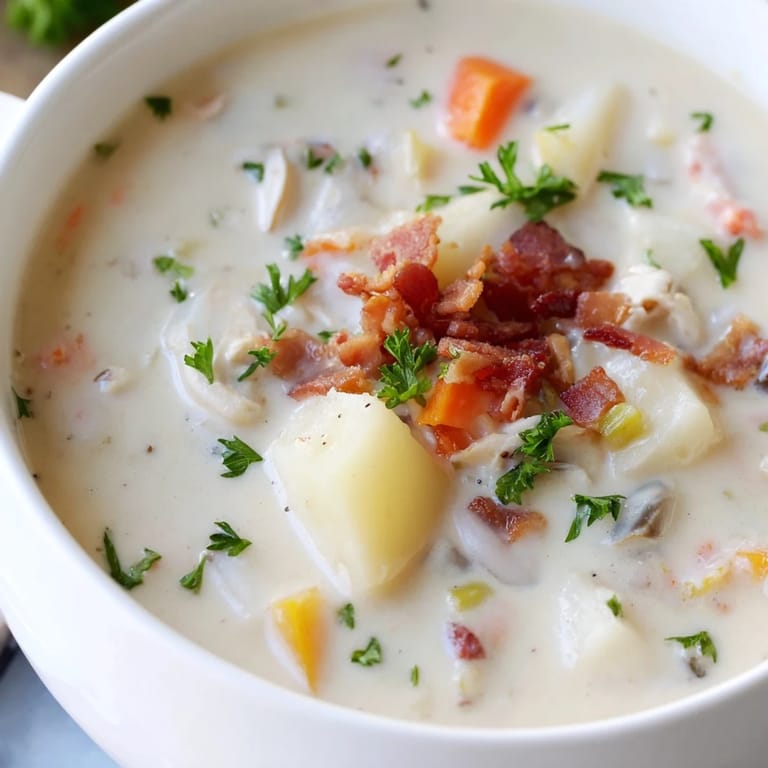
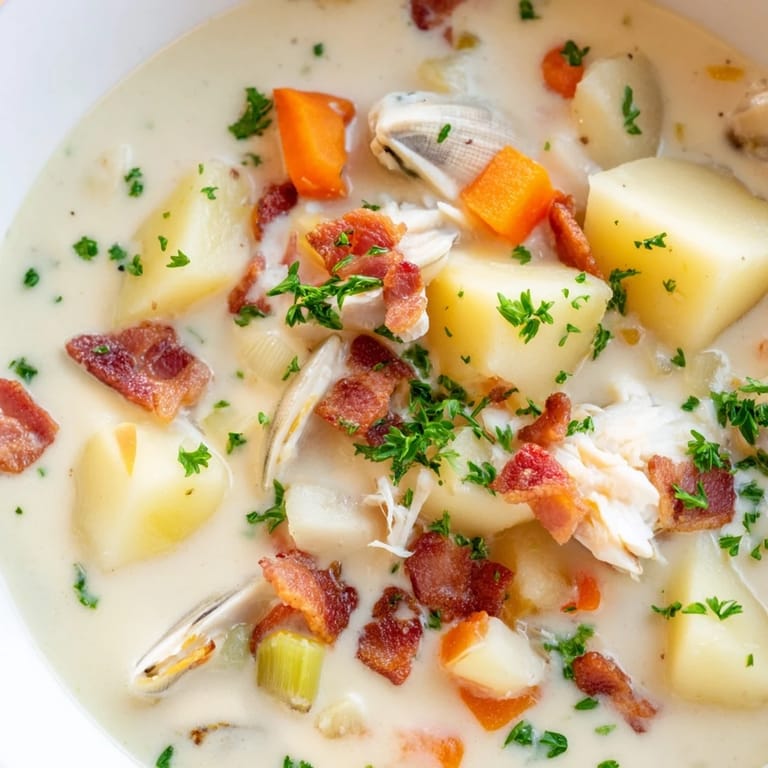
- Ladle into bowls, scatter fresh parsley on top, and pass oyster crackers. Watch someone taste it and close their eyes like they're in Maine.
 Save to Pinterest
 There's something about serving this soup on a gray afternoon that makes people slow down and really taste it. I made a big pot last January during a snowstorm, and my whole family sat around the table for an hour just eating and talking—nobody rushed through a single bowl.
The Secret to Tender Clams
Clams are delicate, and they toughen fast if you overcook them. Steam them just until they open—not a minute longer—and set them aside. When you add them back to the broth, keep the heat low and the time short. I learned this the hard way by making rubbery clam soup twice before realizing I was boiling them to death in the final step.
Cream Versus Milk: Finding the Balance
New England chowder lives in that space between rich and approachable. Cream alone makes it heavy enough to sit in your stomach all afternoon; milk alone tastes thin and sad. The combination of both gives you body and comfort without guilt, and it's what keeps people coming back for seconds.
Timing, Flavor, and Why This Works
The magic happens because you're building layers: bacon fat and butter for richness, the holy trinity of vegetables for sweetness, a proper roux for body, and clam broth for depth. By the time the potatoes are tender, you've created something that tastes complex and made-by-someone-who-knows, even though you just spent an hour in the kitchen.
- Don't skip the roux—it's what makes this soup feel like soup, not clam-studded cream.
- Taste constantly as you go, especially near the end, because salt needs can shift once you add the potatoes and clams.
- If it ends up thinner than you'd like, just mash a few cooked potatoes into the broth before serving.
 Save to Pinterest
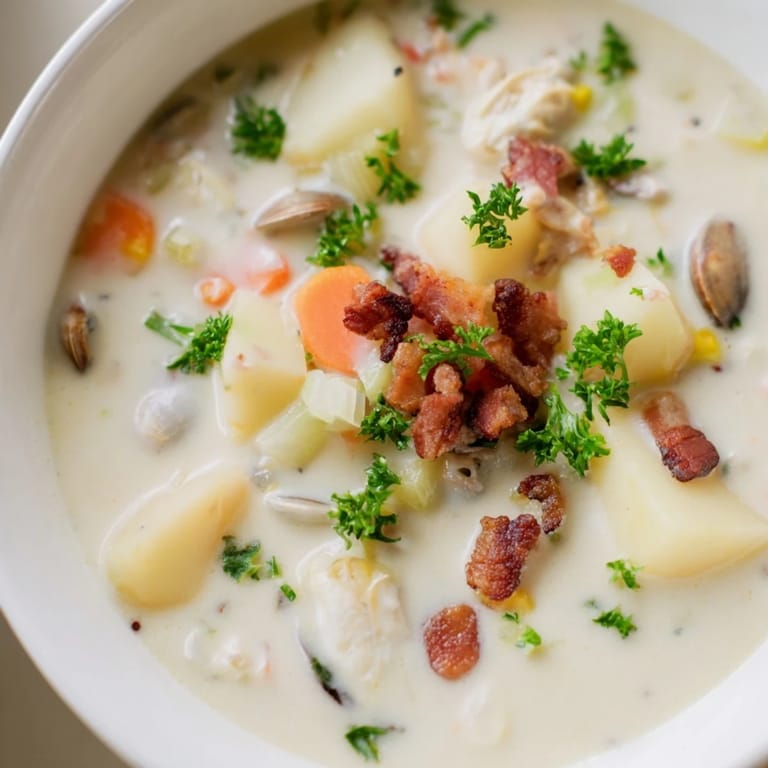
 This soup is the kind of food that makes you feel like you're taking care of the people you're feeding. Once you've made it, you'll understand why people crave it.
Recipe FAQs
- → How do I clean littleneck clams properly?
Rinse clams under cold water and scrub shells to remove sand and debris before steaming.
- → What is the best way to thicken the chowder?
Mashing some of the cooked potatoes into the broth helps achieve a thicker, creamier texture.
- → Can I substitute half-and-half for cream and milk?
Yes, using half-and-half creates a lighter version while maintaining creamy consistency.
- → Why is it important not to boil the chowder after adding dairy?
Simmering gently prevents curdling and keeps the texture smooth and rich.
- → What spices enhance the flavor without overpowering?
Bay leaf and dried thyme provide subtle herbal notes that complement the seafood and vegetables.