 Save to Pinterest
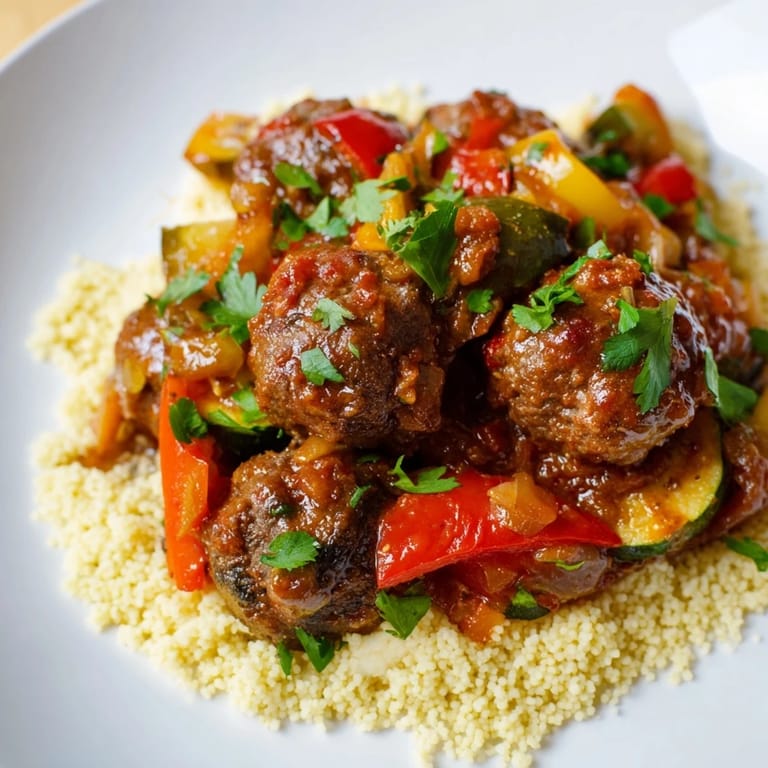
 The first time I really understood the soul of North African cooking was in a cramped kitchen in Marrakech, watching a woman I'd just met form hundreds of kefta with her bare hands, each one identical, each one infused with spice and intention. When she served it over couscous with a vegetable sauce that tasted like every sunset I'd seen that week, I realized this wasn't fancy food—it was the kind of dish that makes people linger at the table, telling stories they haven't told in years. Now, whenever I make this at home, that same magic happens. The aroma alone seems to soften everyone who walks through the door.
I made this for a dinner party once and forgot the cilantro garnish until the last second, pulling it straight from my garden and scattering it on top like I'd planned it all along. My friend who'd lived in Tunisia took one bite and got quiet, then asked for the recipe with this look that made me understand that food carries memory in ways words never can. That's when I knew this dish was worth keeping close.
Ingredients
- Ground beef or lamb: Lamb is traditional and adds richness, but beef works beautifully too and lets other flavors shine through—I've used both and they're honestly equally good.
- Grated onion: This is the secret that keeps the meatballs tender; it breaks down during cooking and releases moisture into the meat.
- Fresh parsley and cilantro: These aren't just garnish—they're woven into the meatballs themselves, so don't skip them or use dried herbs here.
- Cumin, coriander, cinnamon: The holy trinity of North African spice; they should smell warm and inviting when you open the jars.
- Paprika and cayenne: Paprika gives sweetness and color, cayenne gives heat—use as much or as little heat as feels right to you.
- Couscous: The tiny pearls of semolina soak up every bit of sauce, so don't skip the step of fluffing with a fork or you'll end up with a dense brick.
- Mixed vegetables: Carrots, zucchini, bell pepper, tomatoes—use what's in season or what you have on hand, the dish is forgiving.
- Vegetable or beef broth: This is where the magic happens; good broth makes the sauce sing, so use the best you can find.
Tired of Takeout? 🥡
Get 10 meals you can make faster than delivery arrives. Seriously.
One email. No spam. Unsubscribe anytime.
Instructions
- Mix the kefta with your hands:
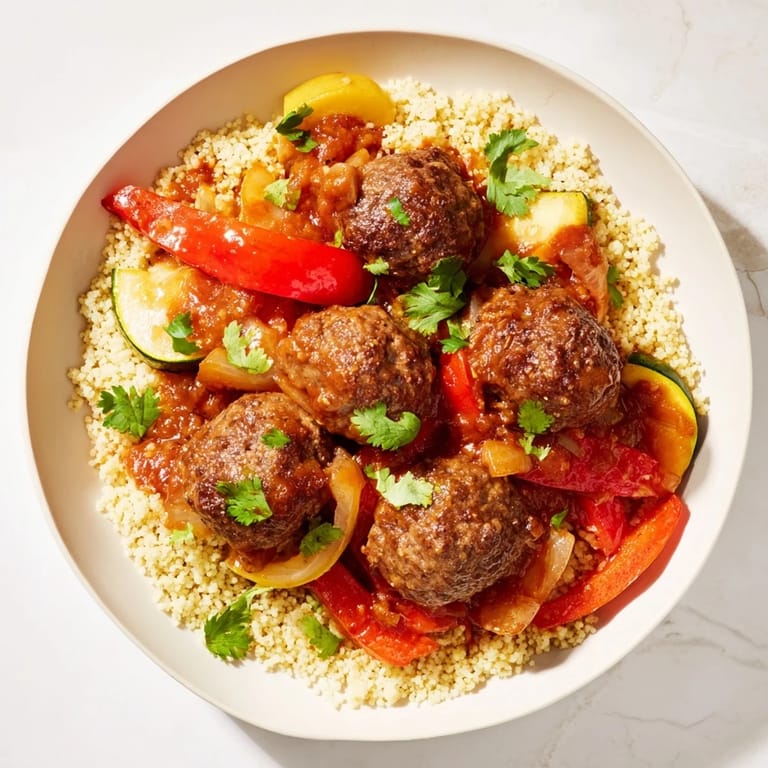
- In a large bowl, combine all the kefta ingredients and knead them together until the mixture feels unified and slightly sticky. Shape into walnut-sized balls about 20 to 24 total; handle them gently so they stay light inside.
- Build the sauce base:
- Heat olive oil in a large pot over medium heat and cook the sliced onion until it turns golden and soft, about 5 minutes. This is the foundation—don't rush it.
- Add the harder vegetables:
- Toss in carrots, bell pepper, and zucchini, stirring occasionally for 4 to 5 minutes until they start to soften at the edges. They'll finish cooking in the broth, so don't worry about them being fully tender yet.
- Bloom the spices:
- Stir in the tomatoes and garlic, cook for 2 minutes, then add all the dry spices—cumin, coriander, turmeric, cinnamon, paprika, cayenne. Keep stirring so the spices coat everything and release their oils into the pot.
- Introduce the broth:
- Pour in the broth and bring everything to a gentle simmer, then season with salt and pepper to taste. This is your sauce and it should smell incredible at this point.
- Nestle in the meatballs:
- Gently add the kefta to the simmering sauce, cover the pot, and let everything bubble away for 25 minutes. Stir once halfway through so nothing sticks to the bottom.
- Prepare the couscous while everything braises:
- Place couscous in a large bowl with salt and olive oil, pour boiling water over it, cover tightly with a plate or lid, and let it sit for 5 minutes. Fluff with a fork before serving.
- Serve with intention:
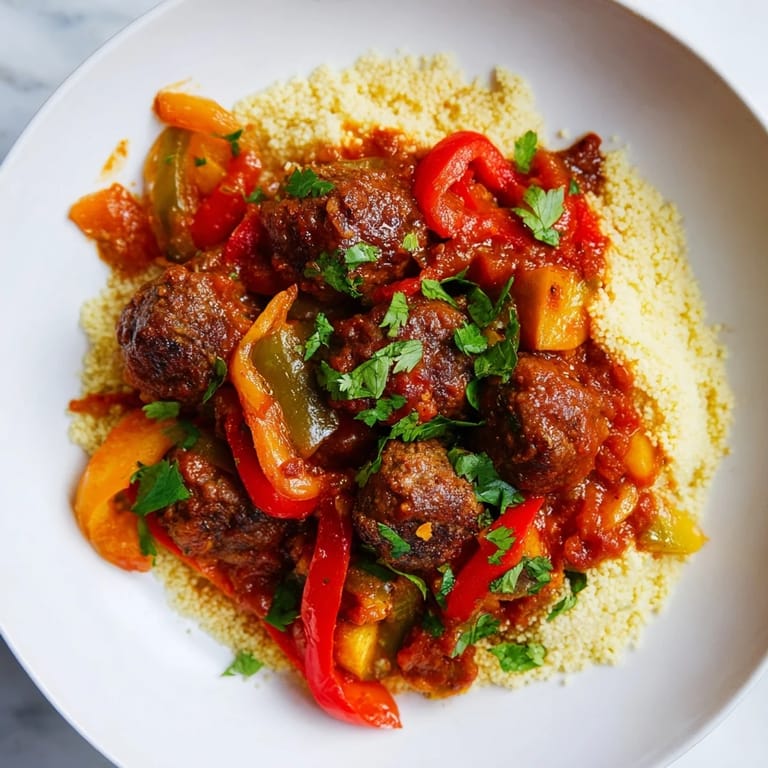
- Mound couscous on a platter or individual plates, spoon the kefta and vegetables with their sauce on top, and finish with a handful of fresh cilantro or parsley so every bite feels alive.
 Save to Pinterest
 There's a moment, about halfway through cooking, when your kitchen fills with the smell of cinnamon and cumin and simmering broth, and you realize you're not just making dinner—you're creating an experience. That's when this dish stops being a recipe and becomes something you want to share.
Why These Spices Work Together
Cumin and coriander are the workhorses of North African cooking, grounding the dish in warmth, while cinnamon adds a subtle sweetness that plays against the savory meat and vegetables. Turmeric and paprika bring color and earthiness, and the optional cayenne gives a whisper of heat that wakes up your palate without overwhelming it. The magic is that none of them shout—they harmonize, which is why this dish feels so balanced and comforting.
The Art of the Couscous
Couscous intimidates people, but it's actually the easiest grain you'll ever cook—the whole point is that it steams itself in just five minutes and doesn't need stirring. The key is using boiling water so the pearls plump up quickly, and covering it tightly so steam stays trapped inside. Some people add a little butter when they fluff it, which is lovely, and I've sometimes stirred in a pinch of saffron for an extra layer of complexity.
Variations and Personal Touches
Once you've made this dish a few times, you'll start seeing it as a canvas rather than a rigid formula. I've added chickpeas for extra texture and protein, roasted some cauliflower on the side for a friend who wanted more vegetables, and experimented with different broths depending on what I had on hand. One autumn I added a pinch of saffron to the sauce and it made everything feel more special somehow. The dish is robust enough to handle your creativity without losing its soul.
- Consider swapping lamb for ground chicken or beef depending on what you find at the market or what your family prefers.
- Add a pinch of saffron to the broth if you want to elevate it, though it's beautiful without it too.
- Finish with a drizzle of really good olive oil and plenty of fresh herbs so each serving feels generous and alive.
 Save to Pinterest
 This is the kind of dish that brings people to the table and makes them want to linger, sharing stories and laughing over food that tastes like home even if it's your first time making it. Once you've made it once, you'll find yourself making it again and again.
Recipe FAQs
- → What meat is best for the spiced meatballs?
Ground beef or lamb are ideal, as they absorb spices well and provide tender texture, but ground chicken or plant-based options also work.
- → How do you achieve fluffy couscous?
Pour boiling water over couscous with salt and olive oil, cover tightly and let it steam for 5 minutes before fluffing gently with a fork.
- → Can the vegetable sauce be made ahead?
Yes, the sauce can be prepared in advance and refrigerated; just reheat gently before adding the meatballs to simmer.
- → What spices create the North African flavor profile?
Cumin, coriander, paprika, turmeric, cinnamon, and a touch of cayenne pepper combine to give an authentic aromatic and slightly spicy taste.
- → Are there common substitutes for couscous here?
Quinoa or bulgur wheat can replace couscous, offering a similar texture and grain base for the spiced meatballs and sauce.