 Save to Pinterest
 The first time I made harira, my kitchen filled with such an intoxicating cloud of cinnamon and cumin that my neighbor actually knocked on the door thinking something was burning. That moment taught me that some soups announce themselves before you even taste them. This North African classic has since become my default when the weather turns cold or when I need to feed a crowd with something that tastes both elegant and deeply comforting. The beauty of harira is how it balances sweetness from dried apricots against warming spices, all anchored by humble chickpeas and lentils.
I remember serving this to my Moroccan colleague at work, and watching his face as he took that first spoonful was worth every minute of prep. He closed his eyes and just nodded, then asked for the recipe in a way that felt like an honor. That's when I understood this wasn't just another soup—it was a small bridge to somewhere he missed, all through a bowl of aromatics and legumes.
Ingredients
- Dried chickpeas (1 cup, soaked overnight): Soaking transforms them from rock-hard to creamy; if you're short on time, two cans of chickpeas work beautifully and cut your cooking time nearly in half.
- Dried lentils (1/2 cup): They dissolve slightly as they cook, thickening the broth naturally and adding earthiness that rounds out the spices.
- Olive oil (2 tbsp): Use something you'd actually taste on bread—it's not hidden here, so quality matters.
- Onion, celery, and carrots: This trio is your flavor foundation; don't rush the sauté or you'll miss the moment they become sweet and translucent.
- Garlic (3 cloves, minced): Add it after the softer vegetables or it'll burn and taste bitter.
- Canned tomatoes (one 400g can): Crushed tomatoes work too, though I prefer the texture of chopped; they're more forgiving than fresh when you're building layers of flavor.
- Tomato paste (2 tbsp): This concentrate is your secret weapon for deepening the savory notes without making the soup watery.
- Vegetable broth (6 cups): Homemade is ideal, but store-bought works if you choose one without added sweetness.
- Ground cumin, cinnamon, ginger, turmeric, and paprika: Buy these whole if you can and toast them lightly; the flavor difference is immediate and worth it.
- Cayenne pepper (1/4 tsp, optional): This is your heat dial—add gradually and taste as you go.
- Dried apricots (1/2 cup, chopped): They plump slightly in the hot broth and create little pockets of sweetness; don't skip them even if fruit in soup feels odd at first.
- Lemon juice and fresh cilantro and parsley: These finish the dish with brightness that cuts through the richness and makes everything taste alive.
Tired of Takeout? 🥡
Get 10 meals you can make faster than delivery arrives. Seriously.
One email. No spam. Unsubscribe anytime.
Instructions
- Build your flavor base:
- Heat the olive oil and add your chopped onion, celery, and carrots all at once. You're aiming for that soft, golden stage where they've given up their raw crunch—about 6 to 8 minutes. Listen for a gentle sizzle and watch the onions turn translucent; that's your signal to move forward.
- Wake up the spices:
- Add the minced garlic and all your ground spices to the softened vegetables. Stir constantly for about one minute—your kitchen will smell incredible, and that's exactly right. This brief toasting unlocks flavors that would otherwise stay locked inside the spice.
- Deepen with tomato:
- Stir in the tomato paste and cook for another minute, then add the canned tomatoes, chickpeas, lentils, and chopped apricots. Mix everything until the tomato paste coats all the vegetables evenly and there are no hidden pockets of dry paste.
- Let it simmer:
- Pour in your vegetable broth, bring the whole pot to a rolling boil, then reduce the heat and let it simmer uncovered for 45 to 50 minutes. You're waiting for the chickpeas and lentils to become tender enough to break with a spoon but not so soft they lose their shape entirely. Stir occasionally and taste the broth—it should taste richer and more complex as time passes.
- Finish with brightness:
- When the legumes are tender, stir in the fresh cilantro, parsley, and lemon juice. Taste and adjust salt and pepper carefully—you may need less salt than you expect because the spices already carry warmth and weight.
- Add texture, optional:
- If you want a heartier soup, cook some vermicelli or rice separately and stir it in just before serving, or add it to individual bowls so it doesn't absorb all the broth.
- Serve hot:
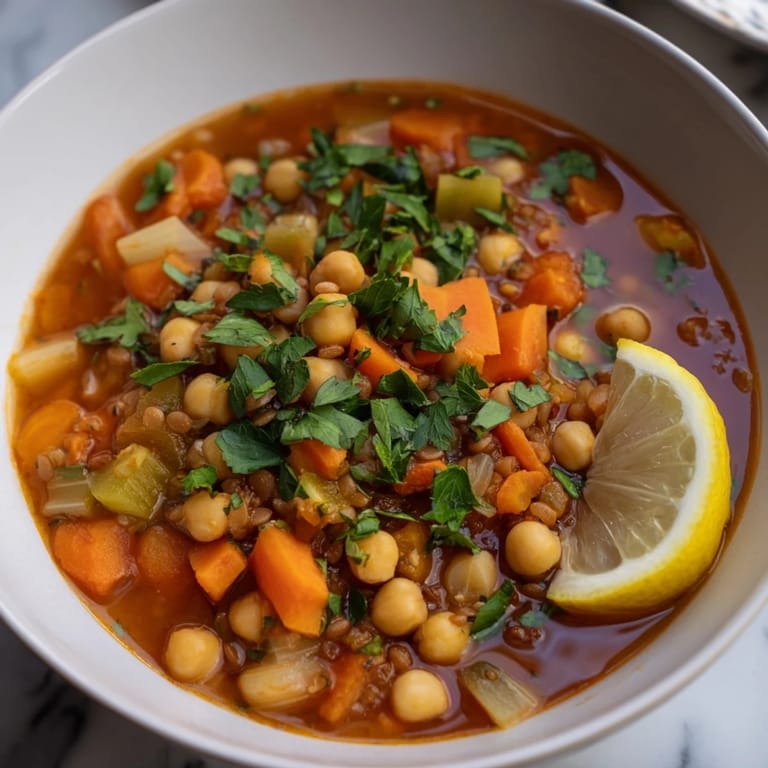
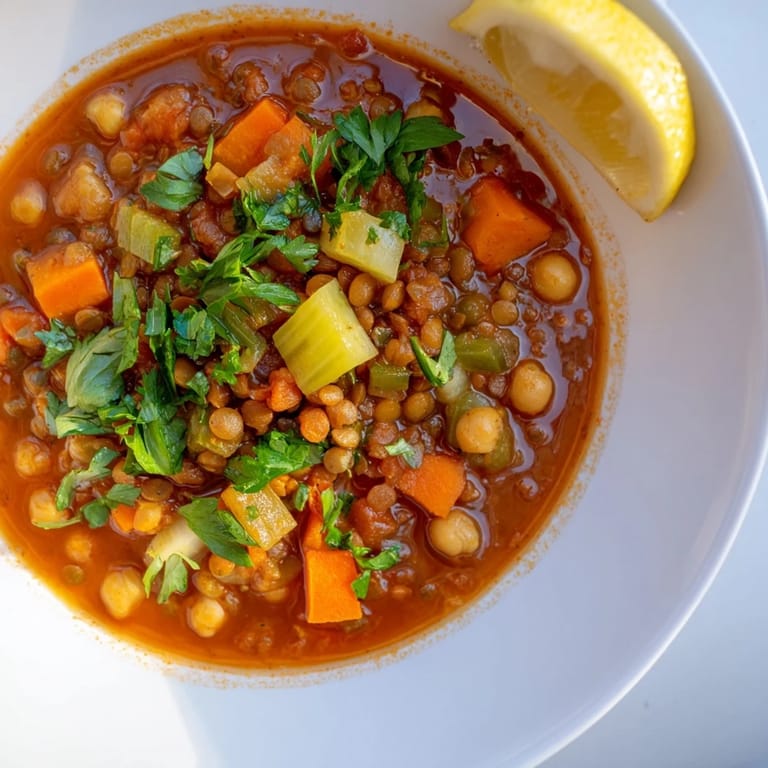
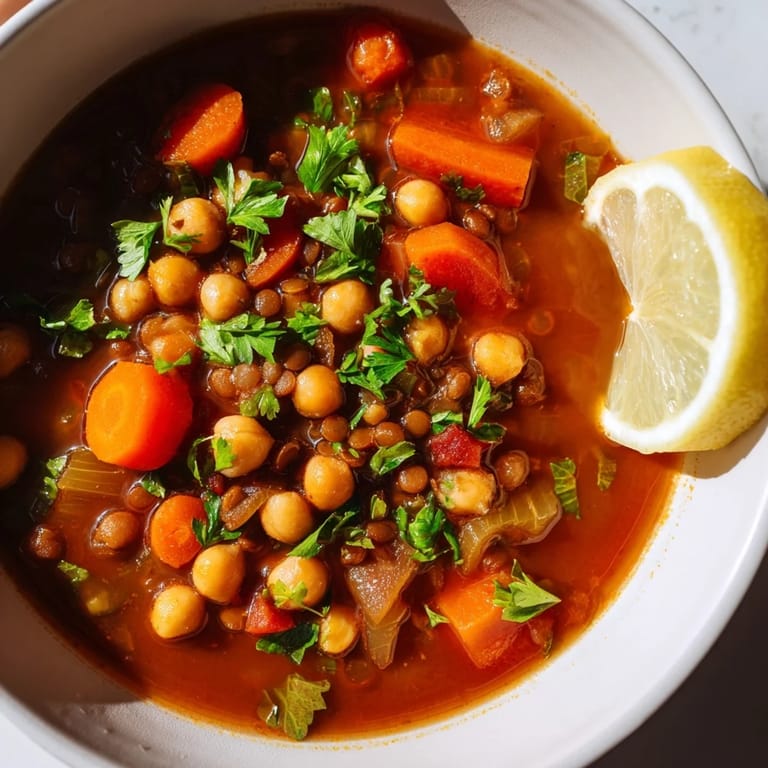
- Ladle into bowls and crown each one with fresh cilantro, a wedge of lemon, and maybe a small pinch of paprika. The lemon wedge is essential—each person should squeeze it in to their own taste.
 Save to Pinterest
 There was an evening when I made this for my partner who was fighting a cold, and somehow the steam, the fragrance, and the warmth of something so deeply comforting seemed to matter more than any medicine. That's when I realized harira isn't just about nourishment—it's a small gesture of care wrapped in a bowl.
The Spice Story Behind Harira
North African spice blending is less about precision and more about intuition built over generations. Cinnamon and cumin are the backbone, warm and slightly sweet, while turmeric adds earthiness and that golden color that makes the soup look alive. Ginger sneaks in with a subtle heat that sits in the back of your throat, and paprika rounds everything out with a gentle smokiness. I've learned to respect these spices as individuals first—toasting them briefly in the oil releases oils that would otherwise remain locked away, and that minute of fragrance is your indication that you're about to create something memorable.
Why Apricots Belong in Soup
The first time someone tells you dried apricots belong in a savory soup, it sounds wrong. But North African cooking understands something about balance that Western kitchens often miss—sweetness isn't the enemy of savory when it's used sparingly and with intention. The apricots soften in the broth and release a subtle honey-like sweetness that plays beautifully against the spices and the lentils' earthiness. It's not about making the soup taste like dessert; it's about creating a more complex, more interesting whole. Once you taste it, you'll understand why this combination has endured for centuries.
Serving and Storage
Harira is one of those rare soups that improves with time, as if the spices continue their quiet work overnight in the refrigerator. Make it in the morning and you'll have something even better for dinner. Store it in an airtight container for up to five days, or freeze portions for up to three months—just leave room at the top of the container because the liquid will expand slightly as it freezes.
- Serve with crusty bread for dipping and let each person season their own bowl with lemon juice and fresh herbs.
- If you're making this for a crowd, prepare the ingredients earlier in the day and the soup itself takes just over an hour of mostly hands-off simmering.
- For a vegan version, confirm your vegetable broth is plant-based and everything else is naturally compliant.
 Save to Pinterest
 Make this soup when you need to feel something warm and intentional. It's the kind of dish that turns a quiet Tuesday evening into something memorable, and fills your home with the kind of aroma that makes people ask what's cooking before they even walk through the door.
Recipe FAQs
- → What spices give Harira its distinctive flavor?
Harira features a warm blend of cumin, cinnamon, turmeric, ginger, paprika, and optional cayenne pepper, creating its signature aromatic profile.
- → Can I use canned legumes instead of dried ones?
Yes, canned chickpeas can be used to reduce prep time. Just drain and rinse before adding.
- → How do I make this suitable for a vegan diet?
Use a plant-based vegetable broth and ensure no animal-derived ingredients are added.
- → What garnishes complement this dish best?
Fresh cilantro or parsley, lemon wedges, and optionally cooked vermicelli or rice enhance flavor and texture.
- → How long should the soup simmer for optimal taste?
Simmer uncovered for 45–50 minutes to tenderize legumes and meld flavors fully.
- → Can I prepare this in advance?
Yes, the flavors deepen when rested overnight, making it great for meal prep or gatherings.