 Save to Pinterest
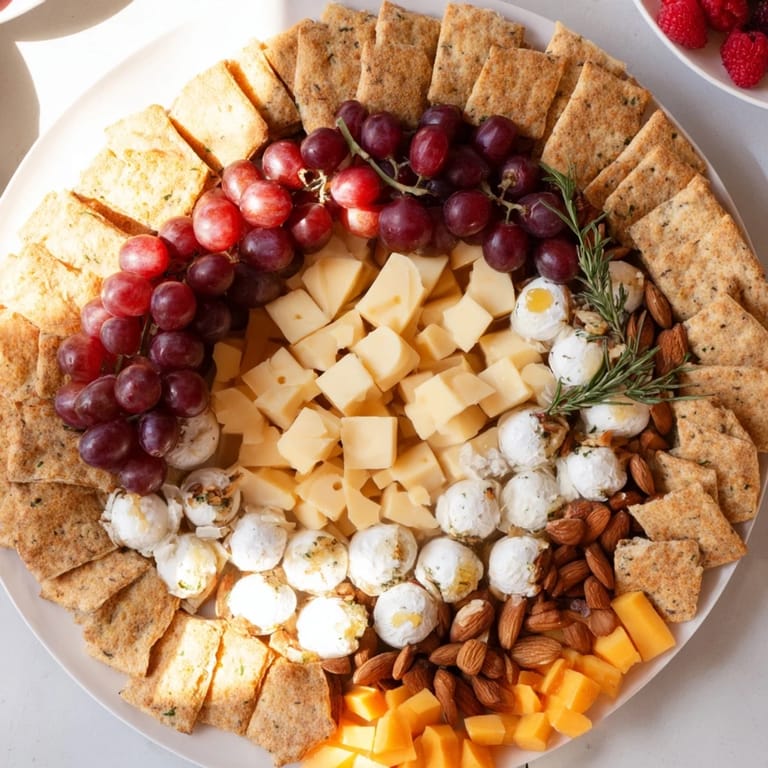
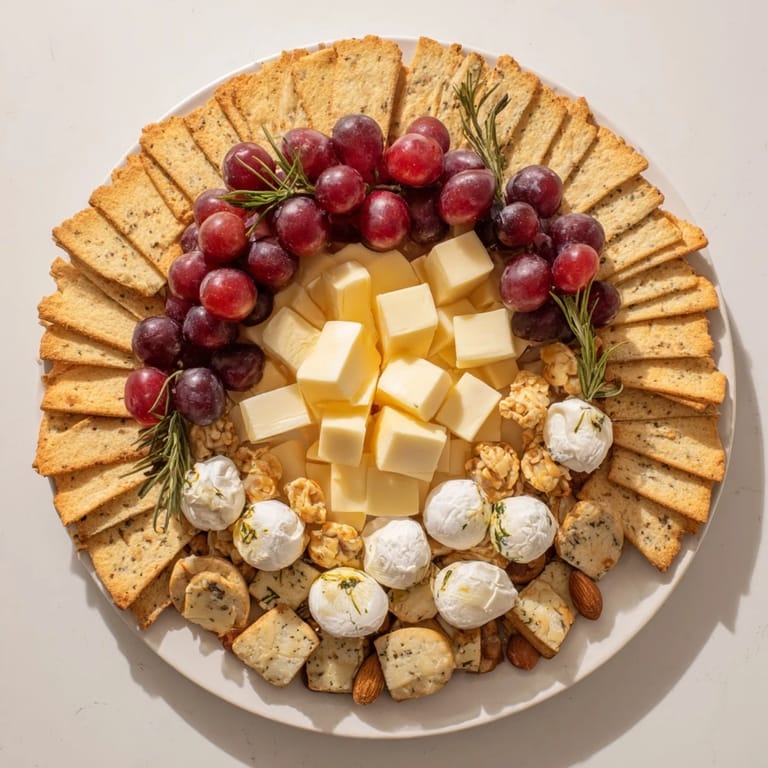
 I remember the first time I created something meant to be more than just food—it was at a dinner party where I wanted guests to feel like they were entering a moment of art before tasting. The Ouroboros Circle came to me as I stood in my kitchen, thinking about that ancient symbol of the snake eating its own tail, and I realized: why not create that on a platter? Cheese, fruit, and crackers arranged in an unbroken ring, a visual story that made people pause before they ate. That night, someone broke into the circle, and suddenly everyone felt permission to do the same, to destroy something beautiful and share it together.
I made this for my partner's birthday gathering, and what struck me wasn't just the compliments, but how people gathered around the board like it was a centerpiece, not just appetizers. They photographed it, they hesitated before breaking the circle, and then they started sharing stories—about their own favorite cheeses, about times they'd had good wine and good friends. The platter became the reason to linger before dinner even started.
Ingredients
- Brie, sliced (100 g): The creamy anchor of your circle, soft enough to spread on a cracker if someone wants it that way. I always keep brie slightly cool but not refrigerator-cold, so it's luscious without being hard to slice.
- Aged cheddar, cubed (100 g): This brings sharpness and structure. Choose a cheddar with some age to it—that tangy depth makes people pause and really taste it.
- Goat cheese, rolled into small balls (80 g): These become little flavor bombs, especially when you'll drizzle honey over them. Rolling them in your hands (slightly damp helps) keeps your arrangement looking intentional and elegant.
- Prosciutto, thinly sliced (80 g): Optional, but it adds a salty sophistication and color variation. I fold mine loosely so they look gathered, like little fabric sculptures.
- Salami, folded (80 g): Another optional layer of richness. I choose a good one because thin slices of mediocre salami disappear on a board like this.
- Artisanal crackers, fanned (1 handful): These form the head of your ouroboros, so choose ones with texture and character. The fanning motion happens naturally when you arrange them slightly overlapping.
- Baguette slices (6 small): Toast them lightly if you want them crisp, or leave them as-is for a softer bite. They're your spacing element, filling gaps with warmth.
- Red grapes in small clusters (1 cup): These become your tail, and their round shape echoes the circular theme. Keep them slightly chilled so they feel fresh and burst with juice.
- Mixed berries (1 cup): Blueberries, raspberries, blackberries—they're your color punctuation marks. I arrange them to catch the light differently than the heavier cheeses.
- Sliced fig (optional): When figs are in season, they're magic on a board. Their deep interior color contrasts gorgeously with everything around them.
- Roasted almonds (1/3 cup): Toast them yourself if you can; the aroma in your kitchen is half the pleasure. Their slight saltiness balances the sweetness of fruit.
- Marcona almonds (1/3 cup): These are buttery and almost caramel-like. Use them as your luxury touch, slightly clustered to draw attention.
- Honey (2 tbsp): This bridges sweet and savory, especially over the goat cheese balls. Warm it gently so it drizzles without being too thick.
- Fresh rosemary sprigs (1 tbsp): This is your final garnish, your herb confession. A light sprinkle says you cared about every detail.
Tired of Takeout? 🥡
Get 10 meals you can make faster than delivery arrives. Seriously.
One email. No spam. Unsubscribe anytime.
Instructions
- Choose your canvas:
- Select a large round platter or wooden board—this is important because the circle shape frames your idea perfectly. I use a wooden board because it feels organic and warm, and it photographs beautifully. Whatever you choose, make sure it's clean and has enough space for ingredients to breathe.
- Create the head with crackers:
- At one point around the circle, fan your artisanal crackers slightly overlapping, like feathers. This is your ouroboros's head, its entrance point. Arrange them with intention, so they look gathered but not crowded.
- Build the backbone with cheese and cured meats:
- Moving clockwise around the board, alternate your cheeses and meats in sections. Think of this as creating rhythm: brie here, cheddar cubes there, goat cheese balls at intervals. If you're including prosciutto and salami, fold them gently and tuck them into the spaces between cheeses. This creates texture and visual interest.
- Curve the baguette slices around the ring:
- These aren't random—they follow the circle's curve like stepping stones. Place them into gaps, creating a continuous path around your platter. They're your secondary structure, supporting and separating the bolder flavors.
- Place the tail with grape clusters:
- Directly opposite your cracker head, arrange your red grape clusters. This is the tail meeting the head, the circle completing itself. Grapes add a visual weight that anchors the whole composition.
- Fill and color with berries, nuts, and figs:
- Now the real artistry happens. Take your mixed berries and scatter them thoughtfully—not randomly, but not rigidly either. Cluster the marcona almonds slightly, so they catch light together. If using figs, slice them and tuck them where you want a moment of deep color. This is where you respond to what you're seeing, filling gaps until the board feels balanced.
- Crown it with honey and rosemary:
- Gently drizzle warm honey over the goat cheese balls—watch it gather and pool slightly. Then sprinkle fresh rosemary sprigs as your final flourish. This is the moment where technique becomes poetry.
- Complete the circle:
- Step back and look. Does your head (crackers) and tail (grapes) feel like they're about to touch? Does the eye travel continuously around the ring? Adjust anything that feels off. The circle should feel unbroken, intentional, complete.
- Serve with ceremony:
- Present it to your guests before they eat. Let them see what you've created. Then invite them to break the circle, to begin the ritual of sharing. This moment—where beautiful things are meant to be consumed, to bring people together—is what makes this more than appetizers.
 Save to Pinterest
 I think about that birthday dinner often, not because the food was technically perfect, but because for those few minutes before eating, everyone was united in appreciating something beautiful. The conversation shifted. People were more present. A platter of cheese and fruit became a moment, and that's when food transcends ingredients.
The Symbolism Behind the Circle
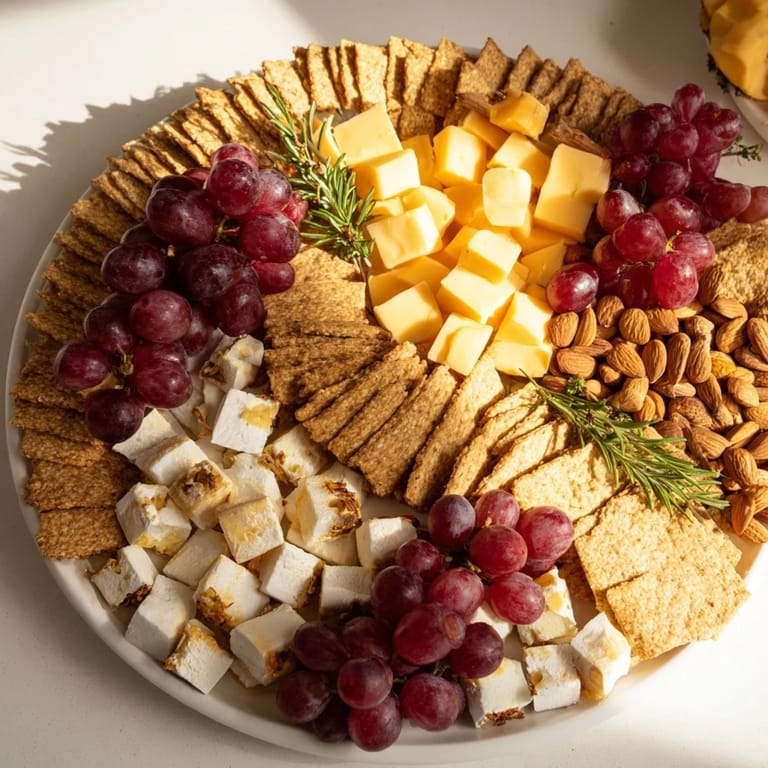
The ouroboros is one of humanity's oldest symbols—a snake consuming its own tail, representing infinity, cycles, and completion. When you build this on a platter, you're creating a edible meditation on that concept. The act of breaking the circle is part of the ritual; it's guests participating in an ancient idea. Every time I make this, I'm struck by how people instinctively understand the shape before I explain it. Some pause before breaking the circle, as if asking permission. Others dive in eagerly, ready to destroy the beautiful thing and share it. Both responses feel right. That moment of hesitation, of choosing when to begin, is why this works as more than just an appetizer.
Adapting the Ouroboros for Your Guests and Seasons
One of the greatest pleasures of this platter is that it's a framework, not a prison. In summer, when berries are overwhelming and cheese tastes lighter, I load the board with raspberries and stone fruits. In winter, I reach for dried apricots, candied orange peel, and deeper cheeses. I've made this vegan using plant-based cheeses that are actually good, and I've made it for meat-lovers by adding more cured meats and less fruit. The circle always works. The structure remains, but the ingredients tell you what season it is, what your market had, what your guests love. Pay attention to what's freshest when you're shopping—the board wants to reflect that moment in time.
Wine Pairings and the Complete Serving Experience
I learned early that the ouroboros circle deserves a proper drink pairing, something that lifts the whole experience. A crisp Sauvignon Blanc cuts through the richness of brie and cheddar, refreshing your palate between bites. Sparkling rosé adds playfulness and celebration to the table. If your guests prefer red wine, a light Pinot Noir works beautifully with the cured meats and almonds. The honey-drizzled goat cheese is almost dessert-like, so think of wines that bridge savory and sweet. Pour the wine into proper glasses—this detail matters because it says you considered everything. Serve the platter at the center of the table where people naturally gather, and give them small plates and napkins. These practical touches are actually invitations to linger, to make this part of the evening, not just the opening chord.
- Chill your wine glasses ahead of time, but keep the platter at cool room temperature (not cold) so flavors sing
- If making this ahead, assemble everything but the honey and rosemary garnish an hour early, then add them fresh right before guests arrive
- Have small cheese knives or forks nearby—it gives people permission to take what they want without feeling like they're diving into shared food with their hands
 Save to Pinterest
 Making an Ouroboros Circle teaches you something quiet about hospitality: that the most memorable meals aren't always the most complicated ones. Sometimes they're the moments when you slow down, when you arrange things with care, when you invite people to break something beautiful together. That's the real recipe.
Recipe FAQs
- → What cheeses work best for this platter?
Soft and semi-hard cheeses like brie, aged cheddar, and goat cheese complement the various textures and flavors beautifully.
- → Can this platter be made completely vegetarian?
Yes, simply omit the meats and consider adding extra fruits or plant-based cheese alternatives for variety.
- → How should the platter be assembled for the best presentation?
Arrange crackers in a fanned shape to form the head, cluster grapes on the opposite end as the tail, and alternate cheeses and meats around the circular board.
- → Which accompaniments enhance the flavor profile?
Honey drizzled over goat cheese, roasted almonds, fresh rosemary, and a mix of berries add contrast and depth to the platter.
- → What wines pair well with this platter?
Crisp white wines like Sauvignon Blanc or sparkling rosé nicely complement the mix of cheeses, fruits, and nuts.
- → Can seasonal ingredients be substituted?
Yes, seasonal fruits and nuts can be swapped in to create variations while maintaining balance and color.