 Save to Pinterest
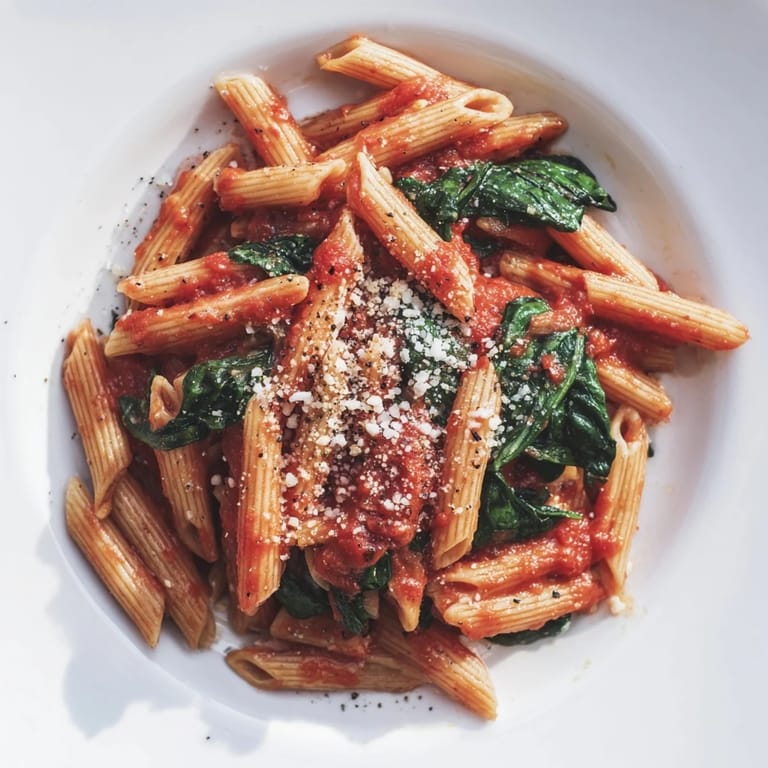
 There's something magical about the smell of garlic hitting hot oil at just the right moment—that split second when you know dinner is going to taste like you actually had time to cook. I discovered this pasta during one of those frantic Tuesday nights when my fridge had spinach that needed using and a jar of marinara winking at me from the pantry. What started as kitchen improvisation became the dish I reach for whenever I want something that tastes homemade but won't keep me hovering over the stove for hours.
My roommate in college used to joke that my cooking was "aggressively boring," so when I made this for her one random Thursday, her surprised "wait, this is actually really good" made me oddly proud. It's not fancy, but something about the balance between that tangy marinara and the gentle earthiness of wilted spinach made her ask for the recipe—and she's the type of person who never asks for recipes.
Ingredients
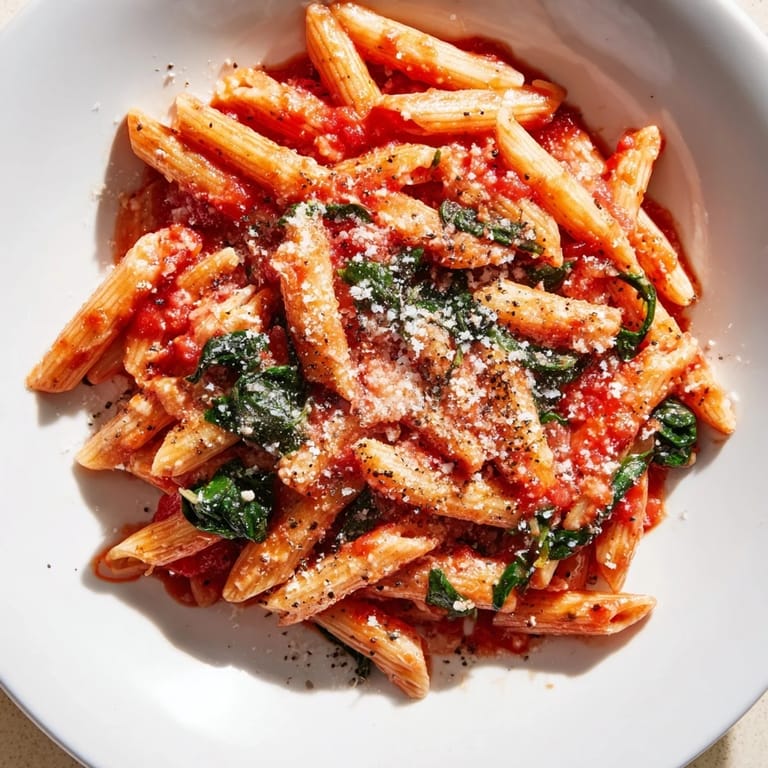
- Spaghetti or penne (12 oz): The shape matters more than you'd think—penne catches more sauce in its tubes, but spaghetti has this satisfying twirl factor that makes the meal feel less rushed.
- Olive oil (2 tbsp): Don't skip the quality here; good olive oil tastes like something, and that matters when you're building flavor in just a few minutes.
- Garlic (3 cloves, minced): The 30-second sauté is crucial—you want it fragrant and just barely golden, not brown and bitter.
- Jarred marinara sauce (24 oz): Your kitchen is not pretentious for using this; it's actually smart because you're spending your energy on the fresh spinach that makes it sing.
- Fresh baby spinach (5 oz): Baby spinach wilts faster and disappears into the sauce like it was always meant to be there.
- Red pepper flakes (1/2 tsp, optional): A whisper of heat can change everything—add it if you like knowing the sauce is awake.
- Parmesan cheese (1/4 cup grated): Grate it fresh if you can; the pre-shredded stuff won't melt as smoothly into the hot pasta.
- Fresh basil (optional): A few leaves torn at the end remind you this started with fresh ingredients.
- Black pepper and salt: Taste as you go—the pasta water should taste like the sea, and the final dish should make you pause.
Tired of Takeout? 🥡
Get 10 meals you can make faster than delivery arrives. Seriously.
One email. No spam. Unsubscribe anytime.
Instructions
- Get the Water Going:
- Fill a large pot and add enough salt that it tastes noticeably salty—this is where most of your seasoning actually comes from. Bring it to a rolling boil because pasta water that's just simmering won't cook the pasta properly.
- Cook the Pasta:
- Add pasta and stir it once right at the beginning so nothing sticks. Cook to al dente, which means it should have a tiny bit of resistance when you bite it; overcooked pasta absorbs all the sauce and turns mushy.
- Start the Sauce:
- While the pasta's working, warm olive oil in a large skillet over medium heat. The moment it shimmers, add your minced garlic and listen for it to sizzle softly.
- Build the Flavor:
- After 30 seconds (really, don't wait longer), pour in the marinara sauce and let it warm through gently. If you're using red pepper flakes, add them now so they bloom in the heat.
- Wilt the Spinach:
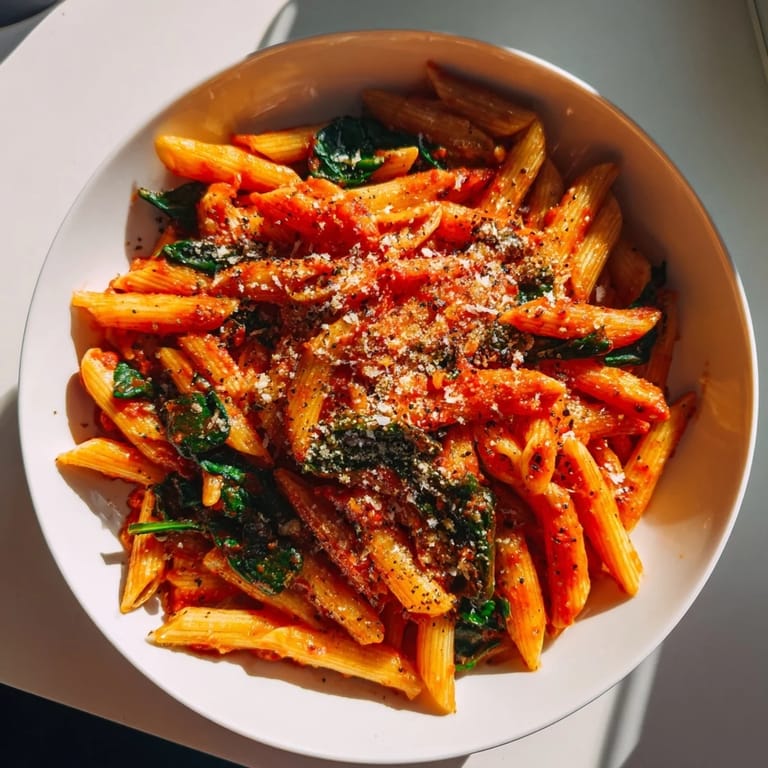
- Add the fresh spinach in batches, stirring as it collapses down. It'll look like too much at first, then suddenly it's this beautiful dark mass folded into the red sauce.
- Bring It Together:
- Drain your pasta (saving that half cup of starchy water like it's liquid gold), then add it straight to the sauce. Toss everything gently so the pasta gets coated, and if it looks too thick, add pasta water a splash at a time until it loosens up—the sauce should cling to the pasta, not pool at the bottom.
- Finish and Serve:
- Stir in your Parmesan, crack black pepper over everything, taste it one more time, and serve immediately while it's still steaming. Garnish with extra cheese and torn basil if you have it.
 Save to Pinterest
 The first time I made this for someone who actually cared how I cooked, they asked if I'd added cream, because the sauce seemed so silky. I hadn't—it was just the pasta water and patience, and that moment made me understand that cooking isn't about complexity; it's about knowing a few true things and doing them right.
Why This Works on Busy Nights
The genius of this dish is that every component is actively cooking while you're busy with something else. Water boils while you mince garlic, sauce warms while pasta cooks, spinach wilts while you're getting bowls ready. Nothing requires constant attention, which means you can actually breathe instead of stress-cooking. It's the kind of meal that tastes like you had it under control the whole time, even when you absolutely didn't.
Stretching It and Making It Yours
This recipe is a canvas that won't fight you. White beans stirred in at the end add protein and weight without changing the character of the dish. Sautéed mushrooms—especially cremini or portobello—add an earthy depth that plays beautifully with spinach. Some nights I add a pinch of dried oregano to the sauce, other nights I don't. The thing about simple food is that you get to decide where the personality goes, and it always feels like your own cooking rather than following orders.
The Small Details That Matter
Texture matters more in simple dishes because there's nowhere to hide. The crunch of fresh Parmesan on top, the slight resistance of al dente pasta, the way spinach goes tender but not mushy—these small things add up to making the meal feel intentional. The basil at the end isn't just decoration; it's a gentle reminder that fresh tastes better, and it costs almost nothing to let it be.
- Always reserve your pasta water before you drain—this single habit will improve your cooking immediately and permanently.
- Taste the final dish before serving; the balance of salt and pepper is personal, and you're the only one who can get it right.
- If you have 30 extra seconds, tear basil by hand instead of cutting it; it releases the oils more gently and tastes noticeably fresher.
 Save to Pinterest
 This pasta taught me that you don't need hours or complicated ingredients to cook something that tastes like care. It's the meal I make when I want to prove that cooking is actually possible on an ordinary night.
Recipe FAQs
- → Can I use fresh marinara sauce instead of jarred?
Absolutely! Fresh marinara will provide a brighter flavor and can be used as a substitute without altering the cooking process significantly.
- → How can I make this dish vegan?
Omit the Parmesan cheese or replace it with a plant-based alternative to keep the dish vegan-friendly.
- → What pasta types work best with this sauce?
Spaghetti or penne are excellent choices as they hold the sauce well, but feel free to use your favorite pasta shape.
- → How do I prevent the sauce from becoming too thick?
Add a splash of reserved pasta cooking water to thin the sauce and help it cling evenly to the pasta.
- → Can I add protein to this dish?
Yes, adding cooked white beans or sautéed mushrooms enhances protein content and complements the flavors nicely.