 Save to Pinterest
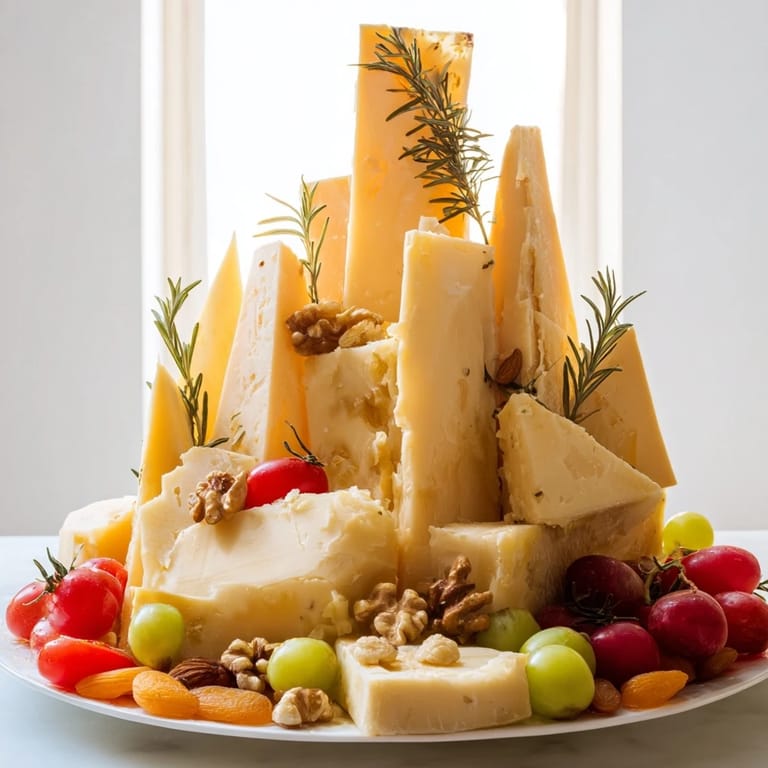
 I'll never forget the moment a friend brought a sculptural cheese board to a dinner party and completely transformed how I thought about entertaining. It wasn't just food arranged on a platter—it was edible architecture, a landscape you could explore with your hands and taste buds. That night, I watched people lean in closer, their eyes widening at the dramatic wedges of cheese stacked like mountain peaks. I went home inspired to create my own, and it became the centerpiece of every gathering I've hosted since.
I made this for my sister's gallery opening last spring, and I watched it become the talk of the room—more people gathered around that board than around the paintings. By the end of the evening, the mountains had crumbled into beautiful chaos, and I realized that was exactly the point. It wasn't meant to stay pristine; it was meant to be enjoyed, dismantled, and savored.
Ingredients
- Aged Manchego (150 g), cut into tall irregular chunks: This Spanish cheese has a nutty, slightly caramel-like flavor that anchors your landscape. Cut it into chunky, uneven pieces—the irregularity is what makes those peaks feel dramatic and natural, not fussy.
- Parmigiano-Reggiano (150 g), broken into rugged shards: Let this one break naturally along its crystalline lines rather than cutting it precisely. Those rough shards catch light beautifully and taste intensely savory, like edible gold nuggets.
- Aged Cheddar (150 g), sliced into tall triangles: Choose a really aged version if you can—the sharper the better. Slice it into tall triangles so they stand proud on your board, almost like warning flags on mountain summits.
- Brie (100 g), cut into thick wedges: This is your soft, creamy base layer. Cut generous wedges so they nestle comfortably between the hard cheese peaks, creating natural valleys.
- Gorgonzola (100 g), broken into rustic pieces: The blue veining creates natural visual interest. Break it rather than cut it—those irregular pieces feel more organic and invite people to dig in.
- Red grapes (1 cup), halved: These jewel-like gems fill valleys and create pockets of sweetness and juiciness. Halving them shows off their interior and makes them easier for guests to pick up.
- Cherry tomatoes (1 cup), halved: Their bright red draws the eye and provides an unexpected savory-sweet moment. The halves reveal that perfect burst of juice inside.
- Cucumber (1 small), sliced into rounds: These pale green circles add freshness and a cooling crunch. They're the unexpected refreshment that makes people return to the board.
- Apple (1 small), thinly sliced: A crisp, slightly tart apple bridges sweet and savory beautifully. Slice it just before serving and toss lightly with lemon juice if you're concerned about browning.
- Dried apricots (1/2 cup): These concentrated pockets of sweetness pair unexpectedly well with sharp cheeses. They add color and a chewy texture that contrasts with everything else.
- Roasted almonds (1/2 cup): These are your boulders, your texture anchors. The roasting gives them a deep, toasty flavor that complements both hard and soft cheeses.
- Walnuts (1/2 cup): Earthier and slightly more assertive than almonds, walnuts add another dimension of nuttiness and visual variation.
- Thin baguette slices (12): These are your paths and platforms. Toast them lightly if you want them to hold up better under toppings, or leave them soft for a different textural experience.
- Assorted crackers (12): Mix shapes and colors—water crackers, seeded, herb-infused. Let the crackers be vehicles for flavor, not stars themselves.
- Honey (2 tbsp): This is your finishing touch, your sweetness that surprises. Drizzle it strategically over the harder cheeses where it catches and pools.
- Fresh rosemary sprigs: These aren't just garnish—they're edible flavor and a visual nod to a landscape with growing things. Brush your fingers against them as you explore the board.
Tired of Takeout? 🥡
Get 10 meals you can make faster than delivery arrives. Seriously.
One email. No spam. Unsubscribe anytime.
Instructions
- Set Your Foundation:
- Start with a large wooden board or platter as your canvas. Wood naturally complements cheese and creates a warm, inviting stage. Take a moment to imagine your landscape—where will your highest peak be? Where should the gentle slopes flow?
- Build Your Mountains:
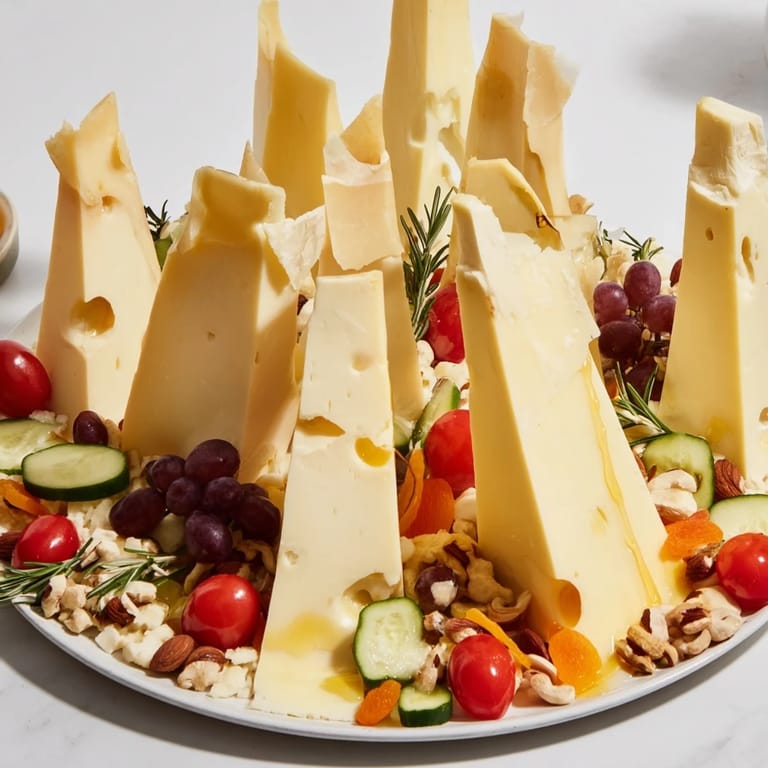
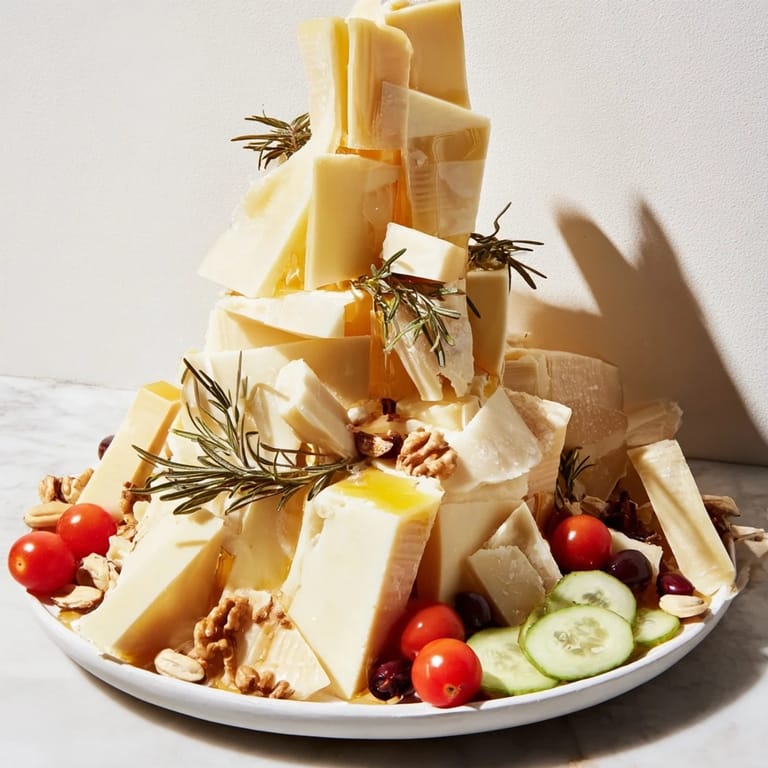
- Arrange those tall, dramatic chunks of hard cheese vertically, creating the highest points of your landscape. Stand the Manchego, Parmigiano-Reggiano, and Cheddar pieces upright or at strong angles. They should feel bold and architectural, like you're building something that will stand proud on the table.
- Create Your Hills:
- Nestle the softer Brie and Gorgonzola around the bases of those hard cheese peaks. These pieces should feel supportive, creating natural valleys and gentle slopes. The creaminess of these cheeses visually softens the landscape around the hard mountains.
- Fill the Valleys:
- This is where it gets fun. Cluster your grapes, cherry tomatoes, cucumber rounds, apple slices, and dried apricots into the lower areas. Think about color distribution—let the reds and greens flow like rivers through your landscape. Fill intentionally but not densely; you want people to see where to place their cheese.
- Scatter Texture and Boulders:
- Distribute those roasted almonds and walnuts around the board in small clusters. They should look like natural stones and boulders scattered throughout your edible landscape. Distribute them so there are little pockets of crunch everywhere someone might look.
- Create Pathways:
- Arrange baguette slices and crackers along the edges and flowing through the middle, creating inviting paths that encourage people to navigate the landscape. These are the trails through your terrain. Leave some space around them so they feel like thoughtful placement, not cramming.
- Add the Magic:
- Drizzle honey in small pools over select hard cheeses or let it pool in natural crevices you've created. Tuck fresh rosemary sprigs throughout, positioning them as if little evergreens are growing throughout your landscape. The honey catches light and adds a final touch of luxury.
- Invite Exploration:
- Step back and look at what you've created. Serve it immediately, and encourage your guests to explore, to pick their paths, to discover their own favorite combinations. The beauty of this board is that it invites participation and play.
 Save to Pinterest
 There was a moment during that gallery opening when a quiet man in the corner—someone who'd spent the whole evening looking at art without much expression—suddenly smiled wide while taking a bite of Manchego with a dried apricot. He looked at me and said, 'This is the best thing I've tasted all night.' That's when I understood: food arranged with intention, with respect for beauty and thoughtfulness, becomes more than sustenance. It becomes generosity.
Designing Your Landscape
Think of this board as your blank canvas. There's no single right way to arrange it, which is both liberating and slightly daunting. Some people prefer symmetry; others love organic, chaotic abundance. I've learned that the best boards reflect the person making them. If you're someone who finds calm in order, create balanced mountains and carefully placed valleys. If you're someone who loves abundance and color, let things flow more wildly. The key is intentionality—arrange with purpose, even if that purpose is 'joyful chaos.' Stand back between steps and look at it from your guests' perspective. Does the eye know where to go? Are there colors and textures distributed throughout, or are all the greens clustered together? Does it feel inviting or overwhelming?
Pairing Wisdom
This board is extraordinary with the right drinks alongside it. I've found that a crisp white wine—think Sauvignon Blanc or Pinot Grigio—cuts through the richness of the hard cheeses beautifully. If you prefer red wine, keep it light-bodied; a Pinot Noir or young Beaujolais works wonderfully without overpowering the delicate Brie. Sparkling wine is perhaps the secret weapon here; the bubbles refresh your palate between bites and feel celebratory. Avoid heavy, oaky wines that can compete with the nuance of aged cheeses. And don't overlook non-alcoholic options—a really good ginger ale or sparkling water with fresh herbs can be just as elegant and lets the food shine without competition.
Variations and Adventures
Once you've made this board once, you'll find yourself wanting to play with it. The structure is flexible; what matters is the principle of creating height, texture, and flavor variety. In summer, I swap out some items for fresh berries, fresh figs, and heirloom tomatoes. In winter, I lean into dried fruits—dried figs, dates, and pomegranate seeds add jewel-like pops of color. I've added cured meats for non-vegetarian versions, creating new mountains of prosciutto and salami. One memorable time, I added edible flowers—pansies and violas—and suddenly it looked like a secret garden rather than mountains. The point is, this is a template, not a prescription.
- Regional cheese variations keep it fresh—try sharp Gruyère instead of Manchego, or a creamy burrata alongside your harder cheeses.
- Seasonal produce adaptations make this board feel current and connected to what's in season around you.
- Cured meats, fresh herbs, and edible flowers transform the look without changing the fundamental structure.
 Save to Pinterest
 Making a sculptural cheese board is an act of generosity and creativity that takes just 25 minutes but feels like so much more. Your guests will remember not just the flavors, but the moment of discovering them on a beautiful landscape you created.