 Save to Pinterest
 There's something about the way green curry paste hits a hot pan that makes you pause mid-conversation. I discovered this soup years ago when a Thai colleague brought leftovers to share, and the first spoonful felt like someone had handed me a passport to Bangkok. It's become my go-to when I want something that tastes restaurant-quality but doesn't demand a complicated technique or hours in the kitchen.
I made this for my partner on a cold Wednesday when they came home exhausted, and watching their shoulders relax after the first spoonful reminded me why I cook. The aroma alone filled our small kitchen like an open window to somewhere warm and bright, and by the time we finished, we were both plotting when to make it again.
Ingredients
- Firm tofu or chicken breast: Use whichever feels right for your meal—tofu absorbs the coconut broth beautifully and keeps things plant-based, while chicken gives you a heartier, more traditional option.
- Green curry paste: This is your shortcut to depth and complexity; a good store-bought paste (Thai, Maesri, or Aroy-D brands are reliable) holds up just as well as homemade.
- Coconut milk: Full-fat creates a silkier, more luxurious soup, but light coconut milk works if you're watching calories—just stir it well before opening.
- Fish sauce: It sounds intimidating, but a tablespoon is the secret that ties everything together; soy sauce is a perfectly valid substitute for vegetarian versions.
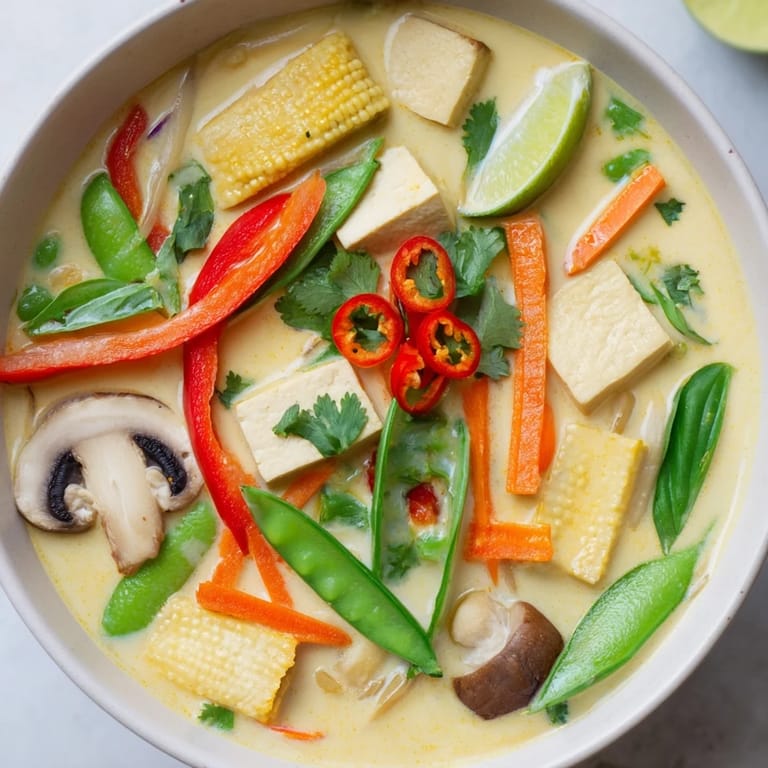
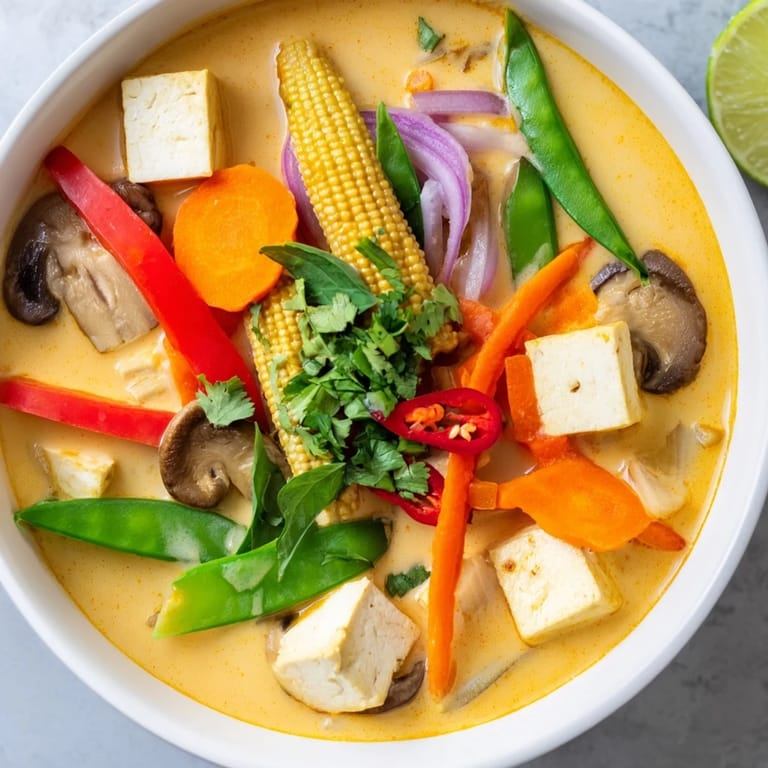
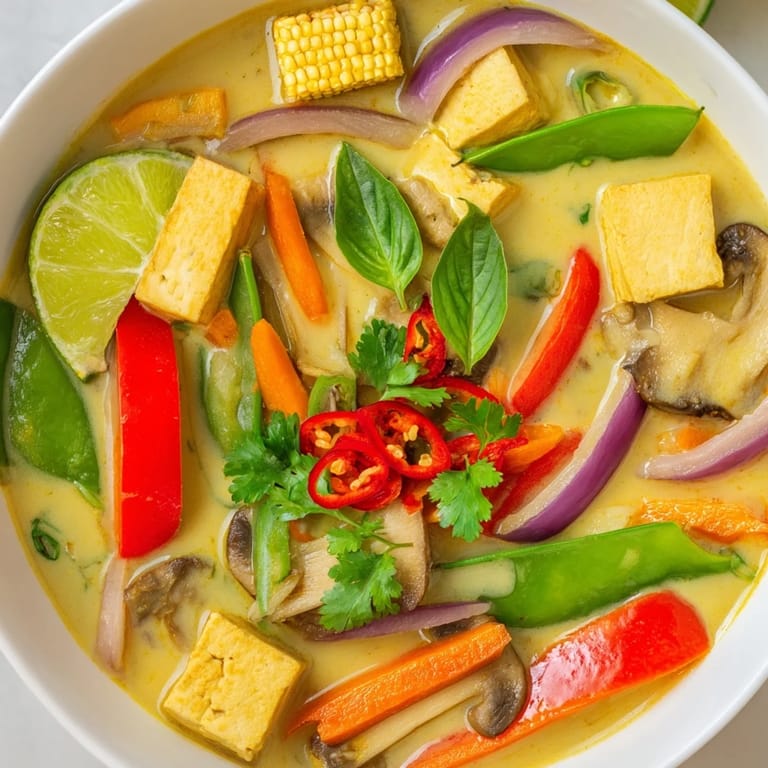
- Fresh vegetables: Red bell pepper, zucchini, snap peas, mushrooms, baby corn, carrot, and onion bring different textures and keep each spoonful interesting.
- Cilantro, Thai basil, and lime: These aren't fancy additions—they're the final brushstrokes that make the soup taste like itself.
Tired of Takeout? 🥡
Get 10 meals you can make faster than delivery arrives. Seriously.
One email. No spam. Unsubscribe anytime.
Instructions
- Wake up the curry paste:
- Heat oil in a large pot and add the paste, letting it sizzle for a minute or two until the smell becomes almost intoxicating and the raw edge mellows out. This step matters more than you'd think.
- Build the base:
- Add your onion, let it soften slightly, then add your protein (chicken or tofu). If using chicken, it should look mostly white but still slightly translucent in the thickest part—it'll finish cooking in the broth.
- Bring in the coconut and broth:
- Pour both in and bring everything to a gentle simmer, adjusting heat so it's bubbling quietly rather than aggressively. This keeps the soup from becoming murky or the protein from getting tough.
- Add vegetables strategically:
- Toss in everything at once and let it simmer for 8–10 minutes until the vegetables are tender but still have a slight snap. Taste a mushroom slice to know when you're done.
- Season and finish:
- Stir in fish sauce (or soy sauce) and sugar, tasting as you go. You're looking for that balance where no single flavor dominates—the heat from the curry, the sweetness of coconut, the salty-savory depth underneath.
- Serve with joy:
- Ladle into bowls and finish with fresh cilantro, Thai basil, a squeeze of lime, and thinly sliced red chili if you want extra heat. The lime wedge on the side lets everyone adjust brightness to their taste.
 Save to Pinterest
 The first time I doubled this recipe for friends, I watched them slow down mid-conversation as the flavors unfolded on their tongues. No one asked for a recipe card—they just sat with their bowls, savoring it slowly, which felt like the highest compliment any cook could receive.
Building Layers of Flavor
Thai curry doesn't work through a single blast of spice; it builds in layers. The initial sauté mellows and deepens the paste, the aromatics from onion add sweetness, the coconut milk rounds everything out, and the vegetables contribute subtle earthiness and textural contrast. When you taste at the end, you're tasting the result of each element having done its job, not just five ingredients dumped into a pot.
Choosing Your Protein
Tofu absorbs the broth like it's designed for this soup—each cube becomes infused with flavor—while chicken gives you a more traditional, heartier bowl. If you use chicken, cut it thin so it cooks quickly and stays tender; thicker pieces can turn stringy by the time the vegetables are done. Either way, the soup doesn't care which you pick, and that flexibility is part of why it's so worth making on repeat.
Making It Your Own
Vegetables are suggestions, not rules. Love eggplant? Swap in chunks. Have asparagus in the crisper drawer? Cut it into pieces and add it. Seasonal vegetables often taste better and cost less, so let what's at the market guide you. The curry paste and coconut milk are the backbone—everything else can shift based on your fridge and mood.
- If you prefer a brothier soup, use less coconut milk and more vegetable or chicken broth.
- For extra depth, try adding a splash of lime juice during cooking, not just at the end.
- A pinch of brown sugar instead of white sugar adds a subtle molasses note that some prefer.
 Save to Pinterest
 This soup has a way of turning up on the table whenever someone needs comfort that doesn't feel heavy. Make it once and it becomes a reliable friend in your cooking repertoire.
Recipe FAQs
- → What protein options work well in this curry?
Firm tofu or boneless chicken breast are ideal, providing contrasting textures that absorb the green curry flavors beautifully.
- → Can I adjust the spiciness of the curry?
Yes, increase the green curry paste amount or add fresh sliced chili to boost the heat according to your preference.
- → What vegetables are best for this soup?
Red bell pepper, zucchini, baby corn, snap peas, mushrooms, carrot, and onion create a vibrant, crunchy, and flavorful vegetable medley.
- → Is it suitable for gluten-free diets?
Use gluten-free soy sauce or fish sauce alternatives to ensure the dish remains gluten-free.
- → How should I serve this green curry soup?
Pair with steamed jasmine rice or rice noodles for a fulfilling and traditional meal experience.
- → Can I make a lighter version of this dish?
Opt for light coconut milk to reduce fat content while maintaining creamy texture.