 Save to Pinterest
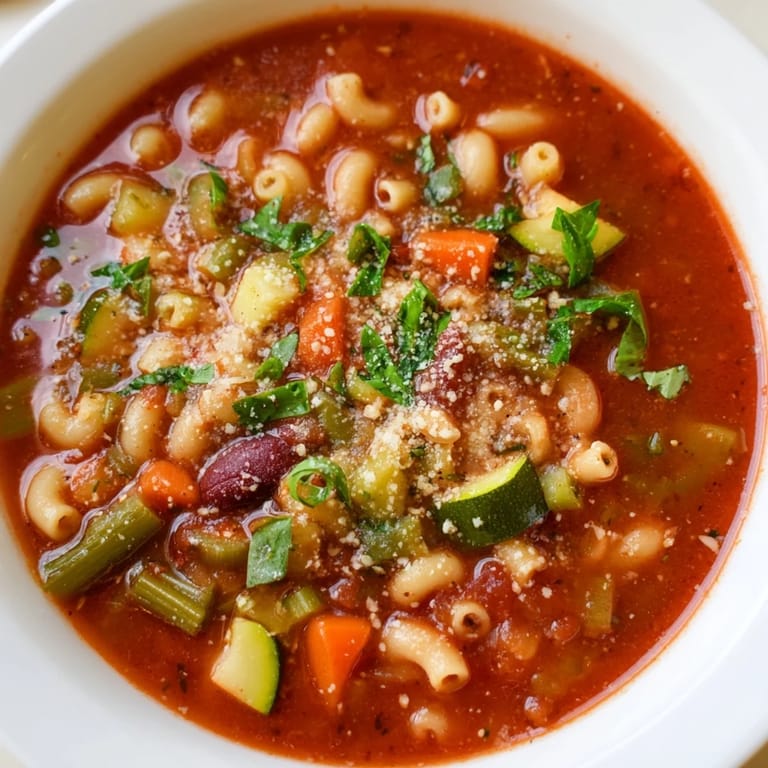
 There's something about the smell of sautéed vegetables that fills a kitchen with instant warmth. I stumbled upon this minestrone on a chilly Tuesday afternoon when I had a fridge full of vegetables and absolutely nothing planned for dinner. What started as a casual throw-together became the soup I now make whenever someone needs comfort in a bowl. It's the kind of dish that tastes like it took hours but actually comes together in less than an hour, which somehow feels like its own small magic.
I made this for my neighbor who had just moved in, and I remember standing on her doorstep with a pot still warm from the stove. She ate it straight from the bowl while we talked, and told me it reminded her of Sunday dinners at her grandmother's house. That's when I realized minestrone isn't really about following steps—it's about understanding that simple vegetables and patience create something that reaches people.
Ingredients
- Olive oil: The foundation that coaxes sweetness from your vegetables, starting everything with a gentle sizzle.
- Onion, carrots, and celery: This trio is non-negotiable—they're the flavor base that makes the whole pot taste intentional and alive.
- Garlic: Adds a gentle backbone that deepens as the soup simmers.
- Zucchini and green beans: These keep the soup feeling light and bright even as it simmers rich and warm.
- Diced and crushed tomatoes: Use both for layered depth—the diced keeps some texture, the crushed melts into the broth.
- Vegetable broth: The liquid foundation that ties everything together without overpowering the vegetables.
- Oregano and thyme: Dried herbs work beautifully here, perfuming the whole pot as it simmers.
- Tomato paste: Two tablespoons tucked in adds a concentrated richness that makes people ask what your secret is.
- Pasta: Small shapes like ditalini work best, catching broth in every spoonful.
- Cannellini beans: Rinsed well, they soften into the soup while keeping it substantial.
- Fresh basil and parsley: Added at the very end, they're what turn a good soup into one worth remembering.
- Parmesan cheese: Optional but recommended—a handful grated over top brings everything into focus.
Tired of Takeout? 🥡
Get 10 meals you can make faster than delivery arrives. Seriously.
One email. No spam. Unsubscribe anytime.
Instructions
- Heat the oil and start the soffritto:
- Warm olive oil in a large pot over medium heat until it shimmers gently. Add your diced onion, carrots, and celery, stirring occasionally as they soften together—this takes about five minutes and fills your kitchen with the smell of something about to become delicious.
- Add the garden vegetables:
- Stir in garlic, zucchini, and green beans, cooking for three more minutes until they just begin to release their fragrance and soften slightly at the edges.
- Build the broth:
- Pour in both types of tomatoes, your vegetable broth, and all the seasonings—oregano, thyme, salt, pepper, red pepper flakes, and that concentrated tomato paste. Stir everything together until the paste dissolves, then bring the whole pot to a gentle boil.
- Let it simmer and develop:
- Reduce the heat and let the soup bubble quietly for fifteen minutes, allowing flavors to meld and deepen without anything turning to mush.
- Add pasta and beans:
- Stir in the small pasta and drained cannellini beans, then simmer for another ten to twelve minutes until the pasta is tender but still holds its shape when you test it.
- Finish with fresh herbs:
- Remove from heat and fold in roughly chopped fresh basil and parsley—the heat will wilt them slightly while keeping their brightness alive. Taste and adjust salt and pepper to your preference.
 Save to Pinterest
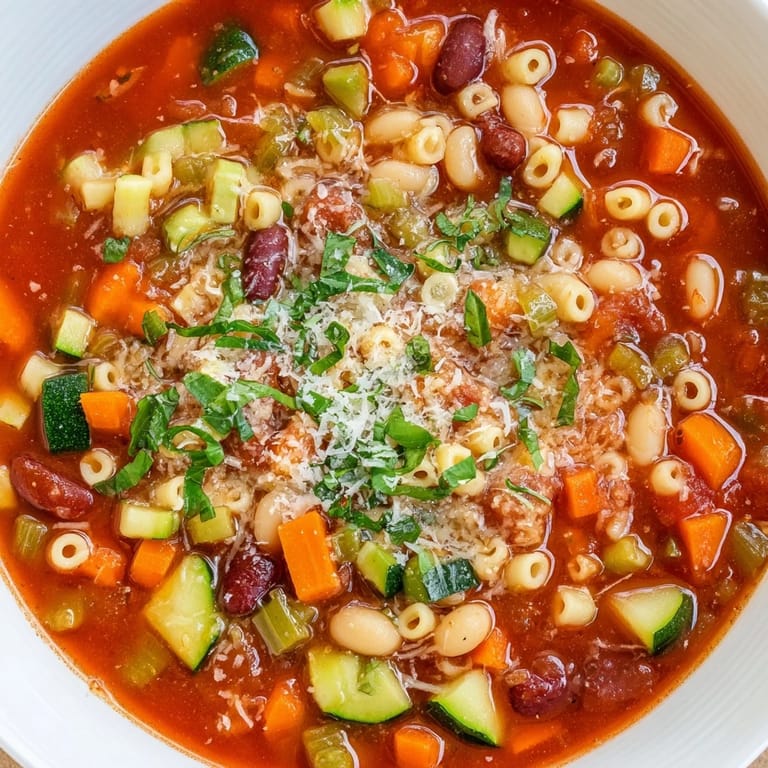
 I learned the power of this soup when my daughter came home from school with a cold, and a bowl of it seemed to somehow make everything feel manageable again. It wasn't magic, but it was close—the kind of food that reminds you why you cook in the first place.
Variations and Flexibility
This soup responds beautifully to whatever you have. Spinach or kale can go in at the end without changing the character of the dish. Swap carrots for parsnips, zucchini for summer squash, or green beans for snap peas. I've made it with ditalini, elbow macaroni, and even small shells—each works differently but equally well. The base of onion, carrot, and celery should stay, as should the tomatoes, but the vegetables between those anchors are completely negotiable.
Serving and Storage
Serve this soup hot in wide bowls, with a generous handful of Parmesan scattered over top and crusty bread alongside for dipping. It tastes even better the next day after the flavors have had time to settle and marry together. This soup freezes beautifully—I always make extra on purpose, ladling portions into containers that become instant meals on evenings when I need comfort without effort.
Deepening the Flavor
The secret to minestrone that tastes like it came from someone's Italian grandmother is patience and the combination of two types of tomatoes. The diced tomatoes give texture and shape, while the crushed ones melt into the broth and create body. Tomato paste isn't filler—those two tablespoons add a concentrated depth that makes people reach for second bowls.
- Taste the soup at every stage and adjust seasonings as you go, not just at the end.
- Use good vegetable broth if you can; it matters more than you'd think.
- Fresh basil makes or breaks this soup, so don't substitute dried if you can help it.
 Save to Pinterest
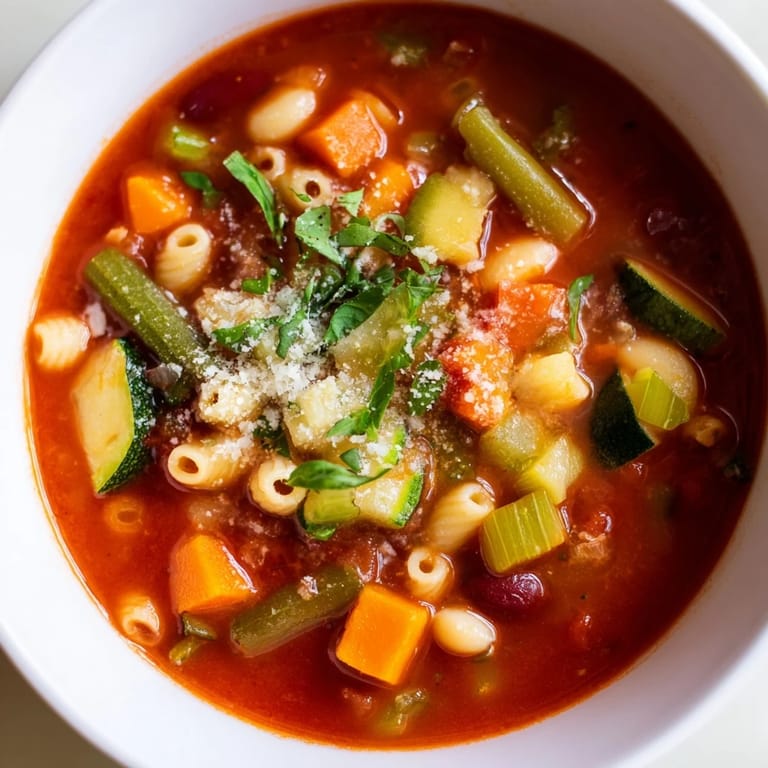
 This minestrone has become the soup I reach for when I want to feed people without fuss, and that simplicity is exactly what makes it special. Every bowl tastes like someone cared enough to cook something real.
Recipe FAQs
- → What pasta works best in this tomato basil dish?
Small shapes like ditalini or elbow macaroni blend well, absorbing flavors without overpowering the vegetables.
- → Can I make this soup gluten-free?
Yes, substitute regular pasta with gluten-free varieties to maintain the texture and taste.
- → How can I add more greens to this meal?
Stir in spinach or kale near the end of cooking for extra nutrients and vibrant color.
- → What herbs enhance the flavor profile?
Dried oregano and thyme provide earthiness, while fresh basil and parsley add a bright, herbal finish.
- → Is it suitable for a vegan diet?
Omit the Parmesan cheese to keep it vegan-friendly without sacrificing flavor.