 Save to Pinterest
 My first merguez came from a street vendor in Tunis on a sweltering afternoon, wrapped in paper and dripping with harissa oil. I bit into it standing up, the casing crackling between my teeth, and suddenly understood why this sausage has survived centuries of trade routes and culinary evolution. Years later, making them at home felt less like following a recipe and more like capturing that exact moment of heat, spice, and satisfaction in a kitchen that smelled like North Africa for hours afterward.
I made these for a potluck once and watched them disappear before anything else on the table—people who'd never tried merguez were coming back for thirds. Someone asked for the recipe right there, mouth still full, which told me everything about whether they'd worked.
Ingredients
- Ground beef and lamb (500 g total): The beef adds structure while the lamb brings richness and that slightly gamey depth that makes merguez unmistakable—don't skip the combination.
- Harissa paste (2 tbsp): This is your backbone of heat and complexity; start with this amount and adjust upward only if your tolerance runs high.
- Garlic (3 cloves, minced): Fresh is non-negotiable here—it punches through the spices and keeps everything tasting alive rather than dusty.
- Cumin, coriander, smoked paprika, fennel, and caraway (1 tbsp cumin, 1 tbsp coriander, 1 tsp paprika, 1 tsp fennel, 1 tsp caraway): These five create the warm, slightly sweet backbone that makes people ask what's in these.
- Cayenne pepper (1 tsp): Adjust this downward if you're feeding hesitant eaters, but don't eliminate it entirely—it adds complexity beyond just heat.
- Salt and black pepper (1 tsp salt, ½ tsp pepper): Taste as you go; the harissa already carries salt, so go cautiously.
- Fresh cilantro and parsley (2 tbsp each, chopped): These brighten the mixture at the last second and keep the sausage from tasting one-dimensional.
- Cold water (2 tbsp): This tiny amount becomes your binder and keeps the texture tender rather than dense when grilled.
- Sausage casings (1.5 m, rinsed and soaked): Sheep casings are traditional and snap satisfyingly when you bite through them, but you can skip these entirely if they intimidate you.
Tired of Takeout? 🥡
Get 10 meals you can make faster than delivery arrives. Seriously.
One email. No spam. Unsubscribe anytime.
Instructions
- Combine your meat base:
- Dump the ground beef and lamb into a large bowl and use your hands to break it apart, mixing gently until you can't see separated colors anymore. Don't overwork it—you want texture, not paste.
- Build the spice layer:
- Add garlic, harissa, cumin, coriander, paprika, fennel, caraway, cayenne, salt, and pepper all at once. This is where the kitchen starts smelling incredible; mix until every speck of meat has been kissed by spice, which takes about 2 minutes of thorough hand-mixing.
- Add fresh herbs and moisture:
- Stir in cilantro and parsley, then drizzle in the cold water while mixing gently until the whole thing becomes sticky and slightly tacky—this is exactly what you want. The mixture should hold together when you squeeze it.
- Stuff the casings (if using them):
- Rinse and soak your casings according to package directions, then fit them onto a sausage stuffer or the wide nozzle of a piping bag. Push the meat through slowly and steadily, and twist the filled casing into 5 to 6 inch links by pinching and turning every few inches. Work over a plate or tray so nothing lands on your counter.
- Or shape without casings:
- If you're skipping casings, wet your hands and shape the mixture into sausage-sized logs about the thickness of your thumb, then refrigerate for 30 minutes so they firm up enough to handle the grill without falling apart.
- Heat your cooking surface:
- Get your grill or grill pan screaming hot over medium-high heat—you want it hot enough that water droplets dance and evaporate instantly when they hit the surface.
- Cook them until they're golden:
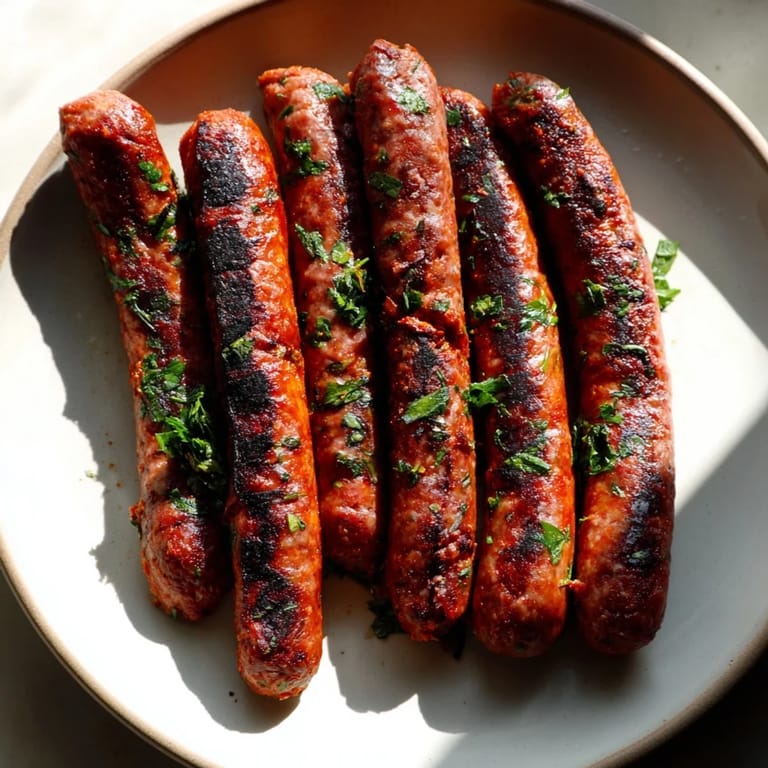
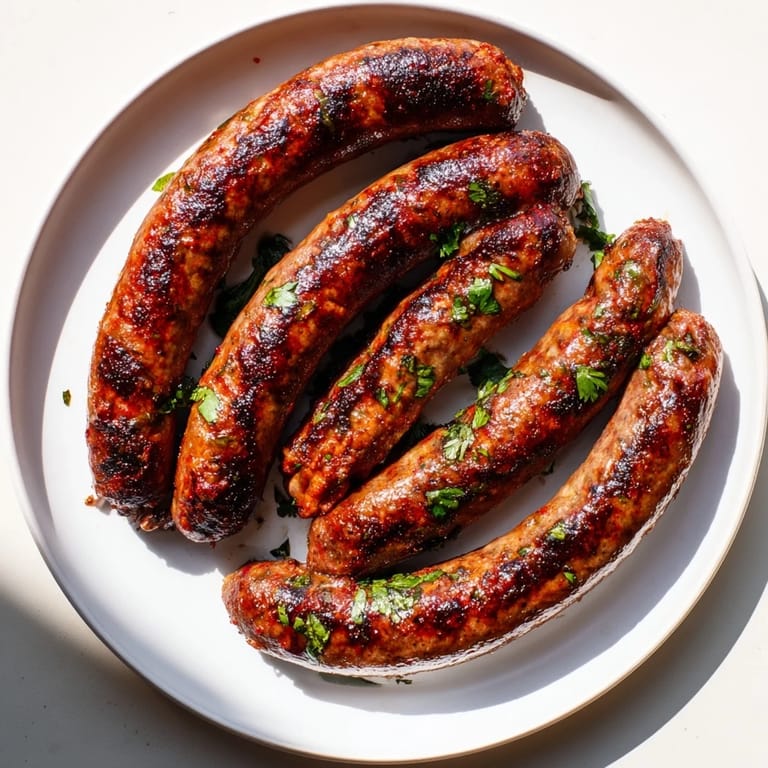
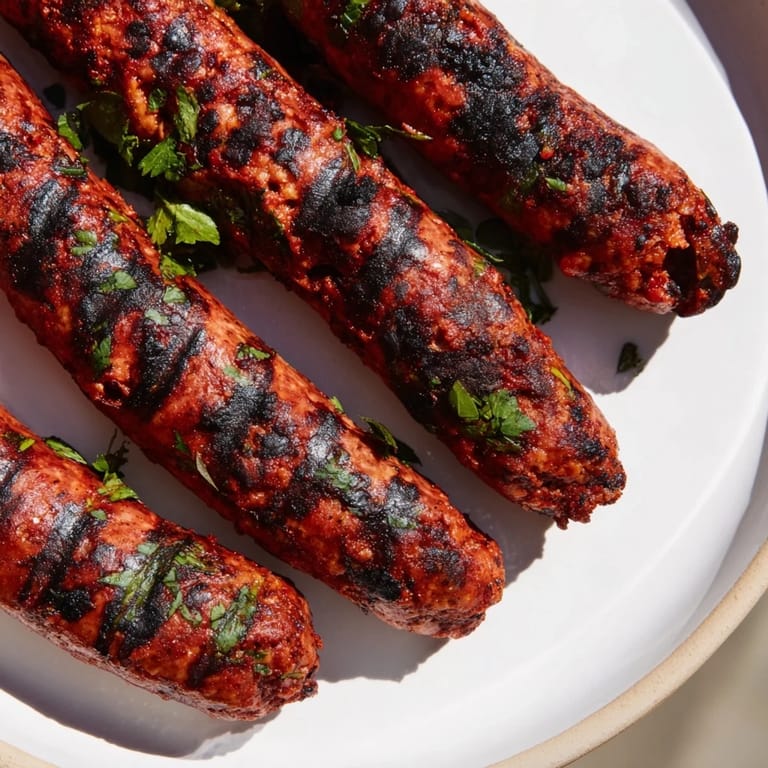
- Lay the sausages onto the hot surface and listen for them to sizzle; turn them every 2 to 3 minutes until they're deeply browned all over and firm when you press them, about 8 to 10 minutes total. They should feel slightly springy, not mushy and not hard.
- Rest and serve:
- Pull them off the heat and let them sit for a minute—this lets the insides settle. Serve while they're still hot enough to steam.
 Save to Pinterest
 There's a moment when you bite into a homemade merguez—that exact second when the casing gives way and the warm spiced meat floods your mouth with heat and garlic and something deeply savory—where you realize you've nailed it. That's the moment merguez stopped being a recipe and became proof that you can bring something extraordinary from another part of the world into your own kitchen.
How to Serve Merguez
I've learned that merguez is incredibly versatile once it's cooked—serve it nestled into warm flatbread or a crusty baguette, pile it over fluffy couscous with a drizzle of olive oil, or lay it across a platter of raw vegetables and hummus as the star of a casual mezze spread. On nights when you want something lighter, slice the grilled sausages and toss them into a fresh tomato salad with cilantro and lemon, and suddenly you have dinner without feeling like you've eaten heavily.
The Flavor Story Behind Merguez
What makes merguez different from other sausages is the philosophy behind its spices—nothing here is shy or apologetic. The harissa brings heat that builds rather than shocks, the fennel and caraway whisper sweetness beneath the surface, and the smoked paprika ties everything together with a whisper of smoke that tastes like it came from a wood fire even on an electric stove. When you make these yourself, you're not just following a recipe; you're learning why these particular spices traveled together along ancient trade routes and why they're still the backbone of North African cooking.
Small Tricks That Actually Matter
Making merguez well comes down to respecting a few non-negotiable details that seem tiny until you taste the difference. Keep your mixture cold until you cook it—warm meat loses the spices' brightness. Let it rest in the fridge if you have time before grilling; it helps everything meld and makes the texture come out perfectly. And taste your raw mixture before stuffing the casings; this is your only chance to adjust the spice level without disappointing someone halfway through dinner.
- If harissa varies wildly in heat between brands, start with 1 tablespoon and taste before adding the second.
- Sheep casings are more delicate than pork, so handle them gently and soak them long enough that they're pliable and easy to fill.
- Leftover raw merguez freezes beautifully for up to three months and can go straight from freezer to grill—just add a minute or two to the cooking time.
 Save to Pinterest
 These sausages taught me that the most authentic food isn't about finding rare ingredients or expensive equipment—it's about understanding why certain flavors belong together and respecting the technique enough to let them shine. Once you've made merguez once, you'll understand why they've endured for centuries.
Recipe FAQs
- → What meats are traditionally used in Merguez?
Ground beef and lamb are the traditional meats, blending rich flavors and textures for authentic taste.
- → How is the spice blend composed?
It includes garlic, harissa paste, ground cumin, coriander, smoked paprika, fennel, caraway, cayenne pepper, salt, and black pepper for a vibrant, layered flavor.
- → Can I prepare Merguez without casings?
Yes, the mixture can be shaped into logs or patties for a casing-free version that still captures the essential flavors.
- → What cooking methods work best for Merguez?
Grilling or using a grill pan over medium-high heat ensures a smoky, browned exterior while keeping the inside juicy.
- → What are some ideal pairings for Merguez?
Serve alongside couscous, in sandwiches, or with flatbread; it also complements bold red wines like Syrah and minty yogurt sauces.