 Save to Pinterest
 I'll never forget the afternoon I wandered into a tiny modern art gallery's pop-up café in Brooklyn, where a chef had arranged vegetables like a Picasso painting on a white plate. Each geometric shape seemed to have its own purpose, its own moment to shine. I spent more time admiring it than eating it, until that first bite of crisp cucumber meeting creamy avocado hit perfectly. That's when I understood: sometimes the most memorable dishes aren't about complexity, they're about seeing ordinary ingredients through a completely different lens. This recipe became my love letter to that afternoon.
I made this for my sister's gallery opening last spring, and watching her guests stop mid-conversation to photograph their plates before eating told me everything. One woman actually said it was too beautiful to eat, then came back for seconds. That's when I knew this dish had crossed from recipe into experience.
Ingredients
- Cucumber (1 small, peeled): The crispest, most refreshing base that keeps its snap even when cut hours ahead. Choose ones that are firm and heavy for their size.
- Golden beet (1 medium, cooked and peeled): Earthier than red beets but without the dark staining. Cook ahead if you like, but let it cool completely before cutting so your lines stay clean.
- Watermelon radish (1 medium, peeled): This is the show-stopper ingredient with those gorgeous pink and white rings inside. Buy it a day ahead so it has time to develop its best flavor.
- Ripe avocado (1): Choose one that yields gently to pressure. Cut it right before assembly so it doesn't brown and lose its creamy appeal.
- Feta cheese in block form (100 g): Buy it as a block, never pre-crumbled. The texture holds geometric shapes better and tastes infinitely fresher.
- Ripe mango (1, peeled): The sweetness ties everything together. A ripe mango should smell fragrant at the stem end and feel slightly soft when gently squeezed.
- Extra virgin olive oil (2 tbsp): This is your emulsion, your finishing touch. Use something you'd actually drink, because the quality matters when it's this visible.
- Lemon juice (1 tbsp): Freshly squeezed, not bottled. It brightens every single element and prevents browning.
- Flaky sea salt and fresh cracked black pepper: Season generously because you're not cooking these ingredients, you're letting their natural flavors speak for themselves.
- Microgreens or fresh herbs (basil or cilantro): These add the final visual pop and a fresh, green note that ties the whole composition together.
Tired of Takeout? 🥡
Get 10 meals you can make faster than delivery arrives. Seriously.
One email. No spam. Unsubscribe anytime.
Instructions
- Prep your canvas:
- Start by gathering all your ingredients in one place. There's no cooking here, so you're really just creating. Have your large platter ready and visible as your workspace.
- Cut with intention:
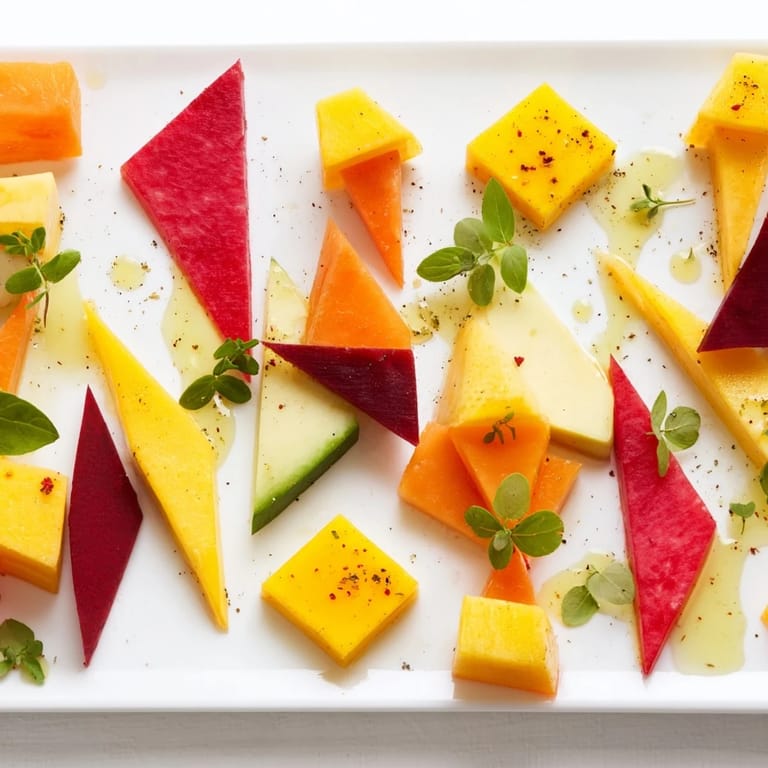
- This is where the magic happens. Slice your cucumber into triangles, your beet into parallelograms, your watermelon radish into hexagons. Aim for about 1 cm thickness so each piece stands on its own. If you have small cookie cutters, use them to cut shapes that feel purposeful. Take your time here—this is meditation, not rushing.
- Build your geometry:
- Cut your feta into cubes or prisms that match the theme. Slice your mango into whatever shape calls to you. Each ingredient should feel like a deliberate choice on your platter.
- Compose your mosaic:
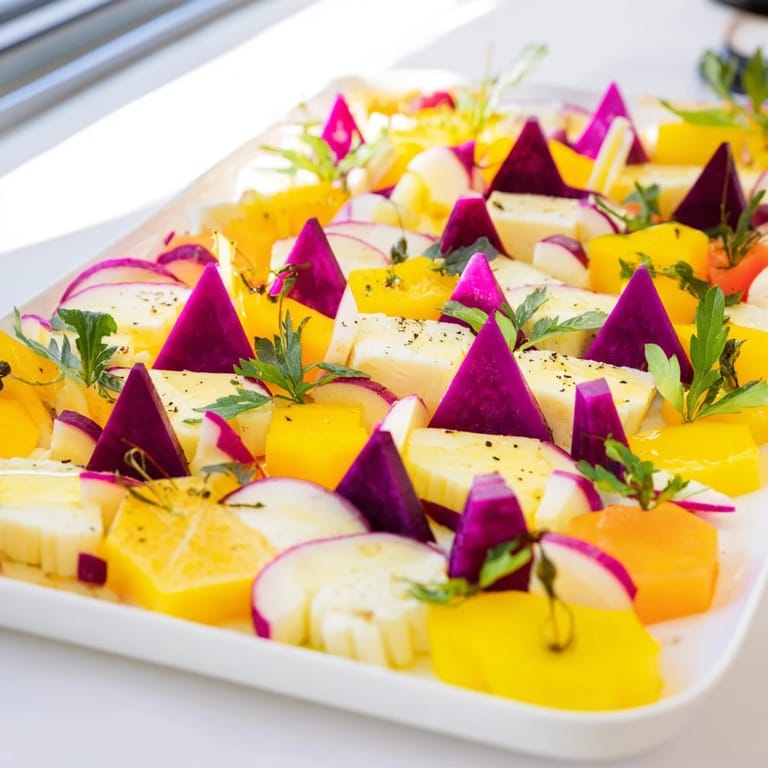
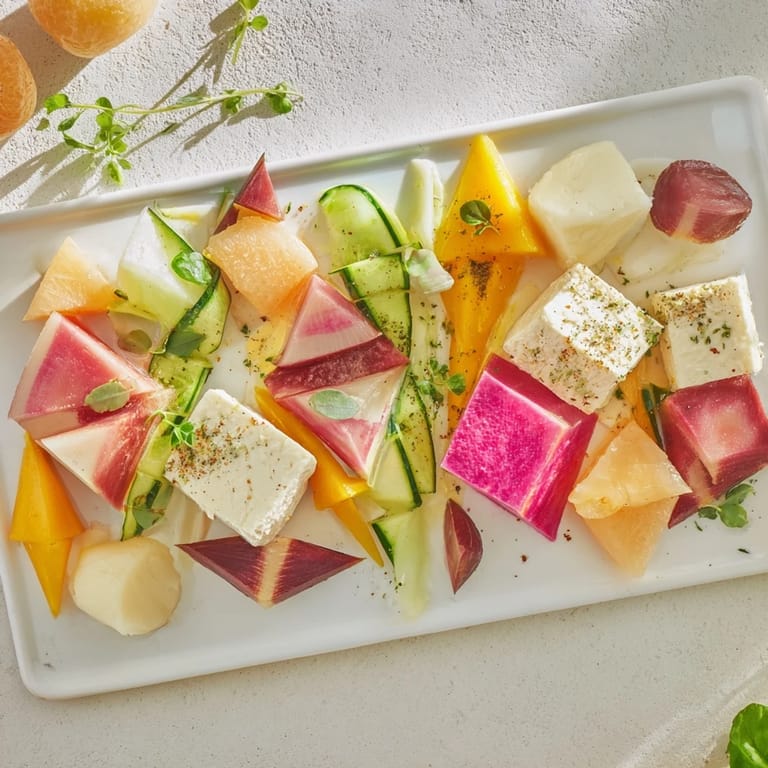
- Arrange everything on your platter close together, creating that cubist mosaic. Think about color balance—the golden beet next to the pink watermelon, the white feta touching green cucumber. Let each shape breathe without overlapping, so every element stays distinct and visible.
- Finish with oil and acid:
- Drizzle your olive oil evenly across the arrangement, then add lemon juice in little dots and streams. Watch how it catches the light on those geometric surfaces.
- Season and garnish:
- Sprinkle with flaky sea salt and cracked black pepper with a generous hand. Top with microgreens or fresh herbs as your final signature.
- Serve now:
- Bring it straight to the table. The moment matters. Those clean lines are part of the experience, and they fade once people start mingling their flavors together.
 Save to Pinterest
 My brother once said this was the first appetizer that made him feel like he was eating with his eyes before his mouth, and I think that's exactly the point. Food should surprise us, should make us pause. This dish does that every single time.
The Geometry of Flavor
What I've learned from making this dish repeatedly is that when ingredients aren't jumbled together, they tell separate stories that somehow harmonize. The cucumber stays crisp and cool, the beet stays earthy, the mango stays bright. You experience them in layers, like a conversation where each voice gets heard. That's why the shapes matter so much—they're not just pretty. They're functional. They keep everything honest.
Creating Your Palette
Think of your platter as a painter's palette. You're not trying to blend colors and flavors into one unified experience; you're creating contrast and dialogue. Every vegetable you choose should have a different color story. Golden beets next to purple carrots. Yellow bell peppers beside green cucumber. That visual tension is what makes someone stop and really look, which is half the battle with any appetizer.
Make It Your Own
Once you understand the philosophy of this dish, you can swap almost anything. Purple carrots work beautifully. Yellow bell peppers add sweetness. Firm tofu replaces feta perfectly if you're serving vegans. Pomegranate arils add jewel-like pops. The point isn't the specific ingredients; it's the approach—clean cuts, bold shapes, and letting each flavor stand alone long enough to be appreciated.
- Serve this with cocktail picks so your guests can taste one element at a time if they want to
- Make it ahead up to the oil and lemon drizzle, then finish right before serving so everything stays pristine
- Pair it with crisp white wine like Sauvignon Blanc that echoes the freshness and clarity of the dish
 Save to Pinterest
 This dish taught me that cooking isn't always about heat and technique and complicated methods. Sometimes it's about seeing, arranging, and presenting the world a little differently. Serve it when you want to give people an experience they didn't expect.
Recipe FAQs
- → What vegetables are best for geometric cutting?
Firm vegetables like cucumber, golden beet, and watermelon radish work well for precise geometric shapes.
- → Can feta be substituted for a dairy-free alternative?
Yes, firm tofu can replace feta for a vegan or dairy-free option without compromising texture.
- → How do I achieve clean geometric cuts on fruits and vegetables?
Use a sharp chef’s knife or small cookie cutters to create uniform shapes like triangles or hexagons around 1cm thick.
- → What is the best way to arrange the pieces for visual impact?
Place sliced ingredients closely side-by-side on a flat platter without overlapping to create a mosaic effect.
- → Which seasonings enhance the flavors without overpowering?
Light drizzle of extra virgin olive oil, lemon juice, flaky sea salt, and cracked black pepper complement the fresh ingredients.