 Save to Pinterest
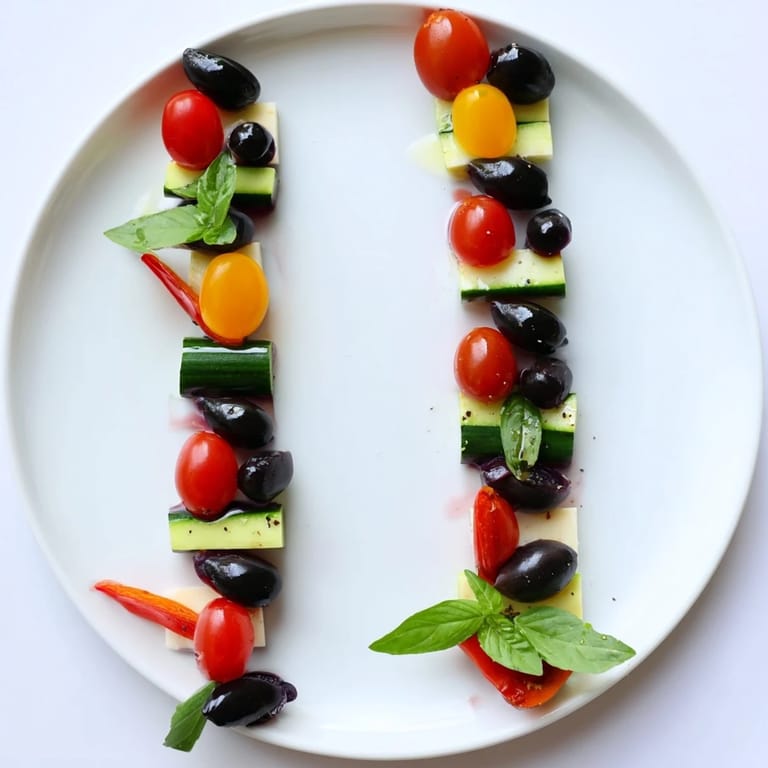
 I'll never forget the moment my niece's science fair project sparked an idea. She was studying DNA structure, and I found myself staring at her double helix model while we were in the kitchen together. That's when it hit me—what if we could turn this elegant scientific wonder into something you could actually eat? I started experimenting that afternoon, arranging olives and tomatoes on a board, connecting them with cheese strips, and when I stepped back, there it was: a DNA strand that made everyone at her celebration party stop and stare before diving in.
What really sealed this recipe for me was watching a quiet teenager at a dinner party actually engage with everyone while building their own mini DNA helixes. Suddenly the appetizer became an interactive experience, and I realized I'd created something that bridges science, art, and togetherness in the most delicious way possible.
Ingredients
- Black olives, pitted and sliced (100 g): These provide one of your parallel lines with deep, rich color and a briny depth that anchors the entire composition
- Cherry tomatoes, halved (100 g): Their vibrant red creates stunning visual contrast and brings fresh acidity that balances the richness of the cheeses
- Cucumber, cut into thin half-moons (100 g): The pale green adds another color layer and contributes a refreshing, crisp texture that keeps everything feeling light
- Roasted red peppers, sliced (100 g): These bring sweetness and a silky texture that feels almost luxurious on the palate
- Smoked salmon or marinated tofu strips, optional (100 g): If you choose to include this, it adds protein and an elegant smokiness that makes the piece feel more substantial
- Mozzarella cheese, cut into thin strips or small cubes (150 g): This is your primary connector—mild, creamy, and it won't overpower the delicate vegetables you're featuring
- Cheddar cheese, cut into thin strips or small cubes (100 g): The sharpness here creates flavor interest between the rungs and catches the light beautifully
- Fresh basil leaves (50 g): These aren't just garnish—they fill in the spaces with color and release that herbaceous aroma that makes people lean in closer
- Crackers or gluten-free crackers, optional (50 g): A vehicle for the composition if your guests want to taste it as a traditional appetizer
- Olive oil (1 tbsp): A light drizzle ties everything together and adds subtle shine that photographs beautifully
- Freshly ground black pepper, to taste: The final seasoning note that reminds people these ingredients are intentional and thoughtfully prepared
Tired of Takeout? 🥡
Get 10 meals you can make faster than delivery arrives. Seriously.
One email. No spam. Unsubscribe anytime.
Instructions
- Prepare your canvas:
- Find your largest, most beautiful serving board or platter—this is where the magic happens. Take a moment to imagine those two parallel lines before you start placing anything. You want them gently curved or straight, running the length of your board like twin strands waiting to be connected.
- Create the first parallel line:
- Start with your black olives, arranging the slices in a long, deliberate line down one side of the board. Don't rush this part—take your time, and notice how each piece catches the light. The olives are your anchor, your dark, mysterious strand.
- Build the second parallel line:
- On the opposite side, create a second line using your cherry tomato halves. Position them so they mirror the distance of your olive line. Step back and look—you're already building something recognizable.
- Layer and enhance your strands:
- Now comes the creative part. Weave additional ingredients between and alongside these primary lines. Add your pale green cucumber slices, the jewel-toned roasted peppers, and if you're using it, the smoked salmon or tofu strips. Think of these as filling in the curves and thickness of your helix strands. You're not filling a grid—you're creating visual richness and depth along those two main pathways.
- Create the connecting rungs:
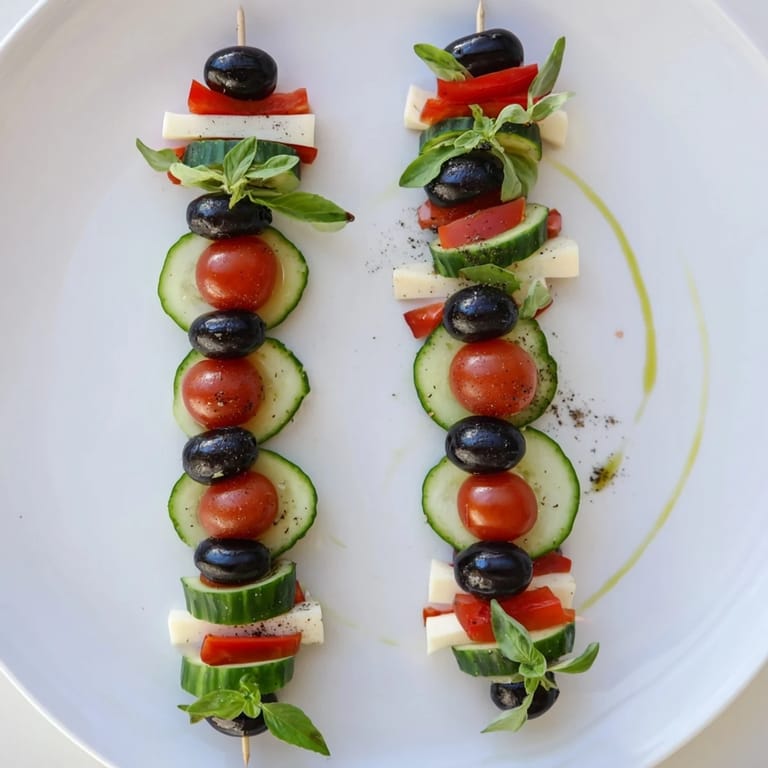
- This is where the DNA magic becomes unmistakable. Take your mozzarella strips and arrange them perpendicular to your ingredient lines, connecting one side to the other like the base pairs in an actual DNA molecule. Space them evenly—I typically place them about 2-3 inches apart. Let them rest gently across both strands.
- Alternate your cheese rungs:
- Now take your cheddar strips and fill in between the mozzarella rungs, creating a pattern that alternates between the two cheeses. This variation in color and shade makes the helix structure jump out visually and creates flavor interest with every bite.
- Tuck and garnish:
- Gently nestle your fresh basil leaves throughout the composition, especially along the ingredient strands. Let them peek out naturally—these green accents soften the geometric lines and add that final flourish of fresh herb aroma.
- Add the finishing touches:
- Drizzle your olive oil very lightly across the entire piece—just enough to catch the light and add subtle shine. Finish with several generous grinds of black pepper. If you want an extra touch, you can use mini skewers to secure the cheese rungs in place, keeping everything perfectly positioned.
- Serve immediately:
- Arrange your crackers on the side if using them, and set your creation where it will be admired before it's devoured. Watch people's faces when they realize what they're looking at.
 Save to Pinterest
 I remember a moment when my friend's eight-year-old son asked if he could take a picture of the DNA appetizer before eating any. He said it was too beautiful to miss. Then he asked me to explain how it was actually DNA—and that's when I understood that sometimes food becomes a conversation starter, a teaching moment, a memory in the making.
Bringing Science to the Table
This appetizer works wonderfully at science-themed parties, but don't limit yourself. I've found it's just as perfect at book clubs, dinner parties, or any gathering where you want to spark conversation. The visual impact is undeniable, but it's really the fact that you took time to create something this thoughtful that people respond to. They taste the care in every carefully placed ingredient.
Playing with Color and Contrast
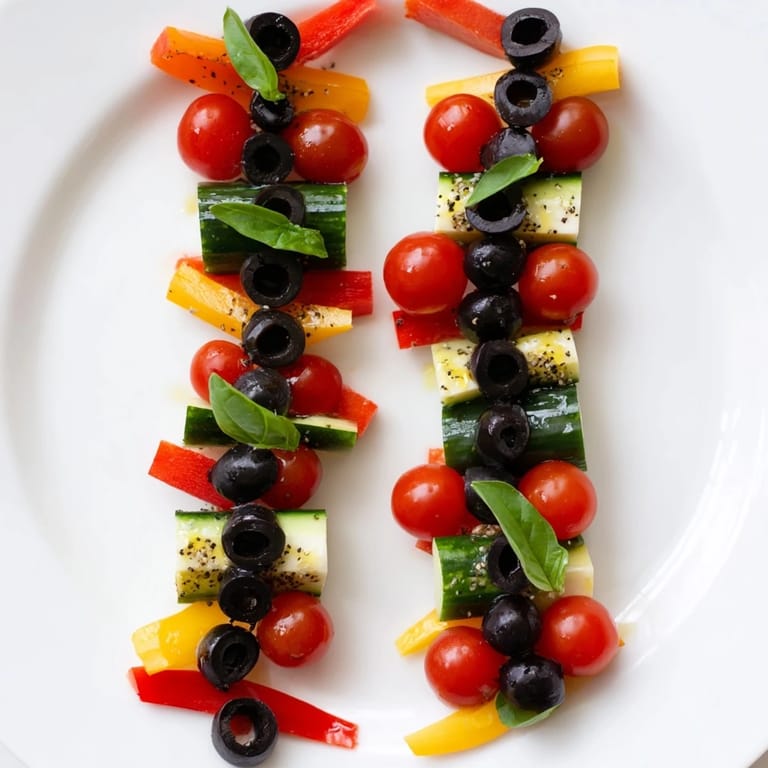
The beauty of this recipe is how forgiving it is when it comes to color choices. The core principle is contrast—dark against light, vibrant against muted. I've made versions with purple cabbage, golden roasted beets, green peas, and thinly sliced radishes. Each time, the DNA structure becomes more striking. The vegetables you choose become part of the story you're telling with this dish, whether that's a celebration of autumn colors, spring freshness, or whatever your farmers market is offering that day.
Customizing for Your Guests
One of the best discoveries I've made with this recipe is how easily it adapts. Vegan guests? Swap the cheeses for plant-based versions and use the marinated tofu option instead of smoked salmon. Gluten-free friends? Use gluten-free crackers on the side. Someone who doesn't like olives? They're just one element—replace them with something else that offers the same deep color. The structure stays elegant and impressive no matter what adjustments you make.
- Keep a spray bottle of lemon juice nearby to spritz over the cucumber and peppers at the last minute—it prevents any browning and adds brightness
- If you're transporting this to a party, build it on a board with a rim or edges so it stays stable, and don't add the olive oil drizzle until just before serving
- The crackers should be placed on the side platter, not integrated into the helix, so people can decide whether they want to eat the pieces on their own or with a crisp vehicle
 Save to Pinterest
 This recipe taught me that sometimes the most meaningful dishes aren't the ones that take hours to cook—they're the ones that show people you were willing to be creative, thoughtful, and a little bit playful. Every time I make this, it feels like a small act of art served on a board.
Recipe FAQs
- → What ingredients create the double helix effect?
Alternating colorful lines of black olives, cherry tomatoes, cucumber, roasted red peppers, and optionally smoked salmon or tofu form the strands, connected by mozzarella and cheddar cheese strips acting as rungs.
- → Can this dish accommodate dietary restrictions?
Yes, substituting smoked salmon with marinated tofu and using plant-based cheeses or gluten-free crackers makes it suitable for vegan and gluten-free diets.
- → How should the ingredients be arranged?
Place two long, parallel lines of alternating ingredients and connect them perpendicularly with cheese strips to visually replicate a twisting double helix.
- → What is the recommended serving suggestion?
Serve chilled on a large board with fresh basil leaves for aroma and a drizzle of olive oil, alongside crackers for added crunch.
- → How long does preparation take?
Preparation typically takes about 25 minutes, requiring no cooking time, making it a quick and easy option.
- → What tools are helpful for assembly?
Using a large serving board, a sharp knife, and small serving tongs or toothpicks helps arrange and secure the ingredients neatly.