 Save to Pinterest
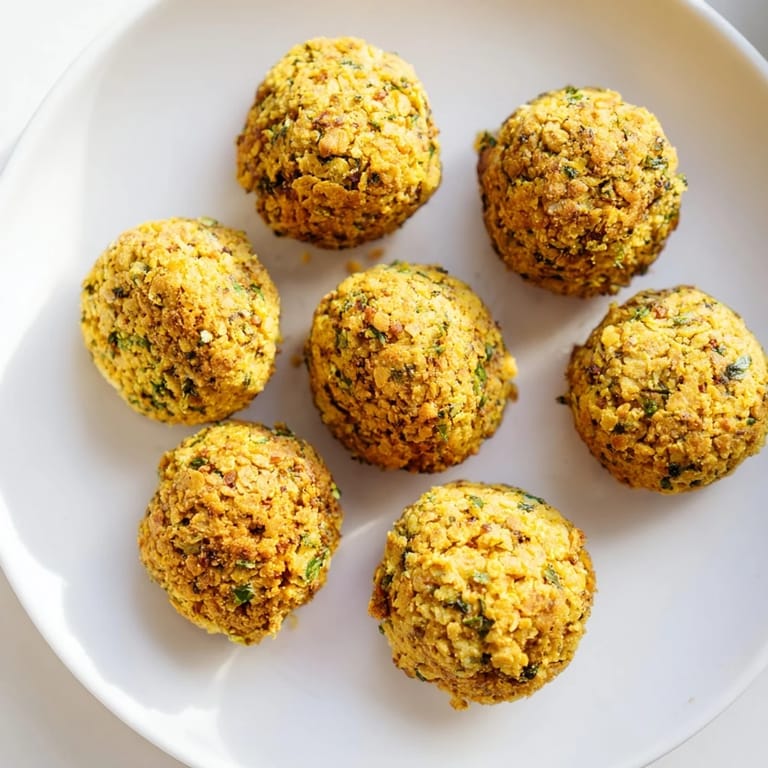
 There's something almost magical about the moment when raw chickpeas transform into these golden, crispy orbs. I discovered real falafel not in a cookbook but in a bustling market kitchen in Beirut, where an elderly woman showed me how the secret wasn't in perfection but in the coarse, textured mixture that holds just enough to stick together. She laughed when I asked if I needed a food processor—her grandmother had used mortar and pestle—but modern shortcuts work just fine. That day, I understood falafel is less about technique and more about respect for simple, honest ingredients.
I made these for my roommate's surprise dinner party—the kind where I realized at 4 p.m. I'd volunteered to bring something substantial. I'd never deep-fried anything in that tiny apartment kitchen before, and the smell of falafel frying opened every window in a three-block radius in the best possible way. When I pulled those first batch out golden and perfect, I felt like I'd just solved a real problem, not just followed instructions. Watching people eat them straight off the paper towels, no pretense, no plates—that's when I knew this recipe was a keeper.
Ingredients
- Dried chickpeas, 1 cup: Always start with dried, never canned—canned chickpeas have too much moisture and will make your falafel fall apart during frying. Soaking them overnight is non-negotiable, not optional.
- Small yellow onion, roughly chopped: The onion adds subtle sweetness and helps bind the mixture; fresh garlic needs a partner.
- Garlic cloves, 3: Raw garlic gives that sharp, authentic edge that bottled garlic paste will never achieve.
- Fresh parsley leaves, 1 cup packed: This is where the falafel's soul lives; don't skimp or substitute dried herbs, they taste like an afterthought.
- Fresh cilantro leaves, 1/2 cup packed: Cilantro adds brightness and a slight herbal bite that makes people ask what your secret is.
- Ground cumin, 2 tsp: Cumin is the backbone; it's what makes falafel taste like falafel and not just fried chickpea paste.
- Ground coriander, 1 tsp: Coriander adds warmth and a tiny floral note that rounds out the spice profile beautifully.
- Cayenne pepper, 1/2 tsp optional: Add it if you want heat that builds quietly; leave it out if you're feeding people who prefer gentler flavors.
- Baking powder, 1 tsp: This is the quiet ingredient that makes falafel crispy—it creates tiny air pockets that fry up into a perfect crust.
- Salt, 1 tsp: Use kosher salt; it dissolves better and tastes cleaner than table salt.
- Black pepper, 1/2 tsp: Fresh-cracked black pepper, if you have the time; pre-ground works but tastes a bit flat by comparison.
- All-purpose flour, 3 tbsp: Flour acts as a binder and helps create that tender crumb inside; use chickpea flour if you're gluten-free and want even better texture.
- Vegetable oil, for deep frying: Use neutral oil with a high smoke point—vegetable, peanut, or canola all work beautifully.
Tired of Takeout? 🥡
Get 10 meals you can make faster than delivery arrives. Seriously.
One email. No spam. Unsubscribe anytime.
Instructions
- Soak the chickpeas overnight:
- Rinse 1 cup of dried chickpeas under cold water, place them in a large bowl, and cover generously with cold water—they'll roughly triple in volume as they absorb water. Leave them on the counter or in the fridge for 8 to 12 hours until they're plump and tender but still hold their shape.
- Build the base mixture:
- Drain the soaked chickpeas well and pat them dry with paper towels. In a food processor, combine the chickpeas with the roughly chopped onion, peeled garlic cloves, and the packed fresh parsley and cilantro, then pulse several times until the mixture looks coarse and sandy, with no big chunks but not pureed into a paste either.
- Add the spices and binder:
- Sprinkle the ground cumin, ground coriander, cayenne, baking powder, salt, black pepper, and flour over the mixture, then pulse briefly a few times to combine everything evenly. Scrape down the sides of the processor and mix by hand to make sure the spices are distributed throughout.
- Shape the falafel:
- Wet your hands with cool water to prevent sticking, then scoop up about a tablespoon of the mixture and roll it between your palms into a compact ball about 1½ inches across. Arrange the shaped falafel on a tray or plate; if the mixture feels too loose and won't hold together, mix in another tablespoon of flour.
- Heat the oil:
- Pour 2 inches of neutral vegetable oil into a deep pot or heavy-bottomed saucepan and gradually heat it to 350°F (175°C), using a thermometer to be certain. The oil is ready when a tiny piece of the mixture sizzles immediately and turns golden brown in about a minute.
- Fry in batches:
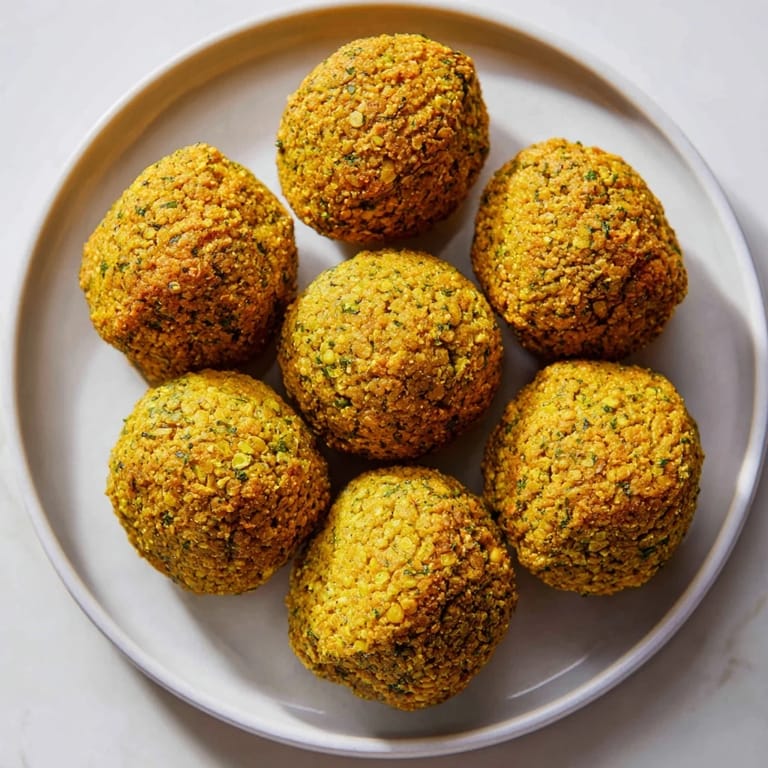
- Working with 4 to 5 falafel at a time so the oil temperature stays steady, gently lower them into the hot oil and watch as they sink, then rise to the surface. Fry for 3 to 4 minutes, turning them gently with a slotted spoon until they're deep golden brown all over, then scoop them out and drain on paper towels while still warm.
- Serve immediately or store:
- Warm falafel is best enjoyed right away tucked into pita bread with tahini sauce, crisp salad, pickled vegetables, and fresh herbs, or arranged on a mezze platter. They keep in an airtight container in the fridge for up to 4 days and reheat beautifully in a 350°F oven for about 10 minutes.
 Save to Pinterest
 I think the moment falafel became real to me was when my neighbor knocked on my door asking what I was cooking because the smell had drawn her over. She stayed for dinner and told me stories about her grandmother making them in Damascus with a mortar and pestle, about how the neighborhood would gather when she was frying them. Food has this quiet way of connecting us across time and distance, and falafel seems to do it better than most things.
Why Soaking Matters
The difference between dried and canned chickpeas is the difference between night and day when you're making falafel. When you soak dried chickpeas, they rehydrate evenly and develop a texture that holds together beautifully without falling apart in hot oil. Canned chickpeas have already absorbed water and been cooked, so they break down into a mushy paste that won't maintain its shape—I learned this the expensive and frustrating way, watching my first batch dissolve into the oil like sand. The overnight soak feels like an inconvenience until you taste the difference: a falafel that's crispy outside, tender and intact inside, with a texture that feels alive in your mouth.
The Texture Secret
The food processor does the heavy lifting, but the pulse function is your best friend here. You're aiming for a coarse, sandy mixture that barely holds together—not a smooth paste. When you over-process, the mixture becomes dense and the falafel will be heavy and gummy inside, which nobody wants. I used to think smoother was better, more refined, until I made a batch that looked almost like hummus, and the texture was completely disappointing. The key is restraint: pulse, check, pulse again, and stop before you think you should. Your hands are the final test; when you squeeze a bit of mixture, it should hold together for a second and then gently fall apart.
Oil Temperature and Frying Technique
A kitchen thermometer is honestly worth its weight in gold here because guessing oil temperature is how you end up with either pale, greasy falafel or burnt exteriors with cold insides. At 350°F, the falafel will sink initially, then gently bob to the surface as it cooks, developing that gorgeous deep golden-brown crust while the interior stays tender. Working in small batches keeps the temperature stable; frying too many at once cools the oil down and they'll absorb more oil than they should. I always let the oil come back up to temperature between batches, which takes maybe a minute or two.
- Don't crowd the pot—give each falafel room to float and cook evenly without bumping into its neighbors.
- A slotted spoon is essential for turning them gently and fishing them out without making a mess or burning yourself.
- Drain them on clean paper towels right away while they're still warm and at their crispiest.
 Save to Pinterest
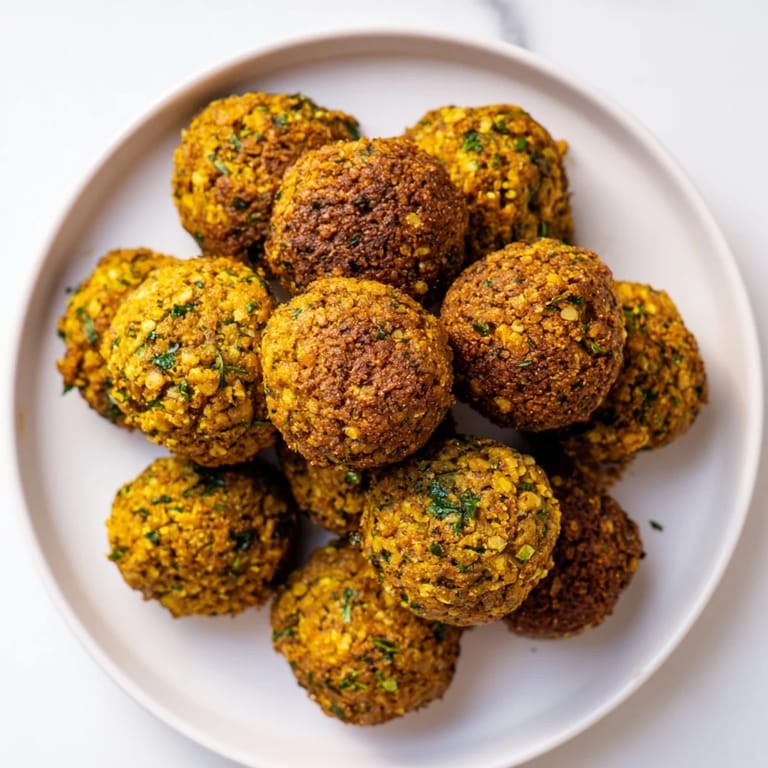
 There's something deeply satisfying about making falafel at home, about understanding each ingredient and why it matters. These crispy, herb-filled balls taste like more than just food—they taste like care, like paying attention, like sharing something good with people who matter to you.
Recipe FAQs
- → How long should chickpeas soak?
Soak dried chickpeas for 8 to 12 hours in plenty of cold water to ensure they soften properly.
- → Can I bake the falafel instead of frying?
Yes, brush the falafel balls with oil and bake at 400°F (200°C) for 20–25 minutes, turning halfway for even crispness.
- → What spices give falafel its flavor?
Ground cumin, coriander, and optional cayenne provide warmth and earthiness to the falafel seasoning.
- → How do I form falafel without it falling apart?
Pulse the mixture until it holds together when pressed and add a bit more flour if needed before shaping into balls.
- → What herbs are used for fresh flavor?
Fresh parsley and cilantro add vibrant, aromatic notes to the falafel mixture.