 Save to Pinterest
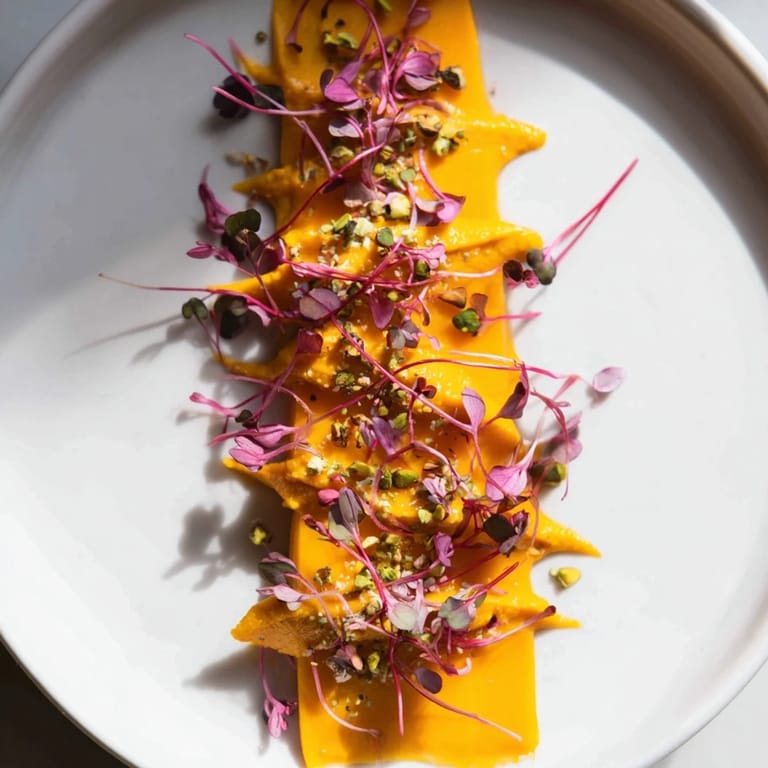
 I discovered this dish not in a cookbook, but while standing in a gallery, watching how a single bold stripe of color could command an entire white wall. It made me think about my kitchen differently—how a simple line of vibrant purée could be just as arresting as any painting, and infinitely more delicious. That evening, I started experimenting with roasted vegetables and a board, trying to capture that same visual clarity but with flavors that unfolded like a story. The Modernist Stripe was born from that conversation between art and appetite.
The first time I served this was to a friend who always said she didn't like beets. I plated it without telling her what she was eating, and watched her pause mid-conversation, fork hovering. Something about seeing the beet as a vivid stripe instead of a chunk on her plate changed everything. She came back for seconds, then asked for the recipe. That's when I knew this one had something special.
Ingredients
- Medium beets: Choose ones that feel dense and heavy; they'll roast down into pure, concentrated sweetness without becoming watery.
- Large carrots: The fresher the better—older carrots can taste woody, so grab the ones that still have that bright, just-harvested snap.
- Ripe avocado: The split-second window between firm and perfect matters here; if it's dark and yields to gentle pressure, you're in the zone.
- Fresh ginger: A small knob grated fine adds warming complexity that feels unexpected in a vegetable purée.
- Greek yogurt: It keeps the avocado cream from oxidizing too quickly while adding a subtle tang that brightens everything.
- Microgreens and edible flowers: These aren't garnish—they're the final punctuation, adding texture and a sophisticated whisper of flavor.
- Flaky sea salt: The mineral finish on top is what makes people pause and ask what they're tasting.
Tired of Takeout? 🥡
Get 10 meals you can make faster than delivery arrives. Seriously.
One email. No spam. Unsubscribe anytime.
Instructions
- Roast the beets until they collapse:
- Preheat your oven to 400°F and toss diced beets with olive oil and salt. They'll look small and resistant at first, but 30–35 minutes of heat transforms them into something almost creamy. You'll smell their earthiness deepen, and that's when you know they're ready.
- Cook the carrots until they're butter-soft:
- While the beets roast, steam or boil your carrots until a fork passes through with zero resistance, about 15–20 minutes. Drain them well and let them cool just enough to handle.
- Blend the beet purée until it's silk:
- Add your roasted beets and lemon juice to the blender and blend hard, pausing to scrape down the sides. If it feels thick, add just a splash of water—you want it to flow like paint but hold its shape.
- Create the carrot-ginger purée:
- Blend cooked carrots with your ginger, butter, and salt until there are no lumps. Taste it; if you need more warmth, add another whisper of ginger.
- Mash the avocado cream until silky:
- In a small bowl, mash your avocado with yogurt, lime juice, and salt until it's perfectly smooth with no green chunks hiding. Transfer it to a piping bag if you want precision, or a squeeze bottle if you want to feel like an artist.
- Create your stripe on the board:
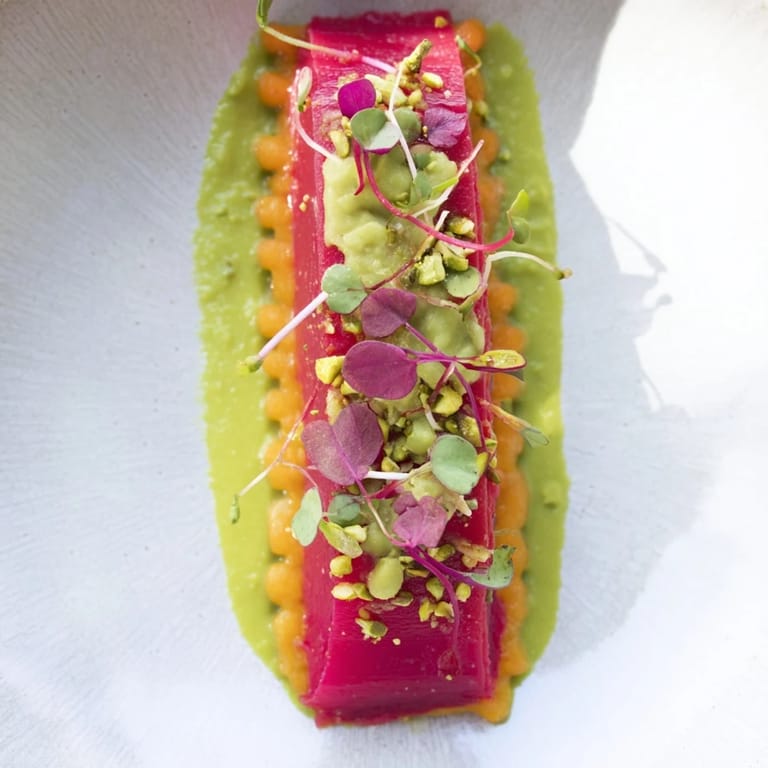
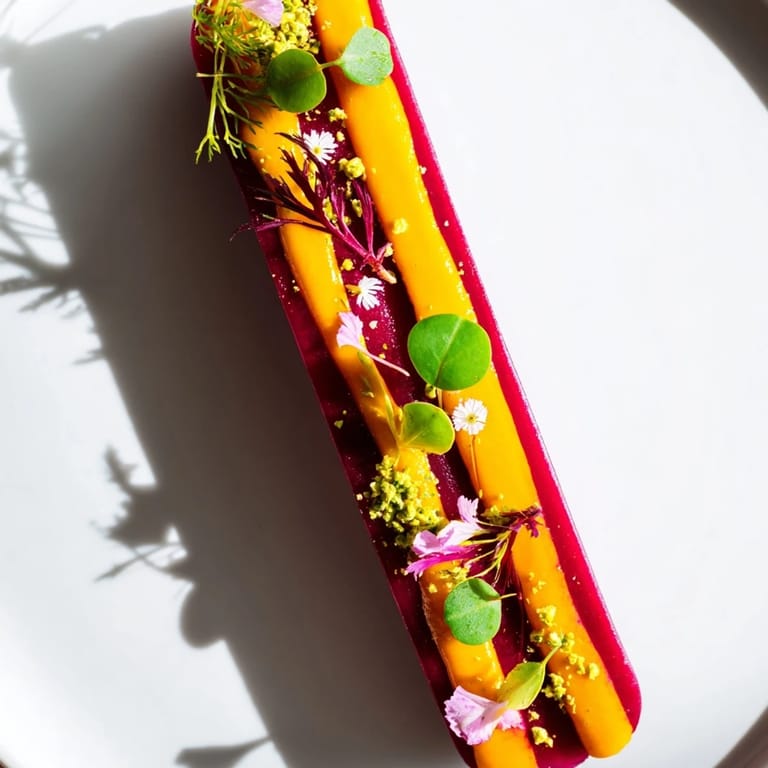
- Using a wide offset spatula or the back of a large spoon, spread the beet purée down the center of a clean board in one confident stroke, about 3 inches wide. Step back—this is your canvas.
- Layer your colors and textures:
- Pipe or spread the carrot purée and avocado cream in artistic strokes or dots along the beet stripe, letting the colors touch and blend slightly where they want to.
- Finish with intention:
- Scatter microgreens, edible flowers, crushed pistachios, and flaky sea salt across the stripe. This is where the dish becomes a photograph—let your hand lead.
 Save to Pinterest
 There's a moment, right when you set this dish down in front of someone, where they stop talking. Their eyes follow the stripe. Then they pick up a piece of bread or a cracker, drag it through all three colors at once, and everything changes. That's when you realize you've made something that tastes as good as it looks, and that's a rare kind of magic.
The Philosophy of the Stripe
This dish is about restraint, which is harder than abundance. It's a reminder that you don't need ten things on a plate to create drama. The stripe forces you to think about proportion, color theory, and negative space. Every element earns its place because there's nowhere to hide. I learned this the hard way, after making seventeen versions with too many garnishes until someone gently said, 'But what if you just... stopped?' The answer was everything.
Playing with the Palette
While beets, carrots, and avocado create a stunning trio, this concept is endlessly mutable. I've made versions with roasted sweet potato purée in place of the beet, adding a subtle sweetness and different earthiness. I've piped pea purée for a brightness that feels almost spring-like. The magic isn't in these specific vegetables—it's in respecting the principle that each stripe should have a different flavor and texture, so eating your way across the board becomes a journey.
Serving and Pairing
This works best as an appetizer, something that quiets the table and sets a tone of deliberate, unhurried eating. Serve it with good bread, or crisp crackers that won't shatter under the weight of the purée. A crisp Sauvignon Blanc is perfect—the acidity cuts through the richness and echoes the brightness of the lemon and lime. The first person to brave the stripe usually reaches for more, and soon everyone's eating with their hands, which is exactly the point.
- You can prep the purées up to 4 hours ahead and keep them covered in the refrigerator.
- If your avocado cream starts to brown slightly, stir it once and the lemon will refresh the color.
- Roasted chickpeas or quick-pickled onions make excellent additions if you want to add crunch and complexity.
 Save to Pinterest
 This dish taught me that cooking isn't always about feeding people—sometimes it's about showing them how to see the everyday ingredients in their kitchen as something worthy of respect and attention. Every time you make it, you can make it different.
Recipe FAQs
- → What vegetables are used in the purées?
Roasted beets, carrots with ginger, and ripe avocado form the main purées, offering vibrant color and flavor contrast.
- → How is the stripe created on the serving board?
Using a wide offset spatula or spoon, a thick 3-inch stripe of beet purée is spread down the center of a clean board as the base.
- → What garnishes complement the dish?
Microgreens, edible flowers, crushed pistachios, and flaky sea salt add texture, flavor, and visual interest.
- → Can this dish accommodate dietary restrictions?
Yes, it is naturally gluten-free and vegetarian; dairy ingredients can be swapped with plant-based alternatives for vegan needs.
- → How long does preparation and cooking take?
Preparation takes about 30 minutes, followed by 45 minutes cooking time, totaling approximately 1 hour and 15 minutes.
- → What tools are helpful for preparing the purées?
A blender or food processor is essential for smooth purées, along with a baking tray, saucepan, and piping bag or squeeze bottle for plating.