 Save to Pinterest
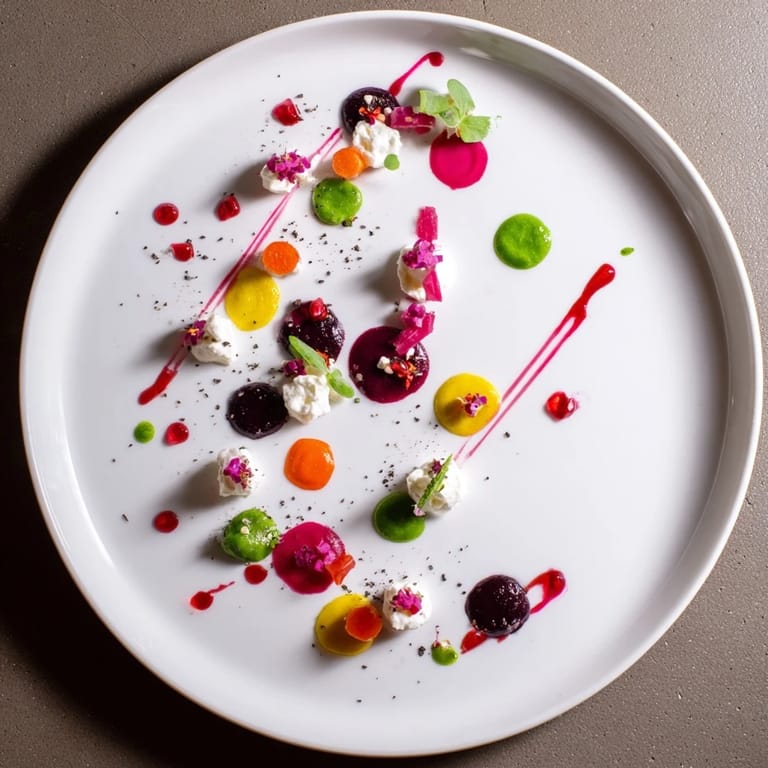
 I still remember the afternoon I wandered into a contemporary art gallery, stopping in front of a Seurat painting and becoming completely mesmerized by how tiny dots of color created something so vibrant and alive. That night, I couldn't stop thinking about how this technique could translate to plating—what if a dish could be a masterpiece too? I rushed into the kitchen and started experimenting with vegetable purees and sauces, dotting them across the plate like an artist with a tiny brush. The Pointillism Dot Matrix was born, and suddenly, every meal felt like creating art.
I'll never forget the dinner party where I served this to friends who are as obsessed with food as they are with art. When I placed those colorful plates down, everyone gasped before even tasting anything. Then came the quiet moment when they realized that beneath the beauty was genuine flavor—earthy beets, sweet carrots, bright peas, and roasted pepper all working in harmony. That's when I knew this dish was more than just a pretty plate.
Ingredients
- Beetroot puree (80g): The deep, earthy foundation that anchors the palette with its rich crimson color and subtle sweetness. Roasting first deepens the flavor before pureeing.
- Carrot puree (80g): Brings a natural sweetness and warm orange that reminds you why carrots are nature's candy. Cooking until just tender keeps it smooth without bitterness.
- Green pea puree (80g): Fresh, vibrant green that tastes like spring on your plate. The secret is not over-cooking—you want that bright, alive flavor to shine through.
- Yellow bell pepper puree (80g): Roasting caramelizes the sugars and creates a silky puree that's almost luxurious in texture. This is where you add complexity.
- Greek yogurt (60g): A creamy anchor that softens the intensity of the purees while adding tangy depth. I prefer full-fat because it pipes so much more beautifully.
- Crème fraîche (40g): The luxurious element that makes everything feel restaurant-quality. Its richness plays beautifully against the bright vegetables.
- Basil pesto (1 tbsp): Your green savory note—herbaceous and slightly peppery. Fresh basil makes all the difference here.
- Red pepper coulis (1 tbsp): A smooth, concentrated pepper sauce that adds brightness and a touch of heat. This is pure, distilled pepper flavor.
- Balsamic reduction (1 tbsp): Sweet, glossy, almost jammy. It adds visual drama and a sophisticated acidic sweetness that ties everything together.
- Pickled red onions (20g, finely diced): The textural contrast that wakes up your mouth—sharp, acidic, crisp against all that smoothness.
- Microgreens: These delicate leaves add an almost floral freshness and remind you that you're eating something alive and vibrant.
- Toasted black sesame seeds (1 tbsp): Nutty and rich, they add both visual drama and unexpected flavor depth. Toasting them yourself brings out their warmth.
- Pomegranate seeds: Jewel-like bursts of tart sweetness and crisp texture. They're the garnish that makes people smile.
- Edible flower petals (optional): If you use them, choose flavors you enjoy—violas, nasturtiums, and borage flowers all work beautifully and taste as good as they look.
- Sea salt flakes and freshly ground black pepper: The final seasoning that makes every element taste more like itself.
Tired of Takeout? 🥡
Get 10 meals you can make faster than delivery arrives. Seriously.
One email. No spam. Unsubscribe anytime.
Instructions
- Prepare your color palette:
- Blend each vegetable separately with just a pinch of salt and a whisper of olive oil. The key is patience—blend until completely smooth, almost creamy. As you work through each one, you're essentially creating five different paintings in puree form. Transfer each to its own piping bag and set them aside. This is the moment where you're truly becoming an artist, not just a cook.
- Load your tools:
- Get Greek yogurt and crème fraîche into their own piping bags—squeeze bottles work for the sauces like pesto, coulis, and balsamic reduction. Arrange everything within arm's reach of where you'll be plating. This is your artist's palette, and you want everything ready to go without hunting around.
- Create your masterpiece:
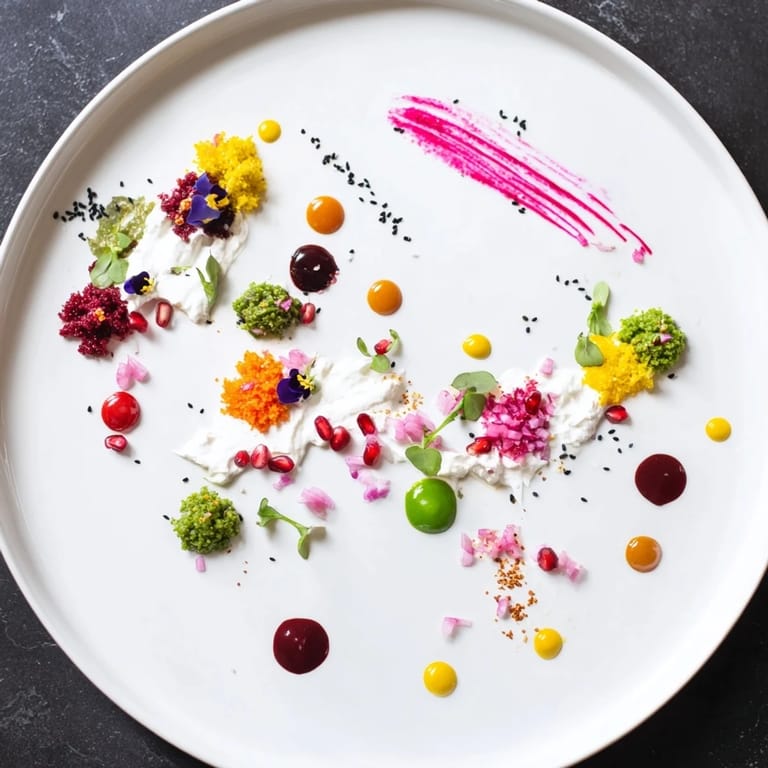
- Take a clean plate and start dotting and creating tiny mounds across the surface in a scattered, non-touching pattern. Don't overthink it—think like a pointillist painter, varying the sizes and using the full canvas of the plate. Some dots larger, some barely there, colors dancing next to each other. This is where intuition matters more than rules.
- Add the drama:
- Now comes the part that makes people lean in for a closer look. Scatter pickled red onions with the tweezers if you have them, or just a light hand if you don't. Sprinkle microgreens for height and movement, sesame seeds for their dark drama, pomegranate seeds for jeweled pops of color, and edible flowers if you're feeling fancy. Each addition should feel intentional, like you're placing the final brushstrokes.
- Taste with your eyes, then with your mouth:
- Finish with a whisper of sea salt flakes and a grind of fresh black pepper. Serve immediately—this is a dish that demands to be eaten while every element is still perfect, before the colors start to blur together. The moment you place this on the table is the moment you stop being a cook and become an artist.
 Save to Pinterest
 There was a moment during that dinner party when someone closed their eyes and took their first bite, tasting the entire plate in one spoonful. They opened their eyes and looked at their fork, then at the plate, then at me, and said, 'I didn't know food could be art.' That's when I understood that this dish had become more than a recipe—it was a small, delicious reminder that cooking is really just another way of telling people you care about them.
Building Your Flavor Symphony
The beauty of this dish is that each element should taste like an enhanced, concentrated version of itself. The beetroot doesn't try to taste like carrot, and the carrot doesn't apologize for not being pea. When you taste them individually, then together, your palate gets to experience both the purity of each vegetable and how they create harmony on the plate. This is why using the freshest vegetables you can find matters so much—you're not hiding them under heavy sauces, you're celebrating them in their simplest, most beautiful form.
The Art of Plating Without Overthinking
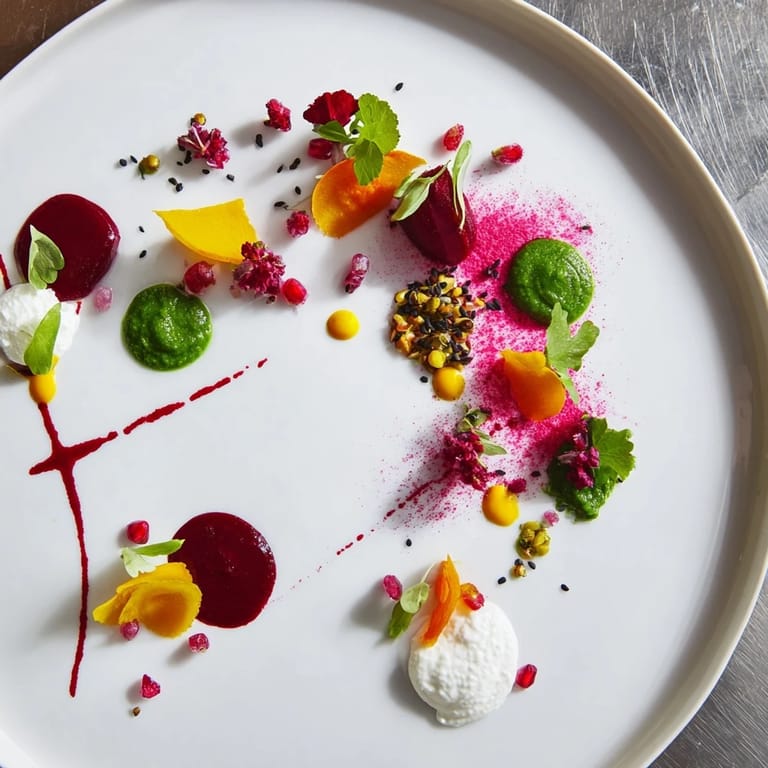
I used to stare at professional plating photos and think I could never recreate that beauty. Then I realized that those beautiful plates aren't about perfection—they're about intention. Every dot you place, every speck of color you add is a tiny decision that says, 'I made this with care.' There's no single 'correct' way to arrange these dots. Your plate will be different from mine, and that difference is exactly what makes it art. The best plates are the ones where you can feel the cook's personality, their joy, their willingness to slow down and create something that matters.
Variations and Personal Touches
Once you understand the framework of this dish, it becomes a canvas for your own creativity. Try purple sweet potato puree for an unexpected earthy note, or avocado for silky richness. You could add a dot of spicy sriracha mayo, a tiny mound of hummus, or a streak of olive tapenade. Fresh herbs beyond basil—tarragon, dill, cilantro—all work beautifully. The structure of the dish is flexible, which means you can make it your own every single time you cook it.
- Experiment with seasonal vegetables that are at their peak and add unexpected colors to your plate
- Try different herb combinations in place of basil pesto—cilantro-lime or mint work wonderfully
- If you're feeling adventurous, add a tiny dot of hot sauce, wasabi, or curry oil for heat and complexity
 Save to Pinterest
 This dish taught me that cooking doesn't always have to be about feeding people—sometimes it's about reminding them to slow down and look at the beauty in front of them. When you plate this with care and intention, you're not just serving food; you're sharing a moment.
Recipe FAQs
- → What vegetables are used in the purees?
Beetroot, carrot, green peas, and roasted yellow bell pepper are cooked and pureed separately to create vibrant colors and flavors.
- → How are the sauces and creams incorporated?
Greek yogurt, crème fraîche, basil pesto, red pepper coulis, and balsamic reduction are placed in piping bags or squeeze bottles for precise dot placement on the plate.
- → What garnishes enhance the dish’s texture?
Finely diced pickled red onions, microgreens, toasted black sesame seeds, pomegranate seeds, and edible flower petals provide additional layers of texture and visual appeal.
- → Can this dish be adapted for vegan diets?
Yes, substitute plant-based yogurt for Greek yogurt and omit the crème fraîche to maintain creaminess while keeping it vegan-friendly.
- → What plating technique is used for visual effect?
Purees and sauces are applied as small dots and mounds in a scattered, non-touching pattern to mimic the pointillist art style on each plate.
- → How should the dish be served for best presentation?
Serve immediately after plating to preserve the vibrant colors and delicate textures, enhancing the visual impact of the dish.