 Save to Pinterest
 I'll never forget the afternoon I watched a food stylist arrange vegetables on a platter in ways I'd never imagined. She created flowing lines with colorful bell peppers and carrots, and suddenly I saw it—a living map of tributaries feeding into a serene river of creamy hummus. That moment changed how I thought about appetizers. They weren't just food anymore; they were edible art that told a story. The River Delta Flow became my favorite way to turn simple vegetables into something that makes guests pause before eating, just to admire the view.
I served this at my sister's garden party last summer, and something magical happened. Instead of people eating and moving on, they gathered around the platter, laughing about which tributary they wanted to follow. Children traced the paths with their fingers before dipping, and suddenly a simple appetizer became the centerpiece of conversation. That's when I knew this recipe was about more than vegetables and dip—it was about creating moments of joy and togetherness.
Ingredients
- Hummus or Greek yogurt dip (1 1/2 cups): This is your river, the creamy anchor that holds the entire composition together. If you use Greek yogurt, add a splash of lemon juice and a pinch of salt to make it feel alive. Hummus brings earthiness and nutty depth, while yogurt offers brightness. Choose whichever speaks to your mood that day.
- Cherry tomatoes, halved (1 cup): These become jewels in your edible landscape. Their bright red demands attention and their natural sweetness surprises guests who expect only vegetables. Halving them gives you control over how they catch the light.
- Cucumber, sliced into sticks (1 cup): Cucumber is the quiet hero, cooling and refreshing. Cut them into uniform sticks so they stand like little sentinels along your tributaries. Pat them dry before arranging so they don't weep and water down your presentation.
- Colorful bell peppers, sliced into strips (1 cup): Red, yellow, and orange peppers create the visual drama this dish needs. They're sweet, crunchy, and forgiving—they won't wilt or discolor if you prep them a few hours ahead.
- Carrots, peeled and cut into thin sticks (1 cup): Carrots are your orange tributaries, offering earthy sweetness and satisfying crunch. The thinner you cut them, the more elegant they become. A vegetable peeler makes quick work of this.
- Radishes, thinly sliced (1/2 cup): Radishes bring peppery bite and striking pink-and-white circles. They're the surprise that makes people say, 'What is that?' and then crave more.
- Snap peas, trimmed (1/2 cup): These feel like nature's gift—sweet, tender, and they photograph beautifully. They're also the first thing people reach for.
- Fresh parsley, chopped (2 tablespoons): Parsley is your finishing touch, the green that says 'I care about details.' It softens the composition and adds herbal freshness.
- Olive oil (1 tablespoon for drizzling): A drizzle of good olive oil catches light and makes everything look more luxurious. Use something you actually enjoy tasting.
- Smoked paprika or zaatar (1 teaspoon, optional): This optional touch transforms the dip visually and adds a whisper of complexity. It's the difference between 'nice' and 'people remember this.'
Tired of Takeout? 🥡
Get 10 meals you can make faster than delivery arrives. Seriously.
One email. No spam. Unsubscribe anytime.
Instructions
- Create Your River:
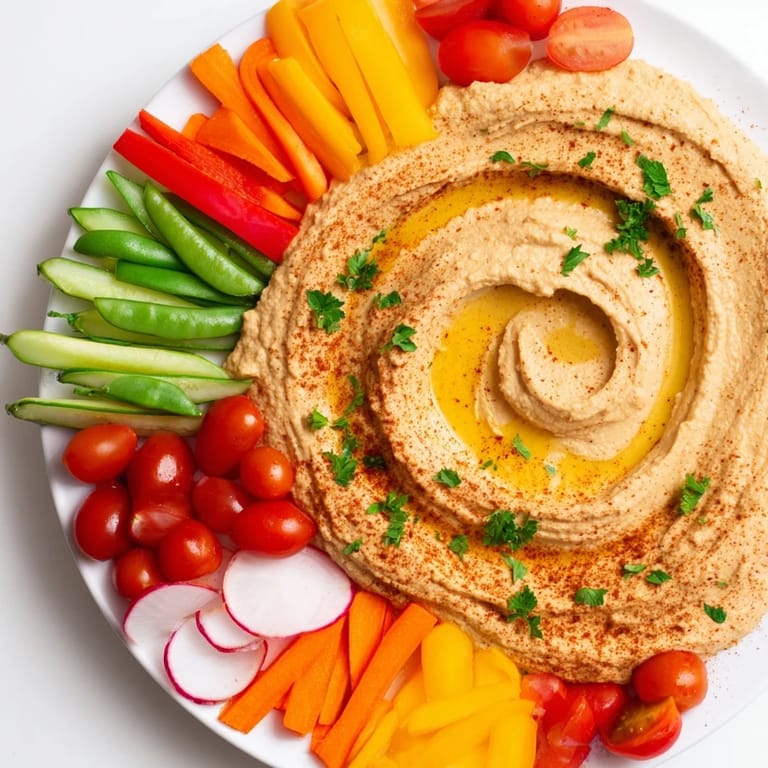
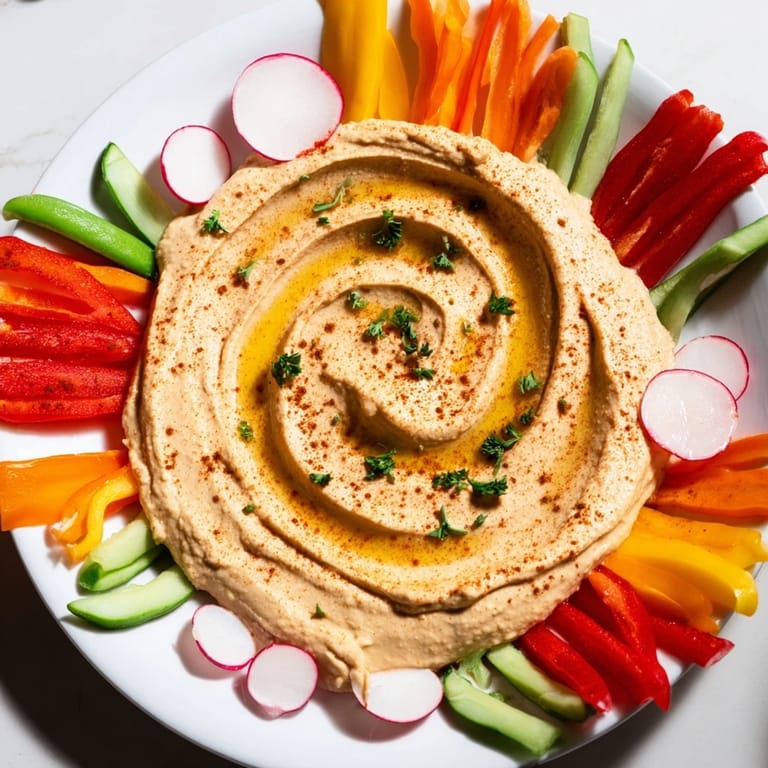
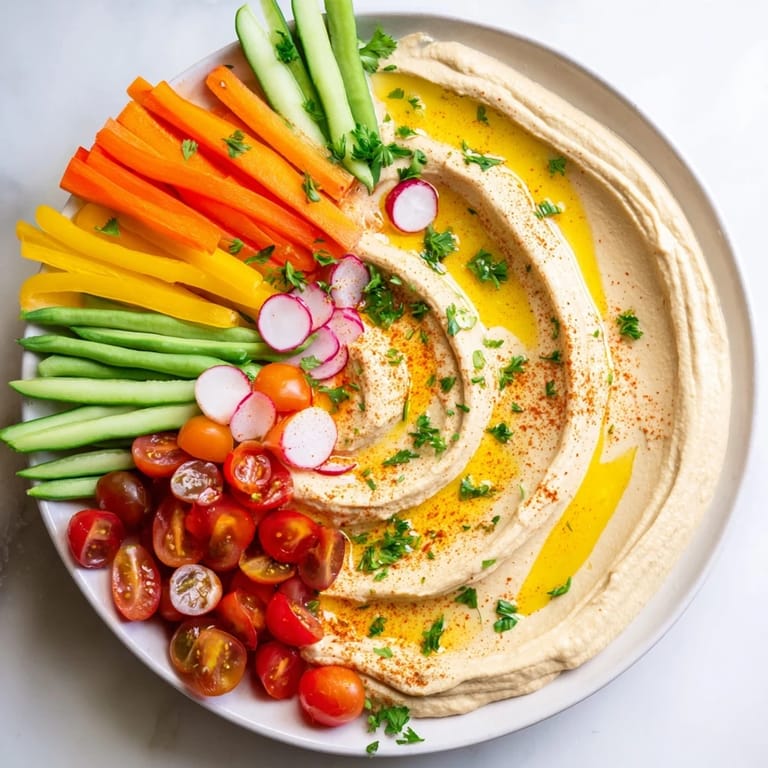
- Pour your hummus or yogurt dip onto the center of a large, flat serving platter in a wide, winding line. Imagine you're drawing a river that meanders across the plate. Use the back of a small spoon to smooth and shape it into curves and bends. Don't rush this—take a moment to make it yours. The river is your foundation, so make it graceful.
- Map Your Tributaries:
- Now here comes the fun part. Starting from the edges of your platter, arrange your vegetables in branching lines that radiate toward your central river of dip. Think like you're creating a flowing landscape. Carrots might form one tributary, bell peppers another, tomatoes a third. Alternate colors and shapes as you go. Stand back occasionally to see the whole picture. You're not just feeding people; you're creating something beautiful.
- Add Finishing Flourishes:
- Drizzle olive oil across the dip with a gentle hand—let it pool slightly in the curves. If you're using smoked paprika or zaatar, sprinkle it now while the oil is still glossy. Watch how it clings and creates shadows. Finish by scattering chopped parsley across the entire platter. The green brings everything alive.
- Serve with Intention:
- Step back and look at what you've created. Serve immediately while everything is at peak freshness and your vegetables still have their snap. Have extra vegetables or pita chips nearby for refills. Let your guests be the first to break the spell of your edible landscape.
 Save to Pinterest
 The most memorable moment with this dish happened when my nephew, who usually refuses vegetables, studied the platter with genuine curiosity. 'It looks like a map,' he said, and suddenly he was tracing paths and asking why the red river branches there. His mother looked at me with tears in her eyes. That's when I understood—food arranged with intention and love changes how people experience it. This recipe isn't really about vegetables and dip. It's about giving people permission to see their food as art, and themselves as artists when they arrange it.
The Magic of Color and Composition
Color is the secret language of appetizers. When you arrange vegetables thoughtfully, you're using visual appetite—studies show we eat first with our eyes. The warm oranges and reds create energy and draw attention, while the cool greens and whites balance and soothe. This isn't accident; it's intention. Every time I arrange this platter, I think about how the vegetables speak to each other across the space, how they create movement and flow. Your guests will feel that intentionality, even if they can't name it. That's the difference between a tray of cut vegetables and a River Delta Flow.
Making It Your Own
The beauty of this recipe is its flexibility. Once you understand the principle—a central river of dip with tributaries flowing toward it—you can fill in the details however your heart desires. I've made this with a beet hummus river that stained everything pink and glorious, with a vibrant green cilantro-lime yogurt that tasted like summer, with a smoky baba ghanoush that turned the whole thing into something more sophisticated. I've added edible flowers that looked like little celebrations scattered across the landscape, and microgreens that added an unexpected earthiness. Each time, it felt new and personal.
Entertaining Like You're Not Stressed
Here's the secret that changed my approach to hosting: the River Delta Flow is almost entirely prepared ahead of time. Your vegetables can be cut, stored in containers, and assembled with less than five minutes of actual hands-on time before serving. This means you can focus on your guests instead of frantically chopping while they arrive. You can take a breath. You can pour yourself a drink and actually enjoy the party. You can be present instead of panicked. That's the real gift this recipe offers—not just beautiful food, but the freedom to actually host the people you love.
- Cut vegetables up to one day ahead and store them separately in airtight containers in the refrigerator.
- Prepare your dip the morning of, keeping it covered and cool until the last possible moment.
- Assemble the platter right before serving for maximum visual impact and vegetable freshness.
 Save to Pinterest
 This recipe taught me that sometimes the most meaningful food doesn't come from hours of cooking—it comes from intentionality, creativity, and the willingness to see vegetables as a canvas instead of just an obligation. Every time someone makes this for people they love, they're saying, 'You're worth the care.' That's what makes it special.
Recipe FAQs
- → What vegetables work best for this dish?
Use colorful, crisp vegetables like cherry tomatoes, cucumbers, bell peppers, carrots, radishes, and snap peas for visual appeal and texture contrast.
- → Can I substitute the hummus with other dips?
Yes, alternatives like Greek yogurt dips, beet hummus, baba ghanoush, or tzatziki offer different flavor profiles while maintaining the river effect.
- → How do I create the river effect on the platter?
Spoon the chosen dip in a winding central line on the platter, then arrange vegetable sticks radiating outward to mimic tributaries converging into the river.
- → Are there any recommended garnishes?
Drizzle olive oil over the dip and sprinkle smoked paprika or zaatar; finish with freshly chopped parsley for added color and flavor.
- → Is this suitable for dietary restrictions?
It's vegetarian and gluten-free. Check dip ingredients for allergens like sesame or dairy depending on your choice.