 Save to Pinterest
 My neighbor Rosa knocked on my door one Saturday afternoon holding a ravioli cutter I didn't even know existed. She'd seen me struggling through the window, trying to cut neat squares with a pizza wheel, and couldn't stand it anymore. Within ten minutes, she'd shown me how to seal the edges properly, why my dough kept tearing, and why I should never skip the resting time. That batch turned out perfect, and I've been making these spinach ricotta ravioli her way ever since.
I made these for my sister's birthday dinner last spring, and she cried a little when she tasted them. Not because they were fancy, but because they reminded her of the summer we spent in Florence, eating ravioli at a place with red checkered tablecloths. She said mine were better, though I'm sure that was the wine talking. Either way, I wrote the date on the recipe card and underlined it twice.
Ingredients
- All-purpose flour: The foundation of your dough, and using the right amount makes all the difference between silky pasta and something that fights back.
- Eggs: They give the dough its golden color and richness, and I always use room temperature ones so they mix easier.
- Ricotta cheese: Look for whole milk ricotta if you can find it, the extra creaminess is worth it and the filling won't taste grainy.
- Fresh spinach: You'll think one cup isn't enough until it wilts down to almost nothing, and squeezing it dry is the secret to avoiding soggy ravioli.
- Parmesan cheese: Freshly grated is the only way to go, the pre-shredded stuff doesn't melt into the filling the same way.
- Egg yolk: This binds the filling together and adds a silky texture you can feel on your tongue.
- Nutmeg: Just a whisper of it makes the whole filling taste warmer and more complex without anyone knowing why.
- Marinara sauce: Homemade is lovely, but a good jarred sauce heated with fresh garlic works beautifully on a weeknight.
- Garlic: Sautéing it in olive oil for just a minute fills the kitchen with the smell that makes everyone wander in asking when dinner will be ready.
- Fresh basil leaves: Torn at the last second and scattered on top, they add a pop of color and that sweet herbal note that finishes everything.
Tired of Takeout? 🥡
Get 10 meals you can make faster than delivery arrives. Seriously.
One email. No spam. Unsubscribe anytime.
Instructions
- Make the Pasta Dough:
- Mound your flour on the counter and create a well in the center like a little volcano, then crack the eggs in and add the salt. Use a fork to beat the eggs gently, pulling in flour bit by bit until it starts to come together, then get your hands in there and knead it for eight to ten minutes until it feels smooth and stops sticking to your fingers.
- Let It Rest:
- Wrap the dough tightly in plastic wrap and let it sit on the counter for thirty minutes. This is when the gluten relaxes and the dough becomes easier to roll out, so don't skip it even if you're in a hurry.
- Prepare the Filling:
- Steam or sauté the spinach until it wilts down, then let it cool enough to handle and squeeze it hard over the sink until no more water comes out. Mix it with the ricotta, Parmesan, egg yolk, nutmeg, salt, and pepper until everything is combined and tastes well-seasoned.
- Roll the Pasta:
- Cut the dough in half and work with one piece at a time, keeping the other covered so it doesn't dry out. Roll it through your pasta machine starting at the widest setting and working down to the thinnest, or use a rolling pin and a lot of patience until the sheet is thin enough to see your hand through.
- Shape the Ravioli:
- Lay one sheet of pasta on a lightly floured surface and place small spoonfuls of filling about two inches apart. Brush the edges and spaces between with a little water, then drape the second sheet over the top and press gently around each mound to seal, making sure no air is trapped inside.
- Cut and Seal:
- Use a knife, ravioli cutter, or even a glass to cut them into squares, then press the edges with a fork to make sure they're tightly sealed. Any gaps and the filling will escape into the water and break your heart a little.
- Cook the Ravioli:
- Bring a big pot of salted water to a gentle boil, not a rolling one or they might break apart. Drop the ravioli in carefully and cook for three to four minutes until they float to the top and look puffy, then lift them out with a slotted spoon.
- Make the Marinara Sauce:
- Heat the olive oil in a saucepan and sauté the minced garlic just until it smells amazing, about a minute. Add your marinara sauce, season with salt and pepper, and let it simmer gently for five minutes to bring everything together.
- Serve:
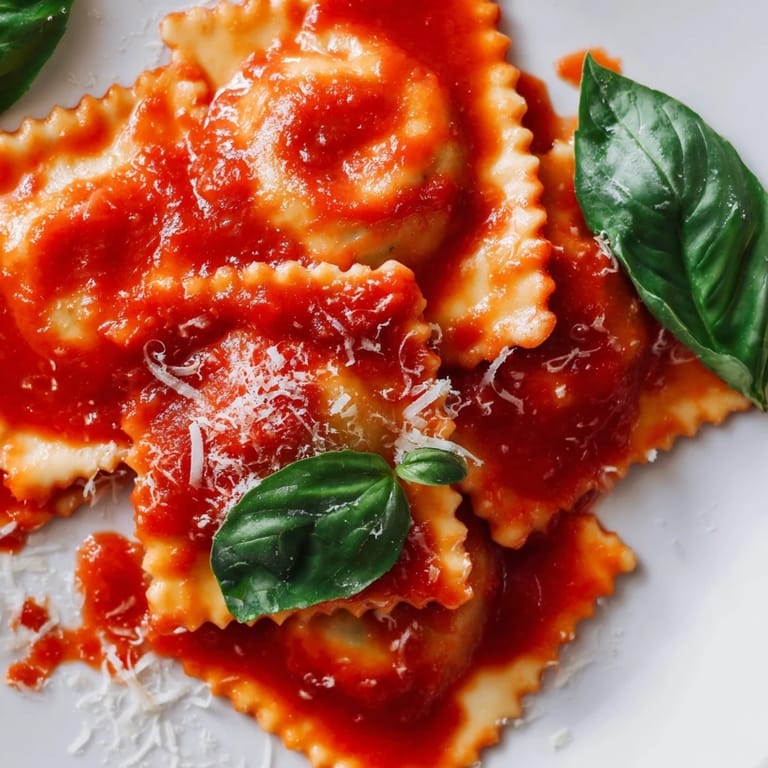
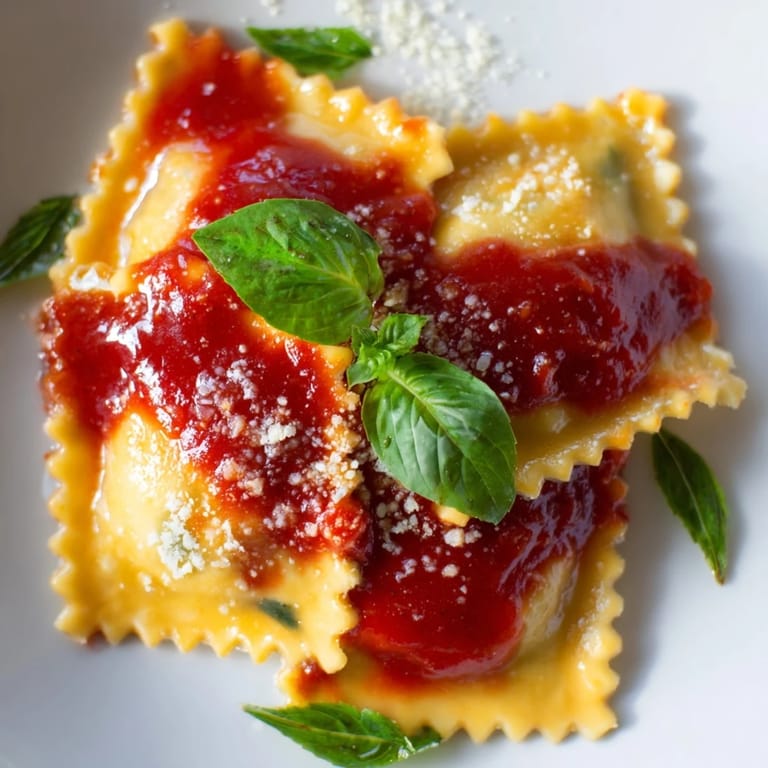
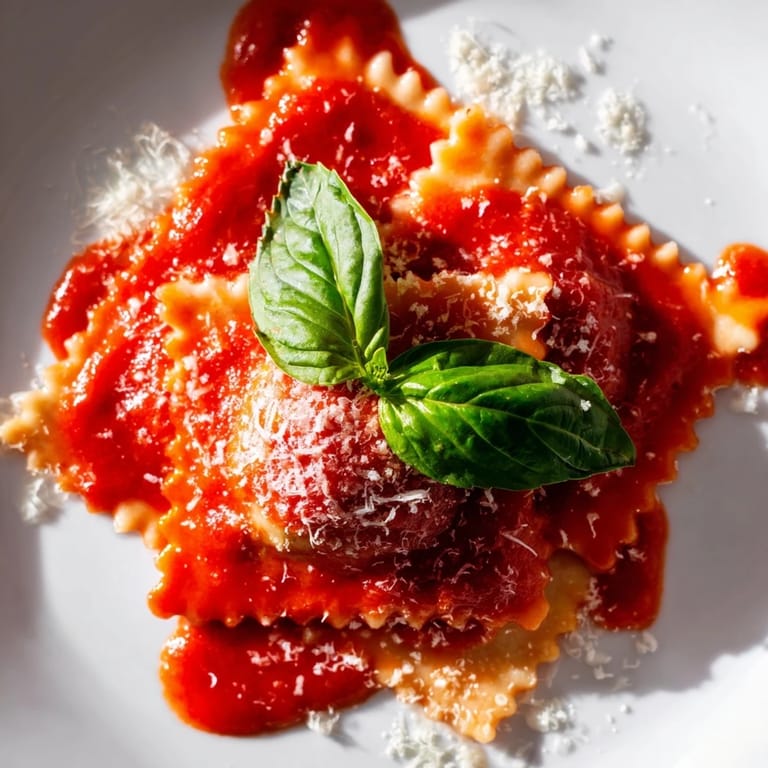
- Spoon a puddle of sauce onto each plate, arrange the ravioli on top, and add more sauce, torn basil, and a generous shower of Parmesan. Serve it hot while the pasta is still tender and the sauce is glossy.
 Save to Pinterest
 There's a quiet kind of pride that comes from setting down a plate of homemade ravioli in front of someone you care about. They always pause for a second, fork in the air, looking at the pasta like they can't believe you made it from scratch. Then they take a bite and the room gets quiet except for the sound of forks on plates, and that's when you know it was worth the flour on the floor and the dough under your fingernails.
How to Store Leftovers
Cooked ravioli don't keep as well as you'd hope, they get a little mushy in the fridge after a day or two. If you have extras, I toss them gently with a bit of olive oil to keep them from sticking, store them in an airtight container, and reheat them in simmering sauce the next day. Uncooked ravioli freeze beautifully though, just lay them on a parchment-lined baking sheet, freeze until solid, then toss them in a freezer bag where they'll keep for up to three months.
What to Serve Alongside
A simple arugula salad with lemon and olive oil cuts through the richness of the ricotta perfectly. I also love serving these with garlic bread for anyone who wants to mop up extra sauce, and a crisp white wine like Pinot Grigio or Vermentino makes the whole meal feel a little more special. If you're feeding a crowd, roasted vegetables or sautéed green beans round out the plate without stealing the spotlight from the ravioli.
Variations Worth Trying
You can swap the spinach for sautéed mushrooms or roasted butternut squash if you want to change things up. I've also added a handful of fresh herbs like basil or parsley to the filling, and a pinch of lemon zest brightens the whole thing in a way that surprises people. Sometimes I'll brown some butter with sage instead of using marinara, and that's a whole different kind of magic.
- Try using half whole wheat flour in the dough for a nuttier flavor and a bit more texture.
- Add a spoonful of pesto to the filling for an herby twist that tastes like summer.
- If you're not vegetarian, crumbled cooked sausage mixed into the filling makes it heartier and deeply savory.
 Save to Pinterest
 These ravioli have become my go-to whenever I want to slow down and spend time in the kitchen, hands busy, mind quiet. There's something about rolling dough and folding in the filling that feels almost meditative, and the reward at the end is a plate of something tender, warm, and completely worth it.
Recipe FAQs
- → How do I prevent the ravioli from bursting while cooking?
Ensure the pasta edges are well-sealed by pressing firmly with a fork or your fingers after placing the filling. Use a gentle boil rather than a rolling boil, and avoid overcrowding the pot. These steps help maintain the structural integrity of your ravioli.
- → Can I make the ravioli ahead of time?
Yes, you can prepare ravioli several hours in advance and refrigerate them on a flour-dusted tray, uncovered, for up to 4 hours. Alternatively, freeze them on a tray for 2 hours, then transfer to a freezer bag for up to 3 months. Cook from frozen, adding 1-2 minutes to the cooking time.
- → What's the best way to handle the spinach filling?
After cooking the spinach, squeeze out as much moisture as possible using a clean kitchen towel or paper towels. Excess water can make the filling watery and cause the pasta to become soggy. Finely chop the spinach for a uniform texture that blends well with the ricotta.
- → Can I use frozen spinach instead of fresh?
Absolutely. Thaw frozen spinach completely and squeeze out all excess moisture before chopping. Frozen spinach works just as well as fresh and is often more convenient. One 10-ounce package of frozen spinach yields approximately one cup when thawed and drained.
- → How do I roll the pasta dough to the correct thickness?
A pasta machine is ideal for consistent thickness—use the thinnest setting, typically setting 6 or 7. If rolling by hand, use a long rolling pin and work from the center outward, rotating the dough occasionally. The dough should be thin enough to see light through it but sturdy enough to hold the filling without tearing.
- → What wine pairs well with this dish?
A crisp white wine like Pinot Grigio, Vermentino, or Sauvignon Blanc complements the richness of the ricotta and the freshness of the spinach. The acidity cuts through the creaminess while enhancing the bright marinara sauce.