 Save to Pinterest
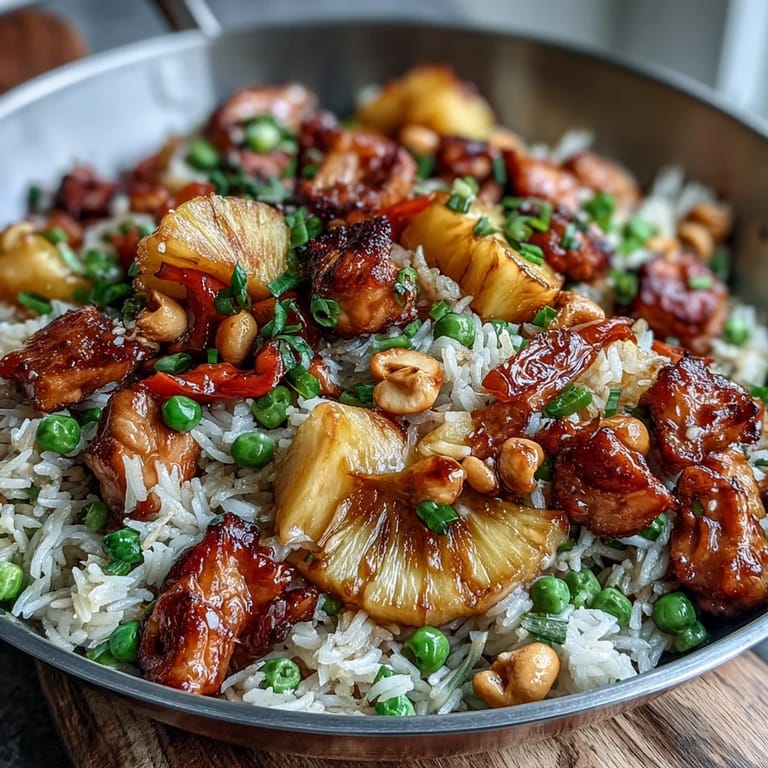
 There's something about the smell of jasmine rice hitting a hot wok that makes you feel like you're on vacation, even if you're just standing in your kitchen on a Tuesday night. I discovered this Hawaiian pineapple chicken fried rice completely by accident when I had leftover rice, some chicken, and a can of pineapple I'd forgotten about in the back of my pantry. My partner walked in mid-cook and said it smelled like we were at a beach resort, and honestly, that sealed it. Now whenever I make it, I'm transported somewhere warm and tropical, no plane ticket required. It became my go-to when I wanted something that felt special but didn't require hours in the kitchen.
I made this for my sister when she was going through a rough patch and needed comfort food that wasn't depressing. She sat at my counter while I worked, and I remember the exact moment she smiled—when the pineapple hit the hot pan and released this sweet, caramelized aroma. We ate straight from the wok, standing up, talking about nothing important, and somehow the meal became less about the food and more about that exact moment. That's when I knew this recipe was keeper material.
Ingredients
- Boneless, skinless chicken breasts (300 g, diced): Buy them slightly thick so they stay juicy when diced small—thin ones dry out fast in a hot pan.
- Large eggs (2, beaten): These create little pockets of richness throughout the rice; don't skip them even if you're tempted.
- Fresh pineapple (1 cup, diced): Fresh is worth it because the juices caramelize and create little sweet bursts, but canned and drained works in a pinch.
- Red bell pepper (1, diced): The color matters here—it looks beautiful and adds a subtle sweetness that plays perfectly with the pineapple.
- Frozen peas and carrots (1 cup, thawed): Thaw them first so they don't drop the pan temperature when you add them; thawed vegetables cook faster and absorb flavor better.
- Green onions (3, sliced): Save some for garnish because the fresh, sharp bite at the end completely changes the dish's energy.
- Garlic (2 cloves, minced): Don't skip the garlic—it's your flavor anchor and keeps this from tasting one-note.
- Cooked jasmine rice (3 cups, chilled, preferably day-old): This is non-negotiable; day-old rice has lost enough moisture that it won't clump and turn into mush when you stir-fry it.
- Soy sauce (3 tbsp): Go gluten-free if that matters to you, and taste as you go because saltiness varies between brands.
- Oyster sauce (1 tbsp): A little goes a long way—it adds umami depth without overpowering.
- Sesame oil (1 tbsp): Use the toasted kind; it's the aromatic difference between good fried rice and unforgettable fried rice.
- Black pepper (1/2 tsp) and salt (1/2 tsp): Season gradually and taste constantly—you might need less salt depending on your soy sauce.
- Chili flakes (1/2 tsp, optional): Add these if you want heat, or leave them out if you're feeding people who prefer mild.
- Vegetable oil (2 tbsp): Use something neutral and high-heat like canola or avocado oil; olive oil smokes and tastes wrong here.
- Roasted cashews or macadamia nuts (2 tbsp, optional): The crunch is optional but transforms the texture; macadamia nuts feel more authentically Hawaiian.
Tired of Takeout? 🥡
Get 10 meals you can make faster than delivery arrives. Seriously.
One email. No spam. Unsubscribe anytime.
Instructions
- Get your mise en place ready:
- Chop everything before you start cooking because once your wok is hot, things move fast and you won't have time to slice. Make sure your rice is cold and broken into separate grains.
- Cook the chicken until golden:
- Heat 1 tablespoon oil in your wok over medium-high heat until it shimmers, then add diced chicken. Let it sit for a minute before stirring so it gets golden color on the outside; this takes about 5–7 minutes total. Remove it to a clean plate.
- Scramble the eggs:
- Add the remaining oil, pour in beaten eggs, and scramble them gently until they're just barely set with some soft curds still visible. Push them to the side of the pan and keep them there for now.
- Build your flavor foundation:
- Add minced garlic, diced bell pepper, and green onions to the center of the pan. Stir-fry for about 2 minutes until the garlic is fragrant and the pepper starts to soften at the edges.
- Add the remaining vegetables and fruit:
- Stir in the thawed peas, carrots, and fresh pineapple. Cook for 2–3 minutes, stirring occasionally, until everything is warm and the pineapple starts to caramelize slightly.
- Combine everything with the rice:
- Add your cold rice to the pan, breaking up any clumps with your spatula as you stir. It should go from cold and clumpy to warm and separated; this takes a minute or two. Return the cooked chicken to the pan.
- Season and finish:
- Pour in soy sauce, oyster sauce, sesame oil, salt, pepper, and chili flakes if using. Stir everything together over heat for 3–4 minutes until the sauce coats the rice and the whole pan smells incredible. Taste a bite and adjust seasoning if needed.
- Plate and garnish:
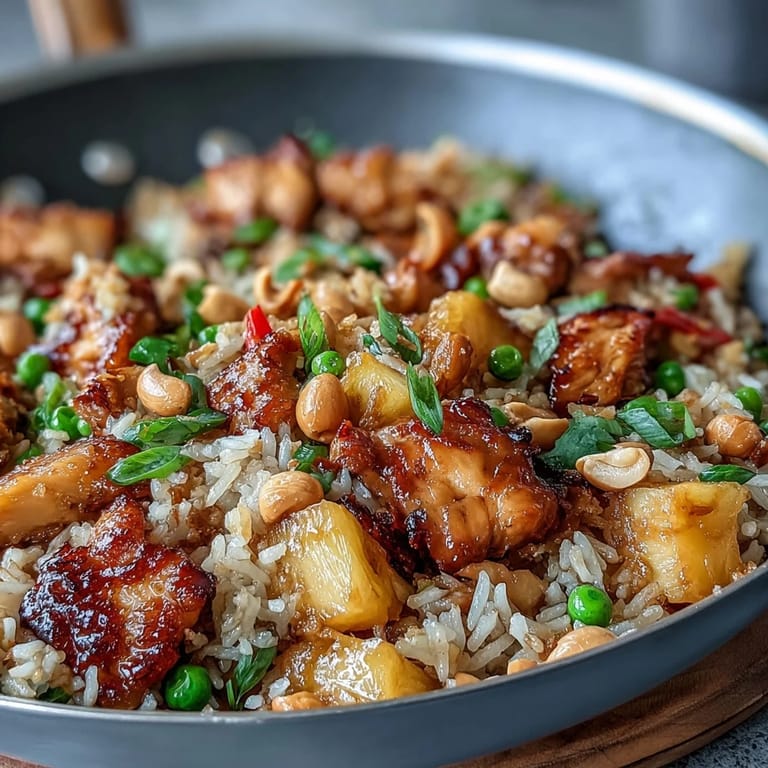
- Remove from heat, divide among bowls, and top with roasted nuts and extra sliced green onions. The fresh garnish is what elevates this from good to memorable.
 Save to Pinterest
 What surprised me most about this dish is how it shifted my thinking about what counts as dinner. It's not fancy, it's not complicated, but it carries this sense of brightness and joy that makes people want seconds. I've served it to people who swear they don't like pineapple, and they've come back for more, which says something about balance and trust in cooking.
The Sweet and Savory Balance
The magic in this dish lives in the tension between sweet (pineapple, a hint of oyster sauce) and savory (soy sauce, sesame oil, umami). Most people new to Hawaiian fried rice worry that pineapple will make it taste like dessert, but it doesn't—it adds brightness and prevents the dish from feeling heavy. The savory elements keep pineapple from being cloying, and together they create something that feels sophisticated without trying too hard. Think of it like a conversation between flavors where nothing drowns anyone else out.
Variations That Actually Work
Once you understand the template, this recipe invites play. I've made it with shrimp instead of chicken on nights when I wanted something lighter, and it took the same 20 minutes. Tofu works beautifully if you're cooking for vegetarians—press it well, dice it into small pieces, and cook it until the edges are crispy and golden before setting it aside. You can swap the red pepper for yellow or orange if that's what you have, add cashew nuts or peanuts, dial up the chili flakes for heat, or even add a splash of lime juice right at the end. The structure is strong enough to handle experimentation.
Making It Your Own
The most important thing I've learned about cooking fried rice is that it's more of a technique than a recipe. Once you understand how heat, oil, and timing work together, you start seeing possibilities everywhere. This Hawaiian version just happens to be one that makes people smile, but the real skill is learning when rice is done, how to read when vegetables are at their perfect crispness, and how to taste as you go. Every kitchen is different—some woks heat faster, some stoves run hotter—so trust your senses more than strict timing.
- Always taste near the end and adjust salty, sweet, and spicy elements to your preference because ingredients vary by brand and season.
- If you're cooking for a crowd, make it in batches rather than cramming too much into one pan, which drops the temperature and steams instead of frying.
- Have everything prepped and sitting next to your stove before you light the flame—fried rice waits for no one.
 Save to Pinterest
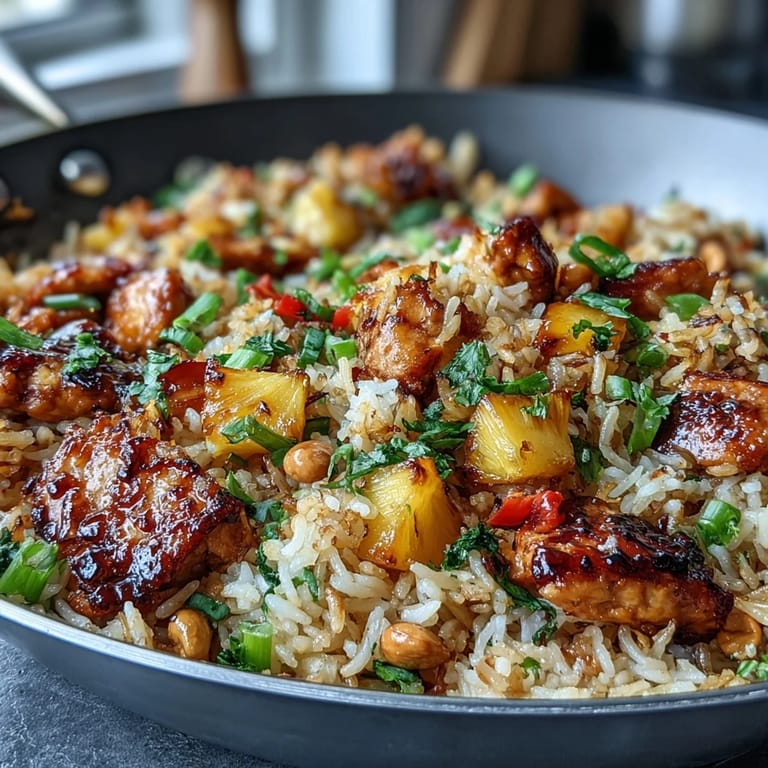
 This recipe taught me that weeknight dinner doesn't have to be a compromise between speed and soul. It's proof that simple, honest cooking done with attention and intention becomes something people crave.