 Save to Pinterest
 The first time I tasted authentic Tom Yum was at a cramped street stall in Bangkok, steam rising from giant copper pots while vendors shouted orders. I was skeptical—how could something so simple in appearance pack such a wallop of flavor? Watching the vendor work, I realized it wasn't magic, just respect for each ingredient and timing. That soup changed how I cook. Now, whenever I make it at home, that same heat and aroma transport me back, and I swear the walls of my kitchen smell like Thailand for hours.
I made this for my partner on a Tuesday night when they were stressed about work, and I watched their shoulders relax with the first spoonful. There's something about a bowl of fragrant, spicy soup that cuts through whatever heaviness you're carrying. The lime juice on their lips, the slight steam on their glasses—it became one of those quiet moments that matters more than any fancy dinner ever could.
Ingredients
- Chicken or vegetable stock (4 cups): The foundation of everything—use good quality broth because you can taste the difference, and it becomes the canvas for those wild aromatic flavors.
- Fresh lemongrass (2 stalks): Smash it aggressively; this is where the soul of the soup lives, releasing those citrusy, almost perfumy notes.
- Kaffir lime leaves (4): Tear them by hand to bruise them slightly, which makes them give up their floral complexity to the broth.
- Fresh galangal (3 slices): It's like ginger's cooler sibling—slightly more peppery and less sharp, but if you can't find it, ginger works in a pinch.
- Thai bird's eye chilies (2): These are legitimately hot, so taste as you go; you can always add more heat but you can't take it out.
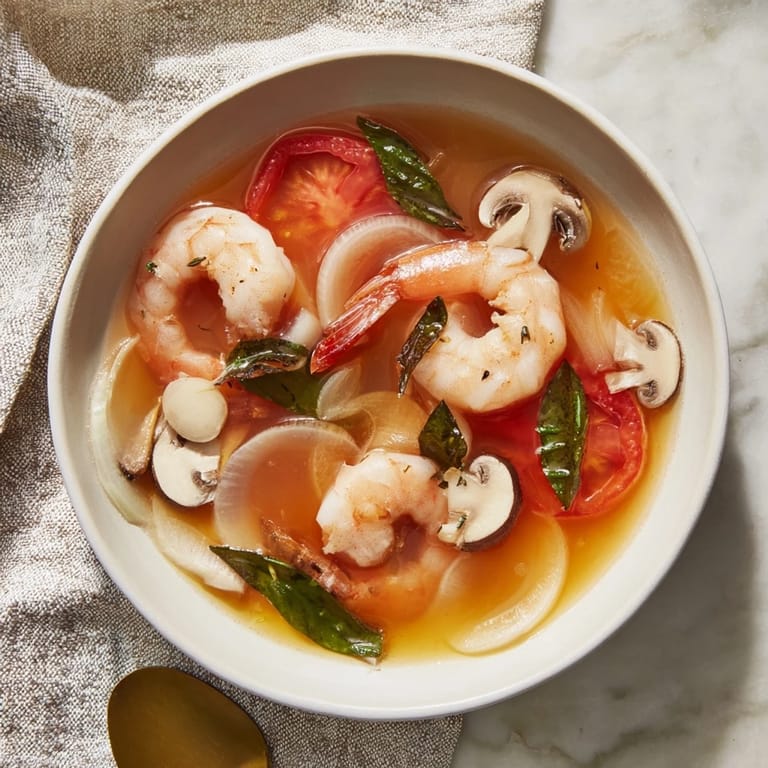
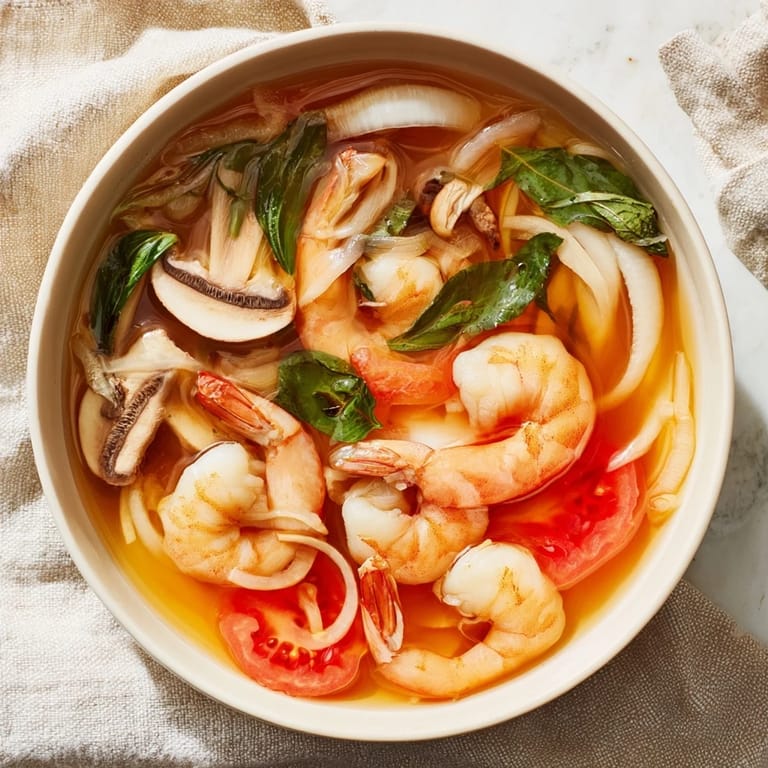
- Large shrimp (250 g): They cook in minutes, so don't walk away once they hit the pot or you'll end up with rubber.
- White mushrooms (150 g): Slice them thin so they soak up all that broth and become tender little flavor sponges.
- Tomatoes (2 medium): Cut into wedges so they hold their shape and add brightness without dissolving into the soup.
- Onion (1 small): Slice it thin; it softens quickly and adds sweetness that rounds out the heat.
- Fish sauce (2 tablespoons): I know it smells funky in the bottle, but trust it—this is the secret ingredient that makes everything taste like Thailand.
- Lime juice (1 tablespoon plus more): Fresh lime is non-negotiable; the acid is what makes your mouth sing at the end.
- Sugar (1 teaspoon): A tiny pinch balances the heat and sour, don't skip it even though it seems weird.
- Chili paste nam prik pao (1 teaspoon, optional): This adds a savory, slightly smoky depth if you want to deepen the complexity.
Tired of Takeout? 🥡
Get 10 meals you can make faster than delivery arrives. Seriously.
One email. No spam. Unsubscribe anytime.
Instructions
- Build the aromatic base:
- Bring your stock to a steady simmer and add the lemongrass, lime leaves, galangal, and chilies all at once. Let them dance in the heat for 5 to 7 minutes—your kitchen should smell absolutely incredible by now, like you've opened a door to Southeast Asia. This infusion step is where patience pays off; don't rush it.
- Add the vegetables:
- Slide in the mushrooms, tomatoes, and onion and let them become tender over 3 to 4 minutes. They should still have some texture, not fall apart into mush. Taste the broth at this point; it should already make you excited.
- Cook the shrimp gently:
- Nestle the shrimp into the hot broth and watch them change from gray to pink—this takes about 2 to 3 minutes and no more. Overcooked shrimp is the enemy of good soup, so stay close.
- Season to perfection:
- Stir in the fish sauce, lime juice, sugar, and chili paste if you're using it. Taste and adjust; this is your moment to make it exactly how you love it. Some people want more lime, others need more fish sauce—there's no one right answer, just your answer.
- Finish with love:
- Remove from heat and let it rest for a minute. You can fish out the lemongrass and galangal slices if you prefer, or leave them for visual drama and extra flavor.
- Serve immediately:
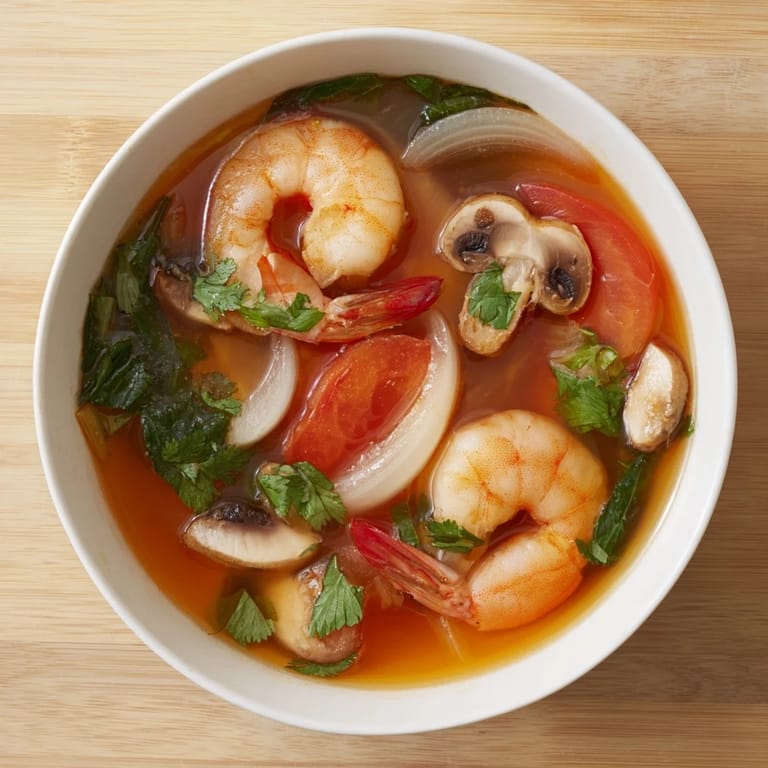
- Ladle into bowls and scatter cilantro and green onions on top with lime wedges on the side. This soup is best eaten while it's still steaming, so gather people around quickly.
 Save to Pinterest
 I remember my friend closing her eyes after that first sip and just sitting quietly for a moment, letting the warmth and spice and brightness wash over her. It felt like we were sharing something sacred, just two people and a bowl of soup that asked nothing of her except to be present. That's when I understood that cooking isn't about impressing anyone—it's about creating these small moments of comfort and awakening.
The Magic of Lemongrass
Lemongrass is the unsung hero here, and honestly, if you only discover one thing from making this soup, let it be how powerful this humble herb is. It's citrusy but floral, bright but subtle, and it completely transforms simple broth into something otherworldly. I've watched people try to describe the flavor and just give up, shaking their heads in defeat—that's how unexpectedly complex it is. Once you understand lemongrass, you'll find yourself adding it to everything from fish to rice, chasing that same magic.
Heat and Balance
Spice is never just about pain; it's about pleasure and awakening your palate. This soup teaches you that heat works best when it's balanced with sour, savory, and a touch of sweetness—no single flavor dominating. I've made this soup for people who claim they can't handle spice, and when they realize it's actually delicious and not just painful, it changes something in how they think about food. Start conservative with the chilies and taste as you go; you can always add more heat, but you can't undo it.
Making It Your Own
The beauty of Tom Yum is that it's flexible enough to adapt to what you have in your kitchen and what your body is craving that day. Some mornings I add noodles to make it more substantial, other times I throw in some baby bok choy or snap peas if I'm feeling fancy. The skeleton of the recipe—that infused broth with the balance of heat, sour, and aromatic—stays the same, but everything else is a conversation between you and your ingredients.
- For a vegetarian version, swap the shrimp for tofu cubes and use soy sauce instead of fish sauce, though you'll lose some of that distinctive umami depth.
- Fresh herbs like Thai basil or mint stirred in at the very end add another layer of freshness that feels like a gift.
- Leftover soup keeps in the fridge for a few days and somehow tastes even better the next day once all the flavors have gotten to know each other.
 Save to Pinterest
 Every time I make this soup, I'm grateful for that steamy Bangkok street stall and the vendor who made magic in a pot. Now it's my turn to pass that forward, one bowl at a time.
Recipe FAQs
- → What broth works best for this dish?
Chicken or vegetable stock serves as a flavorful base, helping to highlight the aromatics and seafood.
- → Can I adjust the spiciness?
Yes, modify the amount of Thai bird’s eye chilies or chili paste to suit your preferred heat level.
- → What can be used instead of shrimp?
Tofu makes a great substitute for a vegetarian variation, while retaining texture and absorption of flavors.
- → How long should the broth simmer with herbs?
Simmering for 5–7 minutes allows lemongrass, kaffir lime leaves, and galangal to infuse the broth properly.
- → What garnishes complement this dish?
Fresh cilantro leaves, sliced green onions, and extra lime wedges enhance the fresh and citrusy notes.
- → Is there a recommended beverage pairing?
A crisp Riesling or chilled lager pairs well, balancing the soup’s spicy and sour flavors.