 Save to Pinterest
 The first time I attempted a proper dark roux, I stood at the stove for twenty minutes straight, my arm aching from constant stirring as I watched flour and oil transform from pale yellow to peanut butter brown to something resembling melted chocolate. My grandmother had warned me about burning it, said a ruined roux smells acrid and bitter, but I was too mesmerized by the alchemy of it all to be nervous. That first batch wasn't perfect, but it taught me patience and respect for the foundation of Cajun cooking. Now whenever I make étouffée, I'm transported back to that tiny apartment kitchen, learning that good things really do come to those who wait.
Last summer, I made a double batch for my friend Sarah's birthday dinner. She had spent a semester studying in New Orleans and kept talking about missing the food there. When she took her first bite and immediately went quiet, eyes closed, I knew I had done something right. We sat on her back porch for hours, eating and talking while fireflies flickered in the yard, and she told me it tasted just like the little restaurant she used to visit near the French Quarter.
Ingredients
- 1/3 cup vegetable oil: Provides the fat base for your roux, neutral enough to let the flour's toasted flavor shine through
- 1/3 cup all-purpose flour: The essential thickener that, when cooked properly, becomes the flavor foundation of the entire dish
- 1 medium onion, diced: Part of the holy trinity of Cajun cooking, lending sweetness and depth
- 1 green bell pepper, diced: Adds a fresh, slightly bitter note that balances the rich roux
- 2 celery stalks, diced: The third component of the holy trinity, providing aromatic brightness
- 4 cloves garlic, minced: Don't be shy with garlic here, it mellows beautifully in the roux
- 1 pound shrimp: Peeled and deveined, preferably fresh but frozen thawed works perfectly fine
- 2 cups seafood stock: Homemade stock elevates this, but a good quality store-bought version does the job
- 1 tablespoon Worcestershire sauce: Deepens the savory notes and adds that subtle umami background
- 1 teaspoon Cajun seasoning: Adjust to your heat preference, but don't skip it entirely
- 1/4 teaspoon cayenne pepper: Provides background heat without overwhelming the delicate shrimp flavor
- 1 bay leaf: Classic aromatic that infuses the sauce as it simmers
- Salt and black pepper: Taste and adjust at the end, since your stock and seasoning already contain salt
- 4 cups cooked white rice: The perfect blank canvas to soak up all that saucy goodness
- 2 green onions, chopped: Fresh finish that brightens the rich dish
- 1/4 cup fresh parsley, chopped: Adds color and a fresh herbal note to cut through the richness
Tired of Takeout? 🥡
Get 10 meals you can make faster than delivery arrives. Seriously.
One email. No spam. Unsubscribe anytime.
Instructions
- Make the dark roux:
- In a large heavy pot or Dutch oven, heat the vegetable oil over medium heat, then gradually whisk in the flour until smooth. Cook the roux, stirring constantly and adjusting the heat as needed to maintain a steady sizzle without burning, until it reaches a deep chocolate brown color, about 15 to 20 minutes. This is the most important step, so don't rush it and don't walk away.
- Add the holy trinity:
- Stir in the diced onion, bell pepper, and celery, cooking for 5 to 7 minutes until the vegetables have softened and the mixture has a glossy sheen. The roux will seize up briefly when you add the vegetables but will smooth out again as they release moisture.
- Infuse the garlic:
- Add the minced garlic and sauté for 1 minute until fragrant, being careful not to let it brown or it will turn bitter. You want the garlic to bloom in the hot roux, releasing its oils and perfume.
- Incorporate the stock:
- Gradually pour in the seafood stock while stirring constantly, working out any lumps until the mixture is smooth. The sauce will thicken dramatically at first, then thin out as all the liquid incorporates.
- Add the shrimp and seasonings:
- Stir in the shrimp, Worcestershire sauce, Cajun seasoning, cayenne pepper, bay leaf, salt, and black pepper. The shrimp will start turning pink immediately, but they need time to finish cooking gently in the simmering sauce.
- Simmer to perfection:
- Bring the mixture to a gentle simmer, then reduce heat to low and cook uncovered for 20 to 30 minutes, stirring occasionally to prevent sticking. The sauce should thicken slightly and coat the back of a spoon, and the shrimp should be fully cooked and tender.
- Final adjustments and service:
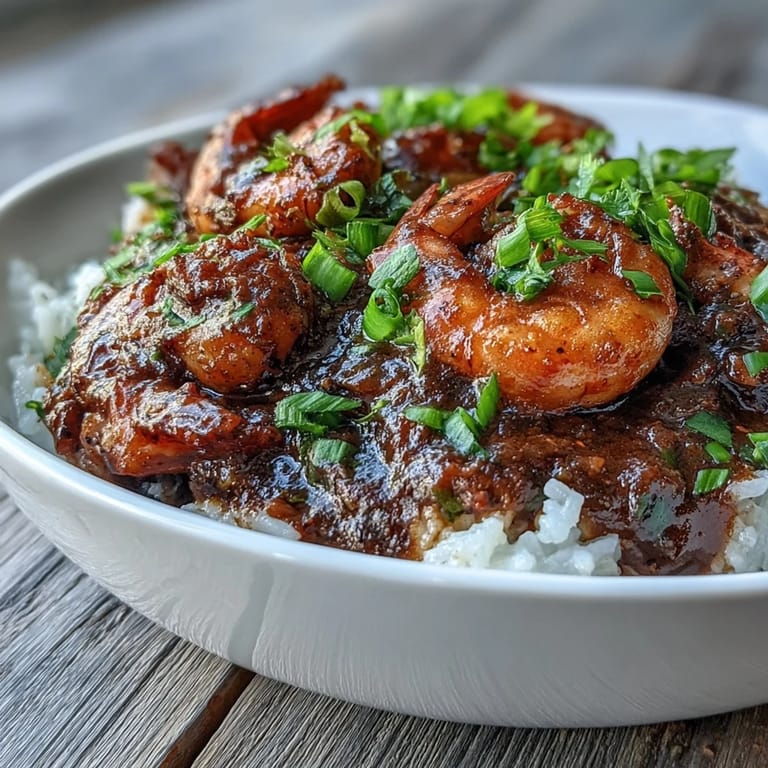
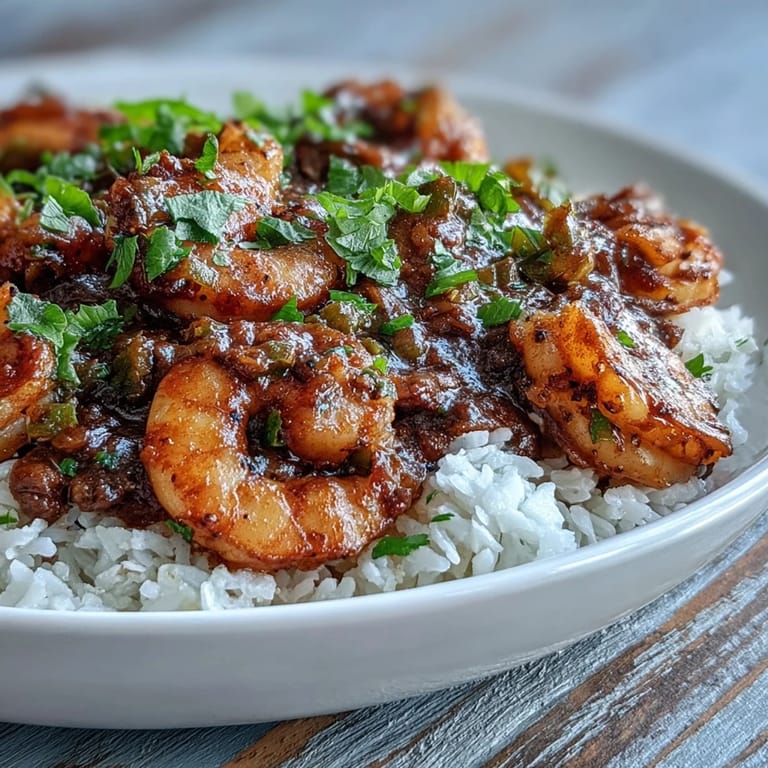
- Taste and adjust seasoning as needed, then remove and discard the bay leaf before serving over hot cooked rice. Garnish generously with chopped green onions and fresh parsley for that pop of color and freshness.
 Save to Pinterest
 There's something almost meditative about making étouffée, the way the kitchen fills with the toasty, nutty aroma of the roux, then the sharp smell of onions and garlic, and finally the briny perfume of shrimp. My roommate used to wander into the kitchen whenever I made it, drawn by the smells, and we would end up eating straight from the pot while standing at the counter, too impatient to bother with proper plates.
The Art of the Roux
Learning to make a proper dark roux changed my cooking entirely. The color stages are like a roadmap, from white to blonde to peanut butter to milk chocolate to the deep dark brown you are aiming for here. Each stage brings different flavors, and once you have made enough roux, you can tell by smell when it is approaching that perfect point.
Serving Suggestions
While white rice is traditional, I have served this over creamy grits for a particularly Southern variation. A simple green salad with sharp vinaigrette helps cut through the richness, and crusty French bread is absolutely essential for sopping up every last drop of sauce.
Make Ahead and Storage
Étouffée is one of those rare dishes that actually improves with time, making it perfect for meal prep or entertaining. The flavors continue to develop overnight, and reheating only seems to intensify the depth of the roux.
- The roux can be made up to three days ahead and stored in the refrigerator
- Freeze finished étouffée for up to three months, though the texture of the shrimp may suffer slightly
- Reheat gently over low heat, adding a splash of water or stock if the sauce has thickened too much
 Save to Pinterest
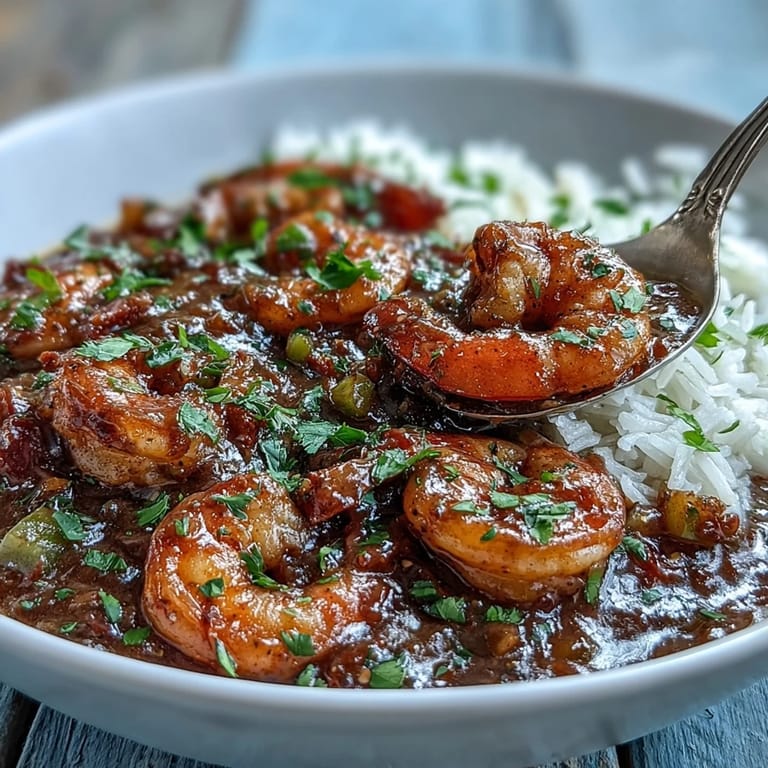
 This is the kind of food that brings people together, ladled into bowls over steaming rice while stories are shared and the house fills with warmth. Perfect for Mardi Gras, casual Tuesday dinners, or anytime you need a little taste of New Orleans in your life.
Recipe FAQs
- → What is a roux and why is it important?
A roux is a mixture of cooked fat (oil) and flour, forming the base and thickener for the étouffée. It's crucial for developing a deep, nutty flavor and a rich, velvety texture. The darker the roux, the more profound the flavor it imparts.
- → Can I use other proteins instead of shrimp?
Absolutely. While shrimp is traditional, you can easily substitute crawfish, chicken, sausage, or even mushrooms for a vegetarian option. Adjust cooking times as needed for the protein chosen.
- → How can I make this dish gluten-free?
To make it gluten-free, use a gluten-free all-purpose flour blend for the roux. Ensure that any stock used is also certified gluten-free. The preparation method remains otherwise the same.
- → What's the best way to store and reheat leftovers?
Étouffée tastes even better the next day as the flavors deepen. Store any leftovers in an airtight container in the refrigerator for up to 3-4 days. Reheat gently on the stovetop over low heat, adding a splash of stock or water if it's too thick.
- → How can I adjust the spice level?
The heat comes primarily from Cajun seasoning and cayenne pepper. For a milder dish, reduce the amount of cayenne or omit it entirely. For more heat, feel free to add a bit more cayenne or a dash of hot sauce to taste.
- → What should I serve with Étouffée?
This dish is traditionally served over fluffy white rice. It also pairs wonderfully with warm, crusty French bread for soaking up the delicious sauce, or alongside a simple green salad for a complete meal.